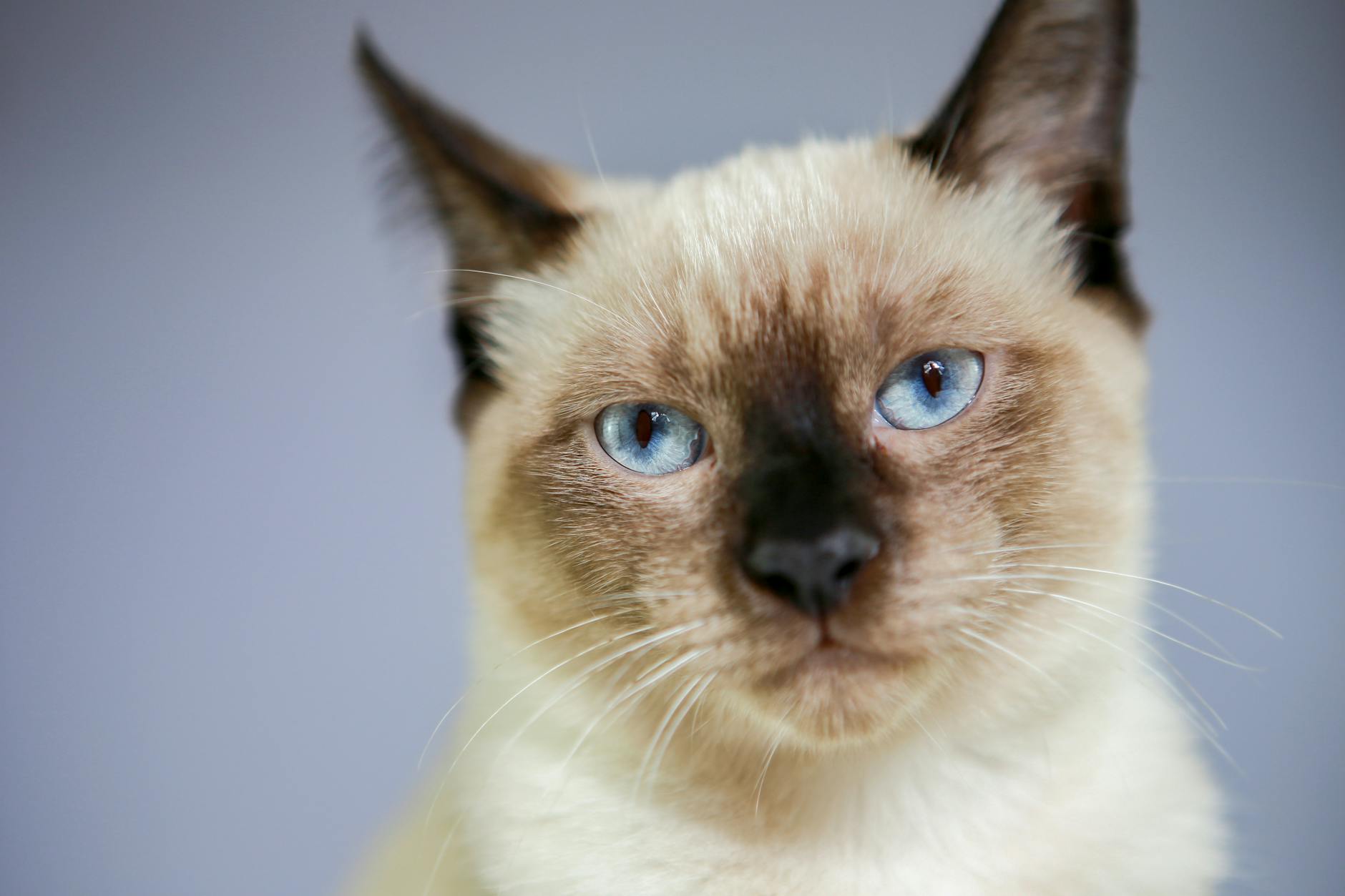
Several cat breeds feature the striking combination of dark ears and blue eyes, but the most iconic is the Siamese cat, which displays this characteristic due to a fascinating genetic mutation. The darkening on a cat’s ears, face, paws, and tail occurs because of a heat-sensitive form of partial albinism called acromelanism—a genetic quirk where a mutated tyrosinase enzyme only functions in the cooler areas of the body, leaving these extremities darker while the warmer core stays pale. This distinctive “pointed” pattern creates one of the most recognizable feline appearances in the world. Beyond Siamese cats, several other breeds display this same enchanting color combination.
Snowshoe cats, Ragdolls, Balinese cats, Neva Masquerades, and Ojos Azules all showcase blue eyes paired with darker ear coloring, though each breed brings its own unique characteristics and history. For potential cat owners drawn to this appearance, understanding which breeds match this description helps narrow down the perfect companion. The blue eyes themselves are equally remarkable. In most pointed breeds, the blue coloration results from reduced pigment production in the eye—the same genetic pathway that creates the pointed pattern throughout the body. Not all blue-eyed cats have dark points, but this combination has become a hallmark of specific breeding lines that value this striking aesthetic alongside desirable temperament traits.
Table of Contents
- Which Cat Breeds Have Dark Ears and Blue Eyes?
- Understanding the Genetics Behind Dark Ears and Blue Eyes
- Popular Pointed Breeds Beyond Siamese and Ragdoll
- Personality and Temperament Considerations
- Health Considerations and Potential Concerns
- Coat Care and Grooming Requirements
- Adopting vs. Breeding: Finding Your Dark-Eared, Blue-Eyed Companion
- Conclusion
Which Cat Breeds Have Dark Ears and Blue Eyes?
The Siamese cat is the quintessential breed associated with dark ears and blue eyes. Originating from Thailand (formerly Siam), these cats are famous for their vocal personalities, sleek bodies, and intensely blue almond-shaped eyes that gaze with an almost mystical quality. Every purebred Siamese cat carries the gene for blue eyes and pointed coloration—it’s not optional or rare in this breed, but rather a breed standard. Their dark points develop as they age, often being nearly invisible at birth before darkening over the first weeks and months of life. The Snowshoe cat, developed in the 1960s in the United States, combines Siamese genetics with white spotting patterns. These rare but striking cats feature the same pointed coloration as their Siamese ancestors but with distinctive white markings on their feet—hence the “snowshoe” name.
Their blue eyes can range from deep sapphire to pale sky blue, and like Siamese cats, their point coloration intensifies with age. If you prefer a Siamese with white paws and a more substantial build, Snowshoes offer an elegant alternative. Ragdoll cats, one of the most popular blue-eyed breeds today, are significantly larger and heavier than Siamese cats. They feature semi-long, plush coats and come in various point colors including seal, chocolate, blue, and lilac. Ragdolls are known for their relaxed, dog-like personalities and their tendency to go limp when picked up—a behavior that inspired their name. Their blue eyes are typically a deeper, more consistent blue than some other pointed breeds, and their darker points are distributed across their face mask, ears, legs, and tail.
Understanding the Genetics Behind Dark Ears and Blue Eyes
The heat-sensitive genetic mutation affecting tyrosinase—an enzyme responsible for melanin production—explains why pointed cats display their distinctive coloring pattern. During fetal development, this enzyme is inactive in warmer areas of the developing kitten’s body, but it becomes active in cooler extremities like the ears, nose, paws, and tail. This means kittens of pointed breeds are often born nearly white or cream-colored, with coloring gradually developing over weeks and months as their body temperature regulation establishes itself. This developmental process makes observing a pointed kitten’s color transformation one of the remarkable experiences of cat ownership. This same genetic pathway that creates point coloration also influences eye pigmentation, which is why blue eyes are almost universally associated with pointed breeds. The reduced melanin production doesn’t just affect the body’s extremities—it affects the iris as well.
However, it’s important to note that not all blue-eyed cats carry the pointing gene, and not all pointed cats have completely blue eyes in every light condition. Some may develop slight color variations as they age, or their eye color might appear slightly different depending on lighting. The most significant limitation of this genetic trait involves potential health concerns. Some research has linked the genes responsible for both blue eyes and deafness, particularly in white cats. However, in pointed breeds where the pointing gene is more dominant than the white spotting gene, deafness is far less common than in entirely white blue-eyed cats. When considering a pointed breed, responsible breeders screen for hearing and other genetic issues, but this remains an important conversation to have with any breeder before bringing home your kitten.
Popular Pointed Breeds Beyond Siamese and Ragdoll
Balinese cats are essentially long-haired Siamese, featuring the same striking blue eyes, pointed coloration, and vocal temperament in a more luxurious coat package. Originating in Bali according to breed mythology, these cats carry all the personality traits of Siamese cats—including their tendency to be demanding, talkative, and deeply attached to their human companions. Their semi-long coat requires regular grooming, making them more maintenance-intensive than their short-haired Siamese cousins, but many owners find the enhanced beauty worth the extra effort. The Neva Masquerade is a Russian breed that emerged in the 1980s, named after the Neva River in Saint Petersburg. These cats are distinguished by their darker facial “mask” marking that gives them an appearance similar to a Venetian masquerade mask.
Unlike most pointed breeds that came from tropical origins, the Neva Masquerade was developed in cold climates, and they feature a dense, water-resistant coat adapted to colder temperatures. Their blue eyes and masked facial pattern create a distinctive, almost theatrical appearance that sets them apart from other pointed breeds. The Ojos Azules breed represents an interesting exception to the pointing pattern rule. Rather than developing their blue eyes exclusively through point coloration genetics, Ojos Azules cats can be born with naturally blue eyes regardless of coat color or pattern. This means you can find Ojos Azules cats with solid dark coats and blue eyes, breaking away from the traditional pointed breed model. However, Ojos Azules remains relatively rare and less recognized than other blue-eyed breeds, making them less commonly encountered in typical cat ownership circles.

Personality and Temperament Considerations
The genetics behind pointed coat colors often correlate with specific personality traits, particularly in Siamese and Siamese-descended breeds. These cats tend to be exceptionally vocal, social, and demanding of human attention—some describe Siamese cats as “Velcro cats” because they follow their owners from room to room and expect to be involved in every activity. If you’re drawn to the appearance of dark ears and blue eyes in a Siamese or Balinese cat, be prepared for a highly communicative, people-oriented companion who will express their opinions frequently and loudly. Ragdolls, by contrast, are generally calmer and more laid-back than their Siamese cousins, though they still crave human interaction and companionship. They adapt well to indoor living and are often content to spend time quietly nearby without constant vocalization.
Snowshoes fall somewhere in the middle temperamentally—they inherit Siamese sociability but often with somewhat less intensity. If you want the striking aesthetic of dark ears and blue eyes but prefer a quieter, less demanding cat, a Ragdoll or Snowshoe would be a more suitable match than a purebred Siamese. This temperament consideration represents a crucial decision point that many first-time buyers overlook. Choosing a breed based solely on appearance without considering personality mismatches is one of the primary reasons pointed breed cats end up in shelters. The stunning blue eyes and dark pointed markings are undeniably beautiful, but if they come attached to a highly vocal cat and you’re someone who prefers a quiet household, frustration can build quickly on both sides of the human-feline relationship.
Health Considerations and Potential Concerns
Pointed breeds, particularly purebred Siamese and related breeds, can be prone to certain genetic health issues that potential owners should discuss with breeders. Progressive retinal atrophy, a degenerative eye disease that eventually leads to blindness, has been documented in some Siamese lines. Similarly, some pointed breeds show higher incidence rates of hypertrophic cardiomyopathy (HCM), a heart condition. Responsible breeders perform genetic testing and screening on their breeding cats, so always ask about health certifications and guarantees before purchasing or adopting a pointed breed kitten. The association between blue eyes and deafness applies primarily to white-coated cats, but some concern exists within pointed breed communities. In cats with predominantly white coats and blue eyes, the risk of deafness increases significantly.
However, in truly pointed breeds where the pointing pattern is the dominant color characteristic, deafness is considerably rarer. Still, many breeders of Siamese and related breeds perform hearing tests on kittens before they go to their new homes, ensuring that any hearing loss is identified early. Another consideration involves the breed’s tendency toward strabismus—a condition where the eyes cross slightly. Historical Siamese cats often displayed this trait, and while modern breeding has largely eliminated it as a prominent feature, some individuals may still show mild eye crossing. This is primarily a cosmetic concern rather than a health threat, but it’s worth being aware of when examining a kitten. The crossed eye appearance that once defined the Siamese look has been largely bred out in favor of the straighter-eyed standard preferred by most contemporary breeders.
Coat Care and Grooming Requirements
Short-haired pointed breeds like Siamese and Snowshoe cats require minimal grooming compared to their long-haired counterparts. Weekly brushing helps reduce shedding and maintains coat health, but these breeds don’t demand the daily grooming commitment that long-haired cats require. Their short, sleek coats are one advantage of choosing a Siamese or Snowshoe over a Balinese, Ragdoll, or other semi-long-haired pointed varieties.
Long-haired and semi-long-haired pointed breeds demand significantly more grooming attention. Balinese, Ragdoll, and Neva Masquerade cats require brushing several times per week to prevent matting and maintain coat quality. Prospective owners should factor this grooming commitment into their decision, as it represents a daily or near-daily responsibility that will span the cat’s entire lifespan. Many first-time owners underestimate this requirement and find themselves struggling with mats and knots within the first few months of ownership.
Adopting vs. Breeding: Finding Your Dark-Eared, Blue-Eyed Companion
While purebred pointed cats from breeders are the most common source for animals with guaranteed dark ears and blue eyes, rescue organizations and shelters occasionally have pointed breed cats or pointed-pattern domestic shorthairs available for adoption. These cats often come from situations where owners didn’t understand the breed’s demanding nature or where life circumstances changed. Adopting a rescue pointed cat offers the satisfaction of providing a home to an animal in need while still getting the striking appearance you admire.
If you decide to work with a breeder, thorough research is essential. Reputable breeders will provide health clearances, allow you to visit their facilities, answer detailed questions about genetics and temperament, and maintain relationships with their kitten buyers long after purchase. They should be transparent about any hereditary conditions in their lines and willing to take cats back if circumstances change. The initial investment in a responsibly-bred kitten is typically recouped through reduced veterinary bills and behavioral issues compared to purchasing from sources that prioritize profit over health and welfare.
Conclusion
The striking combination of dark ears and blue eyes appears in several cat breeds, with Siamese cats being the most iconic and recognizable. This distinctive appearance results from a fascinating genetic mutation affecting melanin production in cooler areas of the body—a heat-sensitive form of partial albinism that creates the characteristic pointed pattern.
Whether you’re attracted to the sleek elegance of a short-haired Siamese, the larger build of a Ragdoll, the theatrical appearance of a Neva Masquerade, or another pointed breed variation, understanding the genetics, personality traits, and care requirements behind this striking look ensures a successful long-term match. Before committing to a dark-eared, blue-eyed cat, honestly assess your lifestyle and preferences. Do you enjoy vocal, attention-demanding companions, or would you prefer a quieter pet? Can you commit to regular grooming if you choose a long-haired breed? Are you prepared for potential genetic health issues and willing to work with responsible breeders or rescue organizations? Answering these questions helps ensure that the beautiful blue eyes and dark points you admire will belong to a cat whose personality and needs align with your home and heart.