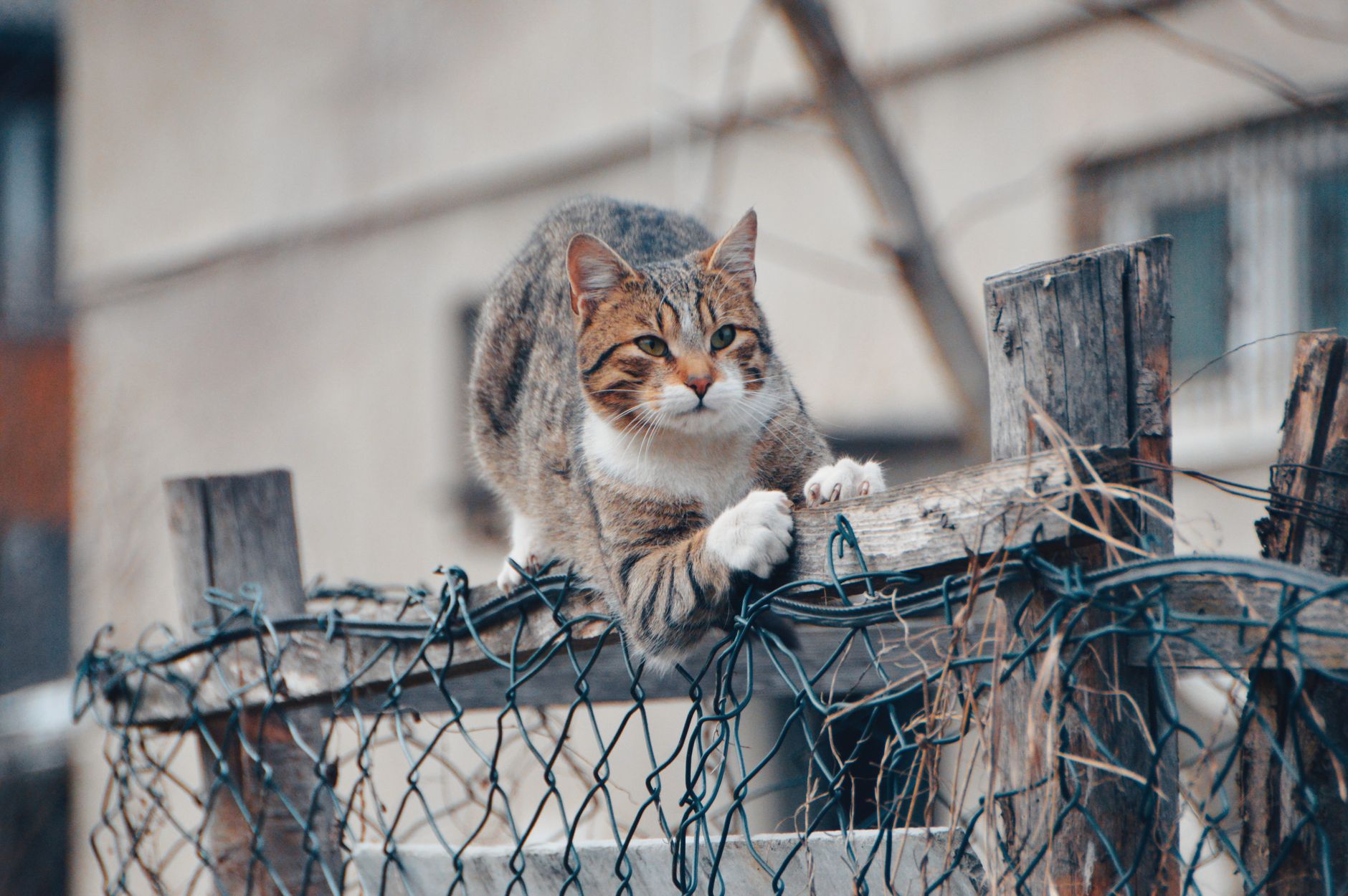
Cats climb to gain a high vantage point for surveying territory, spotting prey, and avoiding predators. Give them height with sturdy cat trees, wall shelves, window perches, and climbable furniture.
Indoor cats keep this ancestral survival instinct. Cat behavior consultant Mikel Delgado ties the drive to surveying territory and staying safe from predators the evolutionary reason behind cats' love of heights. The AAFP and ISFM guidelines list elevated resting and observation places as a core pillar of a healthy feline home.
Table of Contents
- Why high places calm cats
- How cats go up and get down
- What height equipment works best
- Where to place perches and exits
- What if an older cat stops climbing
Why high places calm cats
Cat behavior specialist Pam Johnson-Bennett says elevated perches expand territory in multi-cat homes. Higher-status cats can show indifference from above instead of guarding floor space. Timid cats can watch without risk of ambush.
Add height near contested spots like living-room doorways and feeding areas. A cat that naps on a shelf leaves the sofa and cat bed open. Fewer choke points means fewer chases and staredowns.
How cats go up and get down
Cats ascend with powerful hind-leg muscles, flexible joints, and sharp retractable claws. Washington State University anatomy instructor Steve Lampa describes the claws as grappling hooks for going up how cats climb with help from an anatomy expert. Coming down is harder because the claws cannot grip in that direction.
Falling cats use the righting reflex, the midair twist that turns the body feet-first for landing. They coordinate head, flexible spine, long tail, and limbs to orient toward the ground, as described by Washington State University's Ask Dr. Universe how cats climb and right themselves in a fall.
What height equipment works best
Cornell University College of Veterinary Medicine recommends sturdy posts that do not topple and stand at least as tall as the cat stretched on hind legs feline behavior guidance on destructive behavior. Stability matters more than height.
Place one vertical scratch post where the cat already scratches. It should let the cat stretch fully on hind legs during use.
- Choose a sturdy cat tree that cannot topple.
- Mount wall shelves as an alternate high path.
- Add a window perch for resting and watching.
- Keep climbable furniture clear for safe takeoff and landing.
Where to place perches and exits
Wayside Waifs shelter veterinary guidance recommends at least two safe routes down from every vertical space. Every hiding place needs two exits so no cat feels trapped.
Walk each room at cat-eye level to spot usable territory. Spread perches and hiding places room by room instead of stacking them in one tower. Cats use height more when they can move across rooms without crossing a rival.
What if an older cat stops climbing
Veterinary housing guidance notes older cats may still want heights but avoid jumps. Sore joints, vision changes, or balance problems make climbing painful or risky.
Provide ramps, low steps, and lower perches instead of forcing jumps. Schedule veterinary checks for pain, vision, and balance when use drops suddenly.