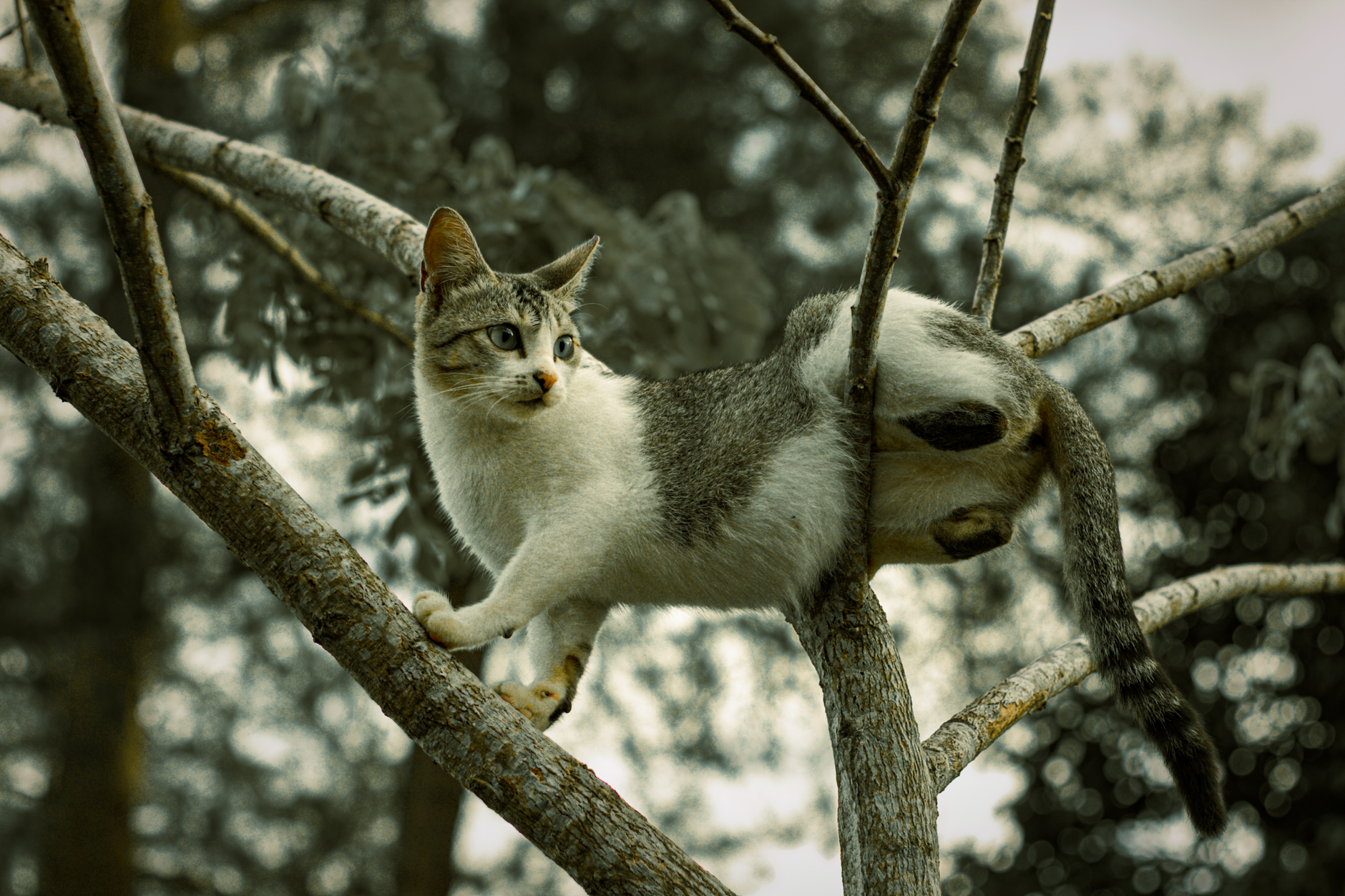
Cat climbing means seeking and using high places to rest, watch, and hunt. It affects indoor cats and multi-cat homes most, and evidence supports adding safe vertical space indoors while blocking window and balcony falls. The pattern is practical, not misbehavior. High spots improve prey spotting, reduce danger from larger threats, and give cats choices for play, retreat, and observation.
Table of Contents
- Why cats seek height
- How cats climb so well
- Which cats need vertical space most
- How to offer safe climbs and prevent falls
Why cats seek height
Cats climb to reach safe spots, scan surroundings, hunt, and play. Cornell University lecturer Brian Collins explains that high places help cats spot prey while reducing their own risk from larger predators.
That motive explains curtains, shelves, and refrigerator tops. The cat is not being stubborn. It is looking for a secure vantage point.
How cats climb so well
Cats ascend with powerful hind-leg muscles, flexible joints, and retractable claws that work like grappling hooks. Washington State University anatomy experts describe how domestic cats use sharper claws than wild relatives for silent solo hunting.
Strength supplies the upward push. Flexible joints adjust balance on narrow or uneven surfaces. Sharp, retractable claws grip bark, fabric, and sisal.
Which cats need vertical space most
Indoor cats and multi-cat households gain the most from climbing space. Cat Behavior Associates explains that vertical territory expands usable space, lets a higher-status cat show indifference from a top perch, and lets a timid cat retreat.
That separation often prevents fights. Shelter research in Animals found communally housed cats spent more time in refuges raised 0.5 m than at ground level. Reviewers concluded hiding spots plus vertical structures reduce confinement stress.
How to offer safe climbs and prevent falls
Give indoor cats a carpet-, fabric-, or sisal-covered tree with climbing perches, plus posts and chase-and-catch toys. Cornell Feline Health Center recommends this setup in its guidance on redirecting destructive climbing behavior to support urinary and behavioral health.
Height also brings fall danger from windows and balconies. A 2025 review in the Journal of Feline Medicine and Surgery reported orofacial injuries in about half of 1,125 high-rise-syndrome cats, with many survivors needing intensive care. Colonial Veterinary Hospital advises owners to follow its high-rise syndrome prevention advice to reduce that risk:.
- Keep window screens tightly secured and close gaps around air conditioners.
- Block balcony access or add netting or a catio.
- Put perches away from startling appliances.
- Offer more than one safe high resting spot in multi-cat homes.