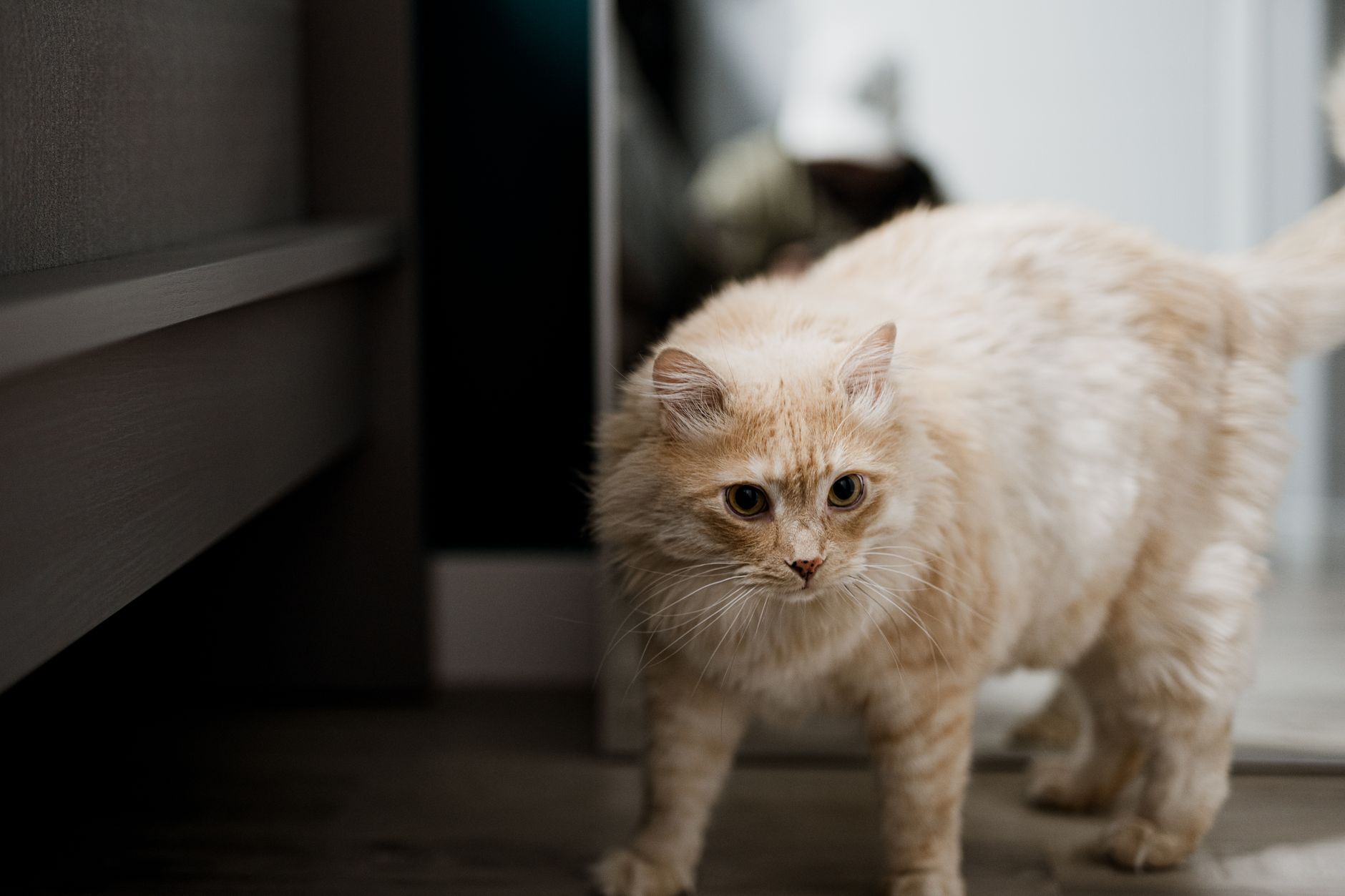
Indoor cats still hunt and pounce because hunting is instinct, not hunger. Even with full food bowls, they run a fixed predatory sequence of stalking, chasing, pouncing, and biting on toys, bugs, ankles, and household objects. Ohio State University researchers describe this sequence as hard-wired, so indoor life redirects it rather than removing it, according to the environmental enrichment review. That redirection explains why a hallway slipper can become prey.
Table of Contents
- Hunger is not the trigger
- Why indoor-only cats chase toys faster
- What kittens practice when they ambush
- How to give the sequence a safe outlet
Hunger is not the trigger
Stable-isotope analysis of whiskers from pet cats that regularly caught wildlife showed almost all nutrition came from owner-provided food. The University of Exeter reported the result as evidence that instinct drives hunting, in the whisker analysis report.
The Missouri Department of Conservation makes the same point for owners: well-fed cats still kill from instinct. The affected parties are indoor cats, owners managing behavior, and prey species.
Why indoor-only cats chase toys faster
Researchers in the Department of Ethology at Eotvos Lorand University tested cats with prey-like balls. Indoor-only cats approached and contacted the balls faster and more often than cats with outdoor access.
Lack of real hunting experience did not remove interest in predatory play. Ball tests measure interest in objects, not real outdoor kill success, so they do not prove indoor pouncing prevents wildlife harm.
What kittens practice when they ambush
Kittens use stalking, chasing, pouncing, biting, and scratching during play for muscle conditioning and neurologic development. Cornell University College of Veterinary Medicine distinguishes this hunting-type play from social play.
Social play teaches bite inhibition and how to interact with littermates. Hunting-type play builds the strength, timing, and coordination used later in the adult predatory sequence.
How to give the sequence a safe outlet
Veterinary guidelines from AAFP and ISFM state that predatory behavior occurs even in well-fed cats. They call for regular opportunity for pseudo-predatory play and feeding behaviors to protect welfare and reduce stress-related illness, in the feline environmental needs guidelines.
A 12-week trial in 219 households tested two practical changes. The University of Exeter found 5-10 minutes daily of feather-wand stalk-chase-pounce play plus a toy mouse after each hunt cut wildlife killing by 25%, while high-meat food cut it by 36%, according to the play and diet trial report. Use that hunt-like pattern at home: End each session with a catch, not a wand that vanishes under the couch.
- move a feather wand like hiding prey for stalking and chasing
- let the cat pounce and catch it often
- place a small toy mouse out right after each session