
Your cat likely doesn’t hate you at all””what appears to be vicious hatred is almost always fear, overstimulation, pain, or a response to environmental stress that your cat cannot communicate in any other way. Cats lack the cognitive framework for spite or vengeance; when they hiss, scratch, bite, or flee from you, they’re responding to perceived threats or discomfort using the only tools available to them. A cat that suddenly attacks your ankles, refuses to let you pet her, or growls when you enter the room is telling you something specific about her experience, not expressing personal animosity toward you as a human being. Consider a common scenario: an owner adopts a friendly shelter cat who becomes increasingly aggressive over several weeks.
The cat hides under furniture, swipes when approached, and seems to despise everyone in the household. Investigation reveals that the family’s new puppy has been cornering the cat when no one is watching, the litter box was moved to a high-traffic area, and the owner has switched to a heavily scented hand lotion that overwhelms the cat’s sensitive nose. None of these issues involve hatred””they involve a stressed animal whose needs aren’t being met. This article will examine the real reasons behind seemingly hostile feline behavior, including fear responses, medical causes, territorial stress, and past trauma. You’ll learn how to read your cat’s body language accurately, identify environmental triggers, and implement proven strategies for rebuilding a positive relationship with your cat.
Table of Contents
- Why Does My Cat Act Like She Hates Me? Decoding Aggressive Behavior
- Medical Causes Behind Sudden Feline Aggression
- How Past Trauma Shapes Your Cat’s Response to You
- Environmental Stressors That Make Cats Aggressive
- Common Mistakes That Escalate Feline Aggression
- Reading Feline Body Language to Prevent Attacks
- Rebuilding Your Relationship With Your Cat
- Conclusion
Why Does My Cat Act Like She Hates Me? Decoding Aggressive Behavior
Aggression in cats serves specific biological purposes, and understanding these purposes is the first step toward addressing the behavior. Cats evolved as both predators and prey, which means they have highly developed defensive responses. When a cat perceives a threat””whether real or imagined””she may respond with what behaviorists call defensive aggression, redirected aggression, or fear-based aggression. Each type looks similar to the untrained eye but has different triggers and requires different interventions. Defensive aggression occurs when a cat feels cornered or unable to escape. A cat trapped in a small bathroom for a veterinary examination, for instance, may bite and scratch viciously””not because she hates the owner holding her, but because her survival instincts have activated.
Redirected aggression happens when a cat becomes aroused by one stimulus (like a stray cat outside the window) but attacks whatever is nearest, often an unsuspecting owner. This explains why a cat might suddenly attack your legs after staring out the window for twenty minutes. Fear-based aggression typically develops in cats with limited early socialization or traumatic experiences, and it may appear unprovoked because the triggers aren’t obvious to humans. The critical distinction here is that cats don’t have the emotional complexity required for hatred. Research on feline cognition shows that cats form attachments, experience fear and contentment, and can certainly develop negative associations with specific people or situations. However, the calculating malice that “hatred” implies simply isn’t part of feline psychology. When your cat seems to hate you, she’s communicating distress through the only means available to her.

Medical Causes Behind Sudden Feline Aggression
A cat that becomes suddenly aggressive after years of friendly behavior should be examined by a veterinarian before any behavioral intervention begins. Pain is one of the most common and overlooked causes of feline aggression. Cats are evolutionarily programmed to hide pain””showing weakness in the wild makes an animal vulnerable to predators””so owners often miss the signs until the cat lashes out when touched. Conditions that commonly cause pain-induced aggression include dental disease (affecting up to 70% of cats over age three), arthritis (particularly in older cats), urinary tract infections, ear infections, and abdominal issues like inflammatory bowel disease. A cat with a painful mouth may bite when you stroke her head because the vibration from purring hurts her teeth.
A cat with arthritic hips may attack when you pick her up because the movement causes shooting pain. Hyperthyroidism, common in older cats, can cause irritability and aggressive outbursts as a direct symptom of hormonal imbalance. However, if your veterinarian gives your cat a clean bill of health, don’t assume the aggression must be behavioral. Some medical conditions require specific testing to diagnose, and cats are masters at hiding discomfort. Ask about a complete senior panel if your cat is over seven, and consider requesting a referral to a veterinary behaviorist who can evaluate both medical and behavioral factors simultaneously. A diagnosis of “healthy” simply means nothing obvious appeared on routine examination””it doesn’t guarantee the absence of subtle pain.
How Past Trauma Shapes Your Cat’s Response to You
Cats have excellent associative memory, which means they connect experiences with specific stimuli and retain those connections for years. A cat who was abused by a man with a deep voice may remain terrified of all men with deep voices for her entire life. A cat who was grabbed roughly by her previous owner may attack any hand that approaches her from above, even a gentle one. This isn’t hatred””it’s a survival mechanism that helped keep her alive in a dangerous situation and now misfires in a safe one. Rescue cats and cats with unknown histories present particular challenges because their triggers may be invisible to new owners.
A cat might panic at the smell of a particular cleaning product, the sound of keys jingling, or the sight of a cardboard carrier””all neutral stimuli to her current owner but tied to traumatic experiences in her past. One cat behaviorist documented a case where a newly adopted cat attacked her owner every Tuesday evening; it took weeks to realize that Tuesdays were when the garbage truck came, and the rumbling engine sound was nearly identical to that of the car her previous owner drove when taking her to be abandoned at the shelter. Working with a traumatized cat requires patience measured in months or years, not days. Counter-conditioning””gradually changing the cat’s emotional response to a trigger by pairing it with positive experiences””can be effective but must progress at the cat’s pace. Forcing interactions or exposure tends to worsen the fear response and can permanently damage the cat’s ability to trust.

Environmental Stressors That Make Cats Aggressive
Cats are profoundly affected by their environment in ways that often surprise their owners. The layout of your home, the placement of resources, the presence of other animals, and even changes in household routine can transform a relaxed cat into an aggressive one. Understanding territorial stress is essential because cats don’t share space the way humans do””they have complex spatial needs that, when unmet, create chronic anxiety. The single most common environmental cause of feline aggression is inter-cat conflict in multi-cat households. Even cats who appear to coexist peacefully may have a relationship defined by subtle intimidation and resource guarding. The victim of this bullying often becomes aggressive toward humans because she’s in a constant state of stress.
Solutions include providing multiple feeding stations, litter boxes (one per cat plus one), water sources, and vertical spaces so cats can move through the home without confronting each other. However, if the conflict is severe, separating cats and conducting a gradual reintroduction””or accepting that the cats may need separate living spaces””might be necessary. Compared to dogs, cats are far more sensitive to changes in their environment. A new piece of furniture, a different brand of litter, houseguests, construction noise, or even a change in your work schedule can trigger stress-based aggression. The tradeoff here involves balancing your household’s needs with your cat’s need for stability. You can’t avoid all change, but you can introduce changes gradually, maintain core routines around feeding and play, and provide safe hiding spots where your cat can retreat when overwhelmed.
Common Mistakes That Escalate Feline Aggression
Well-meaning owners frequently worsen their cat’s aggressive behavior through responses that seem logical to humans but are counterproductive for cats. Understanding what not to do is just as important as knowing the right approach, because certain common reactions can permanently damage your relationship with your cat. Punishment tops the list of mistakes. Yelling at, spraying with water, or physically correcting an aggressive cat does not teach her to be less aggressive””it teaches her that you are unpredictable and dangerous, confirming her fear. A cat who attacks and then gets punished learns only that the punishment follows the attack, not that the attack was wrong. More critically, punishment intensifies the fear or frustration that caused the aggression in the first place, creating a feedback loop that escalates over time.
Studies on feline behavior consistently show that punishment-based training is less effective than positive reinforcement and more likely to cause behavioral problems. Another common mistake is forcing interaction. Picking up a cat who doesn’t want to be held, cornering a cat to “show her you’re not a threat,” or pursuing a cat who has retreated teaches her that you do not respect her boundaries. This is particularly damaging for fearful cats, who need to learn that they can control their interactions with humans. Similarly, staring directly at your cat (a threat in cat body language), approaching her head-on, or looming over her from above can all trigger defensive responses. Let your cat approach you, blink slowly when making eye contact, and get down to her level rather than towering over her.
Reading Feline Body Language to Prevent Attacks
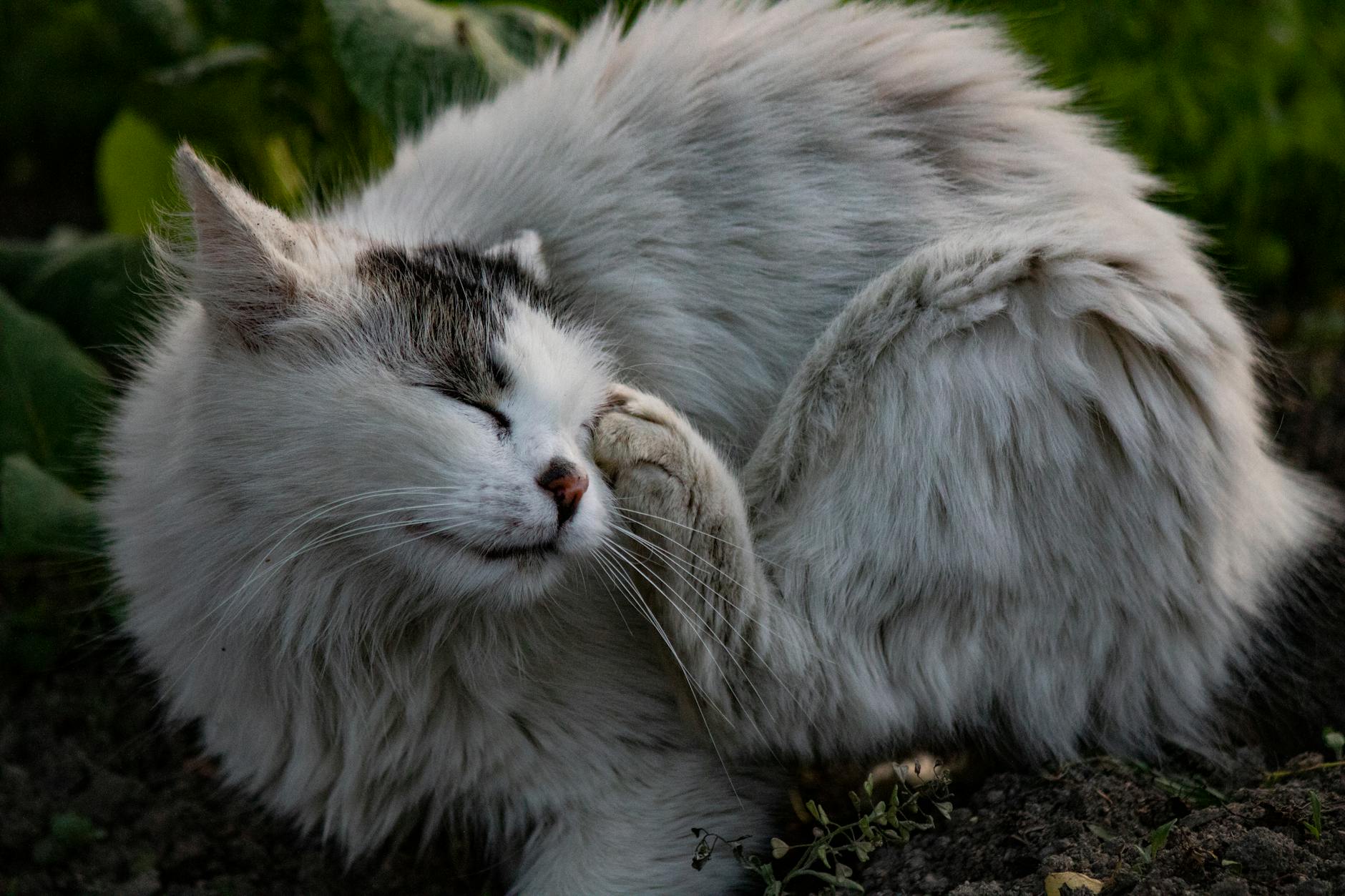
Most cat attacks come with warning signs that owners miss or misinterpret. Learning to read your cat’s body language can prevent many aggressive incidents and will help you identify which specific situations trigger your cat’s stress response. The key warning signs occur in the ears, tail, eyes, and overall body posture. Ears that rotate backward or flatten against the head signal fear or irritation. A tail that lashes from side to side (not the gentle swaying of a relaxed cat) indicates arousal that can tip into aggression.
Dilated pupils in bright light suggest excitement or fear, while constricted pupils combined with a hard stare may precede an attack. A cat who crouches with her body tense, weight shifted to her back legs, is preparing to flee or fight. Piloerection””fur standing on end along the spine and tail””means the cat is in a highly aroused state. For example, if you’re petting your cat and notice her tail beginning to twitch while her ears rotate back, stop petting immediately. Many cats have a “petting threshold” and will bite when overstimulated, even if they initially solicited the attention.
Rebuilding Your Relationship With Your Cat
Repairing trust with an aggressive cat requires a strategic approach that prioritizes the cat’s sense of safety and control. The goal is to create positive associations with your presence and interactions while respecting your cat’s boundaries absolutely. Begin by meeting your cat’s basic needs without requiring anything in return. Provide food, fresh water, clean litter, and a calm environment without attempting to pet, pick up, or interact beyond what she initiates. Sit quietly in the same room and let her observe that you are not a threat. This period might last days or weeks depending on the severity of her fear.
Gradually, begin associating yourself with high-value treats””tossing them toward her (not requiring her to approach) when you enter the room. Over time, she may begin approaching you for treats, at which point you can work toward touch, always letting her set the pace. Interactive play is one of the most effective relationship-building tools because it satisfies your cat’s predatory instincts while creating positive associations with your presence. Wand toys allow you to play without entering your cat’s personal space directly. Multiple short sessions throughout the day are more effective than one long session, and ending play while your cat is still engaged (rather than waiting until she loses interest) keeps the experience positive. The timeline for rebuilding trust varies enormously””some cats respond within weeks, while cats with severe trauma may take a year or more to become comfortable with normal handling.
Conclusion
When your cat appears to hate you viciously, she’s almost certainly communicating fear, pain, stress, or past trauma rather than actual animosity. Cats lack the emotional complexity for hatred, but they have powerful survival instincts that can make them seem hostile when their needs aren’t being met or when they perceive threats in their environment. By ruling out medical causes, identifying environmental stressors, avoiding punishment, and learning to read feline body language, you can address the root causes of aggressive behavior rather than just the symptoms.
Rebuilding a positive relationship with an aggressive cat takes time, patience, and a willingness to let the cat control the pace of progress. Focus on creating safety and positive associations through careful environmental management, respect for boundaries, interactive play, and consistent routines. If aggression persists despite your efforts, consult a veterinary behaviorist who can evaluate both medical and behavioral factors. Most cats can become comfortable and even affectionate companions when their humans understand what they’re actually trying to communicate.