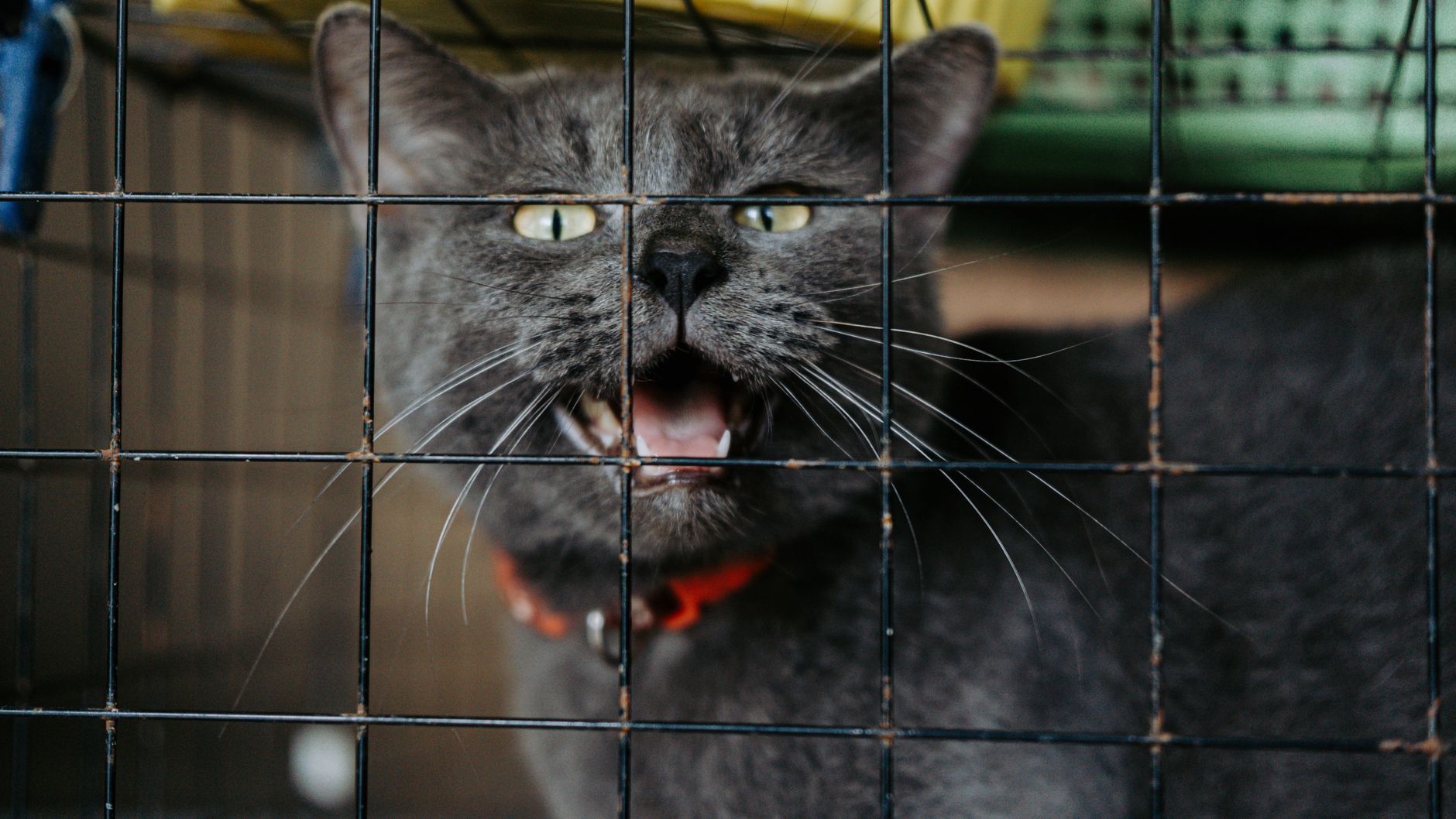
Most night meowing has one of three explanations: a medical problem, age-related cognitive decline, or a cat whose natural activity peaks simply do not match your sleep schedule. In a cat under about eight, the schedule explanation is the most likely one. In a middle-aged or older cat that has *started* yowling at night recently, the first stop is a vet visit, because thyroid disease, pain, kidney disease and high blood pressure all raise vocalization. The distinction that matters is new versus lifelong.
A cat that has always woken you at 5 a.m. is behaving like a cat. A cat that was quiet for ten years and now paces and howls at 3 a.m. has changed, and a change in an older cat is a clinical sign until proven otherwise.
Table of Contents
- The healthy-cat explanation: crepuscular timing
- Why hyperthyroidism is screened first
- The rest of the medical list
- Cognitive dysfunction in the oldest cats
- What to do this week
- Frequently Asked Questions
The healthy-cat explanation: crepuscular timing
Domestic cats are crepuscular, meaning their activity peaks at dawn and dusk rather than being spread through the day. Hill's Pet Nutrition describes this pattern and notes that cats sleep in multiple short bouts instead of one long consolidated night. So a cat who is loud at 4:30 a.m. is often running on schedule — yours is the one that is out of step. This version of the problem responds to changing when things happen, not to discipline.
Shift the main play session and the largest meal to late evening so the hunt-eat-groom-sleep sequence lands near your bedtime. A timed feeder that dispenses at 5 a.m. also removes you as the thing worth yelling at. What this explanation cannot account for is a sudden onset, escalating volume, or yowling that continues after the cat has been fed and played with. Those point somewhere else.
Why hyperthyroidism is screened first
Hyperthyroidism is overproduction of thyroid hormone, which pushes the whole metabolism into overdrive. The Merck Veterinary Manual lists excessive vocalization and hyperactivity among the most common clinical signs, with weight loss also common in cats. The combination owners notice most often is a cat eating enthusiastically while visibly thinning. Age is why vets reach for a thyroid panel early. IDEXX Laboratories calls feline thyroid disease the most common endocrine disorder in cats and puts the average age at diagnosis at roughly 12 to 13 years.
Cornell's Hospital for Animals lists vocalizing alongside weight loss, poor coat, rapid heart rate, voracious appetite or thirst, anxiety and gastrointestinal upset — though Cornell's Feline Health Center page ranks weight loss, increased appetite and increased thirst as the most common signs and does not list vocalization at all. Read that honestly: yowling is a real but secondary sign, not the headline one. A normal thyroid result does not close the case. A two-year screening study of 259 apparently healthy mature and senior cats, published in the Journal of Veterinary Internal Medicine, found hyperthyroidism in 4.6% at baseline, with other national estimates near 6% in cats over nine or ten. Common in older cats, but still a minority of them.
The rest of the medical list
Thyroid disease is one item on a short list. The MSPCA-Angell advises blood work, urinalysis and thyroid testing for an excessively meowing cat, because pain, hyperthyroidism, kidney disease and hypertension all increase vocalization. That is a single visit's worth of testing covering four plausible causes at once. Two causes get missed because they are quiet on their own.
Hypertension is a common finding in hyperthyroid cats and may produce no clinical signs at all, which is why veterinary reviewers recommend measuring blood pressure in every hyperthyroid cat. Chronic kidney disease frequently coexists in geriatric cats — over 80% show evidence of it by age 15 — so a thyroid diagnosis does not mean the kidneys have been cleared. Sensory and orthopedic causes change *how* a cat sounds, not just how often. A dvm360 veterinary behaviourist column identifies reduced hearing acuity, osteoarthritis and hyperthyroidism as medical reasons a vocalization pattern shifts, and explains that deaf or hard-of-hearing cats call loudly because they cannot gauge their own volume. If your cat has gone from meowing to bellowing, hearing loss belongs on the list.
Cognitive dysfunction in the oldest cats
Feline cognitive dysfunction syndrome is age-related decline in the brain, the rough feline counterpart of dementia. A questionnaire study of 154 cats aged 11 to 21 by Moffat and Landsberg found that 28% of cats aged 11 to 14, and 50% of those over 15, had at least one geriatric-onset behaviour problem, with altered vocalization among them. In a very old cat, this is the leading behavioural explanation for night calling. It is also a diagnosis of exclusion.
There is no definitive test in a living cat, so medical causes have to be ruled out before night vocalizing is attributed to cognitive decline. Night-time pacing and disorientation commonly travel with it — a cat standing in a doorway howling at nothing, or forgetting where the litter box is. Management is environmental rather than curative: night lights along routes the cat uses, litter boxes on every floor, predictable feeding times, and no furniture rearrangement. Ask your vet about dietary and pharmacological options, which exist but depend on the individual cat.
What to do this week
Work the list in order of what is both cheapest and most consequential. One warning on the home-management route: ignoring the meowing is standard advice for attention-seeking, and it is the wrong response to a cat in pain or a hyperthyroid cat burning through its reserves. Rule out the medical causes before you start outlasting your cat.
- Note the pattern for three nights: what time it starts, how long it lasts, whether food or attention stops it, and whether the cat paces.
- Weigh the cat on a kitchen or baby scale. Weight loss alongside a good appetite is the signal that moves a vet visit from "soon" to "now."
- Book an exam with blood work, urinalysis, thyroid testing and a blood pressure reading if the cat is over about eight, or if the behaviour is new at any age.
- Mention volume and clarity specifically, plus any hesitation on stairs or jumps — these point at hearing loss and arthritis, which routine blood work will not catch.
- Only after testing comes back clean should you treat it as a scheduling problem and move play and the big meal to late evening.
Frequently Asked Questions
My cat is three and has always woken me before dawn. Is that a medical problem?
Unlikely. Lifelong early-morning activity in a young cat fits the crepuscular pattern; shift play and the main meal to late evening and consider a timed pre-dawn feeder.
Is loud meowing on its own enough to suspect hyperthyroidism?
No. Vocalization is a recognized sign but not a leading one — Cornell's Feline Health Center ranks weight loss, increased appetite and increased thirst or urination above it, and doesn't list vocalization among the most common signs.
The thyroid test was normal. What next?
Ask about kidney values, urinalysis, blood pressure, a pain and mobility exam, and hearing. Screening studies put hyperthyroidism in only about 5% of older cats, so a normal result is expected and not an answer.
Can cognitive dysfunction be confirmed with a test?
No. There is no definitive test in a living cat, so it is diagnosed by excluding medical causes, usually supported by accompanying night-time pacing and disorientation.