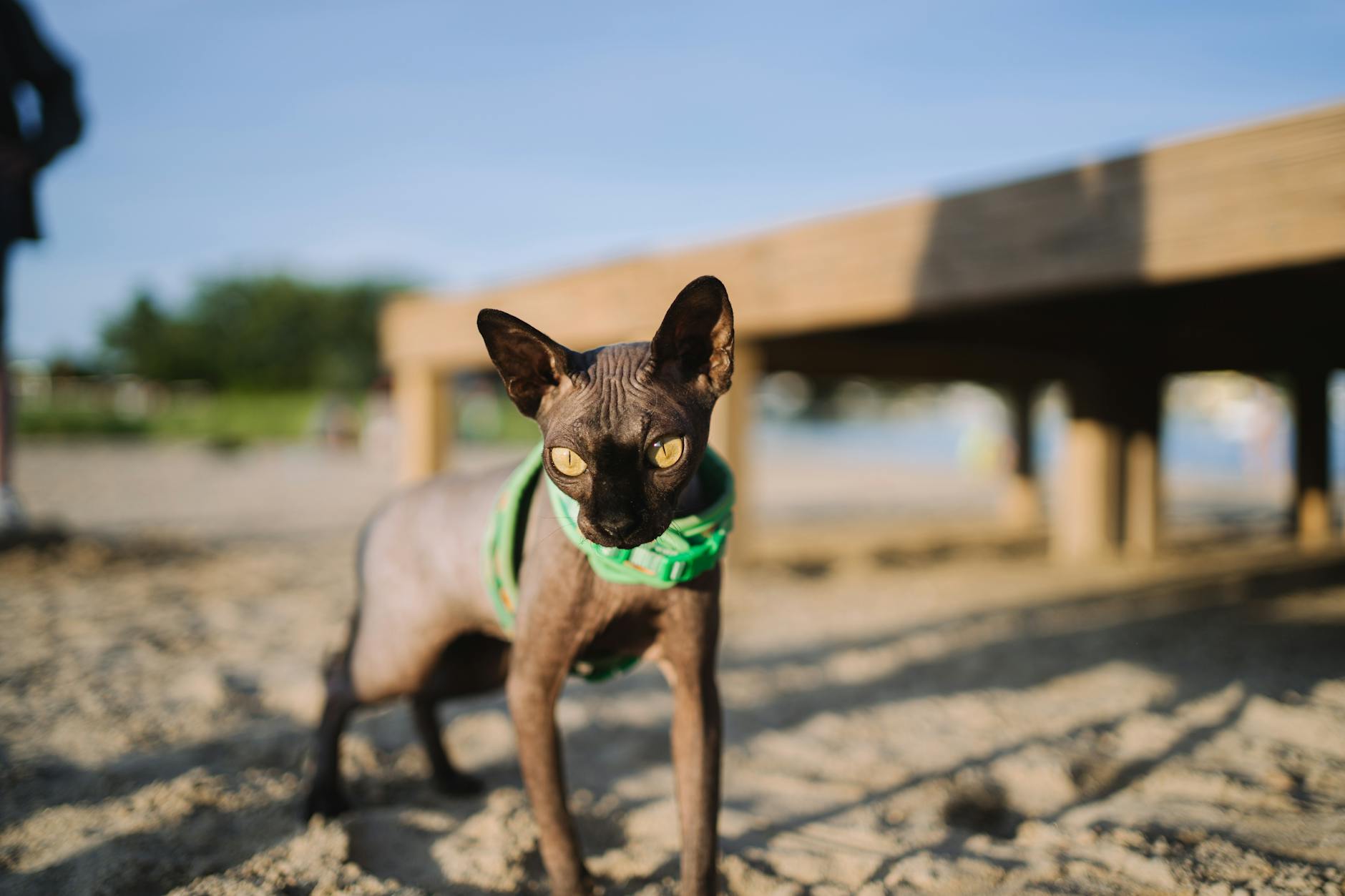
The Sphynx is the primary hairless cat breed known for blue eyes, and it stands as one of the most distinctive and recognizable breeds in the feline world. Originating from a naturally occurring genetic mutation in Toronto, Canada in 1966, the Sphynx was selectively bred to enhance and stabilize its signature hairlessness. What makes these cats especially prized by enthusiasts is the rare Dominant Blue Eye (DBE) gene, which produces those striking intense blue hues—often described as electric blue, sapphire blue, or neon blue—that make these cats instantly recognizable. When you see a hairless cat with luminous blue eyes at a cat show or in a breeder’s catalog, you’re almost certainly looking at a Sphynx.
The Sphynx has climbed the ranks of cat breed popularity, now standing as the 8th most popular breed according to the Cat Fanciers’ Association. This popularity is well-earned: the breed combines an utterly unique appearance with a temperament that sets it apart from nearly every other feline companion. The blue-eyed Sphynx in particular has become emblematic of modern cat breeding, representing a deliberate effort to create cats that are not just visually striking but also deeply connected to their human families. What’s important to understand is that while the Sphynx breed itself is increasingly common, the specific combination of hairlessness and bright blue eyes remains relatively rare. Not all Sphynx cats develop the intense blue eyes that make them so visually compelling; the DBE gene is only present in a small percentage of the breed, making blue-eyed Sphynx cats highly sought after and considerably more expensive than their standard-eyed counterparts.
Table of Contents
- How Did Hairless Cats With Blue Eyes Come Into Existence?
- Understanding the Dominant Blue Eye Gene and Eye Color Variations
- Sphynx Cat Personality and Behavioral Traits
- Grooming and Bathing Requirements for Hairless Cats
- Health Considerations and Genetic Concerns
- Finding and Purchasing a Responsible Sphynx Breeder
- Sphynx Cats in Modern Pet Ownership and Looking Forward
- Conclusion
How Did Hairless Cats With Blue Eyes Come Into Existence?
The story of the Sphynx begins with chance rather than intention. In the 1960s, a domestic shorthair cat in Toronto spontaneously produced a litter containing kittens with a natural genetic mutation that rendered them hairless. Instead of dismissing these unusual kittens, breeders recognized the opportunity and began carefully selecting cats carrying this recessive trait to establish a breeding line. Over successive generations, they refined the breed’s appearance, health, and temperament while maintaining the distinctive hairlessness that made them unique.
The blue eye trait followed a different path in the breed’s development. The Dominant Blue Eye (DBE) gene is a separate genetic trait that produces those striking sapphire eyes and requires only one copy of the gene from a single parent to manifest in offspring. This made it possible for breeders to introduce intense blue eyes into the Sphynx lineage, though doing so required careful genetic matching and understanding of how the DBE gene interacted with the rest of the breed’s genetics. The result is a cat that combines two remarkable visual features—hairlessness and electric blue eyes—that had never appeared together in the feline world before.
Understanding the Dominant Blue Eye Gene and Eye Color Variations
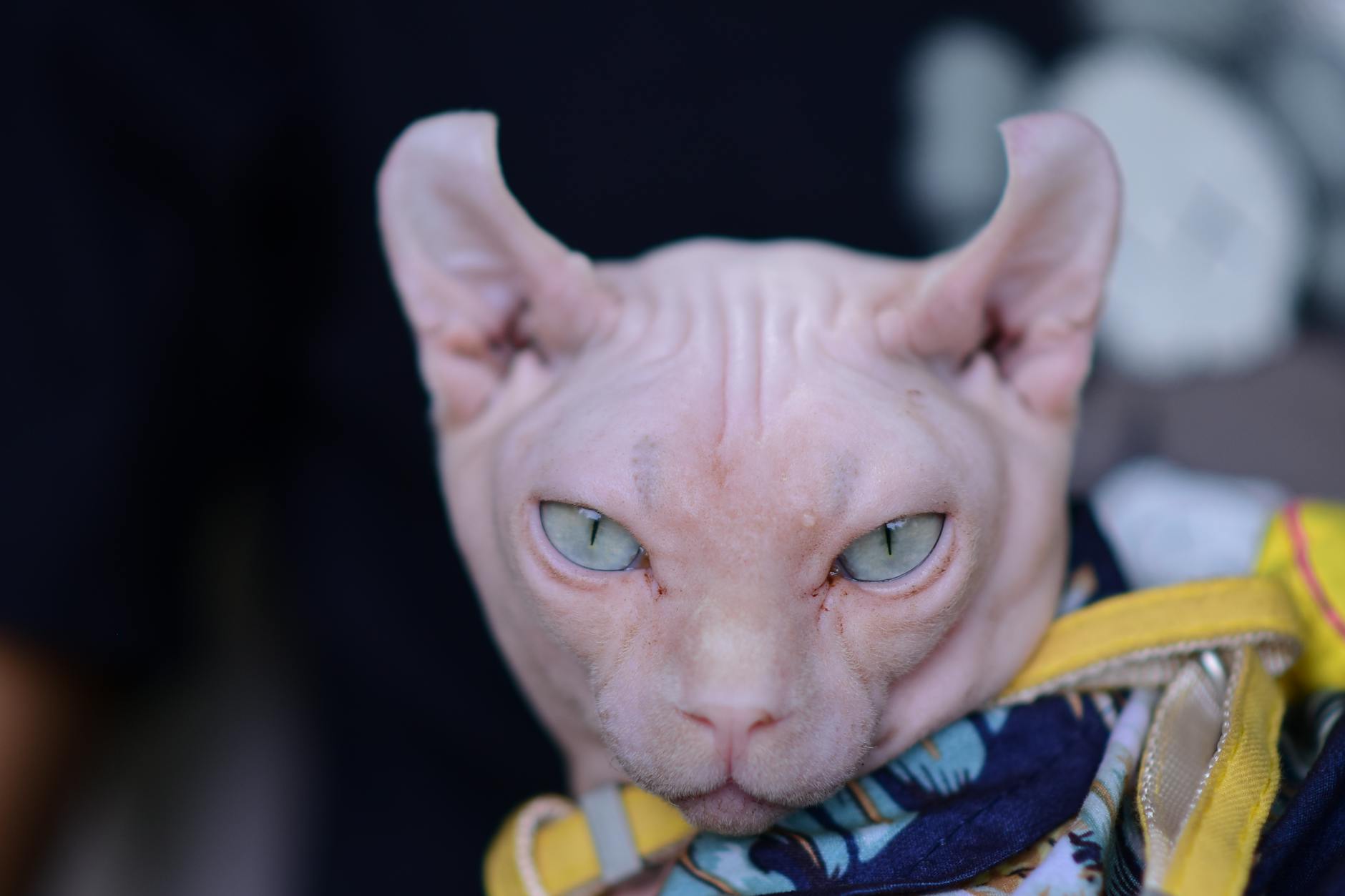
The Dominant Blue Eye (DBE) gene is what separates a standard Sphynx from the truly striking blue-eyed specimens. This genetic trait produces eyes of extraordinary intensity, with a color quality that seems almost unnatural in its brightness and depth. The sapphire or neon blue coloration is so vivid that many people encountering these cats for the first time assume the eye color has been enhanced or altered, when in fact it’s a perfectly natural result of the DBE gene expression. One important limitation to understand is that not all Sphynx cats with blue eyes carry the Dominant Blue Eye gene. Some Sphynx cats inherit blue eyes from other genetic sources, and these eyes may fade to amber, brown, or green as the cat matures.
True DBE blue eyes, however, remain intensely blue throughout the cat’s life. This distinction matters significantly when purchasing a blue-eyed Sphynx kitten, as responsible breeders should be able to explain the genetic basis for the eye color and provide confidence that the blue eyes will persist into adulthood. Without this genetic knowledge, you might end up with a kitten whose stunning blue eyes change color unexpectedly within the first year of life. The rarity of the DBE gene means that only a small percentage of Sphynx cats naturally exhibit these intense blue eyes, making them considerably more valuable to collectors and breed enthusiasts. This rarity has also unfortunately created incentives for less scrupulous breeders to misrepresent their cats’ genetics or make unfounded promises about eye color stability.
Sphynx Cat Personality and Behavioral Traits
Despite their alien appearance, Sphynx cats possess one of the most endearing temperaments in the feline world. Research published in the Journal of Veterinary Behavior has identified the Sphynx as the friendliest cat breed, distinguishing them through their extreme affection and people-oriented nature. Unlike many cats that are content to observe family life from a distance, a Sphynx will demand your attention, seek out your company, and follow you from room to room with the devotion more commonly associated with dogs. This intense sociability means that Sphynx cats, whether blue-eyed or otherwise, struggle with isolation and loneliness. A Sphynx left alone for extended periods will become anxious, vocal, and potentially destructive.
If you work long hours outside the home or frequently travel, the Sphynx may not be the right breed for you. However, if you’re seeking a cat that will greet you at the door, sit on your lap during work hours, and actively participate in family activities, the Sphynx’s affectionate nature is unmatched. Many Sphynx owners report that their cats will learn to play fetch, walk on leashes, and respond to commands in ways typical of more emotionally independent breeds. The playfulness of Sphynx cats is another defining characteristic. These are energetic, curious animals that require significant mental and physical stimulation. A blue-eyed Sphynx kitten will explore every corner of your home, investigate every object, and find entertainment in the simplest things—which can be both delightful and occasionally mischievous.
Grooming and Bathing Requirements for Hairless Cats
The absence of fur in Sphynx cats creates an entirely different grooming situation than traditional feline companions. Without hair to absorb and distribute natural skin oils, Sphynx cats accumulate a layer of oily buildup on their skin that requires regular removal through bathing. Most veterinarians and breed experts recommend bathing a Sphynx cat once weekly using a hypoallergenic, cat-specific shampoo formulated to clean the skin without stripping away essential moisture. This bathing schedule is substantially different from the minimal grooming required for most cats and represents a significant commitment of time and resources. The comparison between Sphynx grooming and standard cat grooming is striking.
A typical cat might require a brush-through once or twice weekly and the occasional bath—if the owner chooses to bathe them at all. A Sphynx, by contrast, demands a dedicated weekly bathing routine in addition to regular ear cleaning, nail trimming, and attention to skin folds where dirt and oils accumulate. For some cat owners, this intensive grooming regimen is not just acceptable but enjoyable; for others, it becomes a source of frustration. Additionally, the monthly cost of specialized shampoos and grooming supplies adds up considerably over the cat’s lifetime. The trade-off is that Sphynx cats produce far less dander and are considered more hypoallergenic than most cats, making them a possible option for people with mild to moderate cat allergies. However, the lack of fur doesn’t eliminate allergens entirely, as cat allergies are primarily triggered by proteins in the cat’s saliva and skin, not just the fur itself.
Health Considerations and Genetic Concerns
Sphynx cats, like all pure-bred cats, are predisposed to certain health conditions that potential owners must understand before committing to the breed. The most significant concern is hypertrophic cardiomyopathy (HCM), a heart disease that is the most common cardiac condition in cats overall but occurs at elevated rates in the Sphynx breed. HCM causes the heart muscle to thicken abnormally, reducing the heart’s ability to pump blood efficiently. While the condition can be managed with medication when detected early, it can also lead to heart failure, blood clots, and sudden death. Any reputable Sphynx breeder should conduct cardiac screening through echocardiography before breeding their cats and should provide documentation of clear screening results to potential kitten buyers.
If you’re purchasing a blue-eyed Sphynx, ask for evidence of HCM screening in both parents. The warning here is important: a stunning appearance and gentle temperament should never override basic health screening. A cheaper Sphynx kitten from a breeder who hasn’t conducted health testing may cost you thousands of dollars in veterinary care within a few years. Beyond HCM, Sphynx cats are more vulnerable to skin infections due to their lack of protective fur, and they’re sensitive to both heat and cold due to their inability to regulate body temperature through a coat. These cats require climate-controlled environments and cannot be left outdoors unsupervised.
Finding and Purchasing a Responsible Sphynx Breeder
The rising popularity of Sphynx cats has unfortunately created a market where irresponsible breeding practices flourish. When seeking a blue-eyed Sphynx kitten, the difference between purchasing from a reputable breeder and acquiring from a backyard breeder or kitten mill can be the difference between adopting a healthy companion and inheriting a cat with undiagnosed genetic conditions. A responsible Sphynx breeder will provide documentation of health testing, explain the genetics behind their cats’ eye color, allow you to meet the kitten’s parents, and remain available for support throughout the cat’s life.
They’ll also ask you detailed questions about your living situation, family structure, and ability to meet the breed’s grooming and socialization demands. If a breeder seems primarily interested in selling kittens as quickly as possible, that’s a red flag. The cost of a blue-eyed Sphynx from a reputable breeder typically ranges from $1,500 to $3,500, with some exceptional examples commanding even higher prices. While this is substantially more than standard domestic cats, it reflects the health testing, genetic knowledge, and specialized care involved in breeding these animals responsibly.
Sphynx Cats in Modern Pet Ownership and Looking Forward
The Sphynx breed represents an interesting moment in the history of cat domestication—a deliberate effort to create cats that are radically different from the wild ancestors that shaped feline behavior for millennia. As cat breeding continues to evolve, the Sphynx serves as a model for what breeders can achieve when they combine selective breeding with modern genetic understanding. The blue-eyed Sphynx particularly has become a status symbol in some circles, featured prominently on social media and in celebrity homes, which has driven demand but also unfortunately incentivized unethical breeding.
Looking forward, the breed’s future will likely depend on whether the cat fancy can maintain ethical breeding standards while managing the public’s fascination with these striking animals. The conversation around Sphynx breeding will increasingly involve questions about genetic diversity, health testing, and whether we should continue breeding cats specifically for traits that create vulnerability—such as hairlessness and the sensitivity to temperature that comes with it. The blue-eyed Sphynx may remain a niche breed for dedicated enthusiasts, or it could become even more mainstream. What seems certain is that as long as people are drawn to the extraordinary, the hairless cat with electric blue eyes will continue to captivate cat lovers worldwide.
Conclusion
The Sphynx with blue eyes stands as a remarkable achievement in selective breeding, combining a naturally occurring genetic mutation from 1960s Toronto with the rare Dominant Blue Eye gene to create cats that are visually stunning and temperamentally exceptional. These cats are ranked among the friendliest breeds available, demonstrating extraordinary affection and people-oriented behavior that sets them apart from nearly all other feline companions. Their intelligence, playfulness, and social devotion make them ideal for families and individuals seeking a highly interactive pet.
However, bringing a blue-eyed Sphynx into your home is a commitment that extends far beyond simply enjoying their remarkable appearance. The extensive grooming requirements, specialized care needs, genetic health considerations—particularly the elevated risk of hypertrophic cardiomyopathy—and the emotional demands of a breed that cannot tolerate isolation all deserve serious consideration before making a purchase. If you choose to proceed, seek out a reputable breeder who prioritizes health testing and can provide documentation of clear cardiac screening. The investment in responsible breeding will pay dividends throughout your cat’s lifespan in the form of better health, more stable temperament, and the peace of mind that comes from supporting ethical practices in the cat fancy.