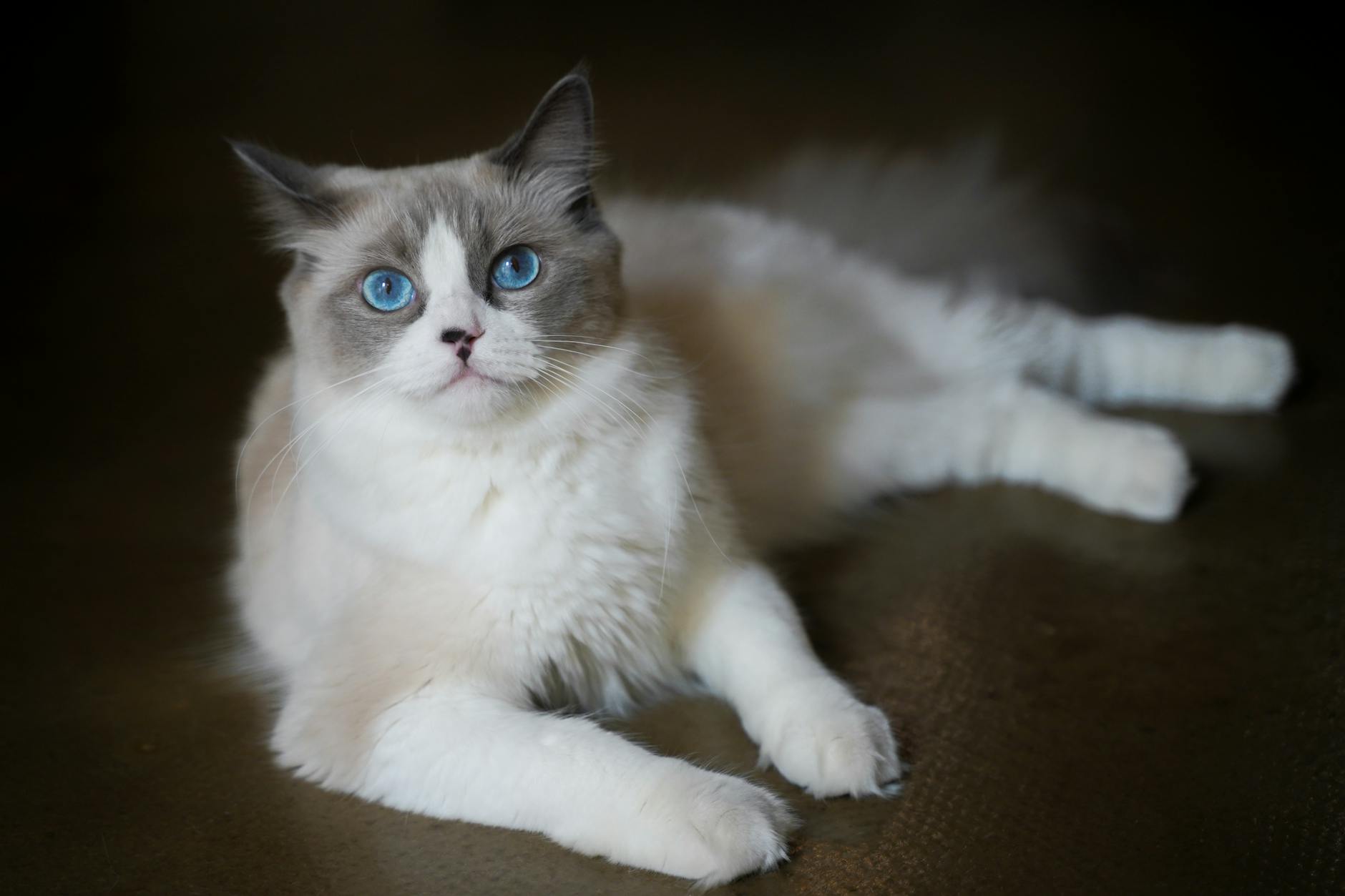
Siamese cats are the most iconic and well-known breed featuring the striking combination of blue eyes and colorpoint fur. Their distinctive appearance—a light-colored body with darker coloring concentrated on the ears, face, paws, and tail—has made them one of the most recognizable breeds worldwide. The Siamese earned their reputation for this pattern centuries ago, originating in Thailand where they were treasured by royalty and Buddhist monks.
However, the Siamese are not the only breed with this captivating blue-eyed colorpoint look. While Siamese cats remain the primary example and the breed that established the colorpoint pattern as we know it today, several other breeds share these characteristics, including Ragdolls, Birmans, Balinese, Himalayans, and Colorpoint Shorthairs. All of these breeds share a common genetic trait: they are born completely white and develop their distinctive pointed coloring as they mature, and every cat with the colorpoint pattern will have blue eyes.
Table of Contents
- What Makes Colorpoint Fur Different From Other Cat Patterns?
- The Siamese: The Original Blue-Eyed Colorpoint Breed and Its Heritage
- Other Colorpoint Breeds With Blue Eyes: A Diverse Range
- The Genetics Behind Blue Eyes and Colorpoint Coloring: Understanding the Science
- Growth and Development: From White Kittens to Pointed Adults
- Caring for Colorpoint Breeds: Coat Maintenance and Health Considerations
- The Evolution of Colorpoint Breeds and Their Modern Popularity
- Conclusion
What Makes Colorpoint Fur Different From Other Cat Patterns?
Colorpoint coloring is a distinct genetic pattern where a cat‘s body remains a light, neutral color while specific areas of the body—called “points”—develop darker pigmentation. These points typically include the face (including the nose and eye area), ears, paws, and tail. The contrast creates a striking visual effect that distinguishes colorpoint cats from other patterned breeds like tabbies, calicos, or solid-colored cats. The darkness of the points can range from subtle to dramatic depending on the breed and individual genetics. What sets colorpoint cats apart genetically is that they are born entirely white or cream-colored with no visible coloring at all.
As they grow, the cooler areas of their body trigger melanin production through a temperature-sensitive enzyme, causing the characteristic darker coloring to develop over time. This developmental process continues for several months, and in some cases, colorpoint cats continue to darken slightly throughout their lives. A kitten that appears to be nearly all white at birth may develop rich seal brown or chocolate points within weeks as it matures. The lightness of the body color combined with the darkness of the points makes colorpoint cats instantly recognizable. Unlike tabby stripes or tortoiseshell patchwork, the colorpoint pattern follows a predictable formula based on body temperature zones. This makes it one of the most distinctive visual markers in cat breeding, and breeders have long valued the clarity and contrast of the pointing when selecting breeding pairs.
The Siamese: The Original Blue-Eyed Colorpoint Breed and Its Heritage
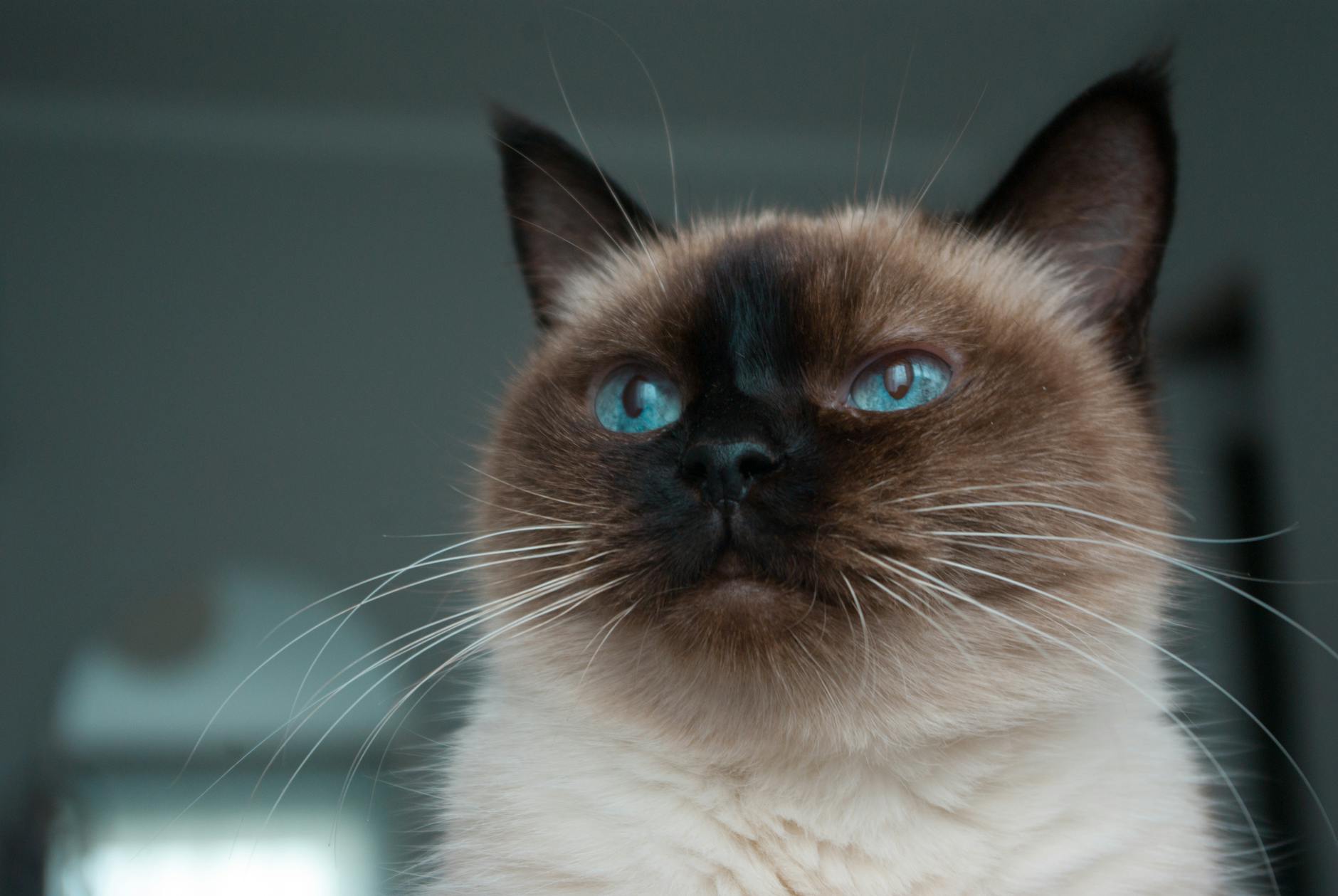
The Siamese cat is the breed most synonymous with blue eyes and colorpoint coloring, and for good reason—they were among the first cats selectively bred to emphasize and standardize this pattern. Siamese cats feature almond-shaped blue eyes that have become a hallmark of the breed, and they come in four original color variations recognized by the Cat Fanciers’ Association: seal point (dark brown points), chocolate point (lighter brown points), blue point (gray-blue points), and lilac point (pinkish-gray points). One limitation of the Siamese breed that potential owners should understand is their distinctive, highly vocal nature. Siamese cats are known for being extremely talkative and demanding, vocalizing their needs and desires frequently throughout the day. They also require significant human interaction and can become lonely or develop behavioral problems if left alone for extended periods.
Additionally, while their sleek, short-haired coat is relatively low-maintenance, Siamese cats do shed and require regular brushing. They are also prone to certain health issues, including crossed eyes and kinked tails, though responsible breeders have worked to minimize these traits in modern lines. The breed’s intelligence and social nature means that while they make wonderful companions for engaged owners, they are not ideal for households where cats will spend long periods alone. Their need for constant stimulation and interaction distinguishes them from more independent cat breeds. Despite these considerations, Siamese cats have remained beloved for decades, earning a devoted following among cat enthusiasts worldwide.
Other Colorpoint Breeds With Blue Eyes: A Diverse Range
While the Siamese established the colorpoint pattern, several other breeds now share this striking appearance. The Ragdoll is one of the most popular modern colorpoint breeds, featuring large, sparkling blue eyes and a semi-longhaired or longhaired silky coat. Ragdolls were developed in California during the 1960s and were officially accepted by the Cat Fanciers’ Association in 1998. These cats are notably large and have a more laid-back, docile temperament compared to the more vocal Siamese, making them appealing to families seeking a colorpoint breed with a gentler disposition. The Birman, with its semi-longhaired silky coat and pure white paws (a distinctive feature called “gloves”), also displays the colorpoint pattern with blue eyes.
The Balinese, a longhaired variant that shares similarities with the Siamese, features sapphire blue eyes and an elegant, flowing coat. The Himalayan represents a deliberate hybrid breed combining the Persian cat’s long, luxurious fur with the Siamese’s pointed coloring and blue eyes. The Colorpoint Shorthair offers an interesting variation, as it comes in 16 different color combinations compared to the Siamese’s four original colors, allowing for greater variety while maintaining the same striking eye color and pointed pattern. Each of these breeds brings its own characteristics and temperament to the colorpoint family. While they all share the blue eyes and colorpoint coloring, their coat lengths, body types, and personalities vary significantly, giving potential owners multiple options if they desire the colorpoint aesthetic.

The Genetics Behind Blue Eyes and Colorpoint Coloring: Understanding the Science
The blue eyes and colorpoint coloring in cats result from a genetic mutation in the tyrosinase (TYR) gene, which is part of the albino gene locus. This mutation restricts pigment production, and crucially, both parents must carry the gene for a kitten to be born with the colorpoint pattern. As of 2026, researchers have identified several genetic variants responsible for colorpoint coloring: cs (point), cb (sepia), cm (mocha), and cscb (mink combination). These different variants account for the variety of point colors and body colors observed across colorpoint breeds. The distinctive blue eye color in colorpoint cats is not actually a different eye pigment than other cats—all cats have a blue layer in their eyes. In most cats with darker eyes, this blue layer is covered by darker pigment.
In colorpoint cats, the tyrosinase enzyme restriction prevents this darker pigment from developing in the eye, leaving the blue layer visible. This is why all pointed cats, regardless of breed, always have blue eyes. Understanding this genetic mechanism explains why blue eyes and colorpoint coloring are inseparable traits. When a colorpoint kitten is born, the cooler areas of its body—the ears, face, paws, and tail—trigger melanin production as the kitten grows and its body temperature regulation develops. This temperature-sensitive response is what creates the characteristic pointed pattern. Kittens born to colorpoint parents will be born white and gradually develop their points, with the process typically complete by several months of age. This genetic reality makes colorpoint cats fascinating examples of how environmental factors like temperature can influence genetic expression.
Growth and Development: From White Kittens to Pointed Adults
One of the most striking aspects of raising a colorpoint kitten is watching the transformation from an all-white newborn to a distinctly patterned cat. This developmental process can take weeks to months depending on the breed and individual genetics. Some colorpoint kittens develop their points rapidly, appearing to change within days, while others develop more gradually. Seal point Siamese kittens, for example, often develop their rich brown points quickly, while blue point varieties may take longer to achieve their full coloring. It’s important for prospective colorpoint cat owners to understand that they will not be getting a kitten that looks like the adult in the breeder’s photos.
When selecting a kitten, you’re choosing based partly on pedigree and partly on trust that the points will develop as expected. Some breeders provide photos showing the parents’ coloring and examples of how kittens from previous litters developed, which can give you an idea of what to expect. Additionally, colorpoint cats may continue to darken slightly throughout their lives, particularly if they live in cooler climates, as temperature continues to influence melanin production even in adults. Another consideration is that elderly colorpoint cats sometimes develop darker body coloring over time, a phenomenon called “temperature-induced darkening.” A senior seal point Siamese that spent its life indoors in a warm home may develop slightly darker body coloring than it had in youth. This is a natural part of aging in colorpoint breeds and is not cause for concern, though it represents a subtle change from the cat’s younger appearance.

Caring for Colorpoint Breeds: Coat Maintenance and Health Considerations
The coat care requirements for colorpoint cats vary significantly depending on the breed’s coat length. Shorthaired colorpoint breeds like the Siamese require minimal grooming, though regular brushing helps reduce shedding and keeps their coat healthy. Longhaired colorpoint breeds like the Balinese, Himalayan, and some Ragdolls require much more intensive grooming, needing daily brushing to prevent matting and maintain their luxurious coats. For example, a Himalayan’s long fur can quickly become matted without consistent care, making daily grooming a necessary commitment rather than an optional extra. All colorpoint breeds benefit from the same basic health care as other cats, including regular veterinary checkups, vaccinations, and preventive care. However, certain colorpoint breeds have breed-specific health concerns worth noting.
Himalayans, being a cross between Persians and Siamese, may inherit respiratory issues common to flat-faced Persians. Ragdolls can be prone to hypertrophic cardiomyopathy, a heart condition that responsible breeders screen for. When acquiring a colorpoint cat from a breeder, ask about health testing in the parents and request documentation of any genetic screening performed. Environmental factors like temperature can influence both the intensity and exact shade of a colorpoint cat’s coloring over time. Cats living in consistently warmer homes may maintain lighter points, while those exposed to cooler environments may develop darker coloring. This is not harmful to the cat but is worth understanding if you’re concerned about maintaining a specific appearance.
The Evolution of Colorpoint Breeds and Their Modern Popularity
The colorpoint pattern has evolved significantly since the Siamese first established it centuries ago. While Siamese cats created the template, modern breeders have expanded the colorpoint trait across multiple breeds and developed new color variations. The creation of the Colorpoint Shorthair with 16 color variations demonstrates how breeders have pushed beyond the Siamese’s original four colors while maintaining the striking pattern and blue eyes.
This expansion has allowed people with different preferences regarding coat length, body type, and temperament to find a colorpoint breed that suits their needs. Looking forward, colorpoint cats continue to gain popularity as the Ragdoll and other colorpoint breeds rank among the most popular cat breeds worldwide. Genetic research into the tyrosinase enzyme and colorpoint inheritance continues to advance, potentially opening doors to new understanding of how breeders can responsibly develop and improve colorpoint breeds. The colorpoint pattern itself remains one of the most visually distinctive and sought-after aesthetics in the cat fancy, ensuring that blue-eyed colorpoint cats will likely remain popular for years to come.
Conclusion
The colorpoint pattern combined with blue eyes represents one of the most distinctive and recognizable aesthetics in cat breeds, with the Siamese cat serving as the original and most iconic example. However, the trait has expanded to include Ragdolls, Birmans, Balinese, Himalayans, Colorpoint Shorthairs, and others, each offering their own unique characteristics while maintaining the striking blue eyes and pointed coloring.
The shared genetic foundation means that all colorpoint cats follow the same developmental pattern, being born white and developing their characteristic points as they mature. If you’re considering a blue-eyed colorpoint cat, evaluate both the breed’s temperament and coat care requirements, as these vary significantly among the different breeds that share this pattern. Whether you prefer the vocal, social nature of a traditional Siamese, the docile temperament of a Ragdoll, or the longhaired elegance of a Himalayan, understanding the genetics and care requirements of colorpoint breeds will help you choose the right companion for your household and lifestyle.