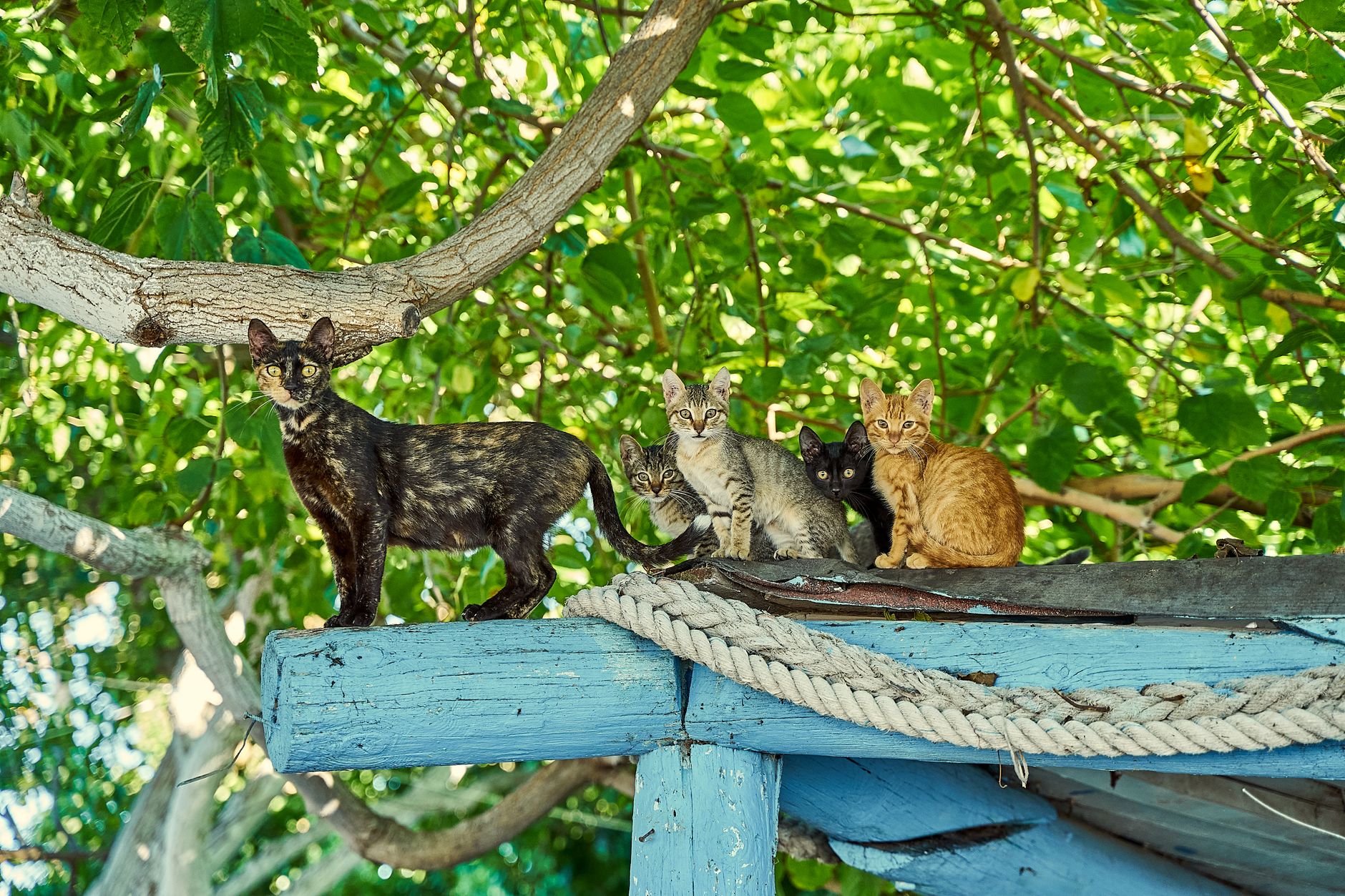
A tuxedo cat defending its home against a large bear sounds like the plot of an animated adventure rather than a real-world possibility, yet such encounters, while extraordinarily rare, have been reported by homeowners across bear country. In this incident, a determined small cat successfully chased away a significantly larger predator—not through superhuman strength, but through the combination of territorial aggression, surprise, and the bear’s natural aversion to confrontation with an unexpected threat. The incident raises compelling questions about how domestic cats behave when protecting their perceived territory and why even large wild animals often retreat from determined resistance.
What makes such encounters possible is the cat’s complete lack of fear response in its own space. Unlike humans or other animals that might freeze or flee, a cat in defensive mode enters a state of heightened aggression where size becomes almost irrelevant. The bear, accustomed to avoiding conflict and preferring easy food sources, had no reason to continue the encounter once the cat made its position clear through aggressive displays and strikes.
Table of Contents
- Can a House Cat Really Drive Away a Bear?
- The Surprising Boldness of Territorial Cats in Their Own Space
- Understanding Bear Behavior During Unexpected Encounters
- Protecting Your Home and Pets When Bears Are in the Area
- The Real Dangers Cats Face in Wildlife Encounters
- Tuxedo Cat Temperament and Natural Behavior
- Why This Story Resonates and What It Actually Tells Us
Can a House Cat Really Drive Away a Bear?
The answer is yes, though the mechanics are counterintuitive. A cat‘s advantage in such an encounter lies not in physical power but in behavioral factors that confuse and discourage the bear. cats possess exceptional reflexes, sharp claws, and a natural ability to employ them with precision. When cornered or defending territory, a cat’s pupils dilate, fur stands on end, and vocalizations intensify—all signals designed to appear larger and more dangerous than reality.
A bear evaluating whether to continue a confrontation calculates risk and reward: if the food or resource is not worth the potential injury, it leaves. Bears are intelligent animals that actively avoid conflict when other food sources are available. Unlike predators that hunt cats, bears are not motivated to fight for a meal; they’re motivated to avoid injury. A cat that stands its ground, swipes viciously, and makes continuous threatening displays can convince a bear that proceeding is not worth the effort. This is similar to how a badger, despite weighing far less than a bear, can successfully defend itself through sheer aggression and the reality of inflicting injury—the bear’s thick hide may protect it, but a determined cat’s claws can still cause painful wounds to sensitive areas like the face and eyes.
The Surprising Boldness of Territorial Cats in Their Own Space
Indoor and outdoor cats undergo a dramatic personality shift when they perceive a threat to their territory. A cat that appears timid indoors may become a ferocious defender when confronted with an intruder in its own yard or home. This territorial response is deeply hardwired; unlike most predators that are motivated primarily by hunger, cats are also driven by the need to protect their established range. The cat’s home represents the center of this territory, and the closer the threat comes to it, the more aggressive the cat’s response becomes.
Tuxedo cats—those with distinctive black-and-white coloring—show no behavioral differences from other domestic cats in territorial defense. However, male cats, particularly unneutered males, tend to be more aggressive in territorial disputes than females. The cat in this encounter likely lived on the property, making its home the epicenter of its territorial claim. A bear simply passing through would have been avoided; a bear approaching the house itself triggered maximum defensive response.
Understanding Bear Behavior During Unexpected Encounters
Bears are naturally cautious animals that prefer to avoid direct conflict. This behavior has evolved because conflict is energetically expensive and carries genuine risk of injury. When a bear encounters something unexpected—a loud, aggressive animal it has never seen before—it faces uncertainty. The cat’s behavior signaled either that the animal was dangerous or that the situation was unpredictable.
For a bear whose evolutionary strategy centers on seeking the path of least resistance, this uncertainty often leads to retreat. A critical limitation in understanding why the bear left is that we cannot know the bear’s internal state. Was it a juvenile still learning to forage, more skittish than an adult? Was it simply passing through and not intensely motivated to approach the house? Did it have previous negative experiences with dogs that made it cautious? Real-world wildlife encounters rarely have simple explanations. The bear may have been equally likely to leave if a human had stepped outside and made loud noises. The cat’s role may have been a contributing factor rather than the sole determining force.
Protecting Your Home and Pets When Bears Are in the Area
If you live in bear country, the lesson from this encounter is not that cats can fend off bears, but that making your home an unattractive target is crucial. Bears investigate properties looking for food—garbage, pet food, compost, or other attractants. A house that offers no reward is a house a bear will pass by. Securing trash in a bear-proof container, removing outdoor pet food before sunset, and trimming vegetation near windows all reduce the likelihood of a bear approaching close enough for any animal confrontation to occur.
The comparison between relying on cat defense and proper property management is stark. A cat may successfully drive away one bear under specific circumstances, but a properly maintained property with no accessible food sources will prevent most bear approaches altogether. Keeping cats indoors during dawn and dusk—peak foraging times for bears—is far more reliable than assuming a cat can handle a wildlife encounter. A cat’s territorial aggression may work in a specific moment, but it is not a sustainable wildlife management strategy.
The Real Dangers Cats Face in Wildlife Encounters
While this story has a fortunate outcome, cats involved in wildlife encounters face significant risks. Even if a cat successfully drives away a bear, it may have sustained injuries from the encounter—bites, scratches, or internal trauma from being struck by the bear’s paws. Cats can also incur injuries without visible symptoms; blunt-force trauma can cause internal bleeding or organ damage that doesn’t manifest immediately. Any cat involved in a wildlife encounter should receive veterinary examination, even if it appears unharmed.
Bears are not the only wildlife threat cats face outdoors. Coyotes, mountain lions, and even large dogs pose more consistent predation risks than bears, since these animals actively hunt cats. A cat’s territorial aggression works well against a bear that’s not hungry for a cat; it works poorly against a coyote that is specifically looking for prey. The rarity of cat-versus-bear encounters should not be interpreted as evidence that outdoor cats are safe in wildlife areas.
Tuxedo Cat Temperament and Natural Behavior
Tuxedo cats derive their name from their formal black-and-white coloring, which resembles a tuxedo suit. While folklore sometimes attributes particular personality traits to coat colors, tuxedo cats show the same range of temperaments as any other domestic cat. Some are bold and aggressive; others are shy and retiring. The cat in this encounter demonstrated exceptional boldness, which may reflect individual personality, age, health status, or previous experiences rather than anything inherent to the tuxedo pattern.
Individual cats vary dramatically in their territorial responses. Some cats are content to live indoors or in a small outdoor space; others are intensely motivated to patrol large territories and confront intruders. The cat that chased away the bear likely fell into the latter category—a cat with a strong territorial drive and the confidence to act on it. These personality traits can make a cat effective at protecting a property from other cats or small animals, though they also increase the cat’s likelihood of injuries from confrontations.
Why This Story Resonates and What It Actually Tells Us
This incident captures something compelling about cats: the contradiction between their small size and their apparent fearlessness. A ten-pound animal confronting a multi-hundred-pound bear seems impossible until you consider that the cat’s success depends not on size but on behavior, territorial certainty, and the bear’s risk calculation. The story also reflects the reality that wild animals are not the fearless predators of popular imagination; they are practical decision-makers that often avoid conflict.
The actual lesson for cat owners is not that cats are invulnerable protectors, but that cats can display remarkable boldness in their own space and that wild animals often have more caution about confrontation than we assume. For homeowners in bear country, the real takeaway is that preventing bear approaches through garbage management and removing attractants is far more effective than any animal confrontation. The cat’s actions in this specific encounter may have made a difference, but the more reliable defense is one that prevents the bear from approaching the house in the first place.
- —