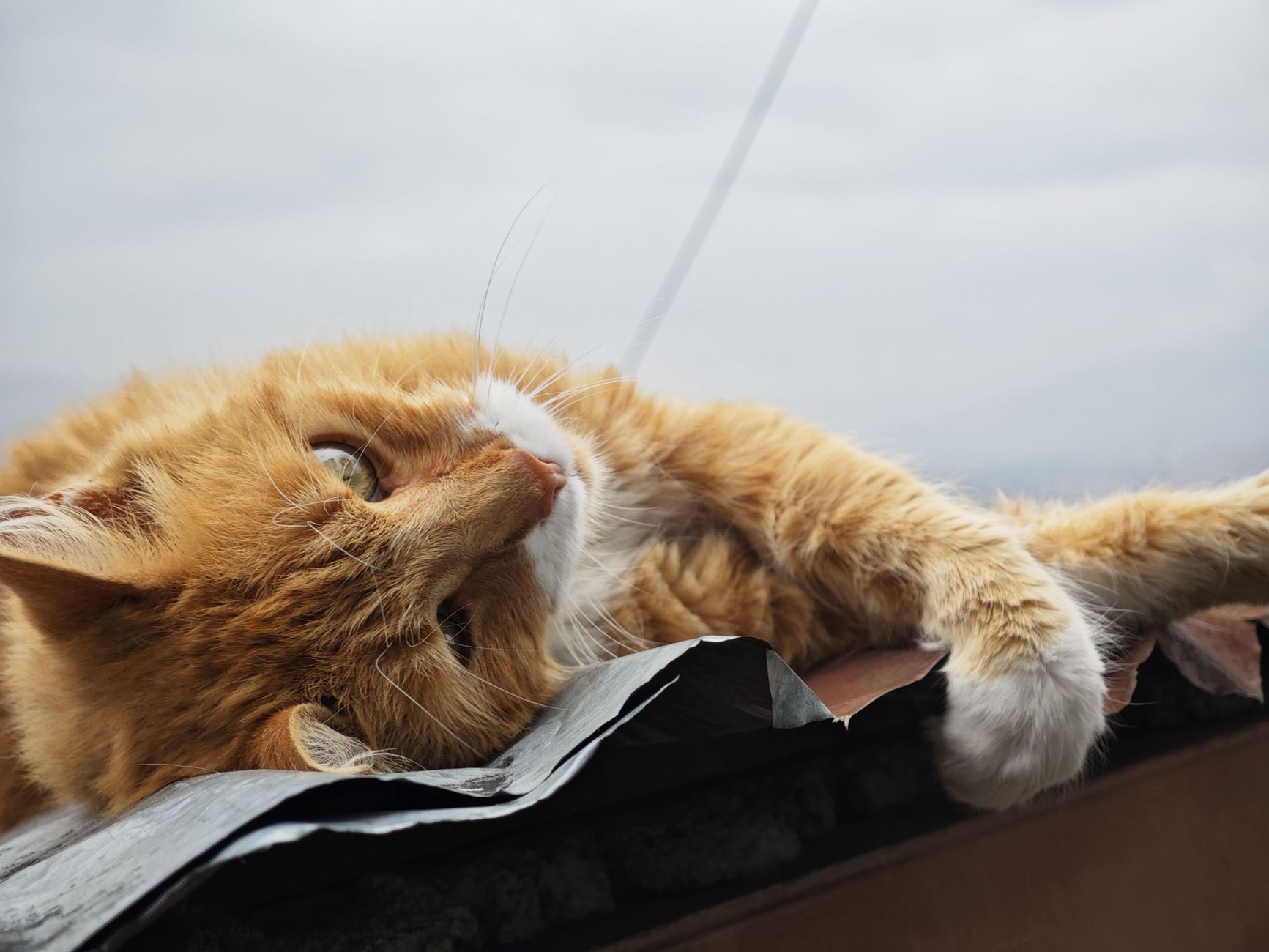
Orange cats do often bear a striking resemblance to their human family members, though this similarity typically stems from personality traits and behavior patterns rather than physical appearance alone. When an orange tabby chooses to loaf contentedly on the kitchen counter while their owner leans against the refrigerator with a similar posture, or when both the cat and the person tend toward mischief and conversational meowing, observers frequently comment on how perfectly matched they appear. This phenomenon is real, but it works through different mechanisms than simple genetic inheritance—it’s partly about how owners select cats that reflect their own temperament, and partly about how cats adapt their behavior to mirror their household environment.
The resemblance people notice often reflects behavioral and personality synchronization rather than a literal genetic connection between species. An owner who is affectionate, talkative, and energetic frequently ends up with an orange cat that exhibits these same traits, because both the person’s selection of that particular cat and the cat’s behavioral development within that household reinforce these characteristics. Orange cats as a group have a reputation for being particularly social and vocal, which means they’re more likely to gravitate toward households where these traits are already valued and encouraged.
Table of Contents
- Why Do Orange Cats Seem to Match Their Owners’ Personalities?
- Genetic Factors in Orange Cat Coloring and Behavior
- The Social and Interactive Qualities of Orange Cats
- Selecting an Orange Cat That Matches Your Household
- Behavioral Complications and Limitations in Matching
- The Role of Household Routines in Creating Resemblance
- What Veterinary and Behavioral Research Actually Shows
Why Do Orange Cats Seem to Match Their Owners’ Personalities?
Orange tabby cats are known for distinctive personality patterns that make them stand out among other color variations. These cats tend to be more vocal than average, initiating contact with their humans through meows, trills, and chirps. They also display higher levels of sociability and often seek out human interaction rather than avoiding it. When an owner has a similarly outgoing, vocal, or social personality, this alignment becomes immediately obvious to anyone who spends time with both the person and the cat together.
The matching effect is partly self-selection in action. People who are drawn to vocal, interactive cats often have those qualities themselves, which means they’re more likely to choose an orange cat at a shelter or from a breeder. A quiet, introverted person might gravitate toward a cat with different traits, or they might bring an orange cat into their home and gradually become frustrated with its constant demands for attention. The reverse is equally true: a gregarious person who brings home an aloof cat might feel like something’s missing from the relationship.
Genetic Factors in Orange Cat Coloring and Behavior
The orange coloring in cats results from a specific genetic expression on the X chromosome that creates the distinctive warm hue and tabby patterns. This genetic factor exists independently from personality genes, meaning orange coloring doesn’t automatically predict behavior—yet there does appear to be a correlation between orange coloring and increased sociability and vocalization, though scientists haven’t definitively isolated why. One limitation is that cat genetics are still not fully mapped, so claims about which genes control specific personality traits should be viewed skeptically.
The phenomenon of cats resembling their owners in behavior is distinct from genetic resemblance. An owner may unintentionally shape their cat’s behavior through reward patterns, daily routines, and the amount of attention they provide. An owner who talks extensively to their orange cat will reinforce vocalization; an owner who plays frequently will encourage higher activity levels. Over months and years, this behavioral shaping makes the cat reflect aspects of the human’s personality, even though the cat was born with different initial traits.
The Social and Interactive Qualities of Orange Cats
Orange cats display consistently higher rates of friendly behavior toward humans compared to other color groups, according to behavioral observations in shelters and veterinary settings. This includes approaching humans first, seeking physical contact, and maintaining engagement during interactions. When an owner is equally enthusiastic about these interactions, the result is a household where both the human and the cat are engaged, playful, and mutually attentive.
A common example is the orange cat that follows its owner from room to room, insisting on participation in household activities. This behavior isn’t inherently “resembling” the owner—but when the owner also prefers company over solitude, the two end up performing nearly identical behaviors simultaneously, creating the appearance of mirroring. The owner works at the desk while the cat sits on the papers; the owner cooks while the cat occupies the counter nearby.
Selecting an Orange Cat That Matches Your Household
When adopting an orange tabby, most people don’t select based on genetic resemblance; instead, they notice during the adoption process whether the cat’s energy level and social style align with their own preferences. A cat with a mellow, laid-back temperament will require different handling and expectations than one that’s constantly seeking interaction. The tradeoff is that the most “resemblant” matches often come from spending extended time with a cat before adoption, allowing true personality compatibility to emerge.
It’s worth noting that spending time with a cat before committing to adoption can prevent mismatches. Some people adopt based solely on appearance without considering whether an orange cat’s typical need for attention fits their lifestyle. If you work long hours and value quiet time, a particularly social orange cat may prove exhausting rather than endearing, regardless of how charming the resemblance seemed during the shelter visit.
Behavioral Complications and Limitations in Matching
The idea that a cat resembles its owner can sometimes lead people to anthropomorphize behaviors that are simply normal feline expressions. When an orange cat meows insistently before feeding time, this isn’t the cat “talking like” the owner—it’s normal cat behavior expressing hunger. The resemblance is illusory if it causes an owner to misinterpret what their cat actually needs.
A cat that appears “moody” or “withdrawn” might be ill or stressed rather than reflecting its owner’s emotional state. Additionally, orange cats have well-documented prey drive and hunting instincts that don’t always align neatly with human personalities, no matter how much else seems to match. An owner who loves to cuddle might feel rejected when their orange cat abruptly abandons lap time to stalk a toy or hunt a real mouse. Understanding that cats operate on instincts independent of personality matching prevents disappointment and strengthens the relationship between owner and pet.
The Role of Household Routines in Creating Resemblance
Cats quickly adapt to their household’s schedule and rhythms, which further reinforces the appearance of resemblance. An owner who wakes early will notice their orange cat waking early too, waiting by the food bowl. An owner with a creative, changeable schedule may have a cat that’s similarly unpredictable in its demands and activity.
These synchronized patterns create a sense of partnership and understanding that feels like deep personality matching. The shared routines also mean that both owner and cat develop similar sleep-wake cycles, meal timing, and play schedules. This synchronization is a practical reality of cohabitation rather than evidence that the cat inherited personality traits, but it contributes powerfully to the perception of resemblance.
What Veterinary and Behavioral Research Actually Shows
Veterinary behaviorists have documented that orange cats, as a group, show higher rates of affiliation-seeking behavior compared to other color groups, particularly males. This is distinct from claiming they inherit personality traits from their owners.
The research shows correlation without definitive causation—whether the coloring itself influences behavior or whether owners treat orange cats differently, resulting in different behavioral outcomes, remains an open question. The resemblance between orange cats and their owners is most accurately understood as a combination of selective adoption, behavioral shaping over time, and routine synchronization. The cat doesn’t literally inherit your temperament, but through daily interaction, shared space, and mutual influence, a harmonious pairing can create the genuine impression that you and your orange cat are two versions of the same personality.