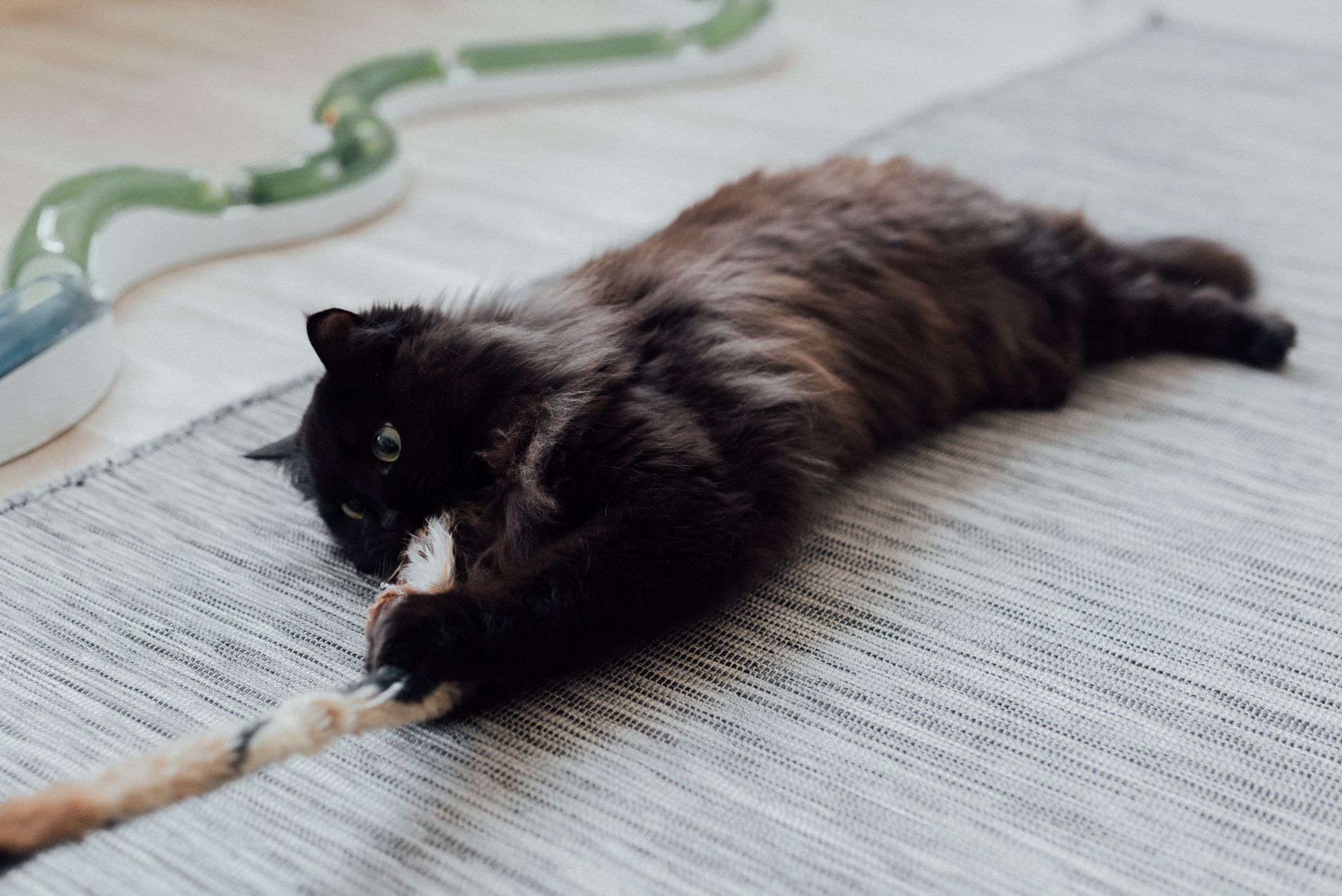
Cat toys support exercise and mental enrichment, but string, yarn, and detachable feathers create life-threatening injury risks that most owners don't recognize until symptoms appear. This guide covers which toys are genuinely safe, how to recognize ingestion symptoms, and how often to replace worn toys to keep your cat healthy. Safe cat toys use 100% natural materials with secure construction and no small detachable parts. Proper storage after supervised play, weekly inspection, and timely replacement eliminate most risks—removing toys after use is the single most effective safety step you can take.
Table of Contents
- Why String and Feathers Are Dangerous
- Symptoms Your Cat May Have Swallowed Something
- Choosing Toys That Won't Harm Your Cat
- How Often to Replace and Inspect Toys
- Age-Appropriate Play and Activity Needs
Why String and Feathers Are Dangerous
String and yarn are the most serious toy hazards. When cats swallow thread, yarn, or floss, the material can become hooked under the tongue or wrap around intestines during digestion, causing linear foreign body obstruction that requires surgery, according to Cats International. This is a veterinary emergency even before visible symptoms appear. The anatomy makes the danger worse.
A cat's tongue barbs all face backward toward the throat, preventing them from spitting out caught string. Pawspital Animal Hospital explains that once wrapped around these barbs or the throat, string cannot be coughed up or swallowed safely. Feathers pose an equal risk. When feathers separate from toys, they risk blocking the throat during swallowing; sharp quills can cut the mouth, and swallowed feathers may lodge in the stomach or intestines. Catster reports this happens frequently with wand toys left unsupervised.
- —
Symptoms Your Cat May Have Swallowed Something
If your cat ingested toy material, warning signs appear gradually. Cats may show vomiting, appetite loss, litter box changes, repeated gagging, drooling, lethargy, abdominal pain, hiding, constipation, or straining without stool. According to PriVET Pet Care, the critical detail is that cats may appear normal early, making any appetite or energy changes significant. Contact your veterinarian immediately if you suspect ingestion—do not wait for multiple symptoms to develop.
A sudden behavior change like hiding, refusing meals, or unusual lethargy after playing with a stringed toy warrants an emergency vet visit. If you actually saw your cat swallow string or feathers, call ahead to alert the vet; some cases need imaging or surgery within hours.
- —
Choosing Toys That Won't Harm Your Cat
Safe toys are made from 100% natural non-toxic materials with no detachable parts, with wand toys providing the most exercise through prey-mimicking actions. Petco emphasizes that construction quality matters—avoid toys with loose eyes, noses, bells, or plastic parts that separate with chewing. Soft plush toys without attachments are generally safer, but supervision is still required.
Wand toys must be put away immediately after supervised play since cats can chew through strings. Storing toys where cats cannot reach them during unmonitored time eliminates swallowing risks entirely, according to Kitty Kickstix. A secure drawer, cabinet, or closed container keeps toys out of reach when you're not actively playing. This single habit prevents most toy-related injuries.
- —
How Often to Replace and Inspect Toys
Toys degrade with use and become dangerous even if they started safe. Plush toys should be discarded when ripped or stuffing is exposed; wand toys need replacement monthly when strings fray or attachments loosen. Unleavables notes the timing depends on toy type and your cat's play intensity—heavy players need replacements every two to three weeks, while gentle players can stretch to quarterly.
Weekly inspection for loose parts, exposed stuffing, cracked plastic, or frayed edges prevents accidents. Store toys in a dry, ventilated container to slow material breakdown; moisture weakens fibers and creates mold. A toy that is safe today can become dangerous within a week of vigorous play, so regular checking catches damage before injury occurs.
- —
Age-Appropriate Play and Activity Needs
Kittens need different toys than adult cats because they're still developing. Kittens (3–6 months) need soft, appropriately-sized teething toys like soft plush mice and textured toys that satisfy teething urges and aid developmental chewing. According to WebVet, toys must be large enough your kitten cannot swallow them and free from shedding fibers—never offer hard dog chews that can fracture developing teeth.
Young kittens especially lack judgment about dangling strings, so interactive wand toys require direct supervision only. Indoor cats benefit from one morning and one evening interactive session, aligning with their crepuscular (dawn/dusk) activity peaks. Two 15-minute play sessions provide meaningful exercise without requiring constant attention. Rotating toys weekly maintains novelty and engagement, so your cat stays interested without requiring you to supervise an ever-growing collection of toys.
- —