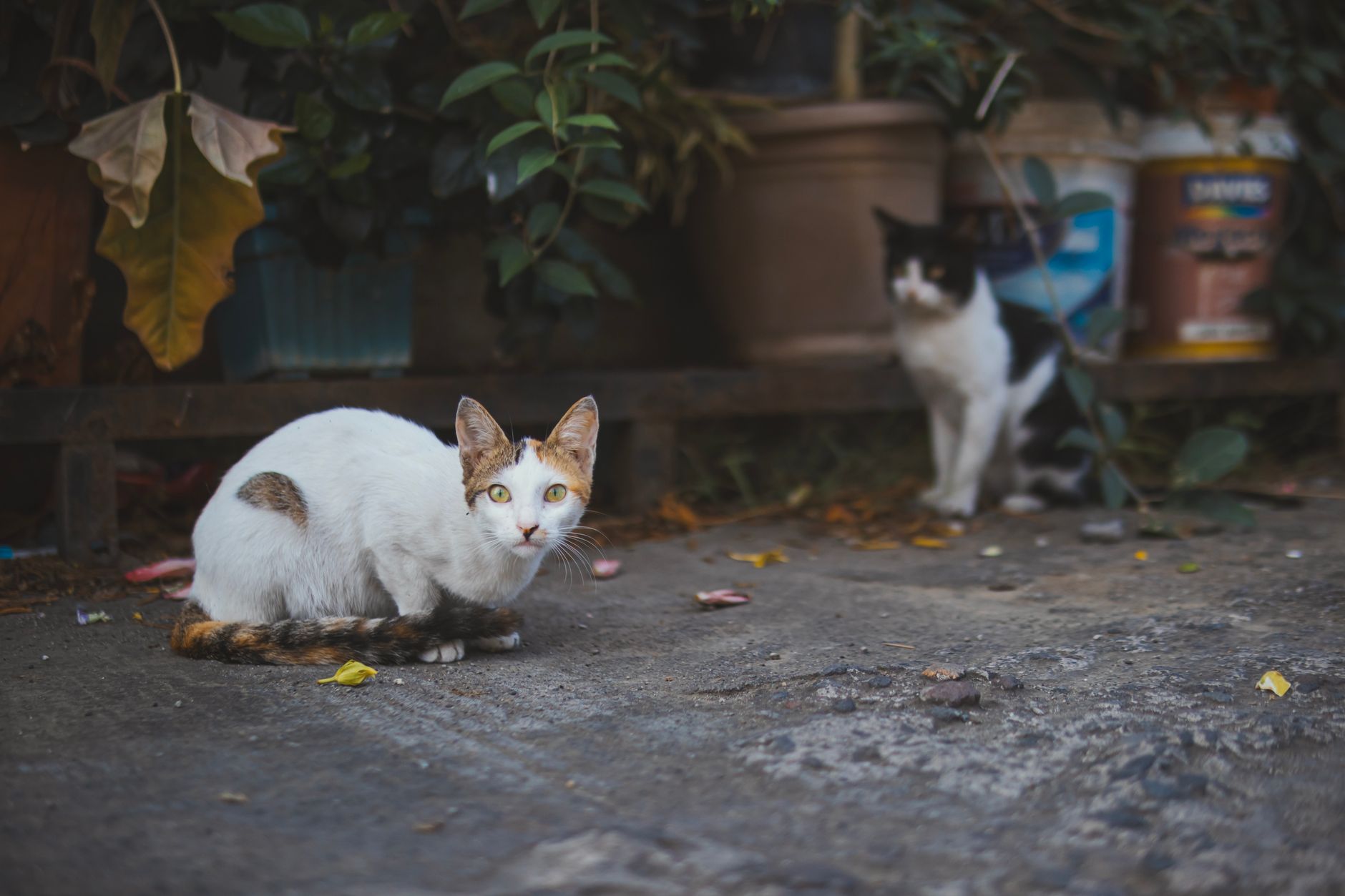
Cat deafness most often affects white, blue-eyed cats from birth, but any cat can lose hearing later from aging or ear disease. Studies find 17-20% of white cats deaf in one or both ears; owners can confirm it with BAER testing and use indoor, visual care. Congenital sensorineural deafness means hearing loss present at birth from inner-ear nerve failure. It differs from later deafness caused by infection, drugs, or age.
Table of Contents
- Why white cats face the highest risk
- How common is deafness in white cats?
- Why does eye color not settle it?
- Can other cats become deaf later?
- What should you do next?
Why white cats face the highest risk
The dominant white W/KIT gene suppresses melanocytes, the pigment cells needed for normal cochlear work. The Journal of Veterinary Internal Medicine links this change to sensorineural deafness that can affect one ear or both.
Cornell University College of Veterinary Medicine identifies white cats with two blue eyes as the highest-risk group, with about 80% showing signs at about four days old from cochlear degeneration, per veterinarian James Flanders Cornell feline ear disorders page. Early change happens inside the inner ear, not from wax or outer-ear blockage.
How common is deafness in white cats?
BAER testing of 84 client-owned pure-breed white cats found 20.2% deaf in one or both ears, including 10.7% bilateral and 9.5% unilateral, with deafness associated with iris color, according to Cvejic and colleagues in the Journal of Veterinary Internal Medicine 2009 white-cat hearing study. Bilateral means both ears; unilateral means one ear hears normally.
A 2007-2021 study of 72 purebred white cats in Poland found 16.7% with congenital sensorineural deafness, including 11.1% unilateral and 5.6% bilateral 2022 Polish white-cat study. Rates shift with breed mix, testing age, and sample size, so use the range as a risk guide rather than a prediction for one kitten.
Why does eye color not settle it?
That 72-cat Polish study found no statistically significant link between blue irises and deafness, with p=0.91. A small purebred sample can miss patterns seen in larger or mixed groups.
For owners, the lesson is direct: eye color raises suspicion in white cats but cannot prove hearing. Watch behavior, test each ear, and avoid breeding decisions based on eyes alone.
Can other cats become deaf later?
Yes. A veterinary review of ototoxicity in dogs and cats lists aging-related nerve decline and ear-canal thickening, chronic middle- and inner-ear infection, gentamicin and similar ear-harming drugs, loud noise, tumors, and head injury.
These causes affect non-white cats and older cats with normal genes. Warning signs include no response to a can opener, sleeping through loud sounds, stronger startle when touched, and louder or changed meows. Ask a veterinarian promptly about ear pain, discharge, balance loss, new drugs, or recent noise or injury.
What should you do next?
Linnaeus and Southfields Veterinary Specialists describe the brainstem auditory evoked response test as the only definitive objective diagnosis, testing each ear separately from about five to six weeks onward Southfields hearing-clinic announcement. A home clap test can miss one-sided hearing because the good ear responds.
The Animal Humane Society advises indoor-only life for deaf pets, with outside time in a catio or harness, plus visual and vibration cues and a steady routine. Practical steps help fast: Expect easy startling and unusually loud vocalizing, since the cat cannot hear its own volume.
- Stomp, flash lights, or use a laser pointer for attention instead of calling.
- Add a routine for meals, play, and bedtime with hand signals.
- Approach from the front and wake gently to reduce startling.