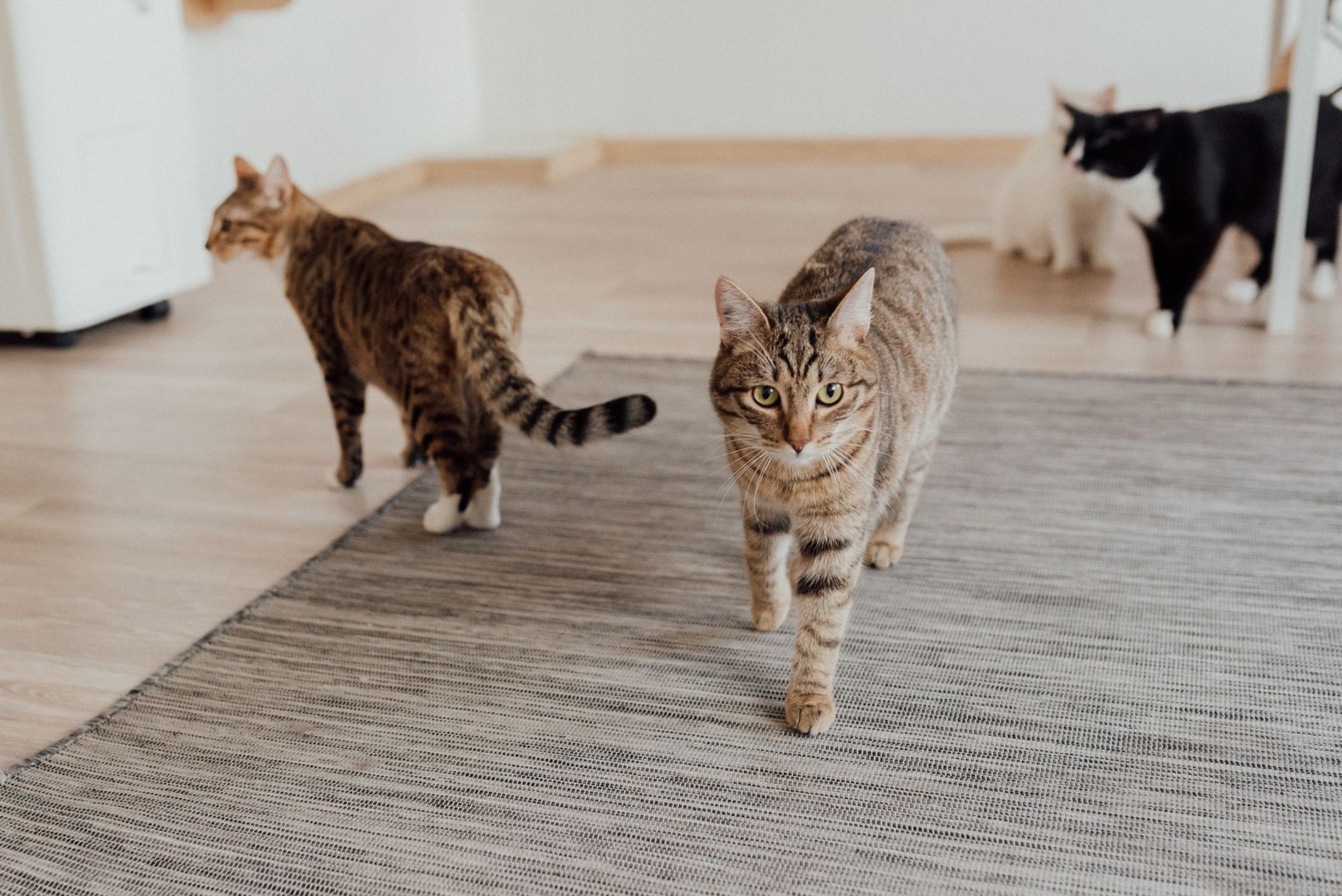
Room layout affects cat stress by shaping exposure, escape options, and access to daily necessities. Cats stay calmer when they can hide, perch above the floor, and use food, water, and litter areas without crossing another animal. Stress here means behavioral tension in a new or crowded room, not illness alone. Layout matters most during change, crowding, or sharing, when cats monitor surroundings for safety.
Table of Contents
- Why do cats avoid wide-open rooms?
- How do hiding boxes help new cats settle?
- Where should food, water, and litter go?
- How should shared homes prevent tension?
Why do cats avoid wide-open rooms?
According to EveryCat Health Foundation in its novel-environment findings, owned cats placed in an unfamiliar room chose concealed areas and high vantage points. They avoided wide open floor while watching the room from cover. That pattern reflects monitoring without exposure.
An open plan removes both cover and height. The cat must cross exposed space to eat, drink, or rest. A layout with a covered bed, a box, and a sturdy shelf gives safer choices.
How do hiding boxes help new cats settle?
In a Dutch shelter trial of 19 new arrivals, cats given a box showed lower behavioral stress and adjusted faster. The box group also interacted more with people, according to Utrecht University researchers described in the shelter-medicine summary. According to the University of Florida shelter-medicine summary, the advantage appeared mainly in the first two weeks after admission, then the groups converged.
A box speeds recovery from novelty; it does not guarantee a permanently calmer home cat. Place one snug box per new cat in a quiet corner, opening toward the room. Let the cat choose when to enter, hide, or look out.
Where should food, water, and litter go?
The Feline Veterinary Medical Association advises separate areas for food, water, toileting, scratching, play, and rest. Spacing prevents one cat from blocking another cat's access. Think zones, not one corner station.
Cornell University College of Veterinary Medicine advises one litter box per cat plus one extra in its new-cat care guide. It also advises keeping food and water dishes far from litter boxes to prevent contamination and avoidance. Veterinary Practice News describes clinic housing with two joined units, placing bedding and food on one side and litter on the other. That split matches cats' instinct to avoid eliminating near sleeping areas.
- place litter away from meals, with an open approach path
- keep water separate from food, not beside the bowl
- give each cat its own rest area out of direct sightlines
How should shared homes prevent tension?
For multi-cat homes, 2024 guidance from the American Association of Feline Practitioners advises vertical perches at varied heights. It also advises hiding spots with two entry and exit paths, so one cat cannot trap another.
EveryCat Health Foundation reports that longer, voluntary interaction with caregivers lowered fecal stress-hormone levels and stress scores during novelty. Arrange seating and perches so the cat can approach, sit nearby, or leave without being lifted out.