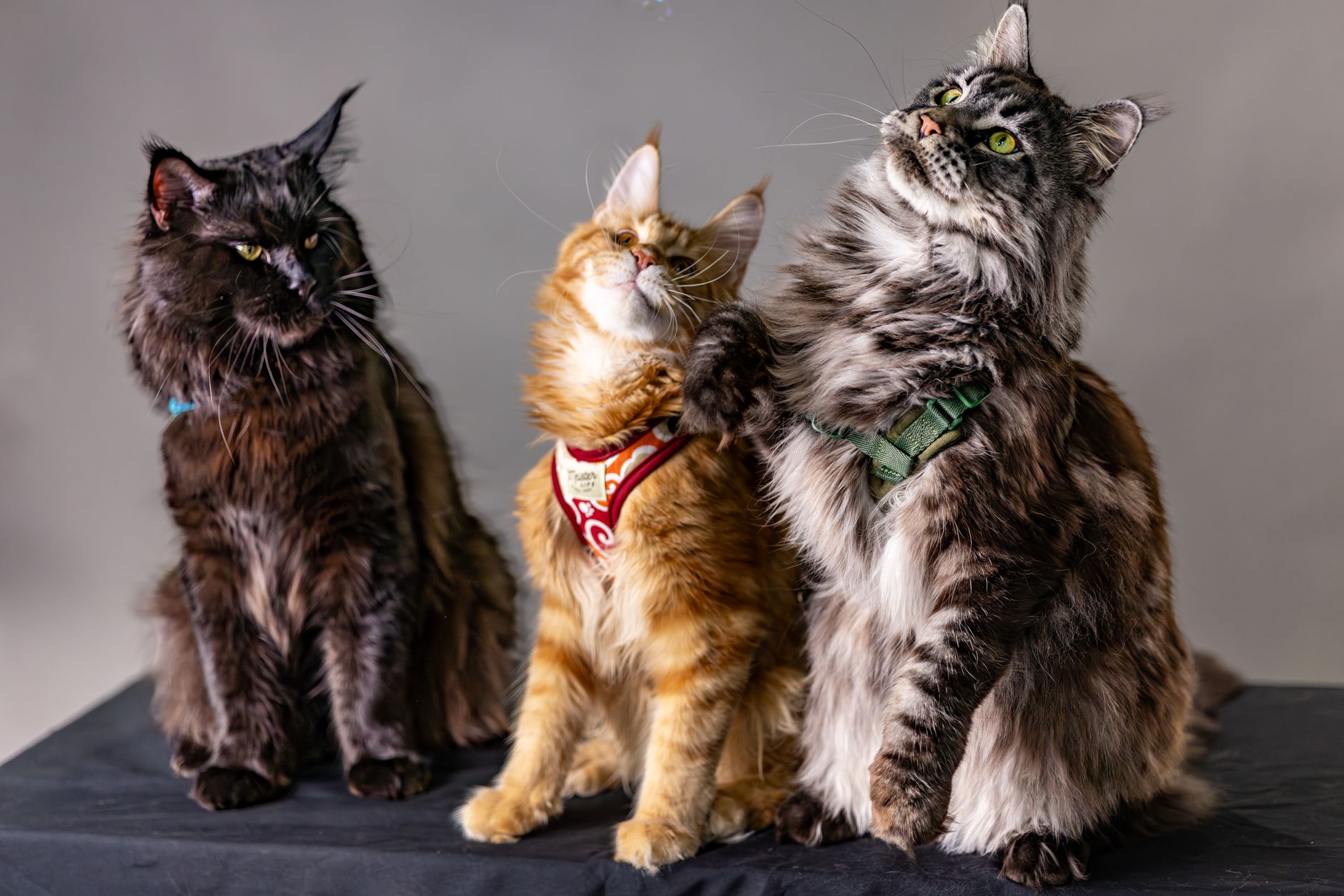
Maine Coon cats purr loudly because their big bodies hold larger vocal structures that create deep, resonant sound. They also purr often during social contact, so owners notice the volume more. A purr is a rhythmic sound made during both breathing in and breathing out. In Maine Coons this sound can carry across a room and feel unusually strong for a house cat.
Table of Contents
- How Purring Works
- Why Size Makes the Sound Louder
- What Loud Purring Means
- When Loud Purring Needs Attention
How Purring Works
According to Vet Verified, a brain signal drives throat muscles to twitch about 25–30 times per second Vet Verified's guide to how and why cats purr. Each twitch opens and closes the vocal cords while air moves in and out. That rapid start-stop action creates the familiar buzz.
Domestic-cat purrs fall around 25–150 Hz, Vet Verified reports. That low pitch travels well and feels like vibration in the chest. It is why a relaxed cat can sound like a small motor.
Why Size Makes the Sound Louder
Petful, citing CFA breed language, calls the Maine Coon North America's largest recognized domestic breed. Adult males commonly reach 15–25 pounds and about 40 inches nose to tail. Bigger chests and throats move more air.
PetsCare links that larger build to larger vocal structures and especially loud, resonant purrs PetsCare's Maine Coon purring guide. Owners often hear the sound from several feet away. Think of a cello versus a violin: larger body, deeper tone.
What Loud Purring Means
UC Davis researcher Leslie Lyons, quoted by Scientific American, ties purring to nursing and close contact between kittens, mothers, and people. The behavior likely helped cats bond and survive. It is social, not only a sign of pleasure.
The Vet Desk describes Maine Coons using frequent purring plus chirps and trills for bonding, attention-seeking, self-soothing, and stress or pain relief The Vet Desk's Maine Coon purring guide. A loud purr on your lap often means contact-seeking. The same loud purr at the vet may mean self-comfort.
When Loud Purring Needs Attention
Guinness World Records puts the extreme in context. The loudest domestic-cat purrs reached 67.8 dB for Smokey in 2011 and Merlin in 2015, near speech level Guinness World Records' loudest-purr listing. Most Maine Coons stay well below that ceiling.
Sudden change matters more than absolute volume. Vet Verified cautions that purring alone does not prove happiness. Watch whole-cat signals and call your veterinarian when the pattern shifts. Run these quick checks:.
- new hiding, flat posture, or tense face
- drop in appetite, thirst, grooming, or litter-box use
- purring that turns constant, stops suddenly, or sounds strained with breathing change