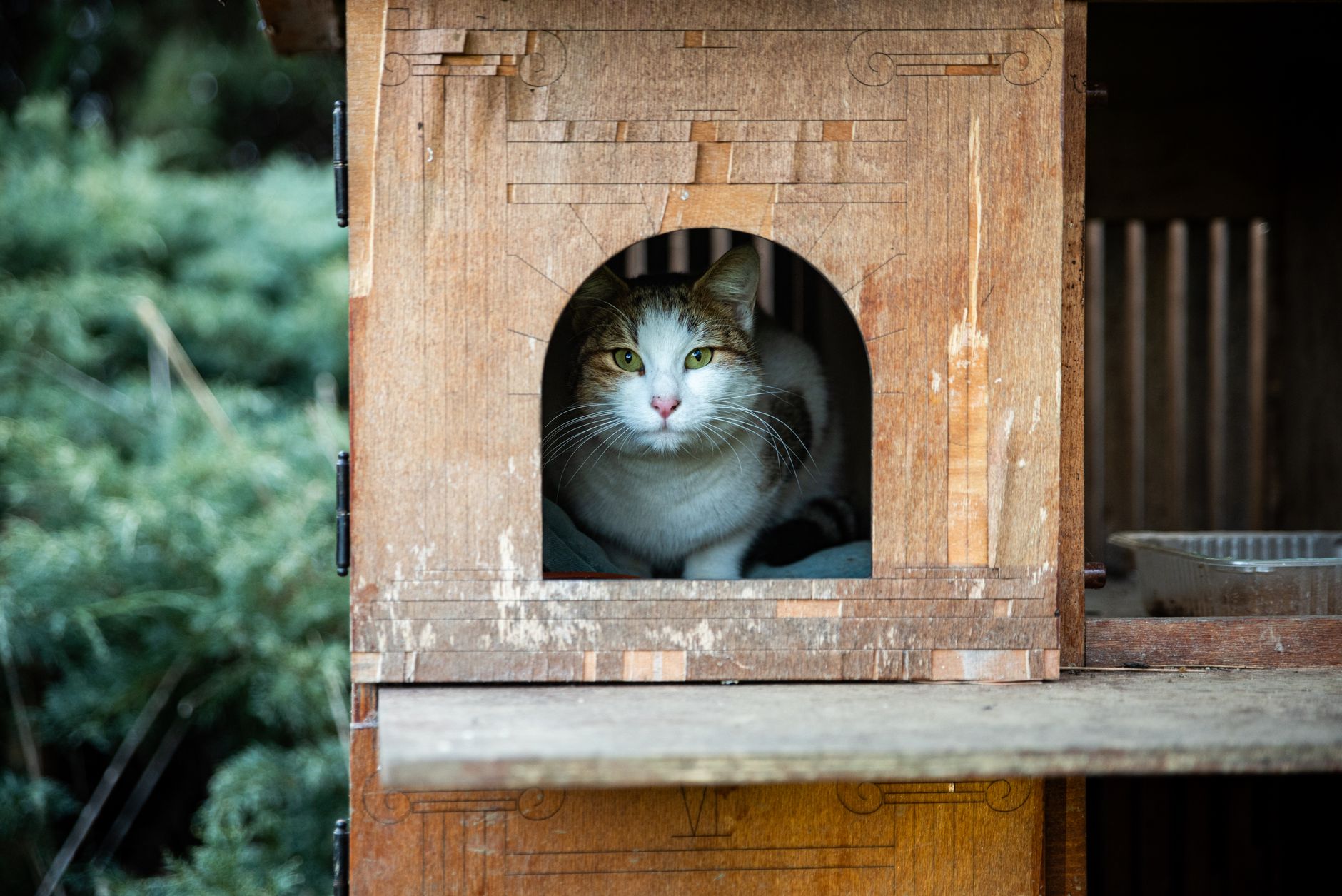
Insulate a small enclosed den inside the window-box catio rather than the whole mesh box. Seal the house opening, line that den with foam board, and bed it with straw. A catio window box is a small mesh enclosure fixed outside a window that lets an indoor house cat get fresh air safely. This den-first method keeps body heat where the cat sleeps without turning the sunny box into a dark shed.
Table of Contents
- Build a small den inside the box
- What bedding stays warm and dry?
- How do you stop drafts from the house?
- How do you block wind without harming the cat?
Build a small den inside the box
Nealon Insulation advises placing an enclosed sleeping den in the window box because the main heat loss is the house opening, not the mesh walls. Details appear in Nealon Insulation's Connecticut catio guide. Line the den walls, floor, and roof with rigid foam board or Styrofoam about 1 inch thick.
Alley Cat Allies recommends this thickness in its outdoor shelter building guide. Tape or seal every seam so drafts cannot bypass the insulation. Elevate the den 2 to 4 inches off the catio floor on wood strips or a pallet.
- Cut foam panels to fit tight, with no gaps at corners.
- Tape seams inside and out.
- Raise the den, then check that it sits level and dry.
What bedding stays warm and dry?
Bed the den loosely with straw, not hay, blankets, or towels. Alley Cat Allies explains in its cold-weather tips for cats that straw's hollow stalks repel moisture and allow burrowing. Hay looks similar but holds water and molds.
Cloth absorbs moisture, then freezes and chills the cat. Fluff fresh straw loosely so the cat can nestle down. Replace it when it looks flat, damp, or dusty.
How do you stop drafts from the house?
Treat the house-to-catio passage like any exterior gap. Nealon Insulation recommends foam or brush weatherstripping around a window insert plus a snug-closing, lockable cat flap. For operable windows, Virginia Energy Sense says flexible weatherstripping preserves operation while sealing air leaks.
The same source notes that U.S. DOE estimates up to 30 percent of home heat escapes through windows. Close and latch the flap when the cat comes inside. Check the insert each fall for cracked foam, bent brush, or daylight around the edges.
How do you block wind without harming the cat?
Add seasonal wind protection over part of the box with clear polycarbonate panels, heavy-duty tarps, or plastic sheeting. Cat Topia recommends covering only part of the box to keep light and airflow while blocking wind, rain, and snow. Keep the den doorway small, turned away from prevailing wind, and fitted with a flap or bubble-wrap curtain.
Pet Infrastructure describes this offset-door method as a way to trap body heat. Retain ventilation at all times and keep antifreeze and chemicals away because they are toxic to cats. Custom Pet Enclosures advises using only pet-rated heated pads and keeping indoor access open in extreme cold.