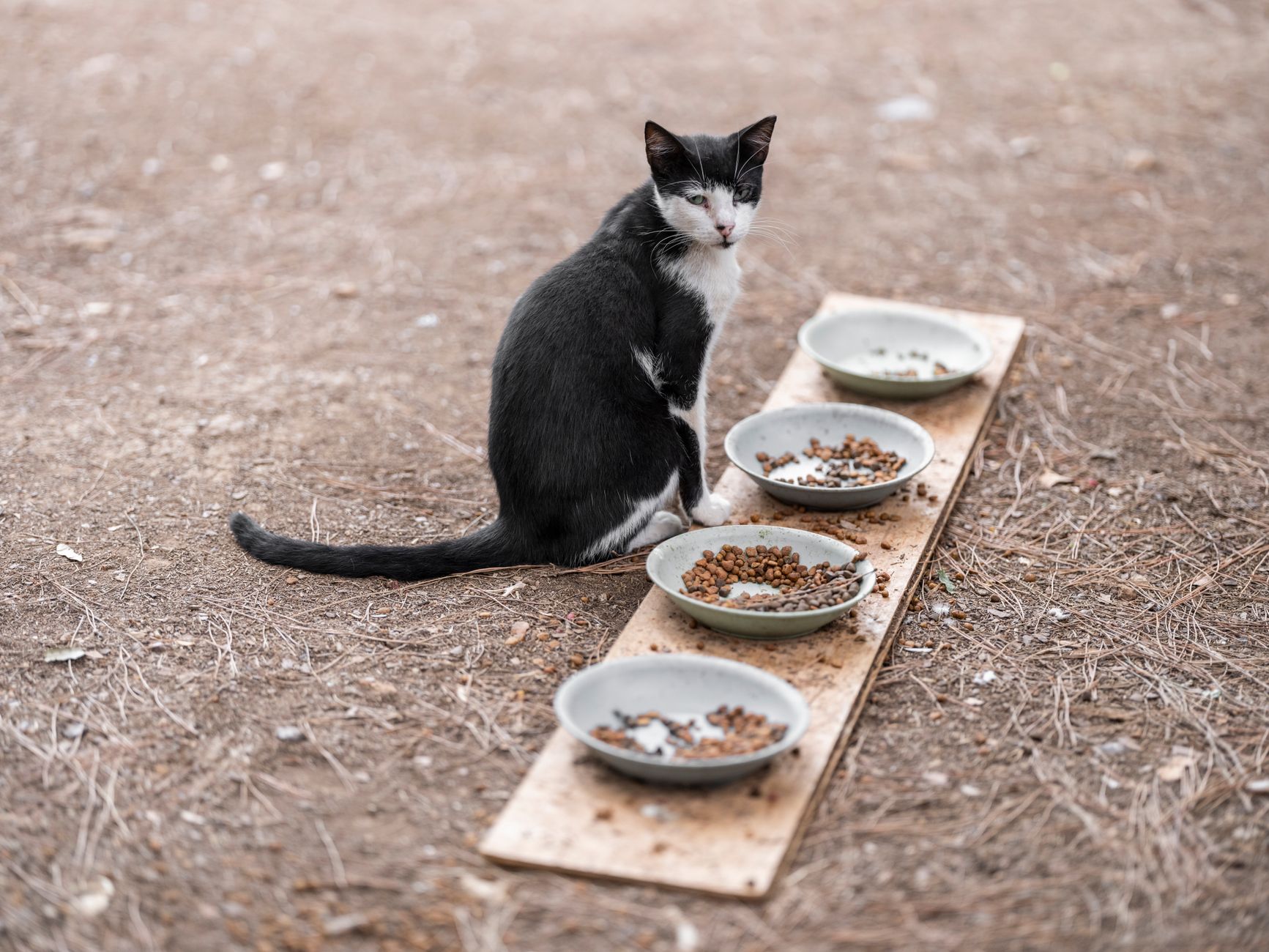
Yes — feeding stray cats outdoors reliably draws other animals, and the research is specific about which ones. A two-year camera study of a trap-neuter-return colony in Johnston, Rhode Island logged 12,272 motion-activated photographs and found that cats accounted for only 64% of visits to the feeding station, published in *Society & Animals*. Raccoons made 22% of visits, coyotes 9%, and skunks 5%.
Roughly one visit in three was not a cat. That does not mean you should stop feeding. It means the feeding method decides how much wildlife you invite, and the same study found that how and when food is offered changed the outcome measurably. The animal most at risk from an unmanaged station is often the cat you are trying to help.
Table of Contents
- Which animals show up, and in what numbers
- The risk runs to the cats first
- Disease is a second, quieter problem
- What actually reduces wildlife visits
- Outdoor feeding can also be a code violation
- Frequently Asked Questions
Which animals show up, and in what numbers
The Rhode Island colony gives the clearest picture. Over two years, the camera recorded four species using one station: cats, raccoons, coyotes, and skunks, in that order of frequency. Raccoons at 22% were by far the most persistent non-cat visitor — they are dexterous, nocturnal, and remember a reliable food source. Federal wildlife managers describe the same pattern. USDA APHIS Wildlife Services' technical bulletin on free-ranging and feral cats states plainly that in areas with feral cat colonies, cat feeding stations often attract local wildlife such as raccoons and coyotes.
The species mix varies enormously by location, and one colony is not a national average. A trail-camera sample from the Urban Wildlife Research Project at a different station recorded wildlife at 96% of visits — skunks 74%, raccoons 15%, gray foxes 7%, and cats just 4%. That sample is not peer-reviewed, so treat the exact figures with caution, but the direction is consistent: a station can be used more by wildlife than by cats. Where bears live, the list grows. Idaho Fish and Game warns that pet food and scraps left outside attract bears, raccoons and skunks, and Manitoba's wildlife guidance notes that odors lingering in the dish alone can draw bears, coyotes, foxes, skunks and raccoons.
The risk runs to the cats first
This is the part most feeders do not expect. In the Johnston colony, the cat population fell from 17 individuals to 12 over the two study years, and the cats showed short life spans. The authors attributed that in part to coyote predation drawn to the feeding station. A feeding station concentrates cats in one predictable place at predictable times.
A coyote that learns the schedule does not need to hunt — it waits. The food is the lure, but the cats become part of what the lure delivers. That reframes the practical question. You are not only managing a neighborhood nuisance; you are deciding whether your station functions as a safe resource or as a baited location for the animals you feed.
Disease is a second, quieter problem
When cats and wildlife eat from the same bowl, they exchange more than food. New York City's health department documented skunks and raccoons in Greenwood Heights, Brooklyn co-mingling with stray cats while feeding on cat food likely put out for strays, and flagged it as a possible rabies transmission route between wildlife and cats. Raccoons and skunks are both primary rabies reservoirs in much of the eastern United States.
A shared dish puts an unvaccinated stray in repeated close contact with them — and puts the humans who tend that colony in closer contact too. This is why public health agencies give blunter advice than cat advocates do. NYC Health's raccoon guidance tells residents not to feed pets outside because pet food attracts raccoons, and D.C. Health gives the same instruction: feed pets indoors, and do not leave uneaten pet food outdoors.
What actually reduces wildlife visits
The Rhode Island study tested this rather than guessing. Abundant food left on the ground was associated with increased wildlife visits; elevated food, and food deliberately limited in quantity, was associated with decreased visits. Skunks and coyotes could not reach the elevated platform at all.
Raccoons could. Humane World for Animals' community cat feeding guidelines translate that into a specific build: feed during daylight hours to avoid nocturnal raccoons, opossums and skunks, and mount the station at least six feet up a smooth post fitted with an aluminum flashing skirt, which climbers cannot defeat. The skirt is the detail that matters — height alone is what raccoons beat. Practical steps, in order of how much they change:.
- Feed on a fixed daylight schedule, not at dusk or overnight.
- Put out only what the colony eats in 30 minutes, then remove the dish.
- Never leave food on the ground; use a raised platform with a flashing-skirted post.
- Wash the bowl and take it indoors — residual odor keeps drawing animals after the food is gone.
- Clear spilled kibble from under the station each visit.
Outdoor feeding can also be a code violation
Local law may settle the question before wildlife does. Kitsap Public Health District's rodent ordinance bars feeding wildlife or pets outdoors in any manner that lets the food attract or be accessible to rodents, which makes an unmanaged colony station a code issue rather than a neighbor dispute. Ordinances like that are written around rodents, but a ground-level bowl of kibble satisfies the language regardless of who it was meant for.
Check your county or city health district's rules before building a permanent station, and be aware that a complaint from a neighbor is usually what triggers enforcement. The managed-feeding practices above tend to satisfy these ordinances as a side effect. A raised platform, timed feeding, and a removed dish leave nothing accessible between meals, which is precisely what the rules ask for.
Frequently Asked Questions
Is it better to stop feeding strays entirely to protect wildlife?
The evidence here addresses feeding method, not whether to feed. The Rhode Island study found elevated and limited food reduced wildlife visits, which means a managed station behaves very differently from an unmanaged one.
Will a covered or enclosed feeder solve the problem?
Partly. The tested variable was height and quantity, and raccoons reached the elevated platform while skunks and coyotes did not. Raccoons are the species any physical barrier has to defeat, which is why Humane World specifies a smooth six-foot post with an aluminum flashing skirt rather than a cover.
Does daytime feeding mean the cats go hungry?
Community cats adapt to a reliable schedule. Daylight feeding works because raccoons, opossums and skunks are nocturnal, so the food window and their activity window stop overlapping.