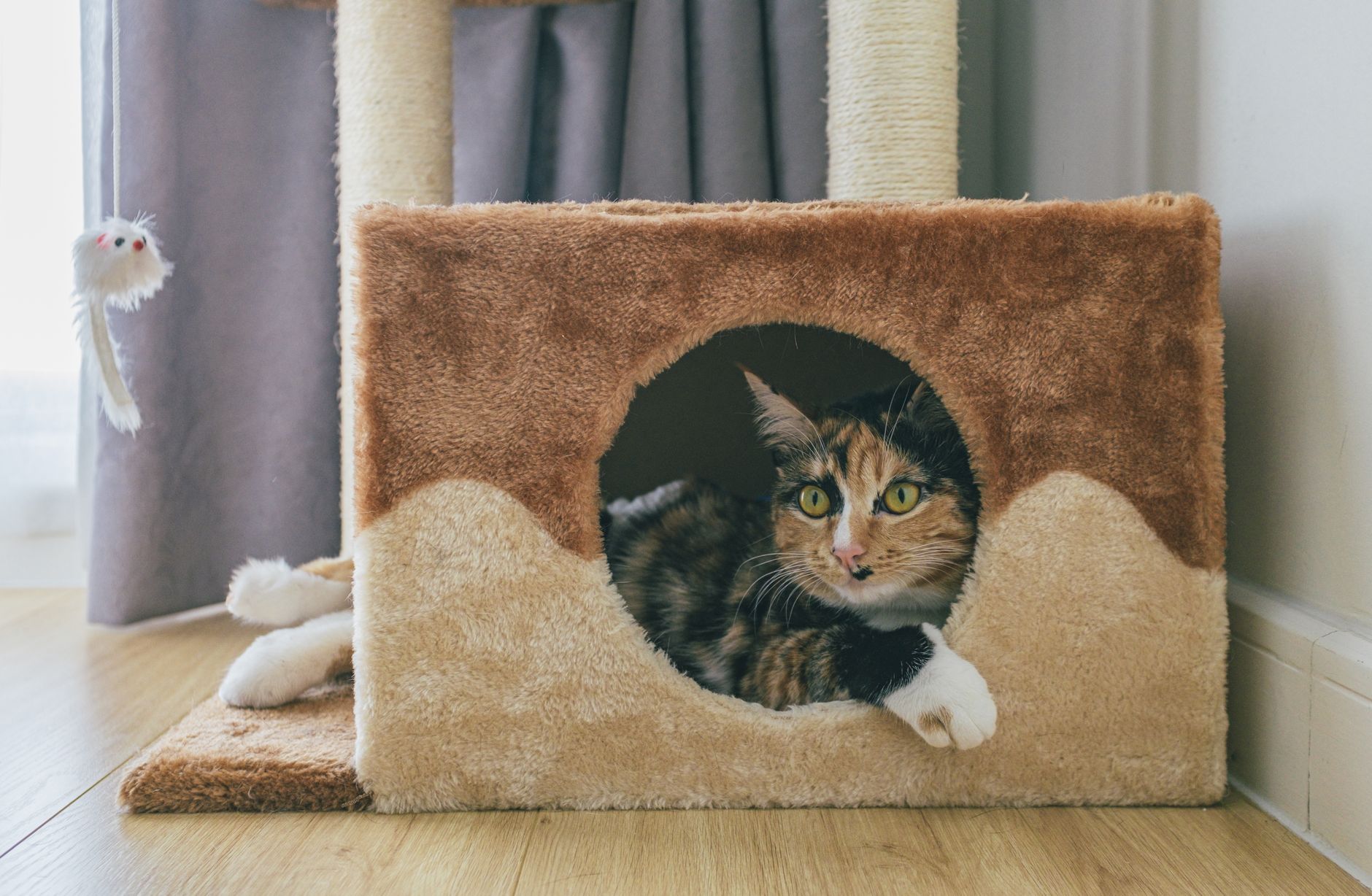
A cat apartment cage setup for limited square footage is a roomy indoor pen that serves as a home base, not full-time confinement. It works when the pen holds separate rest, scratch, feeding, and toileting spots and the cat gets daily time outside it. Think in zones rather than square inches. A small flat can work when the pen stays clean and quiet, the cat has a hidden perch, and climbing options extend the living area upward.
Table of Contents
- How much floor space does a home base need?
- What zones go inside the pen?
- How do you add room without adding footprint?
- Where does litter fit in a tiny flat?
How much floor space does a home base need?
Bigger is better for a pen that holds a bed, scratcher, food, water, and litter. The Association of Shelter Veterinarians calls individual adult-cat housing under 8 sq ft unacceptable and recommends ideally 11 sq ft or more per cat, with at least 18 sq ft per cat for cohoused cats, according to shelter housing standards.
Use those figures as a floor, not a goal. A single-level pen at the minimum leaves little room for separation, so choose a two-level unit when floor area is tight. For pairs, add a second resting shelf rather than squeezing two cats into a single-cat footprint.
What zones go inside the pen?
Give the cat a private retreat, preferably raised, such as a covered box, carrier, perch, or hideaway hole. VCA Animal Hospitals, summarizing AAFP and ISFM guidance, says cats also need separated food, water, toileting, scratching, play, and rest areas, as explained in its feline environmental needs guide. Set the layout so the cat can eat, scratch, hide, and toilet without crossing one small spot.
Keep food and water away from litter, and keep the hide in the quietest corner. A useful small-pen order is: Leave clear walking room between stations. If the cat must step over food to reach litter, the pen is too crowded.
- upper level: covered hide plus soft rest pad
- mid level or side hook: scratch surface and small toy
- lower level: food and water at one end, litter at the opposite end
How do you add room without adding footprint?
Cats use floor and vertical space, so height adds living choices without taking floor. VCA Animal Hospitals notes that many cats can live well in small homes when shelves, wall perches, and tall trees add climbing, hiding, and resting choices, as described in its cat pet-selection guide.
Anchor a tall tree near the pen and add one or two wall steps toward a window perch. Keep the route simple, with one easy jump between levels and no wobbly landing. Open the pen door for supervised roaming, play, and window watching, then let the cat return to the pen for meals and quiet rest.
Where does litter fit in a tiny flat?
Crowding boxes together invites avoidance and conflict. Cornell Feline Health Center recommends one box per cat plus one extra in different quiet spots, away from food and water and reachable at all hours, according to its house-soiling guidance.
In a studio, place the pen box inside the pen and the spare box outside in another calm corner. Scoop daily, wash hands after handling litter, and call a veterinarian about new misses, since dirty, noisy, or poorly placed setups fail fast. Keep nighttime access open so the cat never has to hold urine until morning.