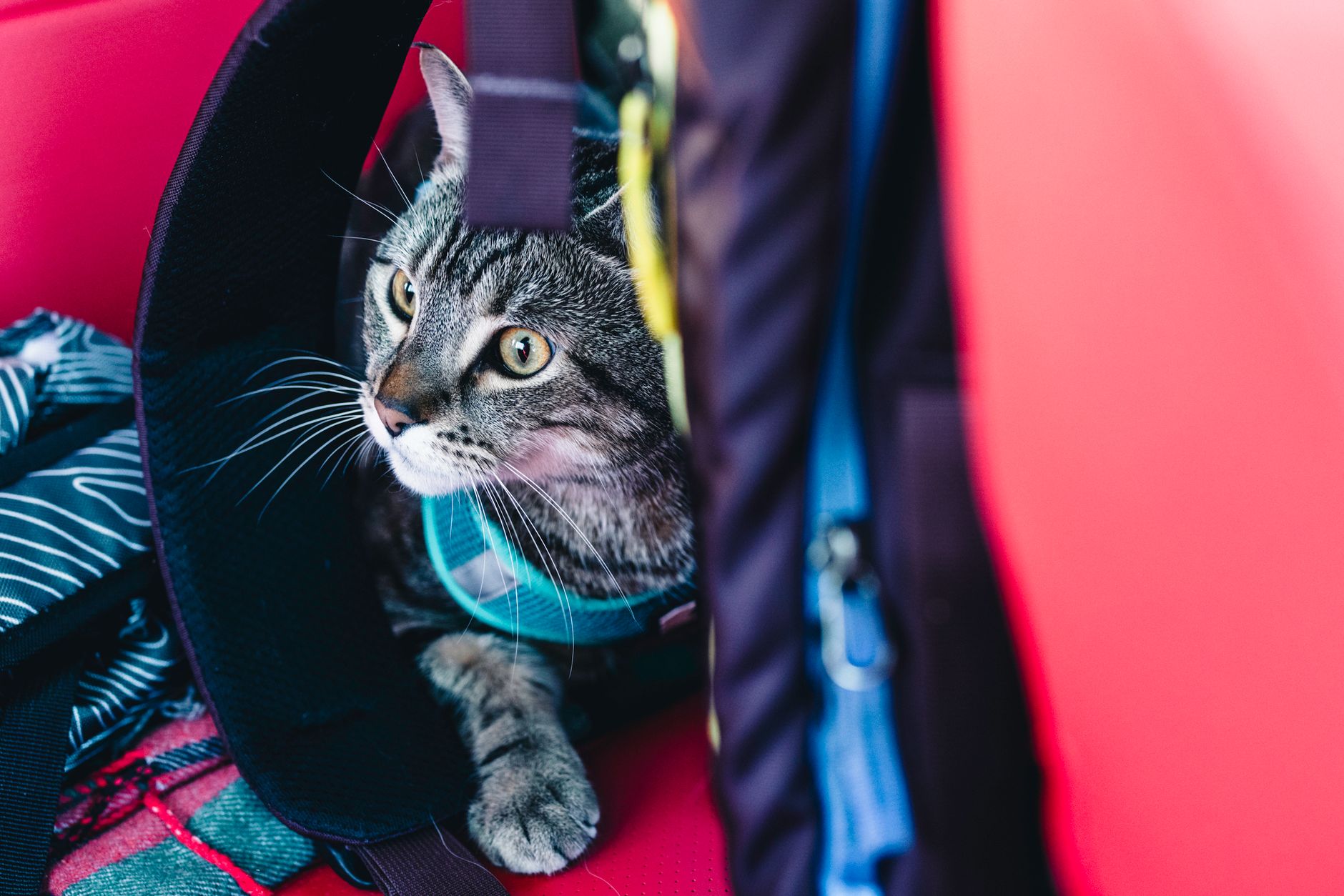
A cat carrier checklist before a road trip starts with a secured hard-sided carrier plus practice drives, vet paperwork, food, water, and litter supplies. A carrier here means an enclosed, ventilated box that confines the cat safely in the car. The goal is fewer surprises: a cat that fits comfortably, stays calm, eats familiar food, and can use litter at stops. The list below groups each task so you can pack and confirm it before leaving.
Table of Contents
- Is Your Carrier Crash-Ready?
- How Do You Lower Travel Stress?
- What Vet and ID Checks Come First?
- What Food, Water, and Litter Go in the Car?
- When Should the Cat Stay Home?
Is Your Carrier Crash-Ready?
Use a hard-sided, ventilated carrier sized so the cat can stand or sit without touching the top, lie down, and turn around. Secure it so it will not slide in an abrupt stop. According to the ASPCA, wire or collapsible crates can collapse in a crash, described in ASPCA travel safety guidance.
Test the fit at home before packing the car. The cat should enter, turn, and settle without crouching against the roof. Recheck the secured position after every stop.
How Do You Lower Travel Stress?
Acclimate the cat with short drives of gradually increasing length before the long trip. Place a familiar blanket or toy in the carrier to reduce stress.
The ASPCA links this gradual exposure and familiar scent to calmer travel, described in ASPCA travel safety guidance. Keep the same bedding for practice and travel day. Load calmly, speak little, and keep the carrier covered only if the cat settles better that way.
What Vet and ID Checks Come First?
Schedule a veterinary exam before a long road trip. Obtain a health certificate generally 7-10 days before travel, and confirm vaccinations, feeding, and whether anti-anxiety or anti-nausea medication fits this cat.
UC Davis School of Veterinary Medicine advises this pre-trip review, explained in UC Davis traveling-cats guidance. Microchip the cat and add a collar tag with a cell number, destination number, and backup contact. Carry vaccination records and veterinary contacts in case of escape or emergency.
What Food, Water, and Litter Go in the Car?
Bring the usual food and water from home, with unbreakable or spill-proof bowls. Offer small portions and water at stops, and ask a veterinarian about withholding breakfast on travel day.
VCA Canada gives this feeding routine for car travel, detailed in VCA Canada road-trip guidance. Pack extra regular food and medication for delays. Pre-portion meals in individual containers, and bring medical records, a pet first-aid kit, and familiar bedding.
- small travel litter box, such as a plastic dishpan, with usual litter
- scoop, bags, paper towels, gloves, and absorbent carrier pads
When Should the Cat Stay Home?
Cats with heart, breathing, or severe stress problems may be unsafe travelers. A pre-trip exam helps identify breathing strain, cardiac risk, panic, vomiting, or refusal to eat.
Look up emergency clinics along the route before departure. Consider a pet sitter when travel stress outweighs the benefit of bringing the cat.