Health departments across the country are actively reconsidering how cities manage populations of free-roaming and feral cats, with several municipalities implementing or debating significant changes to their ordinances. On July 6, 2026, the Spencer City Council heard a warning from City Manager Kevin Robinson that the city should expect “months of public debate” over changes to how Spencer handles free-roaming cats, signaling the complexity and contention surrounding these policy decisions. The Columbia/Boone County Board of Health similarly revisited its feral cat ordinance in April 2026, with officials discussing the removal of permit requirements after receiving repeated resident feedback about the barriers these requirements create in practice.
These debates reflect a growing tension between managing public health concerns and addressing the practical challenges of existing regulations. Cities are recognizing that their current approaches—often requiring permits before anyone can care for feral colonies—create unintended barriers that leave the problem unsolved rather than controlled. The shift toward streamlining these rules, removing unnecessary restrictions, and clarifying what residents can actually do about feral cat colonies represents a fundamental rethinking of how public health departments approach an increasingly visible problem in neighborhoods across the country.
Table of Contents
- Why Cities Are Revising Feral Cat Population Control Ordinances
- Understanding Permit Requirements and Their Real-World Impact
- Disease Risks That Drive Regulatory Concern
- Trap-Neuter-Return Programs and Structured Management
- Enforcement Challenges and Compliance Barriers
- Landlord Approval as a Persistent Barrier
- The Months of Debate Ahead
Why Cities Are Revising Feral Cat Population Control Ordinances
The impetus for these regulatory changes stems largely from real-world failure of existing systems. In Columbia, Missouri, the ordinance requires residents who want to care for feral cats to obtain a permit from the Department of Health and Human Services—but only if the property owner approves. This permission requirement has become a catch-22 in practice. Property owners, often landlords with liability concerns or little interest in hosting feral cat colonies on their property, routinely refuse to authorize permits.
As a result, very few residents are actually applying for permits, meaning the feral colonies remain unmanaged and unvetted while residents attempting to do the right thing hit an insurmountable wall. Health departments have begun to recognize that these barriers actually prevent the orderly management of feral populations rather than encourage it. By removing or simplifying permit requirements, cities aim to enable more residents to participate in structured feral cat management. This shift acknowledges an important reality: the current rules create compliance friction without producing better outcomes. Instead, they discourage well-intentioned residents from documenting and managing colonies in an approved way.
Understanding Permit Requirements and Their Real-World Impact
The permit system, designed to ensure oversight and control, has created unintended consequences that health departments are now grappling with. Columbia’s model requires property owner approval before any permit can be issued—a seemingly reasonable safeguard that has simply stopped working in practice. Landlords have little incentive to approve permits for feral cat activities on their property, and many refuse on principle.
This means residents who encounter feral colonies often choose not to engage with the official system at all, leaving colonies unvaccinated, untreated, and unmonitored. The irony is that these permit barriers may actually worsen the public health situation. Without official documentation and oversight, there is no way to track which colonies are receiving care, which cats have been vaccinated or treated, or whether humane practices are being followed. The Columbia Board of Health’s willingness to revisit and potentially remove the permit requirement reflects this uncomfortable realization: the rule designed to protect public health is instead preventing the very documentation and oversight it was meant to ensure.
Disease Risks That Drive Regulatory Concern
The reason cities impose any restrictions at all on feral cats centers on legitimate public health concerns. Free-roaming cats can transmit serious zoonotic diseases to human populations, including rabies, toxoplasmosis, ringworm, and cat scratch disease. These are not hypothetical risks—they represent real illness in people who come into contact with untreated feral populations. Public health departments have a statutory obligation to address these risks, which is why most ordinances attempt to impose some structure on feral cat management.
However, this is where the tension becomes clearest. If the ordinance’s permit system prevents most residents from documenting and managing feral colonies, the disease risks actually increase rather than decrease. An unmanaged, unvaccinated feral population poses greater disease risk than a managed one. Health officials across multiple jurisdictions have come to understand that removing barriers to responsible colony management may actually better serve the core public health mission than maintaining regulatory obstacles that prevent compliance.
Trap-Neuter-Return Programs and Structured Management
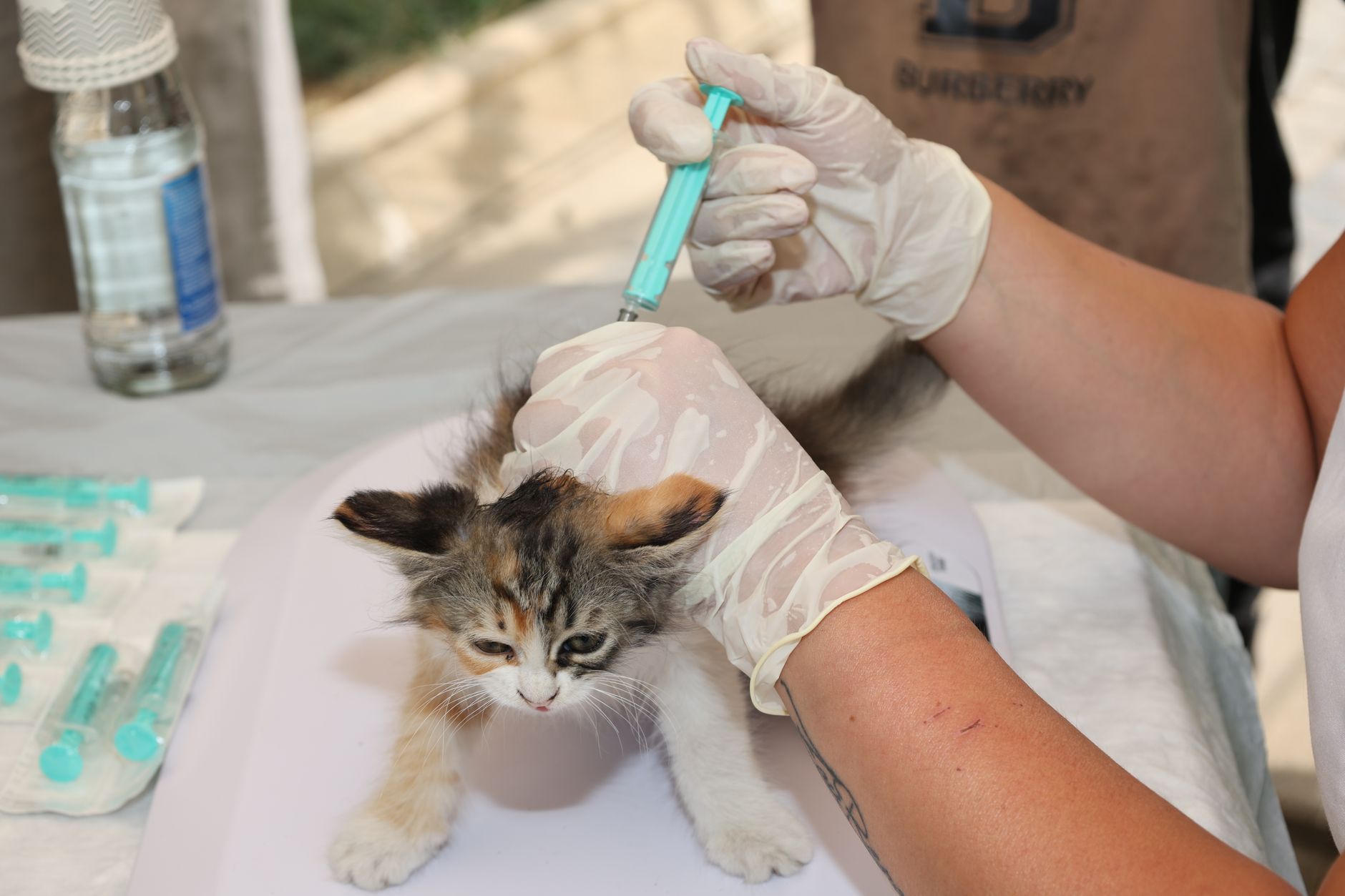
Several cities are turning to Trap-Neuter-Return (TNR) programs as the preferred approach for managing feral colonies. The city of Festus, Missouri recently amended its feral cat ordinance to provide clarity around TNR procedures, specifically including trapping, neutering, vaccinating, and returning the cats. By putting this process into the ordinance itself, Festus gave residents and organizations clear guidance on what constitutes approved, humane feral cat management.
Festus also implemented specific penalties for violations—fines of up to $250 per offense—establishing clear consequences while also clarifying what actions are actually permitted. This approach makes the rules less ambiguous than the previous permit-based systems. Instead of requiring advance approval from landlords, the TNR-focused ordinance describes the acceptable procedure itself. A resident can follow those steps without needing to navigate a permission structure that may never be granted, while the city retains enforcement authority against practices that fall outside the guidelines.
Enforcement Challenges and Compliance Barriers
Even with clearer rules, enforcement remains complex. The fines Festus established—up to $250 per offense—provide a deterrent, but they also raise questions about what actually triggers enforcement. Is an active TNR operation a violation, or is it a violation only if done incorrectly? Are residents conducting TNR activities subject to fines, or only those engaged in prohibited practices? These ambiguities explain why health departments are now spending months in public debate, as Spencer’s experience demonstrates.
Compliance also depends heavily on whether residents actually know what the rules allow. A permit system, however flawed, at least forces a conversation between the resident and the health department. Removing permits means the city must communicate the rules more clearly through other channels. There is a real risk that without clear public education, residents will either continue the same patterns they always have or will assume that any feral cat management is prohibited.
Landlord Approval as a Persistent Barrier
The landlord approval requirement in Columbia’s original ordinance illustrates a structural problem in how cities design feral cat ordinances. Most feral colonies exist on property that is rented, not owner-occupied. This means that the person most motivated to manage the colony—the tenant who lives nearby—is dependent on the landlord’s consent. Many landlords see feral cats purely as a problem, not as something requiring structured management.
Others worry about liability or simply do not want the associated activity on their property. Some residents have found workarounds, such as obtaining permission by framing TNR efforts as pest control, but these informal arrangements provide no oversight or documentation. When Columbia’s Board of Health discussed removing the permit requirement, they were essentially acknowledging that the landlord approval provision was structurally unworkable given typical rental relationships. This limitation explains why the Board of Health is actively revisiting the rule—not because feral cats stopped being a concern, but because the rule itself prevents the very management approach it was meant to enable.
The Months of Debate Ahead
Spencer, Iowa’s anticipated months of public debate will likely address many of these same issues: whether permits should be required, who should be allowed to conduct TNR, what notification procedures should be in place, and how violations should be handled. These decisions require health departments to balance genuine disease concerns against practical recognition that some rules actively prevent management rather than enable it. The Spencer City Council will have to decide whether it wants a permitting system that looks good on paper but generates little actual compliance, or a framework that enables documented management even if it means accepting that landlords cannot veto resident involvement. The outcome of Spencer’s debate and similar discussions across municipalities will shape how cities approach feral cat management for years to come.
Some jurisdictions may embrace simpler ordinances that allow TNR with basic safety guidelines, as Festus has done. Others may try hybrid approaches that make permits easier to obtain by removing landlord approval requirements, as Columbia is considering. What seems clear from these ongoing debates is that the old model—requiring permits that landlords routinely deny—is being abandoned. Health departments have recognized that the solution to feral cat management is not a rule that prevents most residents from participating, but rather a clear framework that makes participation possible while maintaining public health safeguards.
- —