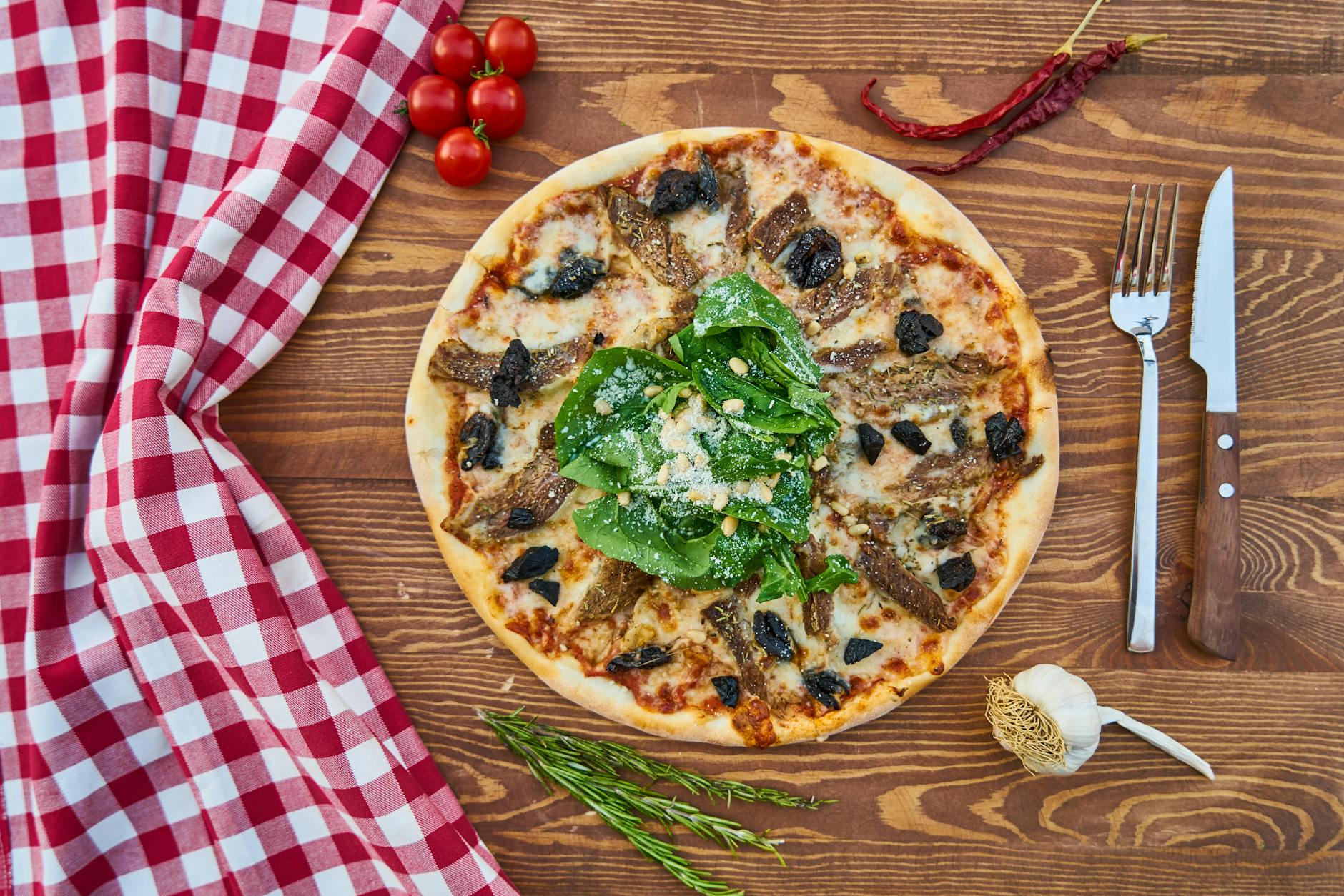
No, pizza toppings are generally not safe for cats to eat. Most common pizza toppings contain ingredients that are toxic, harmful, or difficult for cats to digest, including garlic, onions, excess salt, and fatty meats. Even seemingly harmless toppings like cheese can cause digestive upset in cats, which are obligate carnivores with stomachs adapted for a very different diet than human food.
A cat eating a small piece of plain pizza crust might experience mild symptoms, but toppings like pepperoni, sausage, or vegetables with garlic powder could trigger serious health problems ranging from vomiting to organ damage, depending on the amount consumed. The danger varies by topping type and quantity. While a single bite of pepperoni probably won’t hospitalize your cat, regular exposure or larger quantities create cumulative risk. The bigger problem is that cats don’t have taste receptors for sweetness and lack certain digestive enzymes that humans possess, making them unable to process foods we consider normal.
Table of Contents
- What Happens When Cats Eat Common Pizza Toppings?
- Toxic and Digestive Hazards in Pizza Ingredients
- How Pizza Affects Feline Digestive and Metabolic Health
- What Should You Feed Your Cat Instead of Pizza?
- Emergency Warning Signs After Pizza Consumption
- Understanding Your Cat’s Nutritional Needs vs. Human Food
- Breaking the Pizza Habit in Multi-Pet or Busy Households
- Conclusion
- Frequently Asked Questions
What Happens When Cats Eat Common Pizza Toppings?
Garlic and onions, found in many pizza seasonings and sauces, contain compounds called thiosulfates that damage red blood cells in cats, leading to a condition called hemolytic anemia. Even garlic powder sprinkled on a pepperoni pizza is enough to cause problems. Onions present an even greater risk because cats are more susceptible to their effects than dogs. If your cat consumed pizza with these toppings, symptoms typically appear within a few hours to a few days and include weakness, pale gums, orange or brown-colored urine, and lethargy. A cat eating pizza loaded with garlic-herb seasoning might show signs of anemia within 72 hours, though some cats show delayed symptoms.
Pepperoni and processed meats pose different risks. These toppings are high in sodium, fat, and nitrates. Too much salt causes electrolyte imbalances and dehydration in cats, while high fat can trigger pancreatitis—a painful and potentially life-threatening inflammation of the pancreas. Cats have a much lower tolerance for fat than humans do. A cat that eats several pieces of pepperoni-laden pizza might develop vomiting and abdominal pain within hours, or pancreatitis could develop more gradually over days if this becomes a repeated habit.
Toxic and Digestive Hazards in Pizza Ingredients
Beyond the toppings themselves, pizza sauce deserves attention. Most pizza sauces contain garlic, onion, excess salt, and sometimes added sugar—none of which cats need or tolerate well. The acidity in tomato sauce can also irritate a cat’s digestive system. Additionally, many restaurants use garlic powder and onion powder as hidden ingredients in their pizza seasonings, making it impossible to know exactly what’s in the sauce unless you ask directly. A cat licking pizza sauce off a crust absorbs concentrated garlic and salt, which is more hazardous than the same amount spread throughout a larger portion.
Cheese is another seemingly innocent topping that causes problems for many cats. Cats are typically lactose intolerant after weaning, meaning they lack sufficient lactase enzyme to digest dairy properly. A cat eating pizza with mozzarella cheese might experience diarrhea or vomiting several hours later. Even cats that tolerate small amounts of cheese will struggle with the quantity found on a typical pizza slice. The combination of cheese, fat, and salt makes pizza particularly problematic for digestive health compared to other human foods.
How Pizza Affects Feline Digestive and Metabolic Health
Cats have a short digestive tract optimized for processing protein and fat from meat. Pizza—which combines refined carbohydrates (crust), added fats (cheese and oil), salt, and plant-based ingredients—requires digestive machinery cats simply don’t have in sufficient quantity. When a cat eats pizza, their stomach works overtime trying to break down ingredients it wasn’t designed to process. This mismatch can cause acute symptoms like vomiting and diarrhea, but it also stresses the digestive system over time.
Repeated pizza consumption has additional metabolic consequences. The high salt content disrupts kidney function and puts strain on a cat’s urinary system, potentially increasing risk of urinary blockages—a condition more common in male cats that can become life-threatening. Obesity from high-fat human foods also develops quickly in cats, especially indoor cats with limited activity. A cat given pizza as an occasional treat might gain weight faster than expected because cats have a different metabolic rate than humans, meaning what seems like a small treat represents a larger portion of their daily caloric needs.
What Should You Feed Your Cat Instead of Pizza?
The safest alternative is keeping pizza entirely away from your cat. If you want to offer a treat, small amounts of plain cooked chicken or turkey (no seasoning) provide protein-based rewards cats actually enjoy. Cats are obligate carnivores, meaning they thrive on meat-based foods and derive little nutritional benefit from the grains, vegetables, or dairy in pizza. A cat given a pea-sized piece of plain boiled chicken receives better nutrition than from an entire pizza slice.
If you’re eating pizza around your cat, manage the situation by feeding your cat separately in another room. Many cats are attracted to pizza simply because they see their owners enjoying it, but consistent boundaries teach them that human food isn’t available to them. Some cat owners find that offering a meat-based treat at the same time they eat pizza redirects their cat’s attention. This is more effective than trying to let your cat have “just a little” pizza, which often leads to begging and testing boundaries.
Emergency Warning Signs After Pizza Consumption
Immediate symptoms that require veterinary attention include severe vomiting, diarrhea lasting more than a few hours, lethargy or collapse, difficulty breathing, or any sign of abdominal pain. If your cat ate pizza with garlic or onions specifically, watch for pale gums, orange-tinted urine, or unusual weakness—these indicate anemia. If your cat ate a large amount of pepperoni or sausage, watch for signs of pancreatitis: severe vomiting, hunched posture, abdominal pain, and fever. Call your veterinarian immediately rather than waiting to see if symptoms develop.
The challenge with pizza toxicity is that some symptoms appear quickly while others—like organ damage—develop silently. Your vet can assess whether your cat needs activated charcoal, IV fluids, or monitoring. Time is critical if large amounts were consumed, especially if garlic or onions were involved. Don’t assume that your cat will be fine if it ate pizza without immediately showing symptoms; some damage accumulates before becoming visible.
Understanding Your Cat’s Nutritional Needs vs. Human Food
Cats require specific amino acids like taurine, which is found in meat but absent from vegetables and grains. Pizza provides empty calories and inappropriate nutrients. A cat eating pizza instead of regular cat food develops deficiencies that compromise immune function, heart health, and vision.
Commercial cat food is formulated to meet feline nutritional requirements; pizza does not, even if it contains small amounts of meat topping. Your cat’s diet should consist primarily of high-quality cat food recommended by your veterinarian, whether that’s dry kibble, wet food, or a balanced homemade diet supervised by a feline nutritionist. Treats should make up no more than 10 percent of daily caloric intake and should be feline-appropriate options. Pizza contributes nothing to this nutritional equation and creates only risk.
Breaking the Pizza Habit in Multi-Pet or Busy Households
If your cat has already developed an interest in pizza—perhaps by stealing bites from the table or convincing family members to share—retraining requires consistency from everyone in the household. Cats learn that pizza is off-limits through repeated experiences where they never successfully obtain it.
One family member giving in to a begging cat undoes weeks of training and reinforces the behavior. For households where pizza is a regular meal, establish a clear routine: pizza nights happen in a closed room, or your cat eats a meal in a different location during pizza time. Over time, cats accept that pizza is not part of their food experience, just like they don’t expect to eat from your plate at other times.
Conclusion
Pizza is unsafe for cats because of toxic ingredients like garlic and onions, high salt and fat content that causes digestive and metabolic problems, and dairy that triggers lactose intolerance. Most common pizza toppings pose specific risks ranging from mild digestive upset to serious organ damage.
The safest approach is complete avoidance—pizza offers no nutritional benefit to cats and only creates health risks. If your cat has eaten pizza, watch closely for vomiting, diarrhea, lethargy, or other symptoms, and contact your veterinarian if any develop. Going forward, stick to feline-appropriate treats and high-quality cat food that meets your cat’s actual nutritional needs.
Frequently Asked Questions
What if my cat ate just one bite of pizza with pepperoni?
A single small bite of pepperoni pizza usually causes no serious harm, but monitor your cat for vomiting, diarrhea, or lethargy over the next 24 hours. If no symptoms appear, your cat likely suffered no lasting effects. However, this is not a reason to make pizza a regular treat.
Is plain pizza crust safe for cats?
Plain pizza crust (with no toppings or sauce) is not toxic, but it offers no nutritional value and provides only empty calories. The crust’s carbohydrates and potential added salt still make it an unsuitable food choice for cats.
Can I give my cat a tiny piece of cheese from my pizza?
Most cats are lactose intolerant and will experience digestive upset from dairy. Even a small piece of pizza cheese can cause diarrhea or vomiting in sensitive cats. It’s better to avoid this entirely.
What if my cat ate pizza with garlic or onions?
This requires immediate veterinary attention, even if your cat shows no symptoms yet. Garlic and onions damage red blood cells and can cause anemia. Contact your vet to discuss whether your cat needs observation or treatment, and describe the amount consumed.
Are there any pizza toppings that are actually safe for cats?
Plain cooked chicken or turkey could theoretically be offered as a topping, but cats have no reason to eat them from pizza. These cats benefit more from receiving the meat separately, plain and without any pizza context.
My cat keeps trying to steal pizza from my plate. What should I do?
Never reward the behavior by giving your cat pizza. Consistently redirect your cat to a different room or provide an appropriate treat elsewhere. Cats learn quickly that certain foods are unavailable when boundaries are consistent across all family members.