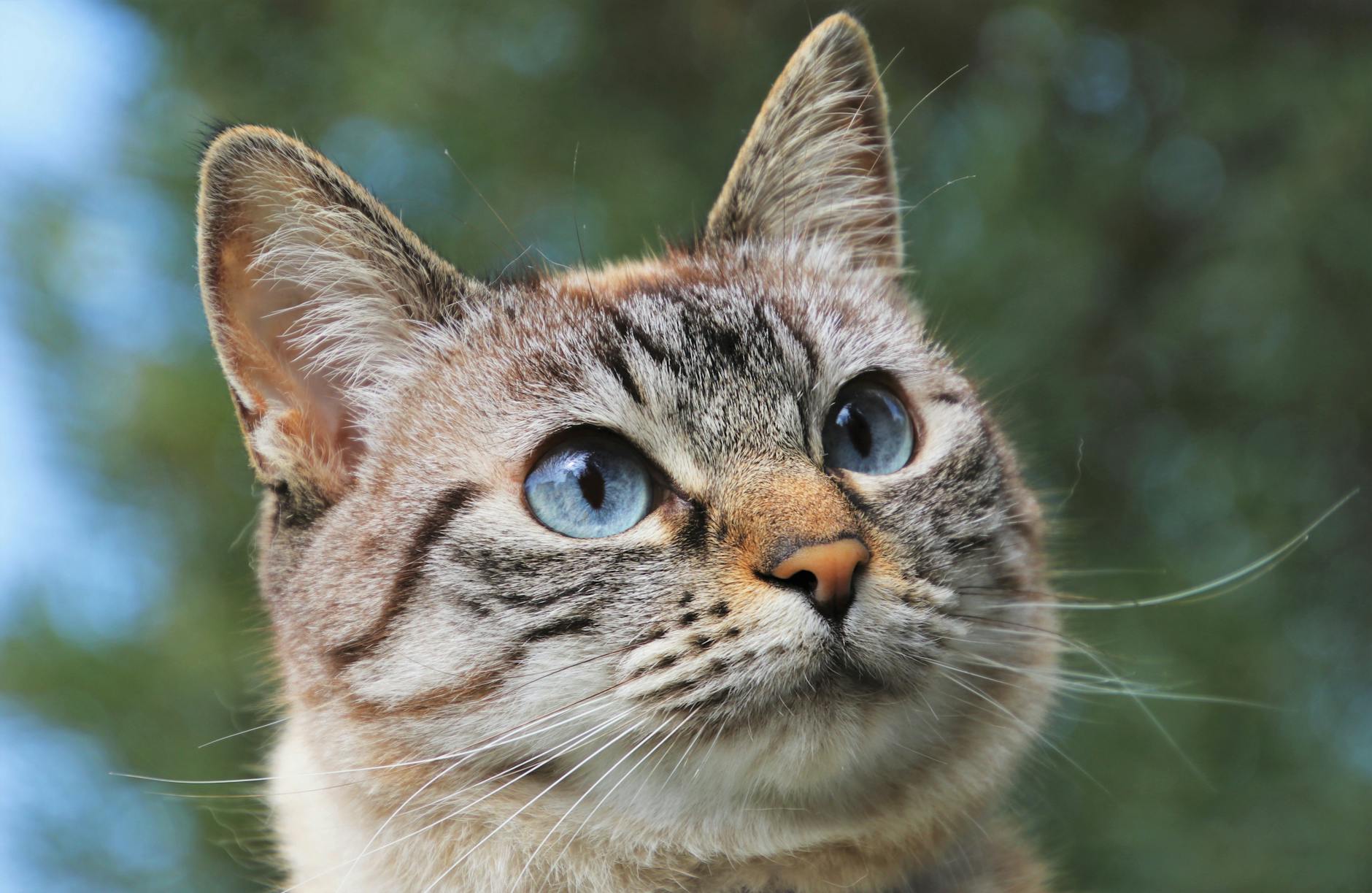
A Lynx Point cat with blue eyes is officially called a “Lynx Point Siamese” or “Tabby Point Siamese”—terms that are used interchangeably to describe this striking color variation within the Siamese breed. The more formal designation used by some breed organizations is “Tabby Point,” which emphasizes the distinctive tabby markings that set this cat apart from traditional solid-pointed Siamese cats. If you’ve seen a cat with a tan or cream body, a tabby-striped face with an “M” marking on the forehead, and piercing blue eyes, you were likely looking at a Lynx Point Siamese. The name itself tells you a lot about what makes these cats unique. “Lynx Point” refers to the resemblance of their facial markings to the wild lynx, while “Siamese” identifies their breed heritage.
These cats inherit the Siamese temperament—vocal, affectionate, and highly social—but with a visually distinctive tabby pattern overlaid on the traditional pointed coloring. The blue eyes are a signature trait of all pointed Siamese cats, a genetic characteristic that’s linked to the same gene responsible for their color-point pattern. It’s worth noting that breed registries don’t always agree on classification. The International Cat Association (TICA) recognizes Lynx Point as a color variation within the Siamese breed, while the Cat Fanciers’ Association (CFA) classifies them as a separate breed called “Colorpoint Shorthair” rather than grouping them under Siamese. This classification difference doesn’t change what the cat is called in everyday conversation, but it does matter if you plan to show your cat or are curious about official breed standards.
Table of Contents
- Understanding the Names—Lynx Point Siamese vs. Tabby Point
- The Striking Appearance of Lynx Point Siamese Cats
- Breed Classification—How Different Organizations Define Lynx Points
- The Siamese Temperament in a Tabby-Marked Package
- Health Considerations and Common Traits of Lynx Point Siamese
- Color Variations Within the Lynx Point Category
- The Evolution and Future of the Lynx Point Siamese Breed
- Conclusion
Understanding the Names—Lynx Point Siamese vs. Tabby Point
The terminology around Lynx point cats can be confusing because breeders and organizations use different names. “Lynx Point Siamese” is the most common name you’ll hear in casual conversation and from most breeders. “Tabby Point Siamese” is technically more accurate from a genetic standpoint, since the “tabby” refers to the specific pattern of stripes and swirls that appear on the cat’s face, legs, and tail. Both names describe the exact same cat, and you’ll see both used in breed documentation, rescue descriptions, and breeder websites.
The distinction matters if you’re searching for adoption information or trying to identify a cat you’ve encountered. A cat listed as “Tabby Point” in a rescue database is the same animal as one listed as “Lynx Point.” The name preference often depends on the region and the specific breed organization. For example, breeders in Europe might favor “Tabby Point,” while North American breeders often use “Lynx Point” because it’s more evocative and easier for the general public to understand. Understanding these naming conventions helps when you’re researching the breed, connecting with breeders, or communicating with veterinarians. Some breeds have multiple acceptable names, and this is one case where both terms are equally valid and widely recognized by cat fancy organizations.
The Striking Appearance of Lynx Point Siamese Cats
The physical appearance of a Lynx Point Siamese is unmistakable once you know what to look for. The most distinctive feature is the tabby “M” stripe on the forehead—this marking appears on nearly every Lynx Point cat and is the signature characteristic that distinguishes them from traditional Siamese. In addition to the facial “M,” these cats display tabby stripes on their legs, creating a ringed or banded effect, and their ears and tail are darkened (called “points”), which is standard for all pointed Siamese variations. What makes Lynx Points particularly striking is the combination of these features with the cat’s body color and eye color.
The body is typically a lighter shade—cream, light brown, or pale gray depending on the specific color variant—while the face, ears, legs, and tail are darker, creating strong contrast. The blue eyes complete the picture, and these aren’t just any blue; they’re typically a vivid, deep blue that stands out dramatically against the darker facial markings. This genetic connection between blue eyes and the pointed pattern means that virtually all Lynx Point Siamese cats will have blue eyes when born, though eye color can occasionally fade slightly with age. One important limitation to be aware of: the same gene that produces these beautiful pointed patterns and blue eyes can sometimes be associated with hearing issues, particularly deafness, in white or heavily marked cats. While Lynx Points are not predominantly white, it’s worth asking breeders about any history of hearing problems in their lines, especially if the cat is very light-colored.
Breed Classification—How Different Organizations Define Lynx Points
The way official breed organizations classify Lynx Point cats reveals some interesting behind-the-scenes dynamics in the cat fancy world. The International Cat Association (TICA) takes a straightforward approach by recognizing Lynx Point as a color variation within the established Siamese breed. Under this classification, a Lynx Point Siamese is essentially a Siamese cat with different coloring but the same genetic foundation and breed standards. TICA’s approach emphasizes the continuity between traditional Siamese and their color variations. The Cat Fanciers’ Association (CFA) has a different philosophy.
Rather than including Lynx Points under the Siamese breed heading, the CFA created a separate breed category called “Colorpoint Shorthair” to encompass all pointed color patterns that don’t fit the CFA’s more restrictive Siamese breed standard. This means that in CFA shows, a Lynx Point would be competing in the Colorpoint Shorthair category rather than in the Siamese category. The difference is administrative but significant if you’re involved in cat showing or breeding, as the breed standards and judging criteria differ between the two organizations. For cat owners who aren’t involved in showing, this classification difference matters very little. Your Lynx Point cat will still have the same temperament, health considerations, and care requirements regardless of which organization’s designation you’re using. However, if you’re purchasing a kitten from a breeder and plan to show the cat or breed from it, you should clarify which breed standard the breeder is working toward and ensure your goals align with that organization’s rules.

The Siamese Temperament in a Tabby-Marked Package
One of the most important things to understand about Lynx Point cats is that their personality is pure Siamese, even though their appearance includes those striking tabby markings. These cats are notoriously vocal, affectionate, and demanding of attention. If you’ve ever lived with a traditional Siamese cat, you already know what to expect—a Lynx Point will talk to you constantly, follow you from room to room, and expect to be involved in your daily activities. Compared to many other cat breeds that are more independent, Siamese and Lynx Point cats form intense bonds with their human families. This temperament trait is worth serious consideration before bringing a Lynx Point into your home. These cats don’t do well being left alone for long periods. They thrive on interaction and can develop behavioral problems—destructive scratching, inappropriate elimination, or excessive vocalization—if they become lonely or bored.
Unlike some breeds that are content to nap and observe from the sidelines, a Lynx Point wants to be your constant companion. This is wonderful if you work from home or have a flexible schedule, but it’s a significant commitment if you’re away for eight hours a day. The flip side is that Lynx Points are exceptionally rewarding pets for people who can meet their social needs. They’re intelligent, playful, and capable of learning commands and tricks like dogs. Many owners report that their Lynx Points follow them like shadows, greet them at the door, and want to be involved in everything they’re doing. If you’re seeking an independent cat that doesn’t require much interaction, this isn’t the breed for you. If you want a highly social, engaging feline companion, a Lynx Point could be perfect.
Health Considerations and Common Traits of Lynx Point Siamese
Lynx Point Siamese cats are generally healthy animals, but they do inherit some breed-specific health predispositions that owners should be aware of. One condition that occasionally appears in Siamese and related breeds is progressive retinal atrophy (PRA), a degenerative eye condition that can lead to blindness over time. While not all Lynx Points will develop PRA, it’s more common in this breed than in some others, so working with a responsible breeder who tests breeding cats for this condition is important. Another consideration is the respiratory sensitivity that some Siamese cats display. These cats can be prone to asthma and other respiratory issues, and they sometimes react sensitively to strong smells, smoke, and air pollution.
If you’re considering a Lynx Point, ensure you can maintain a clean home environment without heavy use of air fresheners, cleaning chemicals, or other strong-smelling products. Additionally, some Lynx Points are susceptible to dental disease, which is why regular veterinary care and appropriate diet are essential throughout their lives. Genetic testing is an important limitation to discuss with breeders. Before adopting a kitten, ask whether the parents have been tested for hereditary health conditions. Responsible breeders test for conditions like PKD (polycystic kidney disease), HCM (hypertrophic cardiomyopathy), and other genetic issues common in pedigree cats. Don’t assume that a kitten from an expensive breeder is automatically healthier than one from a rescue; always ask about health testing and request documentation.
Color Variations Within the Lynx Point Category
While all Lynx Point Siamese cats share the distinctive tabby markings and blue eyes, they come in several different color variations that affect their overall appearance. The most common is seal tabby point, which features a dark brown or seal-colored point pattern on a lighter cream or fawn body. Chocolate tabby point cats have warmer, milk-chocolate colored points on an ivory or cream body, creating a softer overall appearance than seal points. Blue tabby point cats display gray-blue coloring on their points with a soft, silvery body tone, while lilac tabby points—the rarest variation—show pale lavender or lilac coloring on a white or very pale body.
The color variation doesn’t affect the cat’s personality or basic care requirements, but it does impact appearance preferences. Some people are drawn to the high contrast of seal points, while others prefer the subtle elegance of blue or lilac points. If you have a preference for a specific color variation, discuss this with breeders before committing to a kitten, as the availability of particular colors varies by breeding program. It’s worth noting that color can continue to develop as a kitten grows, so the adult cat may look different from the kitten you initially adopt.
The Evolution and Future of the Lynx Point Siamese Breed
The Lynx Point Siamese didn’t exist in the early days of the Siamese breed; these cats emerged as breeders began experimenting with introducing tabby patterns into the traditional Siamese color-point line. What started as an accidental occurrence in some breeding programs eventually became intentional, and today Lynx Points are widely recognized and celebrated as a legitimate variation within the Siamese breed. This evolution reflects the broader trend in cat breeding toward expanding the recognized colors and patterns while maintaining the core breed characteristics.
As interest in Lynx Points continues to grow, more breeders are focusing on improving type and consistency within the variation. Cat show judges and breed standards have evolved to properly evaluate these cats, and online communities of Lynx Point enthusiasts continue to grow. For potential owners, this means more availability and better information than ever before, though it also means being extra diligent about choosing ethical breeders who prioritize health and temperament over profit.
Conclusion
The cat with blue eyes and tabby markings you’re looking for is called a Lynx Point Siamese or Tabby Point Siamese, depending on who you ask and which breed organization’s standards you’re following. These distinctive cats combine the striking appearance of tabby markings with the vivid blue eyes and color-point pattern that define the Siamese breed. Whether registered as a Siamese color variation by TICA or as a Colorpoint Shorthair by CFA, the cat itself remains the same—a visually stunning and highly interactive feline companion.
If you’re considering bringing a Lynx Point into your home, remember that you’re adopting not just a beautiful appearance but a demanding, affectionate personality that requires attention, interaction, and engagement. These cats reward devoted owners with intense bonds and entertaining companionship, but they’re not the right choice for everyone. Research breeders carefully, ask about health testing, and ensure you can meet the social and emotional needs of this vocal, people-oriented breed.