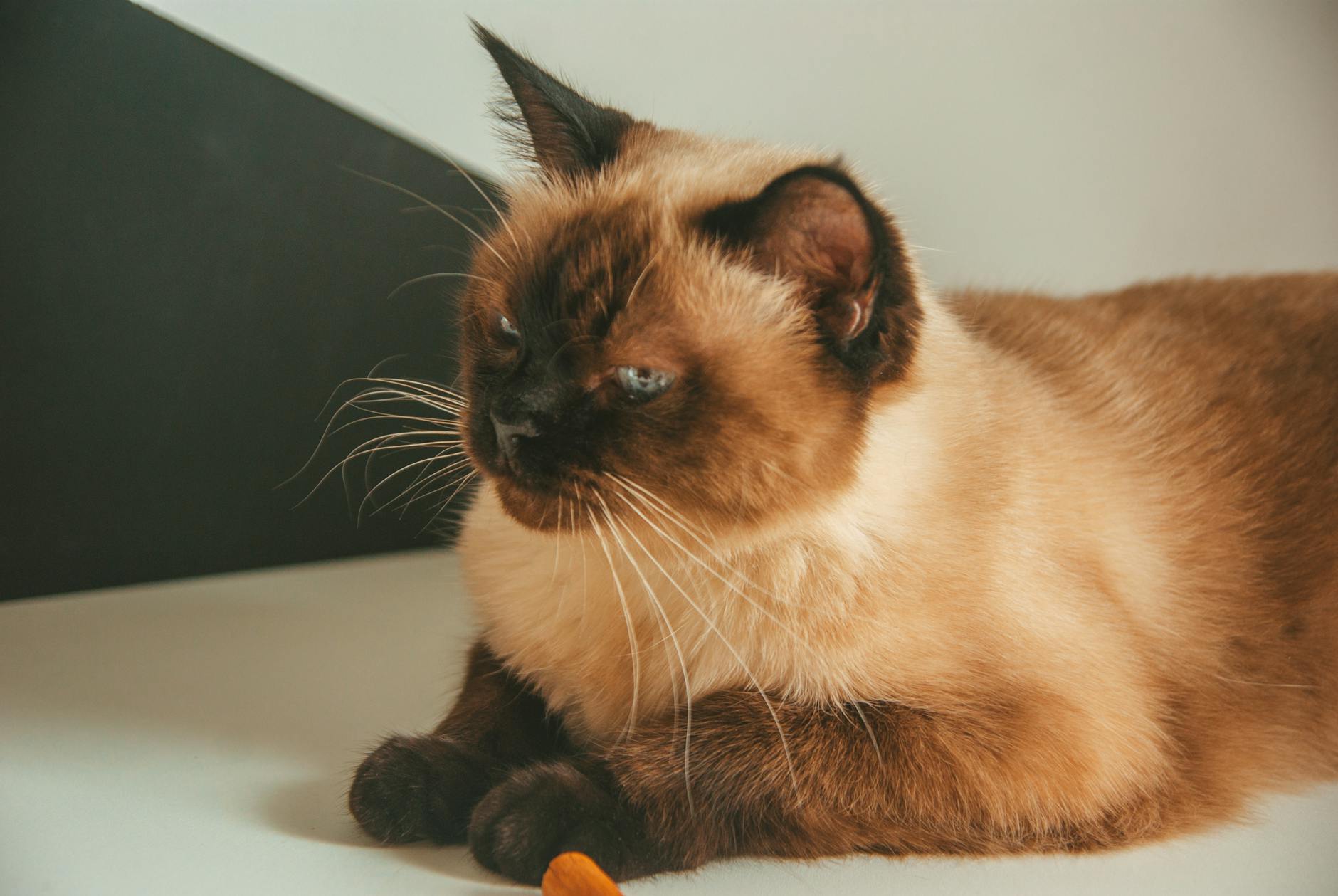
A seal point cat with blue eyes isn’t a single specific breed—it’s a cat displaying a colorpoint coat pattern combined with the striking blue eye color that comes with that pattern. The Siamese cat is the most famous breed known for seal point coloring, but the pattern itself can appear in many other breeds including Himalayans, Tonkinese, Balinese, Ragdolls, and Javanese. The key distinction is that “seal point” describes the coloration pattern rather than the breed itself. Any cat with this particular coat coloring—a pale, creamy body with dark seal-brown (almost black) points on the face, ears, tail, and paws—is called a seal point cat, regardless of whether it’s a purebred Siamese or a colorpoint cat of another breed. What makes seal point cats instantly recognizable is the combination of their distinctive coloring and their piercing blue eyes.
All colorpoint cats are born with blue eyes, and unlike many other cat breeds, they retain these blue eyes throughout their entire lives. This permanent blue eye color is a genetic trait directly linked to the colorpoint pattern itself, making it impossible to find a seal point cat without blue eyes. The contrast between the deep blue eyes and the dark seal-brown points creates one of the most striking appearances in the cat world. It’s important to understand that when someone refers to a “seal point cat,” they’re describing the visual appearance rather than definitively naming the breed. You might encounter a seal point Siamese, a seal point Ragdoll, or a seal point Himalayan—each breed with its own characteristics beyond just the coloring. This distinction matters for potential cat owners, as different breeds carrying the seal point pattern have varying temperaments, energy levels, and care requirements despite sharing the same eye-catching appearance.
Table of Contents
- Are Seal Point Cats a Specific Breed, or Just a Color Pattern?
- The Journey From White Kitten to Seal Point Adult
- Understanding the Distinctive Coloring and Markings
- Which Breeds Come in Seal Point Coloring?
- The Permanent Blue Eyes—A Genetic Guarantee
- Caring for Seal Point Cats—Breed-Specific Considerations
- The Enduring Appeal and Future of Seal Point Cats
- Conclusion
Are Seal Point Cats a Specific Breed, or Just a Color Pattern?
Seal point is exclusively a color pattern, not a breed designation. This is a common source of confusion among cat lovers. While the Siamese breed became synonymous with seal point coloring and virtually defined the look of colorpoint cats in the public imagination, the pattern itself appears naturally in multiple breeds. A seal point Ragdoll will have a fundamentally different personality and body structure compared to a seal point Siamese, even though both display identical coloring.
The Ragdoll, for instance, tends to be a larger, more relaxed cat that loves human companionship and goes limp when picked up, while Siamese are typically more vocal, active, and demanding of attention. This distinction has practical implications for anyone interested in adopting a seal point cat. If you’re drawn to the appearance alone, you could end up with vastly different cats depending on which breed you choose. A seal point Himalayan, bred from Persian ancestry, will be a long-haired, calm indoor companion quite different from the short-haired, athletic Siamese. Breeders maintain these distinct breeds while sharing the seal point coloration, so understanding the breed behind the coloring is crucial for finding a cat that fits your lifestyle.
The Journey From White Kitten to Seal Point Adult
One of the most remarkable aspects of seal point cats is their dramatic color transformation from birth to adulthood. Seal point kittens are born almost entirely white, with no visible coloring at all—a stark contrast to their eventual appearance. This is due to temperature-sensitive genetics; the colorpoint gene produces darker pigmentation only in the cooler areas of the body, which explains why the points (extremities) darken while the warmer center stays pale. Over the first few weeks and months of life, the distinctive dark markings gradually appear on the face, ears, tail, and paws as the kitten grows and develops.
The complete color development process can take up to a year to fully mature, with the body coloring gradually shifting from pure white to cream to caramel and eventually beige tones. This slow transformation means that seal point kittens look completely different from their adult selves, which can be surprising to first-time owners. Some people have reported being disappointed when their tiny white kitten turned out to be much darker than expected, while others love watching the gradual development of the characteristic pattern. The body also tends to darken slightly with age, so an older seal point cat may appear noticeably darker than a young adult of the same breed.
Understanding the Distinctive Coloring and Markings
The seal point pattern consists of a creamy or pale fawn body contrasted with dark seal-brown (nearly black) colored points. The “points” include the facial mask, ears, tail, paws, and nose leather, creating a striking contrast that makes these cats instantly recognizable. The exact shade of brown in the points can vary slightly between individual cats and breeds, but seal point cats consistently display this deep, dark coloring on their extremities. The body coloring, while pale, isn’t pure white in adults—it typically has warm undertones of cream, ivory, or light fawn that give the cat an overall elegant appearance.
One practical way to distinguish a seal point cat from similar-looking colorpoint patterns, particularly chocolate point cats, is by examining the paw pads. Seal point cats have dark brown or almost black paw pads, while chocolate point cats have milk-chocolate brown pads. This distinction becomes important if you’re trying to identify your cat’s exact colorpoint type or if you’re purchasing from a breeder who claims a specific pattern. The nose leather also follows this rule—seal points have dark brown or black nose leather, not the lighter brown of chocolate points. These physical markers help ensure you’re getting exactly the seal point cat you’re looking for.
Which Breeds Come in Seal Point Coloring?
While Siamese cats are the most iconic seal point cats, several other breeds reliably produce this coloring. Balinese cats, which are essentially long-haired Siamese, display the same colorpoint pattern with flowing medium-length fur. Himalayan cats, created by crossing Siamese with Persians, combine seal point coloring with luxurious long fur and a stockier build. The Tonkinese, a cross between Siamese and Burmese cats, frequently displays seal point coloring alongside their distinctive green or aquamarine eyes (though some lines maintain the blue of colorpoint genetics).
Ragdolls, one of the larger domestic cat breeds, showcase seal point coloring in a massive, laid-back package quite different from the sleek Siamese. Less commonly, Javanese cats and some other colorpoint breeds may display seal point patterns. The choice of breed matters significantly because while they all share the striking blue eyes and seal point appearance, their personalities, energy levels, and care requirements vary dramatically. A seal point Siamese requires significant interactive play and vocal communication from their owners, while a seal point Ragdoll is content to follow you around quietly and enjoy passive companionship. Understanding which breed you’re getting is essential for ensuring the cat’s personality matches your lifestyle, despite the visual similarity in coloring.
The Permanent Blue Eyes—A Genetic Guarantee
All colorpoint cats, including seal points, retain blue eyes throughout their entire lives. This is one of the most distinctive features of the colorpoint pattern and a reliable identifier of the genetic background. The blue eye color is directly linked to the colorpoint gene that produces the dark coloring on the extremities, meaning it’s impossible to have a seal point cat without blue eyes. This permanent blue coloring sets them apart from other cat breeds, where eye color often changes from blue at birth to green, gold, or amber as they mature.
The science behind this involves melanin production—the same genes that reduce melanin in the skin (creating the pale body and dark points) also affect the eyes. While normal cats develop eye pigment as they age, colorpoint cats do not, their irises remaining blue throughout their lives. This has practical implications for health monitoring, as any sudden changes in eye appearance should be investigated by a veterinarian. The striking blue eyes set against seal point coloring create the distinctive aesthetic that makes these cats so sought after, though potential owners should understand that this appearance comes with the entire colorpoint genetic package, including the temperature-sensitive coloring pattern.
Caring for Seal Point Cats—Breed-Specific Considerations
The care requirements for seal point cats depend largely on which breed they belong to, as coloring alone doesn’t determine grooming needs, exercise requirements, or health predispositions. A seal point Siamese requires daily interactive play, mental stimulation, and significant human interaction—they’re demanding cats that won’t thrive if left alone for extended periods. Their short coat needs minimal grooming beyond weekly brushing. In contrast, a seal point Himalayan or Balinese requires daily grooming to prevent matting in their longer coats and may be more independent, though still affectionate.
A seal point Ragdoll falls somewhere in between, needing regular grooming for their semi-long coat and moderate playtime, plus strong human companionship. Regardless of breed, all seal point cats should have their blue eyes monitored regularly for signs of health issues. The blue eyes themselves don’t indicate susceptibility to particular problems, but maintaining good veterinary care is important. Some colorpoint breeds have genetic predispositions to specific conditions—Siamese cats, for instance, can be prone to certain heart conditions and kidney disease—so understanding your specific cat’s breed helps you anticipate potential health concerns and take preventive measures.
The Enduring Appeal and Future of Seal Point Cats
Seal point cats have maintained their popularity for decades, and this trend shows no signs of slowing. The combination of their striking appearance—the pale body, dark points, and piercing blue eyes—creates an almost exotic look that appeals to cat enthusiasts worldwide. Social media has further elevated the visibility of seal point cats, with their distinctive appearance making them naturally photogenic and instantly recognizable to viewers.
As more people discover these cats through online platforms, demand continues for seal point kittens across multiple breeds. Looking forward, responsible breeding practices remain important for seal point cats, particularly in maintaining their health while preserving the distinctive colorpoint pattern. Ethical breeders focus on minimizing genetic health issues while selecting for temperament and physical traits appropriate to each breed. Whether you’re drawn to the vocal, interactive nature of a seal point Siamese or the calm devotion of a seal point Ragdoll, these cats represent a remarkable intersection of genetics, appearance, and personality that has captivated cat lovers for generations.
Conclusion
A seal point cat with blue eyes is defined by its distinctive colorpoint coat pattern—a pale body with dark seal-brown points on the face, ears, tail, and paws—combined with the permanent blue eyes that characterize all colorpoint cats. The term “seal point” describes the coloring pattern rather than a specific breed, as multiple breeds including Siamese, Balinese, Himalayan, Ragdoll, and Javanese can display this striking appearance. All seal point cats are born nearly white and develop their distinctive markings over several months, with full coloration potentially taking up to a year to complete.
The permanent blue eyes, dark paw pads, and characteristic coloring make seal point cats instantly recognizable across these different breeds. If you’re considering adding a seal point cat to your family, remember that while the coloring is consistent across breeds, the breed itself determines the cat’s personality, care needs, and potential health considerations. Whether you choose an interactive, vocal seal point Siamese or a more laid-back seal point Ragdoll, you’re getting a beautiful and distinctly striking feline companion. Understanding that seal point describes appearance rather than breed will help you select the right cat for your lifestyle and ensure a successful, rewarding relationship with your seal point companion.