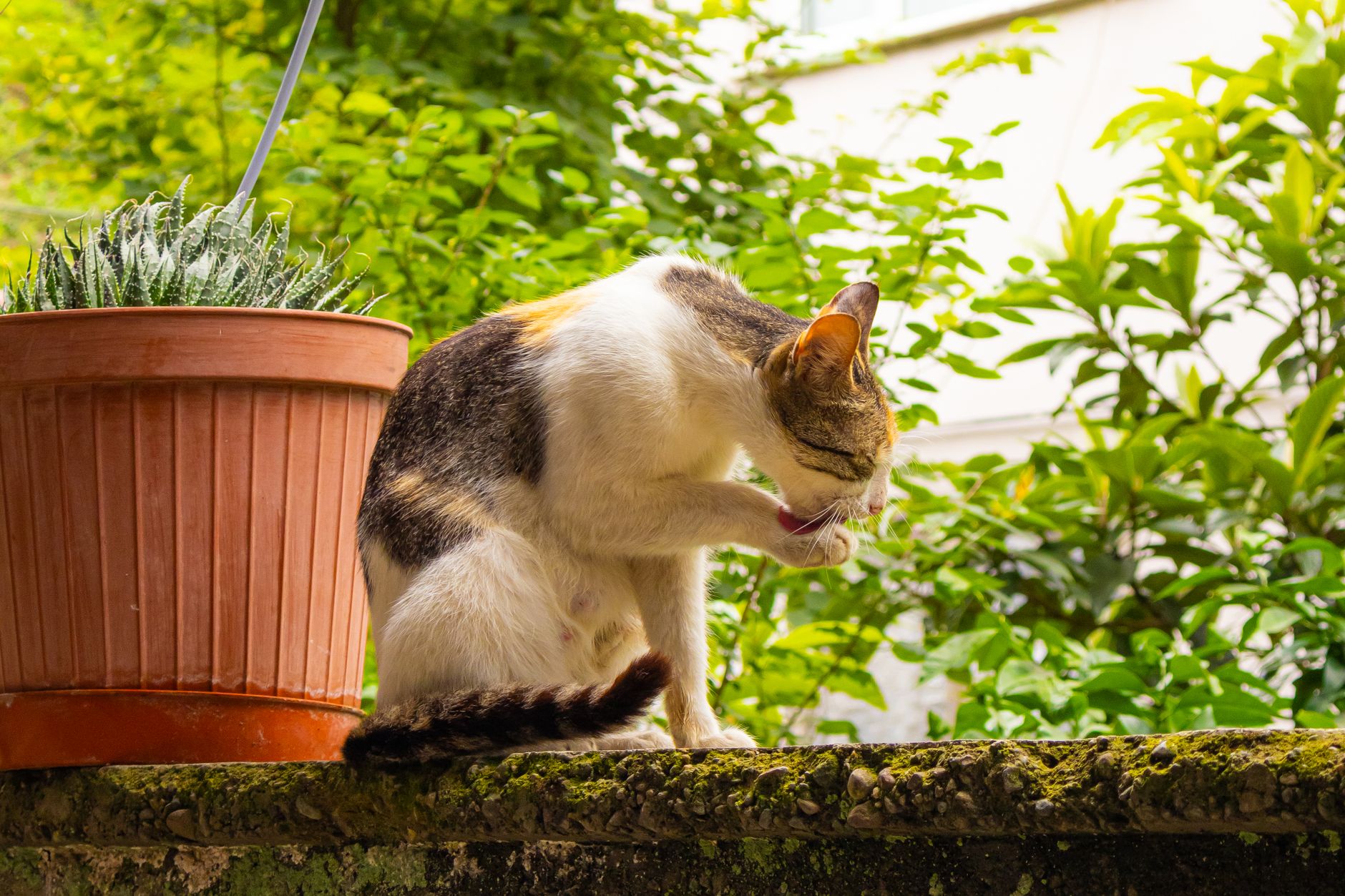
Cats groom unexpected animals—including dogs, rabbits, humans, and other cats they’ve just met—because grooming is fundamentally a social bonding behavior, not merely a hygiene routine. When your cat licks another pet or even your arm, it’s communicating affection, establishing social hierarchy, or activating maternal instincts that extend beyond their biological offspring. A cat grooming a household dog it’s lived with for years, or a kitten it’s recently adopted, is performing an act of social integration that serves multiple purposes in cat society.
This grooming extends beyond the expected targets because cats view grooming as currency in their social world. The behavior carries significance similar to how humans shake hands or embrace, signaling trust, comfort, and acceptance. A cat that grooms an unlikely candidate—say, a bird your family is temporarily caring for, or a guinea pig sharing the living room—is demonstrating that this animal has been accepted into its social circle, regardless of species.
Table of Contents
- What Is Allogrooming and Why Do Cats Engage in It?
- How Do Cats Decide Which Animals to Groom?
- Grooming Patterns and What They Reveal About Social Dynamics
- How to Observe and Interpret Your Cat’s Grooming Behavior
- When Grooming Becomes Problematic
- Grooming Across Species in the Household
- Reading Grooming Signals in Cat Communication
- Frequently Asked Questions
What Is Allogrooming and Why Do Cats Engage in It?
Allogrooming, the act of grooming another individual, is distinct from self-grooming and serves social and emotional functions rather than purely hygienic ones. cats that groom other animals often choose targets that cannot fully reciprocate, which distinguishes this behavior from mutual grooming among cat peers. The grooming behavior is rooted in kittenhood, when mother cats lick their young to stimulate circulation, maintain cleanliness, and establish the first bond. This instinct doesn’t disappear in adulthood; instead, it becomes redirected toward available social partners. A cat that grooms your hand for extended periods, or repeatedly licks a kitten’s face even when that kitten is already clean, is activating the caregiving circuit in its brain.
Research on feline behavior suggests that allogrooming triggers the release of oxytocin, the same bonding hormone involved in maternal-offspring relationships. The behavior is not essential for hygiene—most animals manage self-grooming perfectly well—but rather reinforces social bonds and reduces anxiety in the grooming cat. The specific choice of grooming partner reveals something about the cat’s emotional state and social preferences. Cats that groom hands frequently often have lower stress levels and closer attachment to their owners. Those that groom multiple animals in a household may be establishing or reinforcing their position within the social hierarchy, communicating either acceptance or subtle dominance depending on the context.
How Do Cats Decide Which Animals to Groom?
Cats develop grooming preferences based on familiarity, scent compatibility, and their perception of social standing within the household. A cat is far more likely to groom an animal it lives with than a visiting pet or stranger. The decision is partly driven by scent; cats that live together develop a shared household scent profile, and grooming reinforces this olfactory bonding. When a new cat, dog, or small animal enters the home, grooming signals to both parties that integration into the existing social structure is underway. One limitation of cat grooming as a bonding tool is that it doesn’t always indicate a healthy relationship—sometimes it’s a sign of social stress or an attempt to establish dominance. A cat grooming an older, larger dog may be asserting control, particularly if the dog is unsure or submissive.
Conversely, a cat grooming a more confident dog might indicate genuine affection and acceptance. The intensity and frequency of grooming also matter; occasional gentle licking differs significantly from prolonged, intense grooming sessions, which can indicate anxiety or territorial behavior rather than pure affection. Cats show clear preferences for grooming certain household members over others. Some cats groom their primary human caregiver repeatedly while ignoring other residents. Others focus their grooming attention on a single household pet while maintaining distance from others. These preferences often correlate with the cat’s attachment style and early socialization experiences. A cat bottle-raised by humans, for instance, may groom human hands and faces more readily than cats with traditional feral backgrounds.
Grooming Patterns and What They Reveal About Social Dynamics
Grooming behavior reveals the intricate social choreography within multi-pet households. When a dominant cat grooms a subordinate one, it’s often establishing or reinforcing hierarchy; the subordinate cat’s acceptance of this grooming signals deference. In mixed-species households, the grooming direction—which animal initiates and which receives—matters significantly. A cat grooming a dog’s ears repeatedly indicates that the cat has accepted the dog into its immediate social circle, whereas a cat that only accepts grooming from the dog but never reciprocates may still be establishing boundaries. The timing of grooming episodes can signal the cat’s stress level or emotional needs. Cats often increase grooming behavior during periods of change—a new animal introduction, a household move, or the arrival of an infant.
The grooming may be directed at a dog or even a human, intensifying as the cat seeks reassurance through the familiar bonding ritual. However, a warning sign is when grooming becomes compulsive or obsessive; if a cat grooms another animal until that animal’s fur is damaged or raw, or if the grooming session never reaches a natural end, the behavior has crossed from social bonding into self-soothing for anxiety or medical issues like allergies. Individual cats display vastly different grooming patterns. Some cats are serial groomers, maintaining multiple grooming relationships across the household. Others rarely groom anything except themselves. These differences don’t indicate health problems—they reflect personality and early socialization. A reserved cat that seldom grooms may show deep attachment through other behaviors like sleeping nearby or bringing toys, whereas an affectionate groomer may express nearly identical attachment through frequent grooming sessions.
How to Observe and Interpret Your Cat’s Grooming Behavior
Paying attention to your cat’s grooming patterns provides insight into household dynamics and your cat’s emotional state. Start by noting which animals or people your cat chooses to groom, and how often these sessions occur. Document where grooming happens—does your cat groom on the couch where the dog naps, or seek out a private location? Does grooming increase after the mail carrier visits, or after a family member returns from travel? These patterns reveal whether grooming is a simple affection display or a stress-management tool. The comparison between self-grooming and allogrooming is instructive. Most cats spend substantial time grooming themselves—this is normal and necessary. Cats that neglect self-grooming to focus entirely on grooming other animals may be displaying anxiety or compulsive behavior.
Conversely, cats that engage in moderate allogrooming alongside normal self-care are likely expressing healthy social connection. The tradeoff is that time spent grooming another animal is time not spent on self-grooming, so excessive focus on allogrooming may indicate an emotional need overshadowing practical maintenance. If you have multiple cats, observe who initiates grooming and who accepts it. In a balanced household, cats typically trade the grooming role, with cats taking turns as groomer and recipient. If one cat always grooms and the other always receives, or if one cat consistently rejects grooming attempts, there may be tension or hierarchy disputes worth monitoring. Grooming refusal can signal social stress, and you should watch for other conflict indicators like resource guarding or territory disputes.
When Grooming Becomes Problematic
Excessive grooming directed at another animal can cause physical damage and indicates distress rather than affection. A cat that grooms a dog or rabbit until fur is removed or skin is irritated has crossed from bonding behavior into compulsive self-soothing. This may stem from anxiety, overstimulation, lack of environmental enrichment, or medical issues like allergies affecting the grooming cat itself. A warning sign is when the receiving animal shows stress responses—attempting to escape, growling, or showing signs of skin irritation after grooming sessions. Cats may also groom excessively in response to changes in medication, diet, or environmental stress. If your cat suddenly increases grooming frequency toward household animals or people, consider recent changes: a new medication, dietary switch, visitor, or change in routine.
Medical issues like hyperthyroidism or neurological conditions can also increase grooming behavior. The limitation here is that increased grooming looks similar whether it’s an emotional response or a physical health problem, so veterinary consultation is warranted if the behavior is new or intensifying. Some cats groom as a form of social control or anxiety management, particularly if they lack other outlets. An indoor cat with limited environmental enrichment may groom household animals excessively as a substitute for play, hunting, or territorial behaviors. Providing additional enrichment—vertical spaces, interactive toys, window perches—often reduces compulsive grooming behavior. The key distinction is between grooming as social bonding, which occurs in moderate sessions and appears to calm the grooming cat, and grooming as anxiety self-soothing, which is repetitive, intense, and doesn’t appear to reach a satisfying endpoint.
Grooming Across Species in the Household
In multi-species households, cats often establish grooming relationships with animals they would never encounter in nature. A cat may groom rabbits, guinea pigs, birds in temporary care, or even human infants. These relationships form because the cat perceives the other animal as part of its social group, overriding any predatory instincts. A cat regularly grooming a rabbit it shares a home with has fundamentally recategorized that rabbit as family rather than prey. However, this should never be assumed to mean unsupervised interaction is safe; the grooming relationship can shift instantly if the rabbit moves unpredictably or the cat’s mood changes.
Grooming between cats and dogs often develops as household dynamics stabilize. A cat grooming a dog’s face or ears is performing an intimate behavior that requires significant trust and comfort. This is distinct from the cat merely tolerating the dog’s presence; active grooming indicates social integration. Some cats maintain lifelong grooming relationships with dog companions, while others never progress beyond peaceful coexistence. The direction of grooming sometimes surprises owners: a small cat may repeatedly groom a large dog, demonstrating that size doesn’t determine social standing in the feline perspective.
Reading Grooming Signals in Cat Communication
Grooming serves as a translation tool for understanding what your cat communicates through this behavior. When your cat grooms your hand, it’s offering the same social signal it would offer a feline companion—acceptance into its inner circle and a form of affection. Cats that never groom may still be deeply bonded to their humans; they simply express it through other behaviors. Reading your individual cat’s communication style is essential because assuming that lack of grooming indicates lack of affection is incorrect for many cats. A cat’s grooming intensity and duration provide additional data.
Brief, gentle licks indicate light affection and comfort. Prolonged grooming sessions—five or more minutes—often signal deeper stress-soothing or maternal bonding. The location of grooming also matters: cats that groom heads, faces, and ears are performing the most intimate grooming behavior, similar to how a mother cat cleans her kitten’s face. Cats that groom only paws or tails are engaging in lighter social contact. A cat that refuses grooming from one household member but readily grooms another is expressing preference, not rejection of the first person; these preferences are individual and often stable across years.
Frequently Asked Questions
Is it normal for my cat to groom my dog?
Yes, especially if they live together. Active allogrooming between cats and dogs indicates the animals have integrated socially and the cat has accepted the dog as part of its family group.
What does it mean when my cat grooms my hand excessively?
This typically signals affection and bonding, similar to how a cat would groom a feline companion. However, if the grooming is constant and appears compulsive, it may indicate anxiety or stress that warrants environmental enrichment or veterinary evaluation.
Can grooming between cats and other pets cause problems?
Grooming itself usually doesn’t cause problems, but excessive grooming can damage fur or skin. If the receiving animal shows stress or injury, interrupt the sessions and evaluate the cat’s stress levels and environmental enrichment.
Why does my cat groom me but not my family members?
Cats often show grooming preference toward specific individuals based on attachment, familiarity, and social hierarchy within the household. This doesn’t indicate lack of bonding with other family members.
Is it safe to let my cat groom a rabbit or small pet?
Supervised grooming is generally safe if both animals are comfortable and the cat is calm. Never leave them unsupervised, as predatory instincts can resurface unpredictably, especially if the smaller animal moves suddenly.
Should I be concerned if my cat never grooms other animals?
No. Cats have individual personality styles. Some are naturally affectionate groomers while others express bonding through different behaviors. Lack of grooming does not indicate lack of attachment.