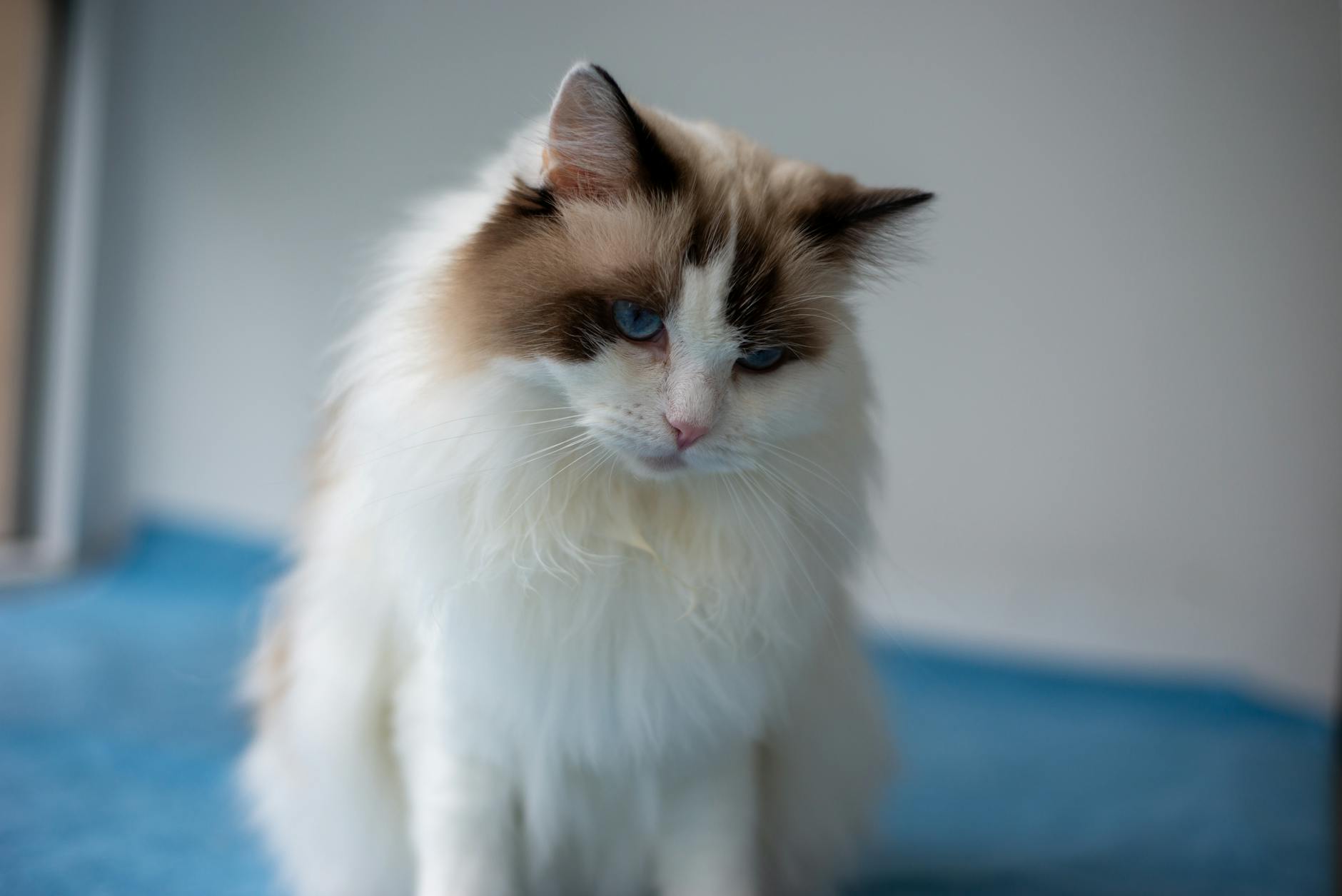
The Ragdoll stands out as the best blue-eyed cat breed for families, combining striking sapphire eyes with a temperament that genuinely tolerates the chaos of household life. These large, gentle cats actively seek human companionship and rarely scratch or bite in frustration, making them forgiving of the unpredictable handling that comes with children. A family with three kids might find their Ragdoll contentedly sitting in laps during homework time or patiently allowing a toddler to carry them around the house—something most other cat breeds simply won’t tolerate. While Ragdolls are the top choice, several other blue-eyed breeds offer excellent family potential depending on your specific situation.
The Snowshoe, Turkish Van, and certain Siamese bloodlines all possess the striking eye color and family-friendly traits that make cat ownership rewarding with children. The key difference between these breeds comes down to activity level, grooming requirements, vocal tendencies, and how much independent behavior you’re willing to accept. Choosing the right blue-eyed breed requires understanding what “family-friendly” actually means in your household. A breed that’s perfect for a quiet home with older children might create stress in a busy household with toddlers. This guide walks through the best options, their specific advantages, and the tradeoffs you’ll face with each choice.
Table of Contents
- What Makes a Blue-Eyed Cat Breed Suitable for Family Life?
- The Ragdoll: Unmatched Family Compatibility and Its Trade-offs
- The Snowshoe: Balanced Activity and Vocal Communication
- Turkish Van Versus Other Breeds: Assessing Activity and Independence
- Health Concerns Specific to Blue-Eyed Breeds: Deafness and Other Issues
- The Importance of Source: Breeders Versus Rescues
- Emerging Genetics and Future Blue-Eyed Breeds
- Conclusion
- Frequently Asked Questions
What Makes a Blue-Eyed Cat Breed Suitable for Family Life?
Blue eyes in cats result from a genetic trait that often concentrates in breeds developed specifically for human companionship. The Ragdoll breed, for instance, was selectively bred in the 1960s by California breeder Ann Baker to produce cats that would go limp and relax when picked up—a trait she called “going ragdoll”—which directly translates to better behavior around children. This isn’t marketing language; the trait is documented and observable. A Ragdoll will typically allow a child to carry it for extended periods without struggling or using their claws defensively, whereas an unselected domestic cat would resist and potentially injure a child. Beyond temperament genetics, family-friendly blue-eyed breeds share practical characteristics: they typically weigh 8-12 pounds (large enough to not be easily injured by small children), they respond to training and boundaries, and they view their human family as part of their social group rather than obstacles to tolerance.
Snowshoes, which combine Siamese and American Shorthair genetics, maintain this balance between the Siamese’s vocal engagement and the American Shorthair’s stability. Turkish Vans, surprisingly, are also excellent with families despite their independent reputation, because they form intense bonds with their chosen people and exhibit fewer stress-related behavioral issues than other independent breeds. The critical limitation here is that no breed guarantees specific behavior. A Ragdoll raised in isolation or in a stressful environment may develop anxiety or aggression despite its genetics. Conversely, some domestic shorthair cats with blue eyes can develop excellent family relationships. Breed predisposition creates probability, not certainty.

The Ragdoll: Unmatched Family Compatibility and Its Trade-offs
The Ragdoll’s suitability for families stems from both genetic programming and its relatively large size. These cats typically reach 10-15 pounds, making them sturdy enough to handle rough play without injury while remaining manageable for children to hold. Their semi-long coat, while beautiful, requires grooming 3-4 times weekly to prevent matting—a task that demands commitment. A family considering a Ragdoll must understand that the grooming requirement isn’t optional; skip brushing for two weeks, and you’ll face mat formation that causes skin irritation and requires professional deshedding. Ragdolls also exhibit a problematic tendency toward obesity. These cats have lower activity levels than many breeds and will readily consume excessive food if given access.
A family with multiple children might find that different kids feed the cat at different times, quickly leading to overweight issues that trigger joint problems and diabetes. The breed’s calm demeanor means they won’t exercise themselves; they need active play sessions directed by their humans. Additionally, Ragdolls are extremely sensitive to heat and prone to heat stress, making them unsuitable for families in warm climates or homes without consistent air conditioning. Their extreme people-dependency, while an advantage for companionship, becomes a weakness when families travel. A Ragdoll cannot be left alone for extended periods without developing separation anxiety. They may stop eating, eliminate outside the litter box, or become destructive—not from malice, but from genuine distress. This makes them problematic for families with demanding work schedules or frequent travel plans.
The Snowshoe: Balanced Activity and Vocal Communication
Snowshoes offer a compelling alternative for families seeking a blue-eyed breed with more independence than Ragdolls. Their Siamese ancestry gives them striking azure eyes and a distinctive white paw pattern (which gives them their name). Unlike Ragdolls, Snowshoes maintain higher activity levels and can entertain themselves more effectively, making them suitable for families where everyone works outside the home. A household with school-age children and both parents employed will find a Snowshoe better-adjusted to a 8-hour day alone than a Ragdoll would be. The downside is their vocal nature. Snowshoes inherited the Siamese tendency toward constant communication.
They will announce their opinions about food timing, toy selection, window access, and general life situations. Some families find this endearing; others find it exhausting. A family with younger children might struggle with a Snowshoe’s persistent meowing during homework or sleep time. Their need for interactive play means they also require more engaged ownership—a Snowshoe bored during the day will make their boredom loudly known. Snowshoes tend to form selective bonds, often picking one family member as their primary person while remaining distant with others. This trait can actually be advantageous in families where one adult primarily manages the cat’s care and feeding, as it reinforces the bond. However, this selectivity means they’re less universally gentle with all family members than a Ragdoll would be.

Turkish Van Versus Other Breeds: Assessing Activity and Independence
Turkish Vans rank among the most misunderstood blue-eyed breeds. They’re often described as “dog-like,” which sounds positive until you realize it means they’re intensely active, highly territorial, and can become obsessive about specific family members. For families with older children and plenty of space, a Turkish Van can be remarkable—these cats enjoy water play, fetch games, and active interaction. They maintain their athletic ability throughout their lifespan, unlike Ragdolls who become increasingly sedentary. The tradeoff is significant: Turkish Vans are not forgiving of mistakes or boundaries.
A child who treats them roughly will respond defensively, not with the tolerance a Ragdoll would show. They can become territorial about “their” people and may be aggressive toward visiting children. A family that values a cat that accepts all household members equally will find a Turkish Van challenging. Additionally, Turkish Vans’ intense focus on their preferred person means the rest of the family receives significantly less affection. Compared to the Ragdoll’s universal friendliness, the Turkish Van requires a family culture that respects the cat’s preferences and boundaries. This works well for families with teenagers who understand animal behavior and respect those boundaries, but creates conflict in households with young children who haven’t yet developed that understanding.
Health Concerns Specific to Blue-Eyed Breeds: Deafness and Other Issues
Congenital deafness is the most serious concern with blue-eyed cats. The genetic connection between blue eyes and hearing impairment is well-documented: approximately 65% of white cats with blue eyes are deaf. However, this statistic misleads many people into assuming all blue-eyed cats face this risk. Among established breeds like Ragdolls and Turkish Vans, selective breeding has largely removed the deafness gene because breeders actively test for it. A Ragdoll from a reputable breeder has minimal deafness risk. The critical warning: purchase your blue-eyed cat only from breeders who provide hearing test documentation (BAER testing) for the parents.
Many backyard breeders and pet stores don’t test, and their blue-eyed cats have elevated deafness rates. A deaf cat can live a happy life indoors—deaf cats develop excellent vision and spatial awareness—but a family unprepared for a deaf cat may struggle. Deaf cats can’t hear their name being called, can’t be alerted to danger with sound, and startle more easily. Beyond deafness, blue-eyed breeds occasionally inherit eye conditions like nystagmus (involuntary eye movement) or progressive retinal atrophy. These conditions are rare in reputable breeding populations but should prompt you to ask breeders about health testing. Request documentation of eye examinations and genetic screening for the parents before bringing any blue-eyed cat home.
The Importance of Source: Breeders Versus Rescues
Finding your blue-eyed family cat requires understanding the difference between ethical breeders and irresponsible breeding operations. A responsible Ragdoll breeder will provide health testing results, allow you to meet the parents, discuss the breed’s specific care requirements honestly, and offer a contract with a health guarantee. They’ll also have a waiting list and charge $1,200-$2,500 for a kitten. This high price point reflects the genuine care, health screening, and breeding management involved. Backyard breeders or kitten mills will charge less—sometimes significantly less—but typically offer no health documentation and no ongoing support.
These sources are common with Ragdolls specifically because the breed’s popularity makes them profitable. The cost savings evaporate quickly if you inherit genetic problems, behavioral issues, or health conditions that appear later. Some blue-eyed cats do appear in rescue organizations, though it’s less common than other breeds. Rescue adoption offers an alternative if you’re flexible about exact breed. A rescue adult cat has known personality traits and likely has fewer genetic surprises than a kitten from an unknown source.
Emerging Genetics and Future Blue-Eyed Breeds
The gene pool for blue-eyed cats continues to expand as breeders introduce new colors and patterns into established breeds. The blue-eyed Ragdoll’s chocolate and seal variants, for instance, were unavailable 20 years ago; today they’re common. This ongoing development means future families might have additional options beyond the traditional choices.
Simultaneously, concern about overbreeding specific popular types is growing within the cat fancy. More families are exploring alternative blue-eyed cats like the Bengal or Ociacat, breeds that offer the striking eyes with different temperament profiles. As awareness spreads about what blue-eyed cats actually require—proper grooming, veterinary care, responsible sourcing—family choices will likely become more informed and more diverse.
Conclusion
The Ragdoll remains the best blue-eyed cat breed for families because of its forgiving temperament, reliable gentle behavior, and genuine enjoyment of human companionship. Its requirement for grooming, susceptibility to obesity, and separation sensitivity demand committed owners, but families willing to meet those needs find an exceptionally rewarding pet. Snowshoes and Turkish Vans offer compelling alternatives for specific family situations: Snowshoes for families where activity and independence matter more, Turkish Vans for older children who respect boundaries and value an active companion. Your family’s specific lifestyle determines the right choice.
Start by honestly assessing your grooming commitment, activity level, climate, and how much time your household can dedicate to active cat care. Once you’ve identified a breed that matches your reality, find a breeder who tests for health issues and can discuss the breed’s actual requirements without marketing embellishment. A well-matched blue-eyed cat will provide decades of companionship; a mismatched one becomes a source of frustration. The difference lies in choosing with your family’s genuine needs, not just its striking eyes.
Frequently Asked Questions
Are all blue-eyed cats deaf?
No. While the white-coat/blue-eye gene correlation includes deafness risk, established blue-eyed breeds like Ragdolls are selectively bred away from deafness. Only purchase from breeders with documented BAER hearing test results for parents.
How much grooming do blue-eyed breeds actually require?
Ragdolls need brushing 3-4 times weekly minimum. Snowshoes require less (2-3 times weekly) due to shorter coats. Turkish Vans fall in between. This isn’t negotiable maintenance—skipping causes mats and skin issues.
Can blue-eyed cats see normally despite their eye color?
Yes. Blue eyes don’t indicate vision problems in cats. Vision quality depends on the genetics behind the eye color, not the color itself. Reputable breeders screen for conditions like retinal atrophy.
Which blue-eyed breed is best for apartments?
Ragdolls adapt best to apartment living because they’re naturally calm and sedentary. Turkish Vans need more space and activity outlets. Snowshoes fall in the middle.
How do I know if a breeder is reputable?
Look for: health testing documentation (genetic and hearing tests), willingness to discuss downsides, contracts with health guarantees, references from previous buyers, and reasonable pricing ($1,200+). Never buy from sellers without documentation.
Are blue-eyed cats more expensive than other breeds?
Yes, significantly. Reputable breeders charge $1,200-$2,500+ for tested, socialized kittens. This reflects the cost of health screening and responsible breeding management.