
No, a cat with blue eyes is not necessarily a specific breed. Blue eyes can appear in many different cat breeds, and even in domestic cats with no purebred heritage. However, blue eyes are more commonly associated with certain breeds like Siamese, Ragdoll, Birman, and Tonkinese cats, where the trait is particularly prevalent and often a breed standard. If your cat has blue eyes, it might be one of these breeds, but it could just as easily be a mixed-breed cat or a breed where blue eyes are less typical. The relationship between eye color and breed is complicated by genetics, age, and other factors.
For example, many kittens are born with blue eyes, but many will develop different eye colors as they mature. A kitten with striking blue eyes today might have green or amber eyes by six months of age. This change happens because the pigment melanin gradually develops in the iris over time, and the amount of melanin present determines final eye color. Understanding whether your blue-eyed cat is a specific breed requires looking beyond eye color alone. You’ll need to consider the cat’s body type, coat texture, pattern, personality traits, and health characteristics. A purebred Siamese with blue eyes will have a distinctive slender body, pointed coloring pattern, and vocal personality that distinguishes it from a domestic short-haired cat that happens to have blue eyes.
Table of Contents
- Which Cat Breeds Commonly Have Blue Eyes?
- How Kitten Eye Color Changes as Cats Age
- Blue Eyes and White Coat Pattern Correlation
- Identifying Breed Beyond Blue Eyes
- Health Screening for Blue-Eyed Cats
- Eye Color Variations in Blue-Eyed Cats
- The Future of Blue-Eyed Cat Breeding and Genetics
- Conclusion
- Frequently Asked Questions
Which Cat Breeds Commonly Have Blue Eyes?
Several cat breeds are strongly associated with blue eyes, making them more likely to have this eye color as part of their breed standard. The Siamese breed is the most iconic example, with striking almond-shaped blue eyes being a defining characteristic. Ragdoll cats are another breed almost always born with blue eyes that they retain into adulthood. Birman cats, which share some Siamese ancestry, typically have round blue eyes. Tonkinese cats, which are a cross between Siamese and Burmese breeds, frequently display blue eyes as well. Beyond these primary blue-eyed breeds, other breeds can occasionally display blue eyes.
Balinese cats, which are essentially long-haired Siamese, inherit the blue eyes trait. Snowshoe cats, which have Siamese ancestry mixed with domestic short-hairs, often have blue eyes. Even breeds like the Ojos Azules (literally “blue eyes” in Spanish) were specifically developed to emphasize blue eyes across different coat colors and patterns. Some breeds, including Maine Coons, Turkish Vans, and certain color variations of other breeds, can have blue eyes, though it’s less typical. The key distinction is that in some breeds, blue eyes are almost guaranteed, while in others they’re rare variations. This is important for anyone trying to determine their cat’s breed based on eye color. If your cat has blue eyes but doesn’t match the typical appearance of Siamese, Ragdoll, or Birman breeds, it’s likely either a mixed breed or a less common breed where blue eyes occasionally appear.
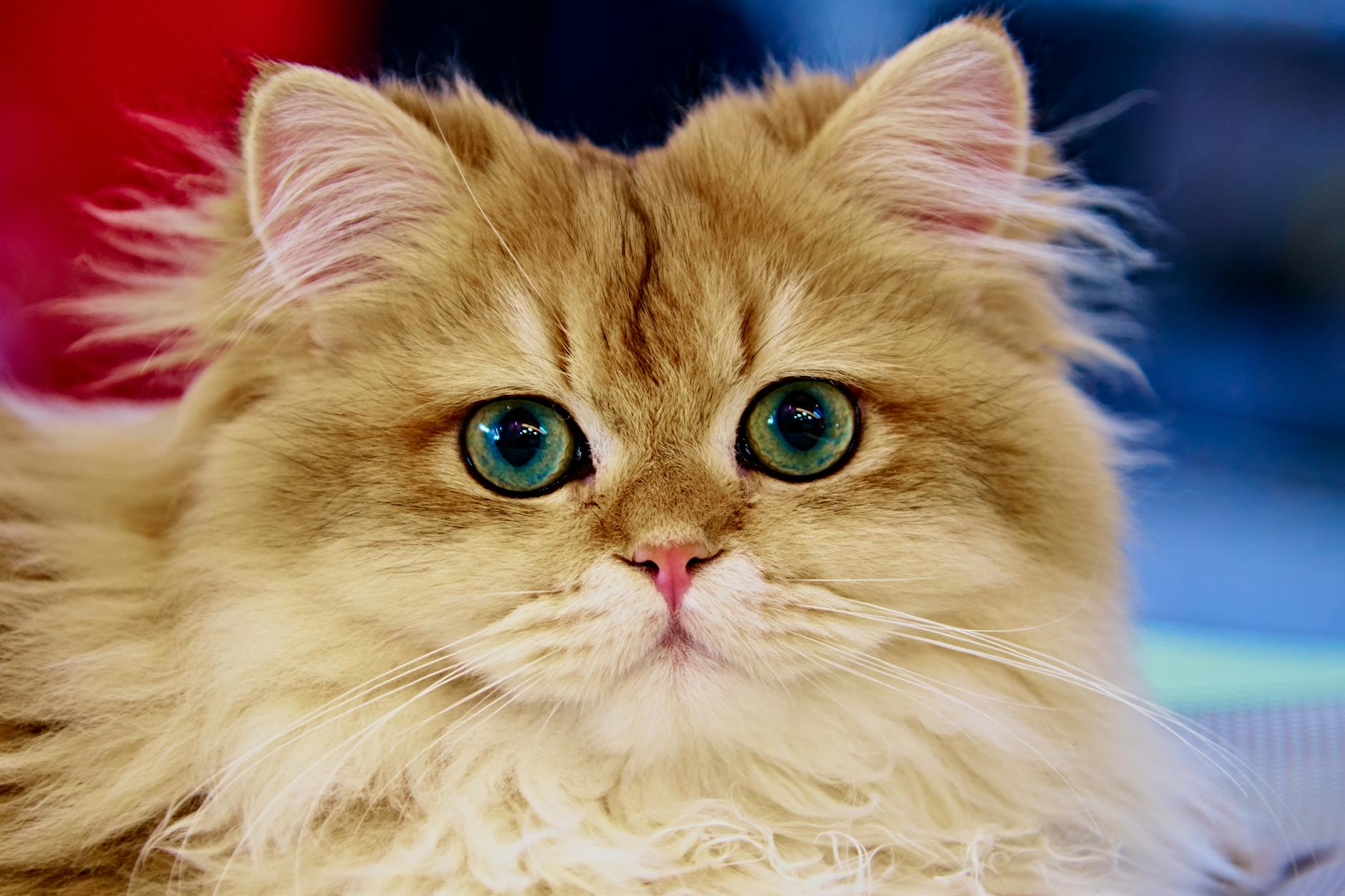
How Kitten Eye Color Changes as Cats Age
Nearly all kittens are born with blue eyes, which can make determining breed identity through eye color impossible when they’re young. This universal kitten blue eye color exists because newborn kittens have minimal melanin in their irises. The blue color isn’t actually a pigment—it’s the result of light scattering through the colorless parts of the eye, similar to why the sky appears blue. This is a critical limitation when trying to breed-identify a kitten: you cannot reliably tell if a young kitten will keep blue eyes or develop a different color. The transition from blue to other colors typically begins around 4-6 weeks of age and can continue until the kitten is 12 weeks old or older. Some kittens’ eyes change gradually, progressing from light blue to blue-green to yellow to amber or brown.
Others might change more rapidly. During this transition period, you might see unexpected colors, including hazel eyes, heterochromia (two different colored eyes), or sectored eyes (one eye with two colors). This variability means that a blue-eyed kitten you bring home at 8 weeks might have completely different eye color by the time it’s six months old. Cats whose eyes remain blue into adulthood are following a genetic pattern that prevents the full development of melanin in the iris. This happens consistently in breeds like siamese and Ragdoll, but when it occurs in mixed-breed cats, it indicates that both parents carried genes for limited melanin development. One important warning: white cats with blue eyes have a higher risk of congenital deafness than white cats with other eye colors. This connection between eye color and hearing has genetic roots and isn’t a sign of illness, but it’s worth knowing if you’re considering a white, blue-eyed cat.
Blue Eyes and White Coat Pattern Correlation
A striking blue-eyed cat that is also entirely white presents a specific genetic situation worth understanding. White cats with blue eyes have a significant risk of being deaf or partially deaf—estimates suggest that about 60-80% of white cats with two blue eyes experience hearing loss. This association between white coat color, blue eyes, and deafness is one of the most important genetic facts for potential cat owners to know, as it affects how you’ll need to care for the cat and what behavioral expectations you should have. The reason for this correlation relates to the genes that produce white coloring and blue eyes. The same gene (the W gene) that prevents melanin deposition in fur also prevents it in the inner ear. Melanin plays a crucial role in the development and function of the cochlea, the hearing structure in the inner ear.
Cats with one blue eye and one non-blue eye (odd-eyed cats) have intermediate deafness risk, usually on the side of the blue eye. For example, a white cat with a blue left eye and an amber right eye might have hearing loss primarily in the left ear. This information becomes particularly relevant if you’re trying to decide whether a white, blue-eyed cat you’re considering is a specific breed or a mixed breed. Deafness risk applies equally to purebred white Siamese cats and white domestic short-haired cats. If you adopt a white, blue-eyed cat, assume it may be deaf or partially deaf and test its hearing through a veterinary audiogram if you’re unsure. Deaf cats can live full, happy lives, but they require different safety precautions, like keeping them indoors and using visual signals for communication.

Identifying Breed Beyond Blue Eyes
Since blue eyes alone don’t reliably identify a breed, you need to look at the complete package of characteristics. Body type is usually the most informative feature. Siamese and related breeds have slender, athletic bodies with long, thin legs and an elongated face. Ragdolls, despite their blue eyes, have a much larger, stockier frame with substantial bone structure. Birmans are medium-sized with sturdy bodies and a somewhat rounded head. If your blue-eyed cat is chunky and compact with a round face, it’s probably not a Siamese-type breed. Coat length and texture provide another crucial clue. Siamese, Tonkinese, and Ojos Azules typically have short, sleek coats that lie close to the body. Balinese and Ragdolls have long, silky coats. Birmans have semi-long coats.
If your cat has blue eyes but a dense, fluffy double coat typical of a Maine Coon or Siberian cat, that combination helps identify what breed it might be. Color patterns also matter significantly. Siamese cats almost always display the pointed pattern (darker coloring on the face, ears, legs, and tail), while Ragdolls display this pattern as well. A solid blue-eyed cat without points is less likely to be a traditional Siamese. Personality traits can provide supporting evidence but shouldn’t be the primary identification method. Siamese cats are famously vocal, demanding constant attention and conversation. Ragdolls tend to be extremely affectionate and may go limp when picked up (hence the name). Birmans are moderately active and less demanding than Siamese. However, many mixed-breed cats develop similar personalities based on their individual temperament and socialization, not just genetics. If you want definitive breed identification, DNA testing is available and can confirm whether your cat carries genes associated with specific breeds.
Health Screening for Blue-Eyed Cats
Blue-eyed cats don’t have inherently poor health just because of their eye color, but certain health conditions are statistically more common in breeds where blue eyes are standard. Siamese and related breeds are prone to progressive retinal atrophy (PRA), a degenerative eye condition that can lead to blindness. Ragdolls are predisposed to hypertrophic cardiomyopathy, a heart condition that’s not directly related to eye color but is more common in the breed. These conditions require regular veterinary screening and early detection to manage effectively. If you have a blue-eyed cat that might be a purebred or purebred-mix of a breed-specific category, discuss health screening with your veterinarian. A vet familiar with the breed can recommend appropriate preventive care and testing.
For example, if your cat is or might be a Ragdoll, your vet would likely recommend echocardiogram screening for heart conditions. If it might be a Siamese, regular eye exams to detect early signs of retinal disease would be important. This is one of the tangible advantages of knowing your cat’s breed: you can proactively screen for conditions that the breed is susceptible to. One significant limitation is that determining breed through appearance alone—even with professional help—isn’t perfectly reliable. A cat that looks 90% like a Siamese might be a mixed breed with strong Siamese genetics, which could affect disease risk. This is why genetic DNA testing has become more valuable for cat owners who want accurate breed information, especially when health screening decisions depend on that information. Testing your cat before age 2 or 3 gives you the clearest picture of its genetic background while it’s young enough to benefit from preventive care recommendations.

Eye Color Variations in Blue-Eyed Cats
Blue eyes don’t come in just one shade, and variations can provide clues about identity and age. Young kittens typically have pale, almost washed-out blue eyes that are very light and ethereal. As kittens age and begin the transition to adult eye colors, their blue eyes might intensify, becoming deeper and more saturated before changing color entirely. Adult cats whose eyes remain blue may have sapphire-blue eyes, cornflower-blue eyes, or even blue eyes with yellow or amber rings around the pupil. The intensity and shade of blue in cat eyes relate directly to how much melanin has developed.
A cat with extremely pale blue eyes might be very young or have genes that suppress melanin very effectively. A cat with deep, dark blue eyes has adult eye development that has stabilized with minimal melanin. Some cats display heterochromia—one blue eye and one eye of a different color. This occurs when one eye develops normal melanin levels while the other doesn’t. It’s more common in white cats or cats with specific color patterns and doesn’t necessarily indicate anything about breed or health, though deaf cats are more likely to have heterochromia.
The Future of Blue-Eyed Cat Breeding and Genetics
As cat genetics become better understood, breeders are using DNA testing to more precisely identify and select for desired traits, including eye color. Breeds like the Ojos Azules were developed in the 1980s specifically to create a new breed that emphasized blue eyes across different coat colors and patterns, proving that blue eyes can be isolated and emphasized genetically even when they don’t naturally align with specific coat colors. This shows that blue eyes as a trait is separate from other breed characteristics and can be combined with almost any other genetic variation.
Looking forward, genetic testing will likely become more routine for cat owners and breeders, making it easier to understand exactly what genes a cat carries regardless of appearance. This will help address uncertainty when trying to identify mixed-breed cats and will enable better health screening. For now, if you’re trying to determine whether your blue-eyed cat is a specific breed, remember that eye color alone is rarely conclusive, but combined with body structure, coat characteristics, patterns, and behavior, it provides valuable information.
Conclusion
A cat with blue eyes could be a purebred Siamese, Ragdoll, Birman, or another blue-eyed breed, but blue eyes alone don’t prove breed identity. Many mixed-breed cats have blue eyes, and most kittens start out blue-eyed before developing different colors. To determine if your cat is a specific breed, look at the overall combination of physical characteristics, including body structure, coat type, color patterns, and size.
If precise breed identification matters for health screening or other reasons, DNA testing provides definitive answers. Taking care of a blue-eyed cat means paying attention to the potential health issues associated with its breed or genetic background. If your cat is white with blue eyes, be aware of deafness risk and adjust your communication and safety practices accordingly. Whether your blue-eyed companion turns out to be a purebred or a beautiful mixed breed, understanding its genetic background helps you provide the best possible care for its specific health needs and personality traits.
Frequently Asked Questions
Will my blue-eyed kitten always have blue eyes?
No. Most kittens are born with blue eyes, but many develop different colors as they grow. Only certain breeds, like Siamese and Ragdolls, consistently retain blue eyes into adulthood. Your kitten’s final eye color may not be apparent until it’s several months old.
Are all white cats with blue eyes deaf?
Not all, but many are. Approximately 60-80% of white cats with two blue eyes have hearing loss. White cats with odd eyes (one blue, one non-blue) have intermediate deafness risk. A veterinary hearing test can confirm whether your white, blue-eyed cat is deaf.
What breeds always have blue eyes?
Ragdoll and Siamese cats almost always have blue eyes that persist into adulthood. Birmans, Balinese, and Tonkinese cats commonly have blue eyes as well. Other breeds may occasionally display blue eyes, but it’s less predictable.
Can I determine my cat’s breed just by looking at its blue eyes?
Blue eyes alone are not enough to determine breed. You need to consider body structure, coat length and texture, color patterns, and personality traits. DNA testing is the most reliable method for definitive breed identification.
Do blue-eyed cats have vision problems?
Blue eyes themselves don’t cause poor vision. However, some blue-eyed breeds like Siamese are prone to progressive retinal atrophy. Regular veterinary eye exams are important for any cat, especially if it might be a breed predisposed to eye conditions.
Why are so many kittens born with blue eyes?
Newborn kittens have minimal melanin in their irises, which is why their eyes appear blue. As they age, melanin develops, often changing eye color. Kittens whose parents both had genes limiting melanin development may retain blue eyes into adulthood.