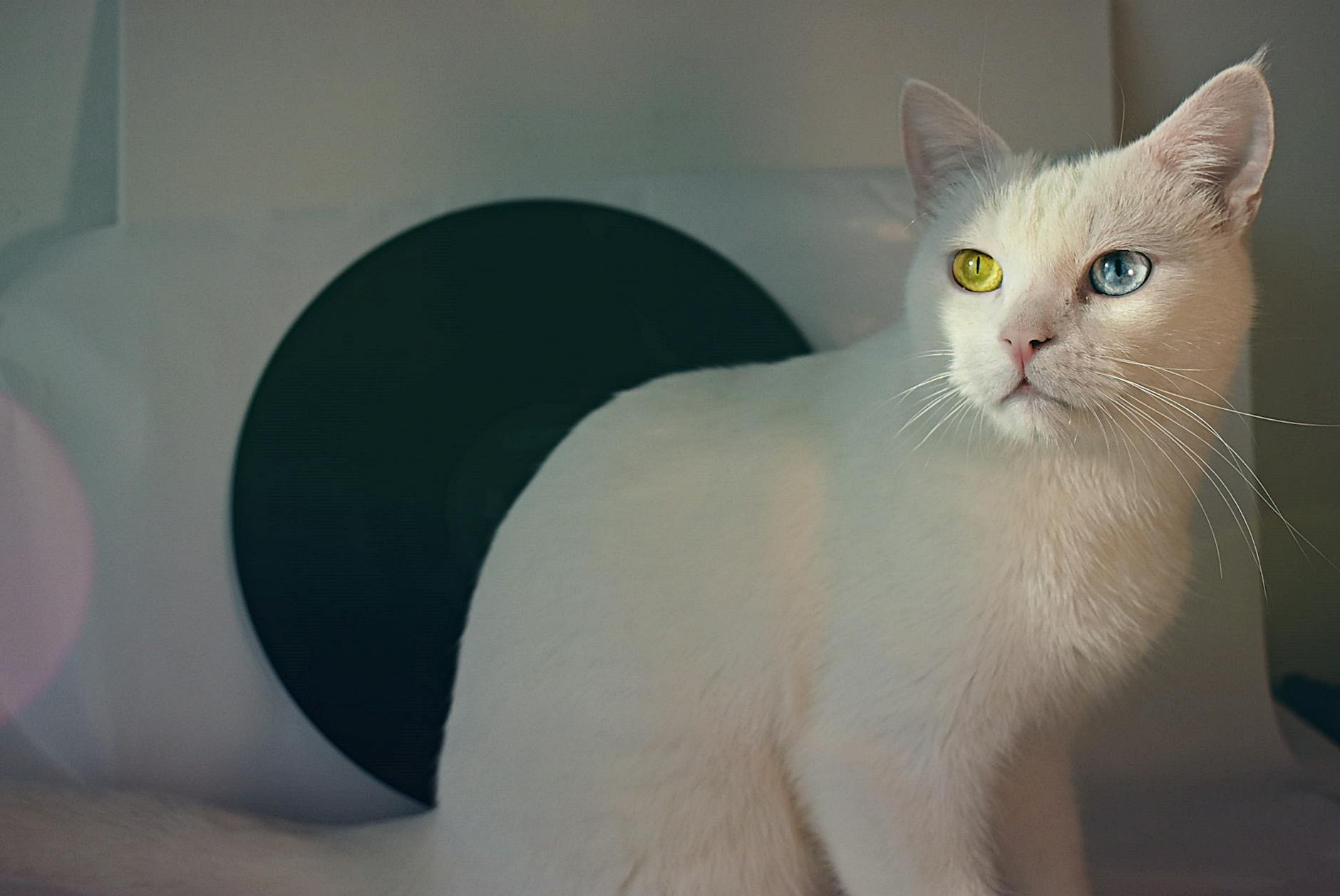
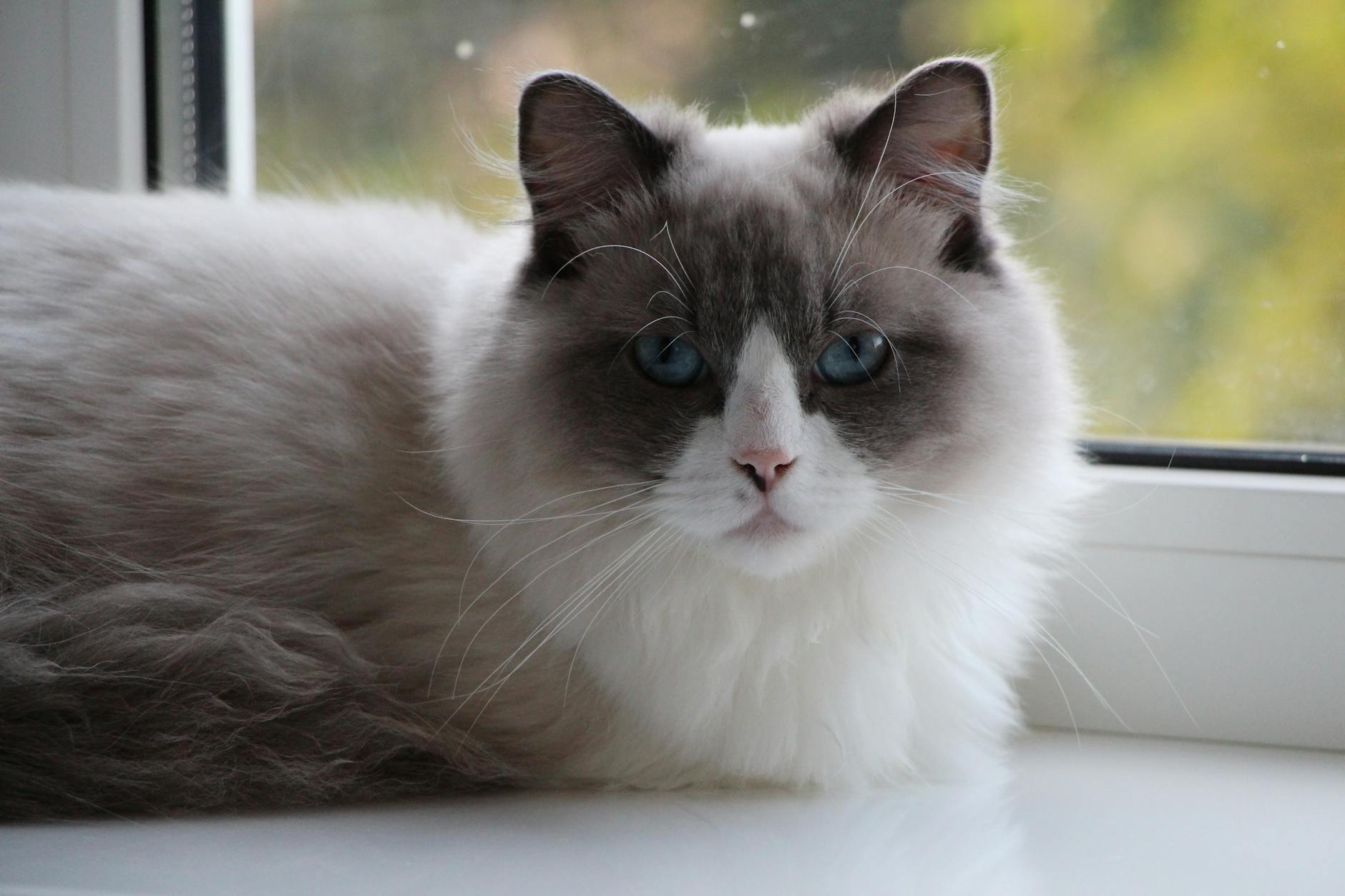
The quietest blue-eyed cat breed is the Ragdoll. This large, striking cat is renowned for its calm temperament and naturally soft vocalizations despite its size and long coat. While Ragdolls are often compared to dogs in their devotion to their owners, they rarely demand attention with loud meows, instead communicating through gentle chirps and almost inaudible vocalizations. A Ragdoll owner often reports that their cat sits quietly in the room for hours, occasionally offering soft meows that are barely above a whisper—a far cry from the stereotype of chatty house cats.
The Birman is the second prime candidate for a quiet, blue-eyed companion. Like Ragdolls, all Birmans are born with striking blue eyes, and they possess a naturally gentle temperament with soft, musical vocalizations. Where Birmans differ is in their tendency to be “quietly chatty”—they will communicate with you, but their voice is refined and melodic rather than demanding or loud. For someone seeking a blue-eyed cat that balances quiet behavior with some personality and interaction, the Birman offers an excellent middle ground between the silent preferences of truly reserved breeds and the vocal needs of social cats.
Table of Contents
- What Makes Ragdolls and Birmans the Quietest Blue-Eyed Breeds
- Beyond Eye Color—Understanding the Broader Context of Quiet Cat Breeds
- Behavioral Traits That Contribute to Quietness
- Comparing Ragdolls and Birmans—Which Is Right for You?
- Common Challenges and Realistic Expectations
- Genetic Factors Behind Blue Eyes and Temperament
- The Future of Quiet, Blue-Eyed Breeds
- Conclusion
What Makes Ragdolls and Birmans the Quietest Blue-Eyed Breeds
Ragdolls and Birmans share a critical genetic trait: all individuals in both breeds are born with deep blue eyes. This consistent eye color, paired with their calm temperaments, makes them stand out in the larger feline landscape. The Ragdoll’s quiet nature isn’t accidental—it’s part of their genetic heritage. Breeders have selected for calm, docile cats that thrive in home environments, and this selection has naturally resulted in cats with subdued vocalizations and a preference for peaceful coexistence with their families.
The Birman’s quietness operates slightly differently. Rather than being completely silent, Birmans communicate through soft chirping sounds and gentle mews that are distinctly softer than the pointed, loud vocalizations of breeds like Siamese. An owner accustomed to louder cat breeds may initially not realize their Birman is attempting to communicate because the cat’s voice is so refined. This makes Birmans ideal for multi-pet households or apartments where noise is a consideration, though they’re quieter in absolute terms than Ragdolls. Research from major veterinary sources, including Purina and Hill’s Pet, consistently ranks both breeds among the quietest available, with Ragdolls specifically noted as one of the calmest overall cat breeds regardless of eye color.
Beyond Eye Color—Understanding the Broader Context of Quiet Cat Breeds
It’s important to note that while this article focuses on blue-eyed breeds, some of the truly quietest cats don’t have blue eyes. The Russian Blue, for instance, is famous for its nearly silent demeanor—it has a soft, almost whispering purr and rarely vocalizes without reason. However, Russian Blues have green or amber eyes, not blue, so they don’t technically fit the specific criteria of this discussion. Similarly, the Chartreux, a French breed prized for its refined quietness and subtle body language communication, has copper or gold eyes rather than blue. This distinction matters because it reveals a potential limitation: if you’re set on having a blue-eyed cat, your quiet options are somewhat limited compared to the broader pool of calm, reserved breeds.
You may need to compromise between having those striking blue eyes and having the absolute quietest possible cat. The Ragdoll and Birman represent the best balance for someone whose priorities include both blue eyes and a naturally quiet temperament. Understanding this trade-off helps prospective owners set realistic expectations. If you visit a breeder and expect your Birman to be completely silent like a Russian Blue, you may be disappointed. Conversely, if you adopt a Ragdoll expecting it to be a typical vocal tabby, you’ll be pleasantly surprised by its gentle nature.
Behavioral Traits That Contribute to Quietness
The quietness of Ragdolls and Birmans isn’t merely about decibel levels—it’s rooted in their overall behavioral approach to life. Both breeds are laid-back and people-oriented, meaning they don’t feel the need to constantly announce their presence or demand immediate attention through vocalizations. A Ragdoll that wants attention might instead follow you from room to room silently or drape itself across your lap with minimal fanfare. This calm demeanor extends to their interactions with other pets; they’re less likely to engage in territorial screeching or constant meowing negotiations. Birmans, while slightly more engaged and curious than Ragdolls, still approach life with a serene attitude.
They’re fascinated by their environment and their people, but they express this interest quietly. A Birman watching birds through a window might chirp softly once or twice rather than the insistent yowling some cats produce. This behavioral quietness—the mental approach to communication—is just as important as the physical capability to produce soft sounds. One practical example: if you work from home and attend video calls regularly, a Ragdoll is less likely to disrupt your meetings with unexpected vocalizations. Many remote workers report that their Ragdolls sit contentedly nearby without adding any audio interference to their day, making these cats excellent for people in professions where sound matters.
Comparing Ragdolls and Birmans—Which Is Right for You?
Both Ragdolls and Birmans offer quietness, but they differ in other ways that might influence your choice. Ragdolls are notably larger, sometimes reaching 15 pounds or more, with semi-long, silky coats. They tend toward more independent quiet—they’re comfortable spending time alone and don’t require constant attention to remain calm. Birmans are slightly smaller and more moderately built, with color-pointed patterns and equally soft coats. They tend to be more engaged with their environment and their people, making them good companions for someone who wants a quiet cat that’s still interactive. The grooming commitment differs between the two.
Both require regular brushing to maintain their coats, but the Ragdoll’s larger frame and longer coat can mean more time spent on grooming. If you have limited time for daily or several-times-weekly grooming sessions, the Birman’s more moderate coat might be more manageable while still providing the striking appearance and quiet temperament you’re seeking. Price and availability represent another trade-off. Both breeds come from reputable breeders, but Ragdolls have become increasingly popular, meaning more breeders exist and prices can vary widely. Birmans are also popular but sometimes slightly less common depending on your region. Whichever you choose, working with an ethical breeder committed to health testing and temperament selection is crucial.
Common Challenges and Realistic Expectations
One significant limitation is that quiet temperament isn’t guaranteed by breed alone. While Ragdolls and Birmans have genetic predispositions toward calm, reserved behavior, individual cats vary. A Ragdoll raised in a chaotic, high-stress environment may develop anxiety-related vocalizations. Conversely, a Birman that hasn’t been socialized properly might be skittish rather than peacefully quiet. Responsible breeding practices and proper early socialization are essential to realizing the breed’s quiet potential. Another consideration is the distinction between quiet vocalizations and total silence. Ragdolls and Birmans still meow, purr, and occasionally chirp.
They’re not silent robots. Some owners expecting a completely mute cat are surprised to discover their Ragdoll purrs very loudly when content, even if it rarely vocalizes otherwise. Managing expectations around this is important—quiet doesn’t mean absence of all sound, just an absence of excessive or demanding noise. Health-related issues can also compromise a breed’s natural quietness. A cat in pain may vocalize more frequently. Hyperthyroidism, which can affect older cats including Ragdolls and Birmans, can trigger excessive vocalization. Regular veterinary care and attention to your cat’s behavior changes helps distinguish normal quiet temperament from behavior changes indicating health concerns.
Genetic Factors Behind Blue Eyes and Temperament
All Ragdolls and Birmans have blue eyes due to specific genetic traits that breeders have intentionally preserved. This genetic consistency across the entire breed is notable—it’s not a recessive trait or something that appears unpredictably. The genes responsible for blue eye color in these breeds are different from the mechanisms that produce blue eyes in other species, involving reduced melanin production in the iris.
While eye color genetics operate independently from personality genetics, the careful breeding practices that maintain consistent eye color in these breeds often also focus on consistent temperament. Breeders who select for both striking appearance and calm behavior over multiple generations inadvertently concentrate the genetic factors that contribute to quiet, docile personalities. This intentional breeding is why Ragdolls and Birmans are so reliably quiet compared to random domestic cats or cats from less selective breeding programs.
The Future of Quiet, Blue-Eyed Breeds
As awareness grows about the benefits of calm, quiet cats in modern living situations—especially among remote workers and people in apartments—the demand for breeds like Ragdolls and Birmans continues to increase. This popularity creates both opportunities and challenges. More reputable breeders entering the market can improve overall breed health and ethics, but it also attracts less scrupulous breeders focused purely on profit.
Potential owners should prioritize health testing, genetic screening, and breeder transparency when seeking a quiet, blue-eyed companion. The future of these breeds likely involves increased focus on maintaining not just appearance but genuine temperament qualities. As genetic testing becomes more accessible, breeders may be able to identify and select for traits associated with calm behavior, ensuring that future generations of Ragdolls and Birmans live up to their reputation for quiet companionship.
Conclusion
The Ragdoll and Birman stand out as the quietest blue-eyed cat breeds available today. The Ragdoll offers maximum calmness with minimal vocalizations, making it ideal for those who prioritize peaceful silence. The Birman provides a balance between quiet behavior and gentle engagement, perfect for those who want a blue-eyed cat that’s still interactive.
Both breeds require the same commitment to grooming, health care, and responsible breeding practices that any valued companion deserves. If you’re considering a quiet, blue-eyed cat, visit breeders, interact with adult cats of both breeds when possible, and ask detailed questions about temperament, health testing, and socialization practices. This homework ensures you find not just a cat with striking blue eyes, but a genuinely calm companion suited to your home and lifestyle.