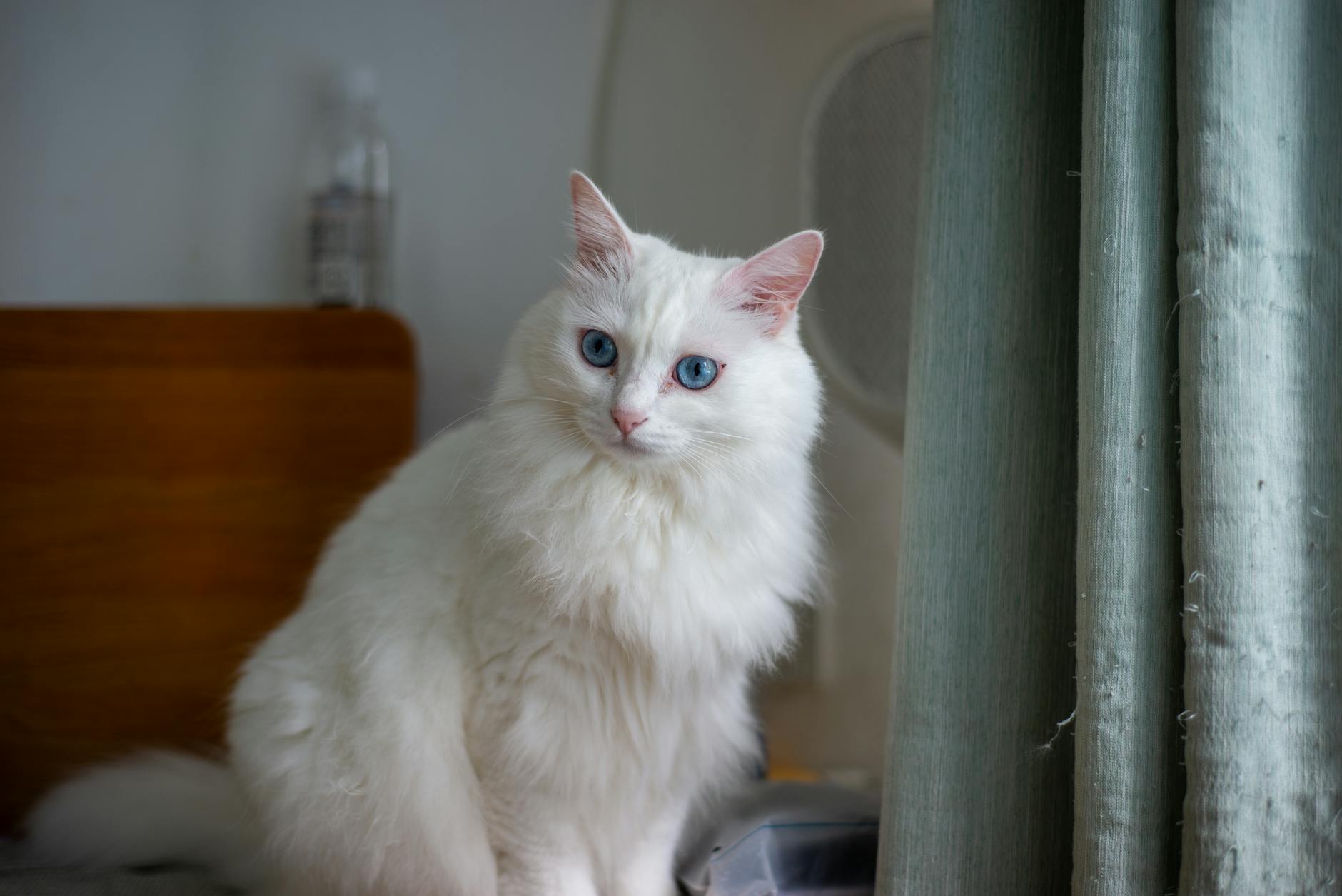
The blue-eyed cat breed that looks like a snowshoe is the Snowshoe cat itself, a distinctly American breed characterized by striking blue eyes and distinctive white paws that resemble snow boots or mittens. This relatively rare breed was developed in the United States during the 1960s by breeder Dorothy Hinds-Daugherty, who crossed Siamese cats with bicolor American Shorthairs to create cats with the elegant pointed coloring of Siamese combined with distinctive white markings. Snowshoe cats are instantly recognizable by their pale to deep azure blue eyes paired with white inverted “V” markings between their eyes and the signature white feet that gave the breed its evocative name.
What makes Snowshoe cats particularly striking is how their appearance differs from the Siamese despite their shared ancestry. While Siamese cats are typically solid-colored with limited white markings, Snowshoe cats feature a bicolor colorpoint pattern where the face, ears, and tail are darker (seal, chocolate, or gray points), while the body remains lighter and the paws display prominent white markings that frequently extend up the ankle. This specific combination of features—the blue eyes, pointed coloring, and extensive white paws—creates a distinctive look that cat enthusiasts find instantly appealing, though the breed’s rarity means many people have never encountered one in person.
Table of Contents
- What Defines the Snowshoe Cat’s Unique Appearance?
- Physical Characteristics and Why Snowshoes Are Rare
- Temperament and Personality Traits
- Cost, Adoption, and Ownership Considerations
- Health Considerations and Care Requirements
- Distinguishing Snowshoes from Similar Blue-Eyed Breeds
- Finding Reputable Snowshoe Breeders and Future Prospects
- Conclusion
What Defines the Snowshoe Cat’s Unique Appearance?
The Snowshoe cat’s defining characteristic is their “mitten” or “snowshoe” paw pattern, where white covers the feet and extends partway up the legs. This marking pattern is created by recessive genes that must be inherited from both parents, which is why Snowshoe cats are considered relatively rare and why breeders have limited genetic pools to work with when developing the breed. The white inverted “V” marking on the face between the eyes is equally distinctive and serves as an immediate identifier—even a Snowshoe kitten displaying this marking can be distinguished from similar breeds at a glance. Beyond the paws and facial markings, Snowshoe cats have a short, dense coat that requires minimal grooming compared to long-haired breeds, yet showcases the beauty of their colorpoint pattern.
Males typically weigh between 9 and 12 pounds, while females generally range from 7 to 10 pounds, making them medium-sized cats that are neither petite nor oversized. This moderate size, combined with their muscular build inherited from their Siamese ancestry, gives Snowshoe cats an athletic appearance that matches their active, playful nature. The challenge with breeding Snowshoe cats is consistency—the white markings depend on recessive genetic expression, which means two Snowshoe parents can occasionally produce kittens without proper paw markings or with markings that don’t meet breed standards. This genetic unpredictability is a primary reason why quality Snowshoe kittens command premium prices and why the breed remains uncommon compared to other pointed cats like siamese or Tonkinese.
Physical Characteristics and Why Snowshoes Are Rare
Snowshoe cats possess what breeders call a “bicolor colorpoint” coat, combining the warmth of Siamese pointed coloring with white markings that make each cat uniquely patterned. The typical color combinations include seal point and white (dark brown or black points with white body), chocolate point and white (lighter brown points), blue point and white (gray points), and lilac point and white (pale purple-gray points). The distribution and extent of white on the body should be balanced and symmetrical, with facial markings being particularly important for breed standard recognition. The rarity of Snowshoe cats stems directly from the complexity of their genetics.
Because the white markings are recessive traits, breeding two Snowshoes together doesn’t guarantee that all kittens will display proper markings—some may be born predominantly white, others may lack the characteristic paw pattern, and some may display asymmetrical markings. This genetic lottery means breeders must carefully plan matings and are often willing to keep only a small percentage of kittens that meet the exacting breed standard, making Snowshoe breeding both challenging and economically risky. A practical limitation for prospective owners is that Snowshoe cats from responsible breeders typically cost between $600 and $1,200, with show-quality lines commanding $2,000 to $4,000 or more. The high cost reflects not only the rarity of proper markings but also the commitment reputable breeders invest in genetic testing and socialization. This price point puts Snowshoe cats in a different category from readily available breeds and means most people encounter them through cat shows or breed-specific rescues rather than casual pet stores.
Temperament and Personality Traits
Despite their elegant appearance, Snowshoe cats are remarkably vocal and social companions, often described as “chatty” by owners who appreciate constant communication. This talkative nature comes directly from their Siamese heritage—Snowshoes inherited not only the pointed coloring but also the gregarious, demanding personality of Siamese cats. Unlike more aloof cat breeds, Snowshoes genuinely seek interaction with their human family members and will follow you from room to room, demanding attention and conversation throughout the day. Snowshoe cats are highly intelligent and playful, with a genuine love of interactive games and puzzle toys that engage their quick minds.
Many Snowshoe owners report that their cats learn to play fetch, enjoy harness walks, and even respond to voice commands in ways that seem more dog-like than typical feline behavior. This intelligence comes with a caveat: under-stimulated Snowshoe cats can become destructive or develop behavioral problems, so they require dedicated playtime and mental enrichment from their owners. One remarkable trait that distinguishes Snowshoes from most other cat breeds is their unusual affinity for water. While the vast majority of domestic cats avoid water, many Snowshoe cats will voluntarily splash in water bowls, jump into bathtubs, and actively participate in water-based play. This water-loving tendency makes bathing less stressful for Snowshoe owners and opens up enrichment possibilities like water fountains or shallow basins for play that would never appeal to typical cats.

Cost, Adoption, and Ownership Considerations
When evaluating the financial commitment of acquiring a Snowshoe cat, prospective owners should consider the significant range in pricing and the distinct advantages and disadvantages of each option. Reputable breeders typically charge $600 to $1,200 for pet-quality kittens and $2,000 to $4,000 or more for show-quality cats with impeccable markings and documented pedigrees. This investment includes genetic testing for heritable conditions, early socialization, and breeder support—responsible breeders maintain relationships with their kitten buyers throughout the cat’s life and will take the cat back if circumstances change. Adoption presents a more affordable alternative, with rescue Snowshoe cats and Snowshoe mixes typically costing $50 to $300.
The advantage of adoption is both the lower cost and the satisfaction of providing a home to a cat in need, though rescue cats may come with unknown health histories or behavioral challenges that require patience and adjustment. Rescue options for Snowshoes specifically are limited due to the breed’s rarity, but breed-specific rescue organizations do exist and regularly place Snowshoes who need new homes due to owner circumstances rather than behavioral issues. The long-term financial commitment extends beyond the initial purchase price. Snowshoe cats require regular veterinary care, quality food, and mental enrichment toys and activities. Their short coats minimize grooming expenses compared to long-haired breeds, but their active, social nature means they benefit from environmental enrichment like cat trees, window perches, and interactive toys that may represent ongoing investment.
Health Considerations and Care Requirements
Snowshoe cats generally inherit the health characteristics of their parent breeds, with particular attention needed to conditions common in Siamese cats and American Shorthairs. Siamese-related concerns include potential issues with crossed eyes or kinked tails, though responsible breeders have largely eliminated these traits from modern Snowshoe lines. Progressive Retinal Atrophy (PRA) and other inherited eye conditions warrant genetic testing by responsible breeders, and prospective buyers should request health testing results before committing to a purchase.
The breed’s short coat requires minimal grooming—occasional brushing helps reduce shedding and keeps the coat lustrous, but daily grooming is unnecessary. However, Snowshoe cats are prone to obesity if not provided adequate exercise and mental stimulation, and their tendency to become destructive when under-stimulated can lead to behavioral problems that actually cost more in veterinary and behavioral consultation than proper enrichment would cost initially. A particular warning for Snowshoe owners relates to their vocal, demanding nature: these cats are not suitable for quiet households or for owners who cannot tolerate frequent communication and attention-seeking behavior. Additionally, their love of water means toilet lids should be closed and water sources secured, as a curious Snowshoe may find their way into inappropriate water sources that could pose health risks.
Distinguishing Snowshoes from Similar Blue-Eyed Breeds
The Birman cat is the breed most frequently confused with Snowshoe cats, as both feature blue eyes and white paws. However, key differences make identification straightforward for those familiar with cat breeds. Birman cats have medium-long, silky coats that require regular grooming and shed considerably more than Snowshoe cats’ short coats. Birmans originated in Burma (modern-day Myanmar), while Snowshoes were developed in the United States, reflecting their fundamentally different breed histories despite some superficial similarities.
The coat pattern distinction is equally important: Birmans display what breeders call “gloves” and “laces”—white extending from the paw up the front leg and creating white laces on the back of the legs. Snowshoes have mittens that extend variable distances up the legs without the formal glove and lace pattern. Additionally, Birmans typically display color points more lightly and evenly across the body compared to Snowshoe cats’ more dramatic pointed coloring. For someone seeking a Snowshoe specifically, the shorter coat and more pronounced colorpoint pattern of Snowshoes provide a distinctly different appearance and grooming commitment compared to Birmans.
Finding Reputable Snowshoe Breeders and Future Prospects
Locating a responsible Snowshoe breeder requires research and vigilance to avoid supporting unethical breeding operations. Reputable breeders are registered with cat associations like the Cat Fanciers’ Association (CFA) or The International Cat Association (TICA), participate in cat shows to demonstrate their cats’ quality, and can provide health testing results, pedigree information, and references from previous kitten buyers.
A responsible breeder will interview potential owners to ensure their kittens go to appropriate homes and will maintain contact to answer questions throughout the cat’s life. The Snowshoe breed continues to attract dedicated breeders and enthusiasts who work to preserve and refine the breed’s distinctive characteristics while eliminating genetic health concerns. As genetic testing becomes more sophisticated and accessible, future Snowshoe breeding may yield healthier cats with more reliably expressed markings, potentially making the breed slightly more accessible to cat lovers while maintaining the distinctive appearance that makes Snowshoes unique.
Conclusion
The Snowshoe cat is an unmistakable blue-eyed breed with characteristic white paws, a relatively rare American breed created in the 1960s by crossing Siamese with bicolor American Shorthairs. Their striking appearance—combining Siamese pointed coloring with white markings and vivid blue eyes—creates a memorable aesthetic that appeals to cat enthusiasts worldwide, though their rarity means encountering one remains a special experience for most people.
Prospective Snowshoe owners should enter the commitment with realistic expectations about the breed’s vocal, demanding nature and their genuine need for interactive engagement and mental stimulation. Those seeking a blue-eyed cat with lower grooming requirements than Birmans, greater affection than aloof breeds, and a distinctive appearance that turns heads in any setting will find Snowshoe cats a rewarding choice—provided they commit to the financial investment, personality demands, and long-term care these remarkable felines require.