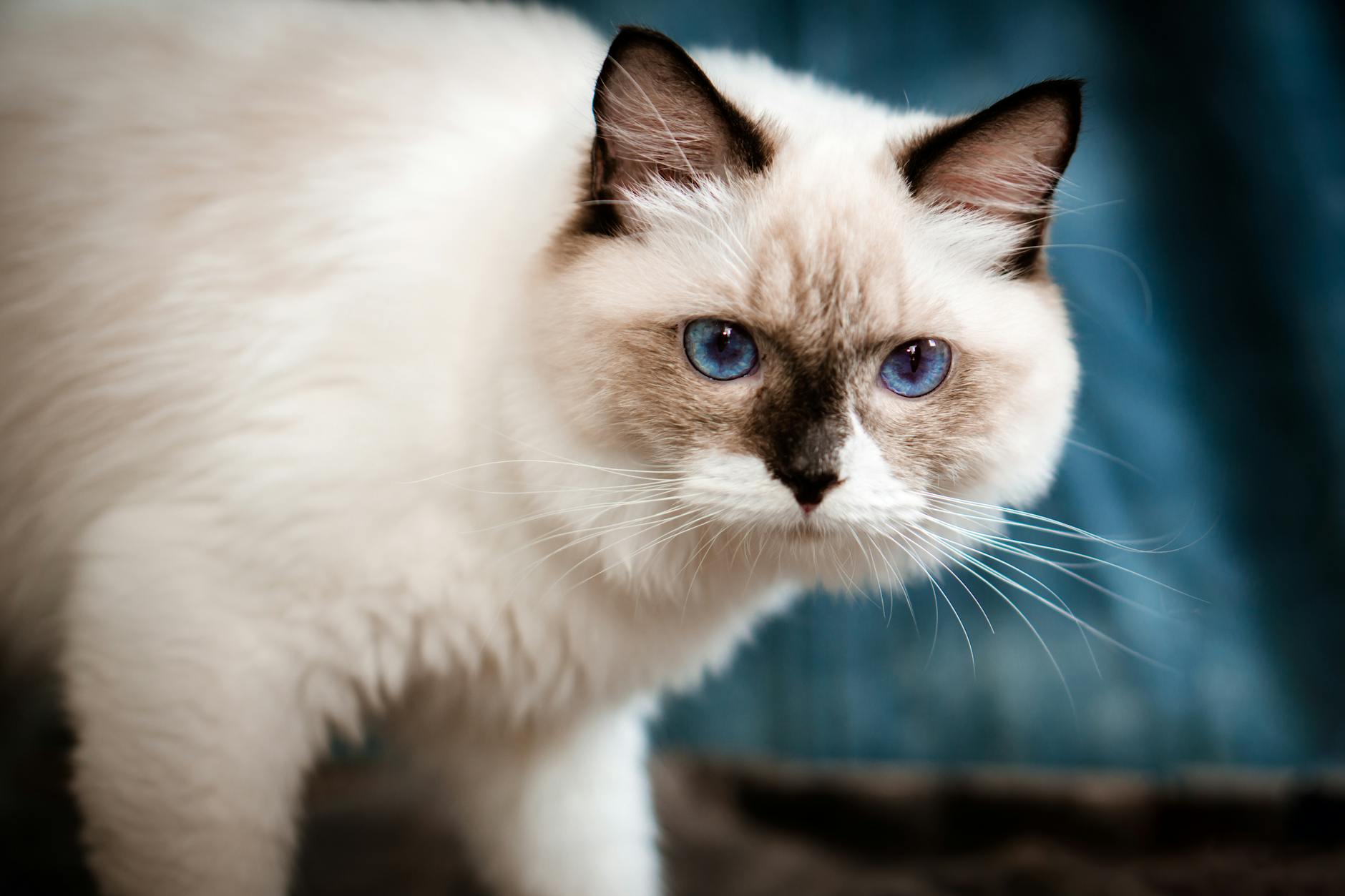
The Ragdoll is the quintessential blue-eyed cat breed that exemplifies what most people envision when they think of a large, striking cat with luminous blue eyes and a soft, colorpoint coat. If you’ve seen a photograph of a cream-colored cat with darker points on its face, ears, and paws and brilliant blue eyes staring directly at the camera, you were likely looking at a Ragdoll. This breed, which originated in California during the 1960s, has become one of the most recognizable and beloved cat breeds worldwide specifically because of this distinctive combination of features.
However, the Ragdoll is not alone in the world of blue-eyed cats with similar appearances. Several other breeds share overlapping characteristics that can create confusion among prospective cat owners, including Birmans and Siamese cats, both of which also feature blue eyes and colorpoint patterns. Understanding what distinguishes a Ragdoll from these similar breeds—and what defines the breed itself—requires examining the specific breed standards, physical characteristics, and behavioral traits that set them apart.
Table of Contents
- What Exactly Is a Ragdoll Cat and Why Are Blue Eyes the Hallmark?
- Understanding the Precise Eye Color Standards Across Different Ragdoll Patterns
- How Ragdolls Compare to Other Blue-Eyed Colorpoint Breeds
- The Distinctive Ragdoll Coat: Why It Matters More Than Appearance
- Temperament as Part of the Complete Picture: Are They Really “Dog-Like”?
- The Full Color Spectrum: Six Recognized Color Patterns in Ragdolls
- Making the Right Choice: Ragdoll Ownership Considerations for Blue-Eyed Lovers
- Conclusion
What Exactly Is a Ragdoll Cat and Why Are Blue Eyes the Hallmark?
The Ragdoll breed was intentionally developed to combine striking appearance with a distinctly gentle, laid-back temperament. Breeders selected for cats that would be exceptionally docile and responsive to human interaction—cats that would follow their owners around the house like dogs and go limp when picked up, hence the “Ragdoll” name. The blue eyes became the signature visual marker of this breed’s unique genetic heritage and selective breeding goals.
According to the Cat Fanciers’ Association (CFA) 2024 breed standard, traditional Ragdolls must have blue eyes, with deeper blue shades being particularly favored in cat shows and breeding programs. However, a nuance emerged with TICA’s 2025 updated standard, which recognizes that mink-pattern Ragdolls may exhibit blue-green to aqua eyes, while sepia and traditional variants can occasionally display gold or green eyes. This distinction matters for breeders and show competitors, though the classic image of a Ragdoll in most people’s minds remains a cat with intensely blue eyes. For example, a champion show Ragdoll with deep sapphire-blue eyes would score higher than one with lighter, washed-out blue eyes under traditional CFA judging criteria.
Understanding the Precise Eye Color Standards Across Different Ragdoll Patterns
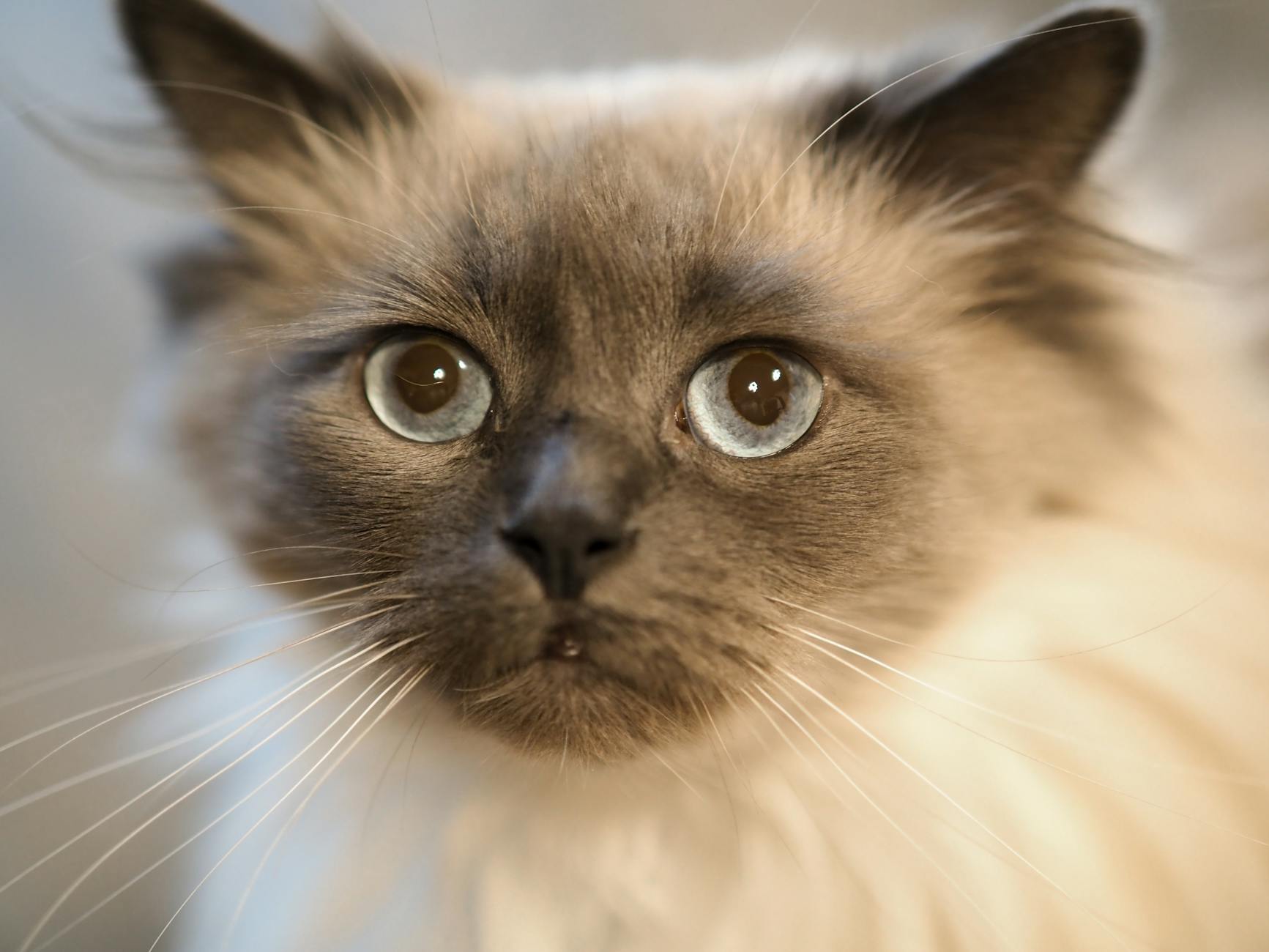
The relationship between a Ragdoll’s color pattern and its eye color is more complex than many cat lovers realize. The traditional colorpoint Ragdolls—those with lighter body colors and darker points—consistently display blue eyes because the genes controlling both the colorpoint pattern and eye pigmentation are linked. But when breeders introduced the mink pattern (which creates a warmer body tone) and the sepia pattern (which produces darker, more uniform coloring), the eye color genetics became more variable.
This distinction has practical implications if you’re purchasing a Ragdoll kitten. A breeder telling you that a mink or sepia kitten might develop greenish or amber eyes rather than blue is not describing a flaw or a mixed breed—they’re accurately describing TICA-recognized genetic possibilities within the breed. This represents a limitation of assuming all Ragdolls will have blue eyes; a small percentage of otherwise purebred, registered Ragdolls will mature with eyes in other colors, which can disappoint owners whose hearts are set on the classic blue-eyed appearance. If blue eyes are non-negotiable for you, requesting a traditional or colorpoint pattern kitten significantly increases the likelihood of getting the eye color you desire.
How Ragdolls Compare to Other Blue-Eyed Colorpoint Breeds
The Birman is often the first breed mentioned when discussing cats that resemble Ragdolls with blue eyes. Both breeds feature colorpoint patterns and striking blue eyes, and both have semi-long, soft coats. However, Birmans are noticeably smaller than Ragdolls, typically weighing 5-10 pounds compared to Ragdolls’ 8-15 pounds for females and 12-20+ pounds for males. Birmans also have a more muscular, compact build, whereas Ragdolls are built more heavily with a larger, more rectangular frame.
The Siamese breed also shares the blue eyes and colorpoint pattern with Ragdolls but differs dramatically in size and coat length. Siamese cats are sleek, slender, and short-haired, making them appear almost delicate next to the substantial presence of a Ragdoll. While both breeds are vocal and people-oriented, the Siamese is famously demanding and energetic, whereas Ragdolls are known as “dog-like cats” with a more placid, patient temperament that makes them better suited to families with young children or less experienced cat owners. For example, a Siamese will demand your attention loudly and persistently throughout the day, while a Ragdoll will quietly follow you from room to room and settle contentedly at your feet without constant vocalizations.
The Distinctive Ragdoll Coat: Why It Matters More Than Appearance
One often-overlooked advantage of the Ragdoll breed relates to their coat structure rather than their eye color. The Ragdoll’s semi-long coat is composed of mainly guard hairs with a minimal undercoat, which results in significantly less shedding and matting compared to other long-haired breeds. This is a genuine practical benefit for owners who love the aesthetic of a long-haired cat but dread daily grooming battles and cat hair covering everything.
A Ragdoll owner typically needs to brush their cat only 3-4 times per week to maintain the coat in excellent condition, whereas breeds with denser undercoats might require daily attention. The soft, silky texture of a Ragdoll’s fur is iconic to the breed’s tactile appeal—it genuinely feels like brushing a cloud. However, this advantage does come with a caveat: while Ragdolls shed less than other long-haired breeds, they still shed more than short-haired breeds like Siamese cats. If you have severe allergies or live in a studio apartment where cat hair accumulates quickly, a short-haired breed might be a more practical choice despite the appeal of those blue eyes and soft coat.
Temperament as Part of the Complete Picture: Are They Really “Dog-Like”?
The Ragdoll’s temperament is fundamentally linked to why people mistake other breeds for Ragdolls or vice versa. The “dog-like” descriptor isn’t mere marketing—it’s a documented characteristic resulting from decades of selective breeding for docility and human affection. Ragdolls genuinely tend to follow their owners from room to room, wait at doors for their return, and display patience with children that other cat breeds often lack. They typically have a placid, easygoing nature that makes them poor hunters and excellent family companions.
This temperament distinction matters because it explains why someone accustomed to a Ragdoll’s personality might feel disappointed adopting a Birman or Siamese expecting similar behavior. Both of those breeds are intelligent, affectionate, and interactive, but they possess notably stronger prey drives and more independent spirits than Ragdolls. A warning worth noting: Ragdolls’ extremely gentle nature makes them unsuitable for outdoor living. Their trusting disposition and reduced hunting instinct mean they’re vulnerable to outdoor predators and less likely to defend themselves or find food if they escape. Many veterinarians and breed organizations strongly recommend keeping Ragdolls exclusively indoors throughout their lives.
The Full Color Spectrum: Six Recognized Color Patterns in Ragdolls
While blue eyes are the signature feature, Ragdolls come in more color variety than many people realize. The breed is recognized in six distinct colors: seal, chocolate, red, blue, lilac, and cream. Each color can appear in the three patterns (colorpoint, mink, and sepia), creating significant diversity within the breed while maintaining the characteristic blue (or near-blue) eyes in most cases.
For example, a seal colorpoint Ragdoll displays a cream body with dark brown (seal) points, while a blue colorpoint shows a white or cream body with soft gray-blue points. A red colorpoint features a cream body with red or orange-toned points. Despite these variations, all these color combinations maintain the same breed standard regarding size, coat quality, and temperament. The diversity in colors means that prospective owners can find a Ragdoll that matches their aesthetic preferences while knowing they’re getting the same fundamental breed characteristics regardless of whether they choose a seal, chocolate, or lilac variant.
Making the Right Choice: Ragdoll Ownership Considerations for Blue-Eyed Lovers
If you’ve fallen in love with the image of a large, blue-eyed cat with a soft coat and gentle nature, a Ragdoll is almost certainly the breed you’re thinking of. However, making the decision to bring one into your home requires understanding the commitment involved. Ragdolls are not low-maintenance cats—they require regular grooming, consistent human interaction, and a commitment to keeping them indoors for their safety.
The blue-eyed aesthetic that makes Ragdolls so appealing comes with genetic and behavioral packages that define the breed entirely. Unlike choosing a specific eye color as an accessory, you’re committing to a cat that was deliberately bred to be dependent on human companionship, to have specific grooming needs, and to have health predispositions common to the breed. If the striking blue eyes drew you in but you’re uncertain about the full commitment, spending time with actual Ragdolls—whether through breed clubs, local shows, or acquaintances who own them—will help you understand whether this breed truly aligns with your lifestyle and expectations.
Conclusion
The Ragdoll is definitively the blue-eyed cat breed that embodies the image of a large, striking feline with an intense blue stare. The breed’s creation was deliberately engineered to combine these iconic physical features with a gentle, devoted temperament, and across more than five decades, selective breeding has successfully maintained these distinctive characteristics. While other breeds like Birmans and Siamese also feature blue eyes and colorpoint patterns, none replicate the complete Ragdoll package of size, coat type, and especially temperament.
Before committing to a Ragdoll based on their striking appearance, ensure you’re prepared for the full scope of breed ownership: regular grooming, significant time commitment for human interaction, indoor-only living for safety, and potential health considerations specific to the breed. The rewarding aspects—a loyal, gentle companion that follows you throughout your home and offers unconditional affection—make Ragdolls exceptional pets for the right owner. If you’re drawn to those distinctive blue eyes, take the time to understand what living with a Ragdoll genuinely entails, and you’ll find yourself with one of the most devoted cat companions available.