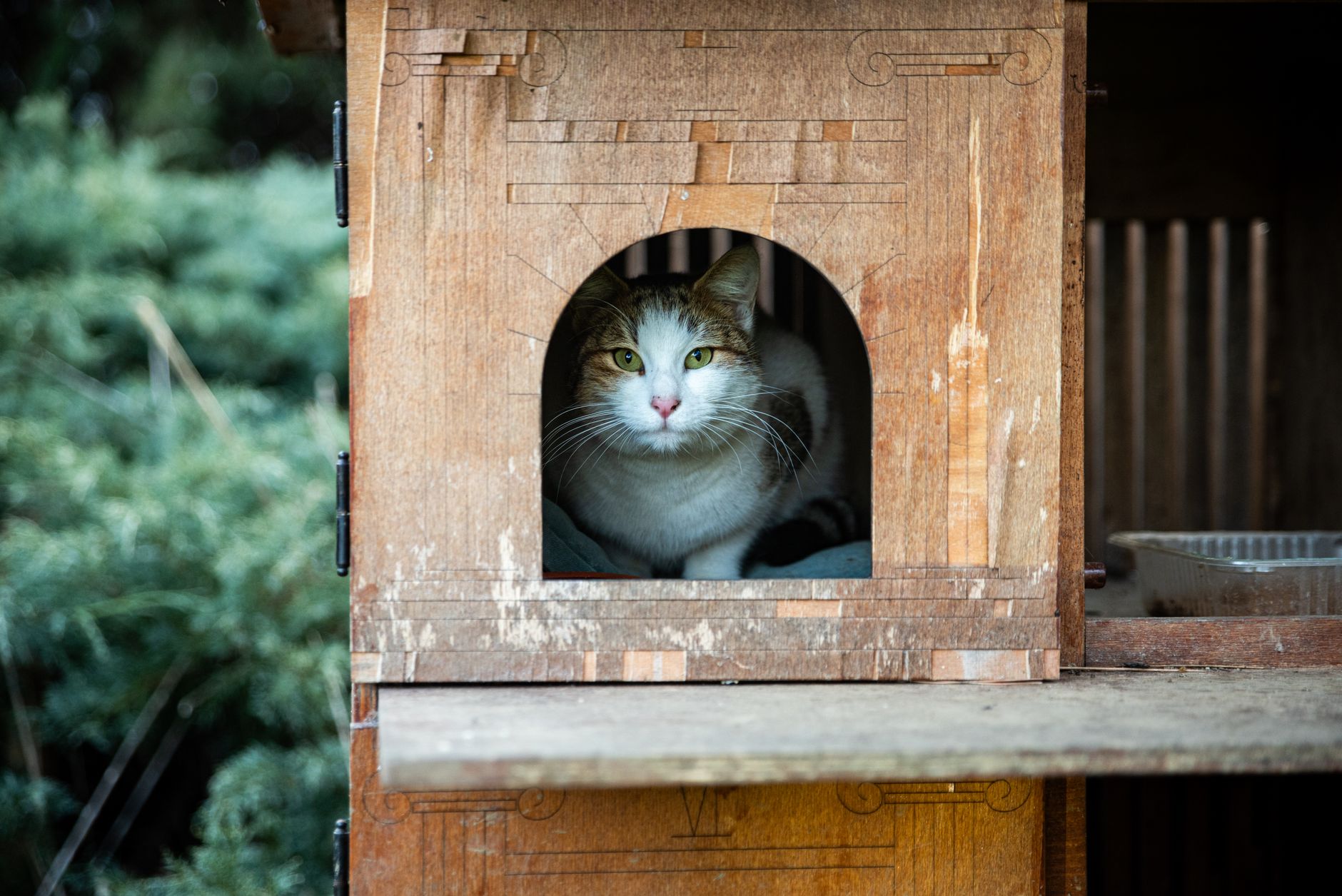
Yes, cats can safely live in big houses, but size alone doesn’t determine safety or wellbeing. A large home is only as good as its design, maintenance, and the owner’s awareness of how cats navigate and use space. A 5,000-square-foot house with numerous hiding spots, secure windows, and enrichment throughout can be ideal for a cat, while a poorly maintained mansion with exposed electrical wires, gaps behind appliances, and inconsistent supervision creates genuine hazards. The key difference is intentional preparation rather than square footage.
Cats don’t naturally struggle with large spaces the way some people assume. A cat in a big house has more territory to patrol, more surfaces to explore, and potentially better ability to establish separate zones for eating, sleeping, and elimination if you design for it. A single cat in a 3,000-square-foot home isn’t anxious about distance; it’s actually closer to how cats evolved—with roaming territories that span multiple acres in the wild. What matters is whether you’ve eliminated hazards, ensured the space is navigable, and given your cat reasons to move through it.
Table of Contents
- Can Cats Get Overwhelmed or Lost in Large Homes?
- Enrichment Demands Grow with Square Footage
- Multi-Cat Dynamics Change in Bigger Homes
- Creating Safe Zones and Reducing Navigation Risk
- Common Hazards Multiply in Spacious Homes
- Behavioral Changes to Monitor
- Specific Zones Requiring Extra Safety Attention
- Frequently Asked Questions
Can Cats Get Overwhelmed or Lost in Large Homes?
cats rarely get genuinely lost in their own home, but they can become disoriented or avoid certain areas if the space feels unsafe or overwhelming. A cat in a big house will naturally establish a home base—often near where you spend the most time—and venture outward in expanding circles. However, if a large home has confusing layouts, blocked sight lines, loud appliances in remote rooms, or areas the cat hasn’t fully explored, it may avoid those zones, effectively making the space smaller in practical terms. The actual risk in a very large home is that a cat can access hazardous areas unsupervised for longer.
In a small apartment, you’re aware of what your cat is doing most of the time. In a big house, a cat can spend hours in a basement, attic, or remote bathroom without you noticing. If that space has exposed nails, old rodent poison, antifreeze in a corner, or gaps leading outside, the danger multiplies. One cat owner discovered her Persian had been spending entire afternoons behind the garage refrigerator, where a slow coolant leak was leaking—something she wouldn’t have known without changing her monitoring habits.
Enrichment Demands Grow with Square Footage
Larger homes present both an opportunity and a challenge for enrichment. The opportunity is obvious: more space means more climbing surfaces, perches, and play areas. The challenge is that a big empty house actually provides less enrichment than a small, well-designed one. If a large home has minimal furniture, few climbing opportunities, and long sight lines with nothing to investigate, a cat will become bored and lethargic despite the acreage. Big houses require intentional enrichment design.
A cat needs multiple vertical spaces (cat trees, shelves, window perches) distributed throughout the home, not clustered in one room. One breeder of active breeds like Bengals found that her cats were lethargic in a large open-plan home until she installed climbing walls and perches along multiple hallways. Within weeks, the cats became more active because they now had engaging landmarks to move between. Without that effort, the sheer size of a big house can actually demotivate cats. An indoor cat’s contentment depends on what you do with the space, not how much of it exists.
Multi-Cat Dynamics Change in Bigger Homes
A big house is genuinely better for multiple cats than a small one, because it allows cats to maintain social distance when needed. Two cats in a studio apartment have limited escape routes if conflict arises; two cats in a 4-bedroom home can occupy different zones and only interact when they choose to. This reduces tension and territorial disputes significantly.
However, large homes create new social challenges: cats can avoid each other so completely that they become isolated rather than bonded. An owner of four cats in a 6,000-square-foot house reported that two of them didn’t interact for over a year because they naturally claimed opposite ends of the home. While this isn’t inherently harmful—many multi-cat households thrive with parallel living—it means you need to actively facilitate shared spaces (common feeding areas, central play zones) or risk cats feeling like roommates rather than companions. A big house won’t automatically create harmony; it just gives cats the option to disagree quietly rather than in each other’s faces.
Creating Safe Zones and Reducing Navigation Risk
The best approach to a big house is to establish a smaller “core territory” where your cat spends most time, with expandable access to other areas. This core zone should be 1-2 rooms containing the litter box, food bowl, primary resting spots, and your bedroom or home office—places you’re present regularly. A cat in this core space is both safer and easier to monitor.
From this base, carefully expand access to other zones. Verify that hallways have clear sightlines, that closets and cabinets close securely, and that any remote rooms (basement, attic, garage) are cat-proofed before allowing regular access. Some cat owners use baby gates or cat doors to control which zones are accessible at different times, which works particularly well in homes where you’re away for extended periods. One household with a big house and a cat with a urinary condition uses this strategy specifically to keep the cat in monitored areas during work hours, then allows full-house roaming in the evening when someone is home.
Common Hazards Multiply in Spacious Homes
Larger homes tend to have more systems, more rooms with different purposes, and more places for hazards to hide. Basements often contain cleaning supplies, old chemicals, or rodent control devices that were placed and forgotten. Garages may have antifreeze, fertilizers, or pesticides. Attics can have insulation that irritates airways, old nesting materials, or gaps where cats can escape to the outdoors. A big house multiplies the number of locations where you need to check for hazards.
One specific danger in large homes is the proliferation of entry and exit points. Multiple exterior doors, often on different levels, increase the risk that a cat can slip outside unnoticed. A cat that escapes in an urban apartment usually doesn’t get far because you hear the door close. A cat escaping through a side door in a big house while you’re in a different zone might be gone for hours before you realize it. Securing all exterior doors, ensuring screens are intact, and having a clear understanding of which doors your cat can access is more critical in a large home.
Behavioral Changes to Monitor
In big houses, behavioral problems can develop silently because you’re not observing your cat as frequently. Inappropriate elimination, loss of appetite, or excessive vocalization are easier to miss when your cat spends several hours a day in a distant room. This makes regular monitoring more important, not less.
Set a baseline for your cat’s behavior by spending time in multiple zones and noting where your cat rests, plays, and eats. If those patterns suddenly shift—a cat that always napped in the sunroom is now always in the bedroom—it could signal stress, illness, or an environmental problem you haven’t noticed. One preventive strategy is to use your big house’s size to your advantage: establish regular “check-in” walks through the home. These 5-10 minute tours where you specifically observe your cat’s behavior, check litter boxes, and look for any signs of stress or illness can catch problems early.
Specific Zones Requiring Extra Safety Attention
Kitchens in large homes often have multiple entry points and complex appliances, increasing the risk of a cat getting trapped or burned. If your big house has a separate kitchen area or large central kitchen, verify that your cat can’t access the space when you’re using the stove, and that pots and pans on cooktops are pushed to the back. Bedrooms and bathrooms also require attention in large homes: closed doors can trap a cat inadvertently if you don’t develop the habit of checking before closing them, and bathrooms with large quantities of medications or cleaning supplies need to be securable.
Multi-level homes (split-level, homes with basement stairs) introduce additional fall and injury risks. A cat that misses a jump on a high staircase in a big home may fall farther than it would in a small home, and staircases are statistically a place where cats are more likely to be stepped on when they’re underfoot. Ensuring your cat is confident navigating stairs before allowing unsupervised access is important.
Frequently Asked Questions
Will a cat feel lonely in a big house?
Not if you establish regular interaction routines and place resources (toys, perches, your attention) throughout the space. The size alone doesn’t cause loneliness; isolation from you does. A cat in a big house where you’re present and engaged will be fine. A cat in a small apartment where you’re never around will be lonely.
Do big houses require more litter boxes?
Generally, one box per cat plus one extra is the rule regardless of house size, but in a big house you should consider placing multiple boxes on different levels or in separate zones. If your cat’s litter box is on the second floor and it spends most time on the first floor, it’s more likely to have accidents. Accessibility matters more than total number.
Should I keep a big house kitten confined to one room?
Yes, during the first few weeks. Introduce your kitten gradually to the full space once it’s confident in its core zone and familiar with the layout. Confining to one room initially prevents it from getting truly lost and helps it build a mental map systematically.
Is a big house better for a senior cat?
Not necessarily. Senior cats often prefer smaller territories and may struggle with stairs or long distances to resources. A big house can work if resources (litter, water, food, favorite resting spots) are distributed throughout or if you concentrate your senior cat’s access to a smaller, accessible zone.
Can cats in big houses escape more easily?
Yes, if you’re not careful. More doors and more space between you and exits means more opportunities for a cat to slip out unnoticed. Heightened vigilance around doors and windows is essential.