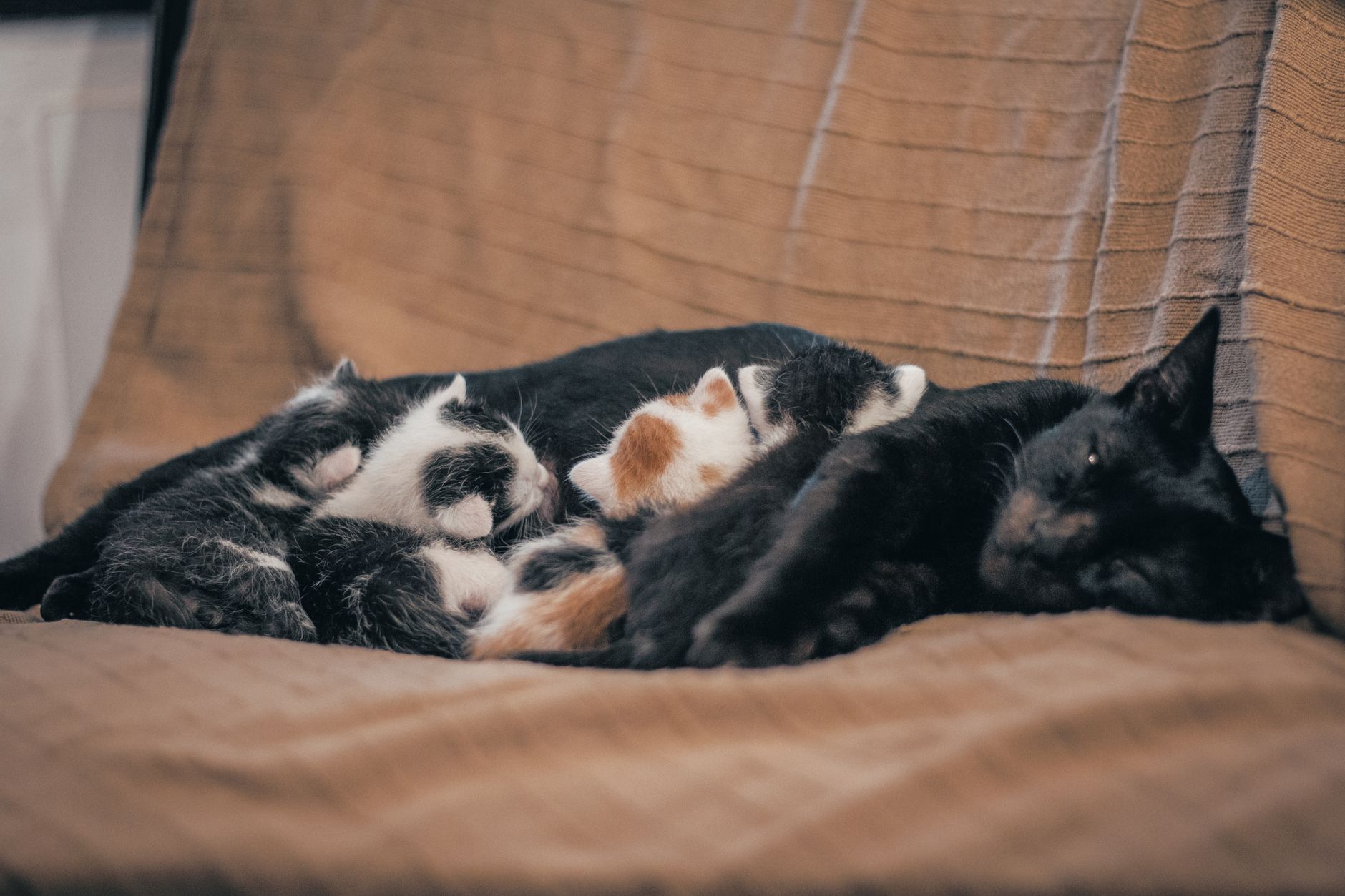
A kitten’s unexpected appearance in a bank during an attempted robbery serves as an unusual reminder of how animals can disrupt even carefully planned human activities. In this case, the small feline didn’t mean to foil a crime—it simply acted on natural instincts, pouncing at movement, meowing loudly, and creating enough commotion that the perpetrators abandoned their scheme. The incident demonstrates something cat owners know intimately: felines have no awareness of context and will respond to their immediate surroundings with complete indifference to what matters to humans around them.
What began as what might have been a controlled situation spiraled because a kitten, likely curious or frightened, could not be predicted or controlled. The animal didn’t understand it was in a bank, didn’t comprehend the crime, and certainly didn’t knowingly intervene. Instead, it reacted to stimuli—people moving quickly, voices raised in stress, unfamiliar sounds—exactly as a young cat would in any chaotic environment. The case highlights a broader truth about living with cats: their behavior remains fundamentally feline, driven by prey drive, fear response, and territorial instincts rather than any comprehension of human expectations or plans.
Table of Contents
- How Cats Become Unwitting Actors in Human Emergencies
- The Limits of Predicting Feline Behavior in Crisis Situations
- Understanding Feline Stress Responses in Unfamiliar Spaces
- Why Cats Cannot Be Controlled or Predicted in Public Settings
- Legal and Liability Questions When Animals Interfere with Human Activities
- Stray Cats and Kittens in Urban Environments
- What This Incident Reveals About Domestic Cats and Responsibility
How Cats Become Unwitting Actors in Human Emergencies
cats possess an extraordinary ability to respond to stressful situations in ways that directly contradict human intentions. A kitten sensing panic or rapid movement will pursue, pounce, or flee—behaviors that made sense when their ancestors hunted small prey, but create chaos in modern indoor settings. When multiple people move quickly around a kitten in an enclosed space like a bank, the animal’s nervous system interprets this as either a threat to escape or prey to chase. The kitten becomes a participant in the emergency not by choice but by hardwired instinct.
This unpredictability is part of why cats cannot be reliably trained to behave consistently in unfamiliar or stressful environments. A kitten that might sleep peacefully on a windowsill at home can transform into a wild creature when frightened or overstimulated. Their sensory world operates on different frequencies than ours—they detect ultrasonic frequencies, see exceptional detail in movement, and respond to subtle air pressure changes that humans never perceive. In the bank robbery scenario, the kitten likely reacted to things the human perpetrators weren’t even aware of, making its behavior appear erratic or deliberately obstructive from their perspective.
The Limits of Predicting Feline Behavior in Crisis Situations
Cat behaviorists emphasize that even domesticated cats retain the full repertoire of wild behaviors, and stress dramatically amplifies unpredictability. A frightened or excited kitten might attack, freeze, hide, or vocalize continuously—sometimes shifting between these states in minutes. This variability makes cats fundamentally unreliable in scenarios requiring controlled behavior, whether in a bank, veterinary clinic, or any high-stress environment.
One critical limitation in understanding this bank robbery case is that no amount of preparation could have prevented the kitten’s involvement once it was present in the location. Unlike dogs, which have been selectively bred for thousands of years to respond to human direction, cats were domesticated more recently and more loosely. They maintain independence as a defining trait, which means even a well-socialized, friendly kitten will prioritize its own instincts over human needs when circumstances trigger them. The perpetrators could not have anticipated or controlled the kitten’s presence any more than they could control a pigeon that flew into the bank.
Understanding Feline Stress Responses in Unfamiliar Spaces
When a cat finds itself in an unfamiliar space like a bank—with hard floors, artificial lighting, unusual scents, and crowds of stressed humans—its stress response becomes pronounced and unpredictable. Stress hormones like cortisol and adrenaline flood a young cat’s system, sharpening some senses while narrowing cognitive function. The kitten in this scenario likely experienced heightened alertness to movement and sound, making it more prone to sudden actions or vocalizations.
A kitten’s response to stress can include increased hunting behavior, as prey drive intensifies under adrenaline. Loud noises, rapid movements, and the general chaos of a botched robbery would trigger exactly this kind of arousal in a young cat. Rather than cowering in fear, the kitten might have become hyperactive and aggressive in hunting mode—chasing shadows, pouncing on moving hands or feet, or vocalizing in ways that disrupted the crime. This is a documented pattern in cat behavior during chaotic situations: the animal’s instincts take over completely, and human expectations become irrelevant.
Why Cats Cannot Be Controlled or Predicted in Public Settings
Managing cat behavior in public or semi-public spaces presents challenges that most pet owners understand from experience. Even when trained, leash-trained, or socialized, a cat retains the ability to panic, attack, or flee unpredictably. A kitten, with even less experience and impulse control than an adult cat, becomes essentially impossible to manage once frightened or stimulated. The bank setting would have been overwhelming for a young cat in multiple ways.
Banks are enclosed spaces with limited escape routes, hard surfaces that amplify sound, fluorescent lighting, and the presence of multiple humans in a state of heightened emotion. A kitten would have no way to process that it should remain calm or stay out of the way. Cats do not understand human concepts of “stay still,” “be quiet,” or “don’t interfere.” They understand fear, prey, territory, and self-protection. In this case, the kitten’s inability to be controlled or directed became the factor that disrupted the entire scenario—a reminder that animals respond according to their nature, not human planning.
Legal and Liability Questions When Animals Interfere with Human Activities
The kitten’s inadvertent role in foiling the robbery raises interesting questions about legal liability and animal behavior. Banks and other facilities have limited control over stray animals that enter their premises. If a cat or kitten wanders into a public space, neither the business nor any human present can reliably manage its behavior. This creates a zone of uncertainty when animals become involved in incidents that humans planned or perpetrated.
One significant limitation here is that law enforcement and judicial systems typically do not assign culpability to animals. The kitten broke no laws and bore no responsibility for the robbery’s failure. However, the incident demonstrates why businesses and individuals need to account for unpredictable elements, including stray animals, in security planning. The presence of an uncontained animal in a supposedly controlled situation highlights gaps in environmental control that extend beyond just the animal itself.
Stray Cats and Kittens in Urban Environments
Urban environments, including downtown banking districts, are home to significant populations of stray and feral cats. Kittens especially wander into buildings seeking shelter, warmth, or food, with no awareness of where they are or what humans are doing. A kitten entering a bank might have been searching for a warm, enclosed space or following a mouse.
Once inside, it becomes a variable that no one can predict or manage. The presence of a kitten in a bank during a robbery might seem coincidental, but stray kittens regularly find their way into buildings and create problems for human activities. They damage merchandise, disturb customers, trigger allergies, and in this case, disrupted criminal activity. From a cat welfare perspective, this situation also represents the broader problem of uncontrolled breeding and stray cat populations in cities—these animals experience constant uncertainty and stress, and their unpredictable appearances in human spaces cause friction.
What This Incident Reveals About Domestic Cats and Responsibility
This unusual case demonstrates that domestic cats, even when young and small, retain complete agency over their own behavior. A kitten weighing a few pounds managed to disrupt an entire criminal operation by simply being itself—reactive, unpredictable, driven by instinct. For cat owners, the lesson is clear: cats cannot be fully controlled or predicted, and they will pursue their own interests regardless of human plans or expectations.
The bank robbery case also underscores why responsible cat ownership includes preventing cats from roaming into public spaces unsupervised. A kitten loose in an urban environment faces dangers from traffic, other animals, and illness, while simultaneously becoming a liability in human spaces. The incident, while unusual, reflects a common reality: cats in public spaces create unpredictable situations that can have serious consequences, even if those consequences sometimes work against criminal activity.