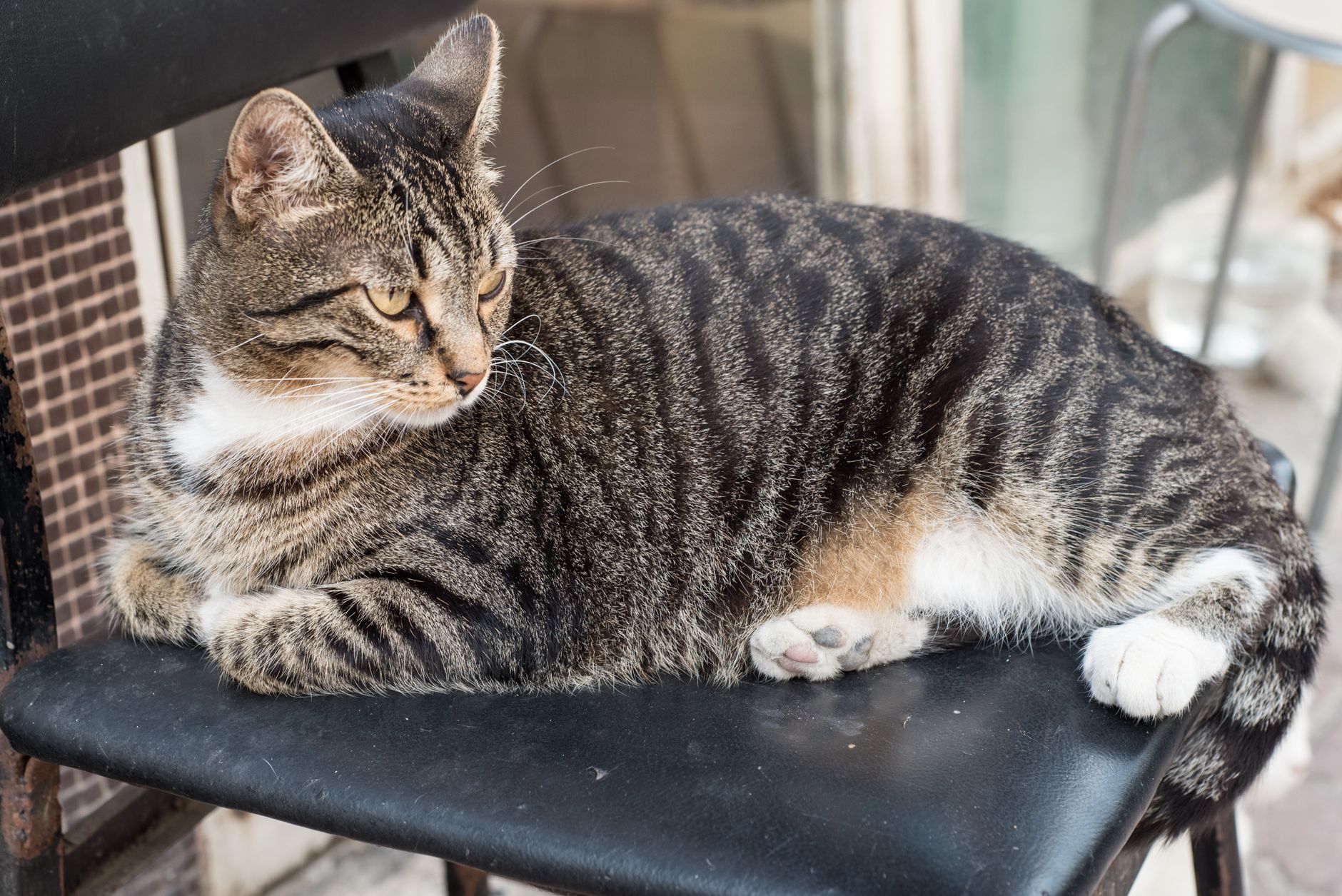
Your cat's constant need to touch you usually reflects scent marking, social bonding, or a preference for contact. It is not a diagnosis, and normal touching varies widely among cats. Rubbing, lap-sitting, licking, and settling beside you may invite interaction. The meaning depends on the cat's full body language and whether the behavior is familiar or newly increased.
Table of Contents
- What does frequent touching mean?
- Is your cat asking to be petted?
- How should you respond?
- When does clinginess need a veterinary check?
- What if touching ends in biting or scratching?
What does frequent touching mean?
cats commonly rub their faces and bodies against people to deposit scent pheromones. According to the Feline Veterinary Medical Association, this scent exchange helps make the cat's surroundings feel familiar and secure. Mutual rubbing and grooming also occur among socially bonded cats and contribute to a shared group odor. A cat may treat a familiar person as part of that social environment.
The behavior is compatible with affection, but it cannot prove one particular emotion. Cats can also form caregiver attachments. In a 2019 Secure Base Test, researchers classified 64.3% of 70 classifiable kittens and 65.8% of 38 adult cats as securely attached to their caregivers, as reported in Current Biology. However, an earlier controlled study found no owner preference consistent with secure attachment, so scientists have not settled on one universal explanation for cat–human bonds, according to PLOS ONE.
Is your cat asking to be petted?
Approaching, rubbing, licking, or settling beside you may be an invitation. It may also mean your cat wants closeness without continuous petting. Let the cat initiate, then watch what happens after the first few strokes. Relaxed posture and continued voluntary contact support ongoing interaction.
Discomfort is more likely when you see tense muscles, dilated pupils, lowered or backward ears, hissing, or distressed crying. Stillness does not always mean enjoyment. A twitching tail tip, rippling skin along the back, or sideways ears can appear before a nip or swat. Stop at these early signals instead of waiting for the cat to escalate.
How should you respond?
Give your cat control over the interaction. Start with brief touches around the head and neck, which are generally better tolerated than prolonged handling elsewhere.
Use a simple consent check: You do not have to respond to every request with a long petting session. Calmly pausing or letting the cat sit nearby can preserve contact without pushing it beyond its tolerance.
- Offer your hand and allow the cat to approach.
- Give one or two gentle strokes around the cheeks, head, or neck.
- Pause and see whether the cat leans back in, rubs again, or moves away.
- Stop when the cat disengages or shows early signs of overload.
- Never restrain the cat merely to continue petting.
When does clinginess need a veterinary check?
A stable preference for sleeping against you or rubbing during familiar routines is less concerning than a sudden increase in contact-seeking. The change matters most when it appears alongside other differences.
Arrange a veterinary assessment if new clinginess accompanies: Behavior changes can be signs of pain or illness, even when the cat still seeks comfort. The Feline Veterinary Medical Association's pain guidance recommends veterinary attention when altered social behavior occurs with changes in eating, movement, grooming, elimination, vocalization, or touch sensitivity.
- Reduced or increased appetite
- Lower activity or unusual restlessness
- Changes in grooming
- Changes in litter-box use
- New or increased vocalization
What if touching ends in biting or scratching?
A cat that rubs against you and then bites is not necessarily being unpredictable. Continued petting may have exceeded its tolerance, or touching a sensitive area may have caused discomfort. Do not punish contact-seeking or touch-related aggression.
Punishment can increase fear and anxiety, making future interactions harder to interpret. End the interaction calmly, give the cat space, and note where it was touched and which warning signs appeared first. Repeated or newly developed aggression warrants veterinary evaluation before behavioral treatment. Medical causes can include osteoarthritis, dental disease, hyperthyroidism, or neurologic disease; readers who need a practice can use the cat-friendly veterinary practice finder.