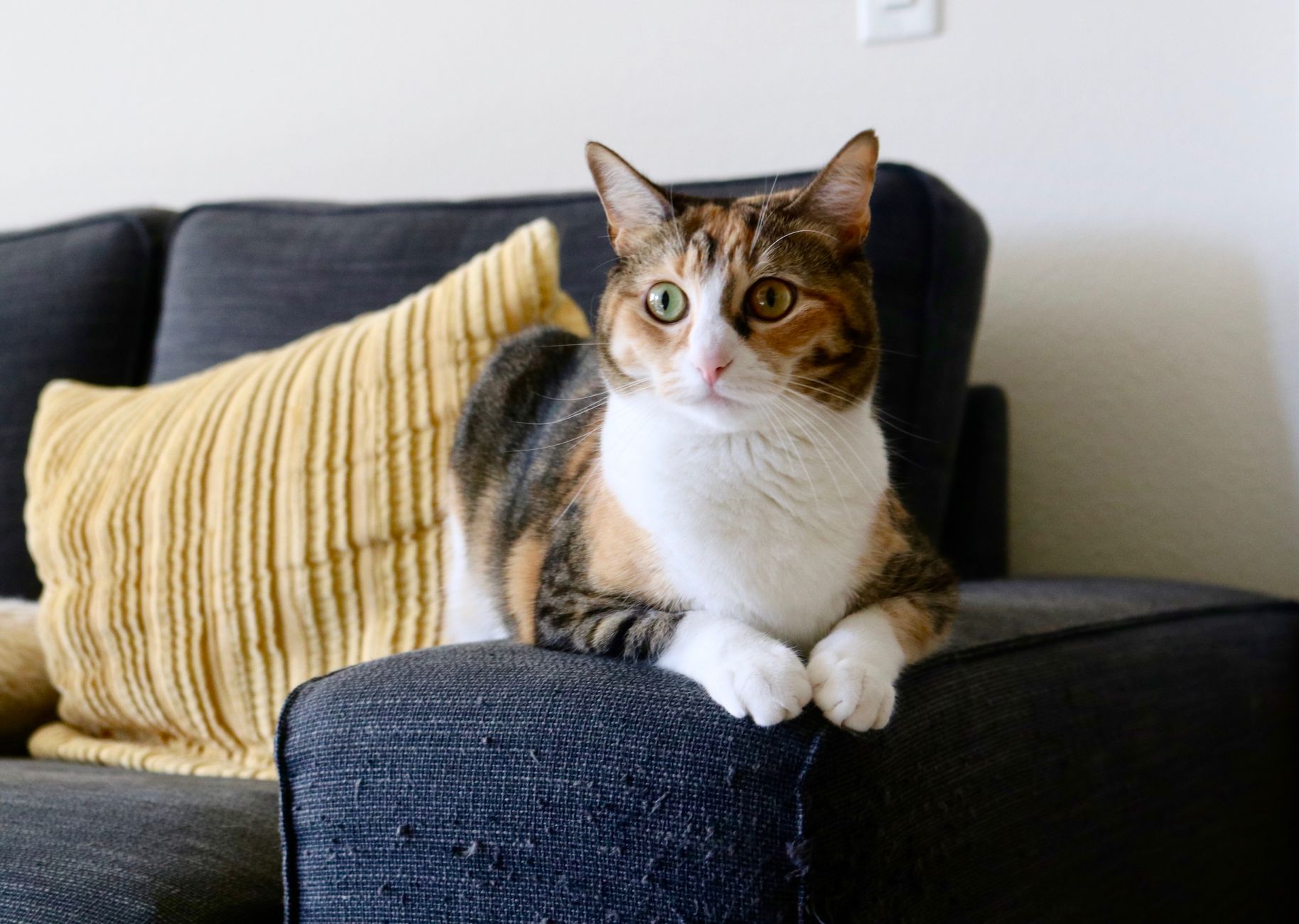
July 2026 marks a pivotal moment for cat adoption in the United States, driven by a perfect storm of shelter overcrowding and declining adoption rates that have prompted emergency interventions across the country. Multiple shelters and rescue organizations are waiving adoption fees, extending promotional periods, and coordinating emergency rescues in response to critical capacity issues. The challenge is stark: while 2.2 million cats were adopted in 2025, approximately 3 million cats entered U.S.
shelters and rescues during that same period, creating a persistent gap between intake and placement. The developments of July 2026 reflect both progress and crisis. The ASPCA launched its annual Adopt a Shelter Cat Month with a goal of 325 cat and kitten adoptions, extending the deadline to July 31, while organizations like MSPCA-Angell took the dramatic step of waiving adoption fees entirely on July 17—offering cats that typically carry $100 to $250 price tags for free to any adopter. Yet beneath these promotional efforts lies a troubling trend: cat adoptions at MSPCA-Angell declined 6.8% during the first half of 2026 compared to the same period in 2025, even as shelters struggle with overflow.
Table of Contents
- Why Are Shelter Adoption Numbers Declining Even as Capacity Crises Worsen?
- The No-Kill Revolution Has Made Shelters More Humane But Also More Crowded
- Emergency Fee Waivers and Adoption Events Are Attempting to Clear Shelters in July 2026
- The Gap Between Cat Ownership Interest and Actual Adoption Rates
- Hoarding Rescues and Emergency Interventions Signal Deeper Systemic Issues
- Understanding the Shifting Economics of Cat Adoption in 2026
- What the ASPCA’s Adopt a Shelter Cat Month Goals Reveal About Realistic Expectations
Why Are Shelter Adoption Numbers Declining Even as Capacity Crises Worsen?
The 6.8% decline in cat adoptions at MSPCA-Angell between January and June 2026 appears counterintuitive—shelters are more full than ever, adoptions should surge, yet fewer people are adopting cats. This disconnect suggests that the current crisis is not primarily a marketing or awareness problem, but rather reflects deeper patterns in how people acquire cats. Some households may be acquiring cats through other channels (breeders, private sales, outdoor births), while others may have postponed adoption due to economic uncertainty or housing instability.
The trend also implies that existing incentive structures—traditional adoption promotions—may not be sufficient to move adoption numbers upward at the speed needed to match shelter intake. Compounding the adoption challenge is that many shelters are now operating at absolute capacity limits. One Missouri shelter exemplifies this crisis: it has over 80 cats and kittens available for adoption and received approximately 700 cats since May 1, 2026—a ratio in which adoptions have failed to keep pace with incoming animals. At this intake rate, the facility would need roughly 14 cat adoptions per day just to prevent the population from growing, yet shelters typically see 30 to 40 percent of people walk through the door without adopting anything.
The No-Kill Revolution Has Made Shelters More Humane But Also More Crowded
Since 2016, the proportion of U.S. shelters operating as no-kill facilities has increased dramatically—from 24% to 63% as of 2026. This shift represents a genuine moral and operational triumph, eliminating the euthanasia of adoptable animals and giving cats a chance to find homes. However, no-kill policies create a direct consequence: without euthanasia, every cat that enters a shelter must eventually find a home, move to a rescue partner facility, or remain at the shelter indefinitely.
The capacity crisis unfolding in July 2026 is partially a byproduct of this progress—shelters that were previously able to euthanize animals to manage population now must find alternative solutions when adoption rates cannot keep pace with intake. This dynamic is particularly acute for cats because feline intake is both high and seasonal. Cats breed prolifically and outdoor colonies expand rapidly in spring and summer months. A single unspayed cat can result in dozens of kittens over several years; a shelter facing a crisis of 700 intakes since May is essentially confronting five or six months’ worth of breeding season all at once. The no-kill mandate, while ethically sound, offers no mathematical solution to an intake problem—it only shifts the burden to keeping cats in appropriate conditions without placing them.
Emergency Fee Waivers and Adoption Events Are Attempting to Clear Shelters in July 2026
Facing these pressures, shelters are deploying emergency promotions with unprecedented scale. On July 17, 2026, MSPCA-Angell waived adoption fees for adult cats at all four of its adoption centers across the region—a dramatic step that eliminates fees that typically range from $100 to $250 per adult cat. This follows earlier initiatives: the Animal Protective Association of Missouri waived adoption fees for cats and kittens through July 10 at its Brentwood location, while a Rapid City rescue extended 50% off cat adoptions after a particularly dire weekend in which zero cats were adopted. These aren’t symbolic gestures—waiving a $200 fee removes what many prospective adopters identify as the primary barrier to adoption, even when they already plan to spend several times that amount on food, supplies, and veterinary care over the cat’s lifetime.
Concurrent with fee waivers, shelters are hosting adoption events designed to draw larger crowds and create social momentum around adoption. Capital City Cats is hosting an all-breed cat competition and adoption event on July 25-26 at the Maryland State Fairgrounds—combining entertainment value with the practical goal of facilitating adoptions. These events serve dual purposes: they create a low-pressure environment where prospective adopters can meet multiple cats, and they generate media coverage and social media visibility that reaches people who would never spontaneously visit a shelter website. For shelters operating at critical capacity, each event is an attempt to move dozens of cats toward homes in a single day.
The Gap Between Cat Ownership Interest and Actual Adoption Rates
Despite 46.5 million U.S. households owning cats as of 2025, and 95 million households (71.6% of all U.S. households) owning at least one pet overall, the adoption crisis persists. This suggests that the universe of potential cat adopters is not the constraint—cats are the second most common pet after dogs, indicating that cat ownership is normalized and broadly acceptable across American society.
The limitation is not interest but rather actionability: most people who want a cat either never initiate the adoption process, acquire cats through non-shelter channels, or encounter barriers (breed preferences, housing restrictions, prior negative experiences) that make shelter adoption feel incompatible with their needs. The ownership statistics also reveal how far shelters must go to close the intake-adoption gap. If 46.5 million households own cats and most acquired them before 2026, the task before current shelters is to find homes among people either acquiring their first cat, replacing a deceased cat, or adding to their existing household. Yet household expansion of pet ownership (adding a second or third cat) faces real constraints: veterinary costs, food expenses, housing capacity, and the logistics of introducing new cats to existing animals. The 6.8% decline in MSPCA-Angell adoptions may reflect not lack of interest in cat ownership, but rather that most prospective adopters have already become cat owners through prior adoptions or purchases.
Hoarding Rescues and Emergency Interventions Signal Deeper Systemic Issues
In July 2026, multiple rescue organizations coordinated to rescue 53 cats from a hoarding situation in Rockbridge County. Hoarding cases represent a particular crisis multiplier for shelters: the cats require medical attention, behavioral assessment, socialization, and potentially long-term care before they’re adoption-ready. Each rescued cat from a hoarding situation consumes significantly more shelter resources than a typical stray or owner-surrender that is already socialized and medically stable. The Rockbridge County rescue, while successful in saving 53 animals, also pushed those rescue organizations into immediate capacity challenges—each of those cats must be housed, fed, and cared for while awaiting adoptive homes, competing for shelter space with the already overcrowded general population.
Hoarding rescues also highlight that the intake crisis extends beyond normal breeding and abandonment patterns. Hoarding cases, accidental litters from unspayed cats, and the consequences of prior underinvestment in spay-neuter initiatives all concentrate into shelter populations during the spring and summer months. The emergency response framework that allowed organizations to coordinate and rescue 53 cats simultaneously demonstrates that regional partnerships are essential—no single shelter can absorb a major hoarding case without exceeding capacity. Yet this same coordination reveals how fragile the system is: it requires constant vigilance, rapid response, and the willingness of partner organizations to accept additional cats despite already operating at capacity.
Understanding the Shifting Economics of Cat Adoption in 2026
Adoption fees have historically been one of the primary funding mechanisms for shelters and rescues, covering portions of medical care, food, utilities, and staff. By waiving fees, organizations are immediately reducing revenue while simultaneously hoping that increased adoption volume will offset that loss through reduced boarding costs for cats. A shelter housing 80 cats spends money daily on food, litter, utilities, medical care, and staff time. Each week a cat remains unadopted costs the shelter approximately $50 to $100 in direct care (food and litter) plus proportional overhead. The $200 adoption fee paid by one adopter may actually cover the marginal cost of boarding an unadopted cat for approximately two weeks.
Therefore, waiving fees to increase adoption velocity can mathematically improve a shelter’s financial position if adoption rates increase sufficiently. However, this calculation assumes that fee waivers actually increase adoptions rather than simply reducing revenue from people who would have adopted anyway. The zero-adoption weekends reported by Rapid City rescue suggest that demand for adoption is genuinely limited—reducing the fee is only effective if there are people willing to adopt who weren’t willing before. In July 2026, we’re essentially in the midst of a natural experiment across multiple shelters to determine whether fee barriers or other factors (breed preferences, time constraints, housing rules) are the binding constraints on adoption rates. The extended fee waivers and promotional periods running through July 31 will provide partial evidence, though shelters won’t have complete data until August when intake patterns are evaluated.
What the ASPCA’s Adopt a Shelter Cat Month Goals Reveal About Realistic Expectations
The ASPCA set a specific goal of 325 cat and kitten adoptions for July 2026’s Adopt a Shelter Cat Month—a target that may seem modest compared to the millions of cats in shelters nationwide, but reflects realistic expectations for what promotional campaigns can achieve. Three hundred twenty-five adoptions across the entire ASPCA network and partner shelters nationwide works out to approximately 10-15 adoptions per major metropolitan area, assuming the goal is distributed geographically. This suggests the ASPCA is targeting not a dramatic reversal of the intake-adoption crisis, but incremental progress within a constrained system.
The extended deadline to July 31 also acknowledges that adoption decisions require time: people need to see promotional announcements, visit shelters, meet specific cats, arrange housing and veterinary care, and coordinate logistics. The one-month window is partially a marketing window and partially a practical recognition that adoption is not an impulse purchase. When MSPCA-Angell waived fees on July 17 and Rapid City extended its promotion after poor weekend results, both organizations were implicitly acknowledging that the promotion itself is not the primary lever—awareness, accessibility, and the fit between specific cats and specific households are ultimately what determine whether an adoption occurs.