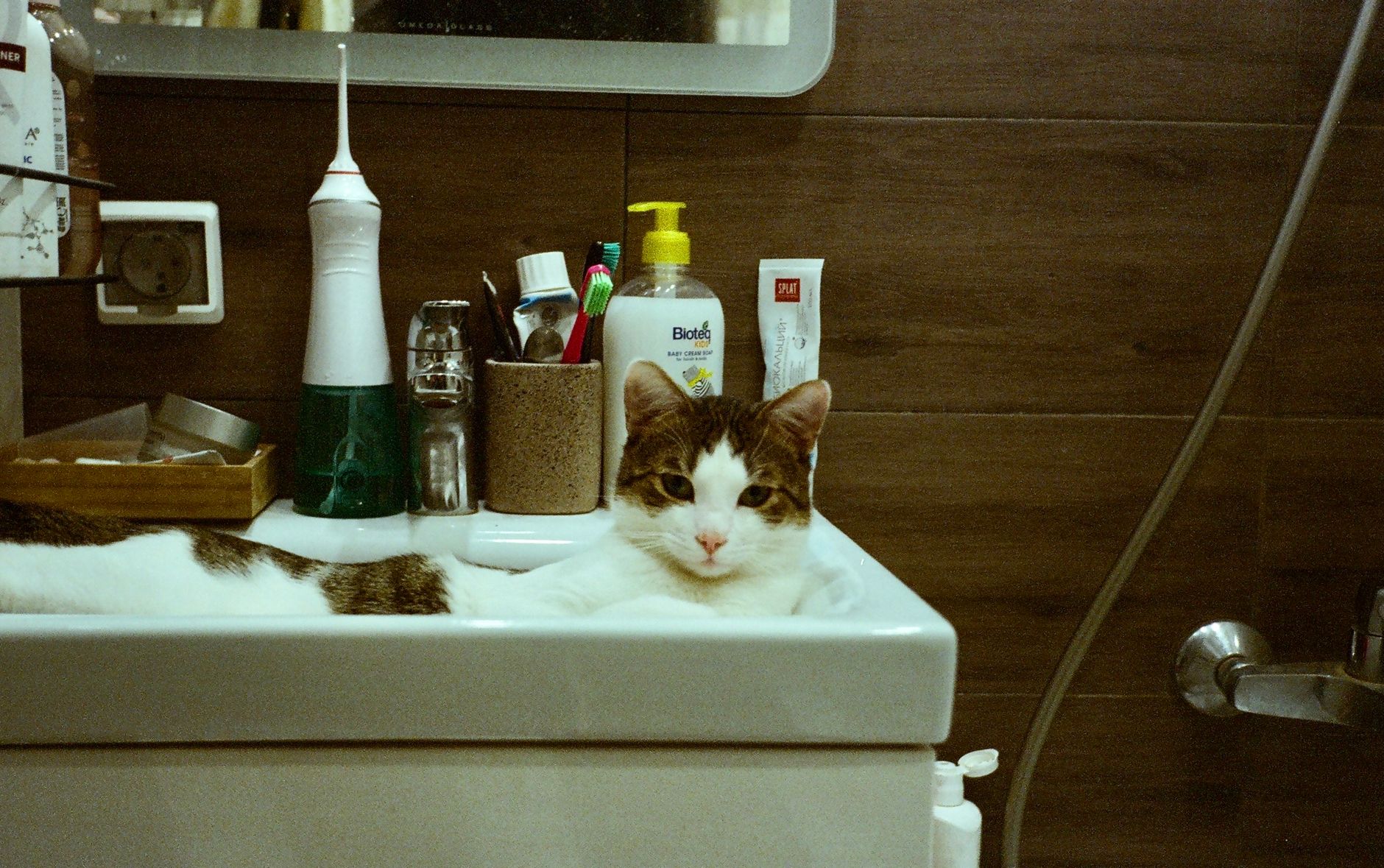
Yes. Minoxidil, the active ingredient in Rogaine and in generic hair-regrowth solutions and foams, is toxic to cats, and exposures as small as a few drops or a lick have made cats seriously ill. In the largest study, built from cases reported to the ASPCA’s animal poison control center, 8 of the 62 cats that developed signs died.
Why is minoxidil toxic to cats when people put it on their scalps every day? It widens blood vessels and lowers blood pressure, and a cat that licks it from a hand, a pillowcase or its own fur swallows it.
If your cat has licked, eaten or been splashed with minoxidil, call your veterinarian or an emergency animal hospital now, even if your cat seems fine. Two animal poison control centers answer around the clock: the ASPCA Animal Poison Control Center at (888) 426-4435 and Pet Poison Helpline at (855) 764-7661. Both may charge a consultation fee.
Is minoxidil toxic to cats? The poison-center evidence
The most useful numbers come from the ASPCA Animal Poison Control Center, one of the two hotlines in the box above. Its researchers searched the center’s database for dog and cat cases involving topical minoxidil between 2001 and 2019, and the American Animal Hospital Association’s journal published their findings in 2021. They found 211 cases. In 87 of them the animal showed signs of poisoning: 62 cats and 25 dogs.
For the cats, the paper’s summary holds three findings an owner should know:
- Tiny amounts were enough. Signs appeared “even with low exposure amounts, such as drops or licks.”
- Most sick cats were badly sick. Of the 62 cats with signs, 59.7% had moderate or major illness.
- Some did not survive. Eight of the 62 died, which the authors give as 12.9%.
The study has limits worth knowing. Only its abstract is freely readable, and we could not access the full paper, so any detail it holds on onset, amounts, treatment or causes of death is unavailable to us. The abstract also never says how many of the 211 animals were cats, so it cannot tell you what share of exposed cats get sick.
The American Academy of Dermatology, whose page for pet owners cites the ASPCA study and a 2025 scoping review of published pet cases in its own journal, reports that “nearly all (97.8%) cats and dogs that came into contact with minoxidil were hospitalized” and that “10 of the 68 cats who came into contact with minoxidil died, usually within days.” The AAD does not say which study each figure comes from, so read them as its summary of published cases, which tend to involve animals sick enough to end up in a hospital.
The UK picture is similar. In May 2026 the charity Cats Protection said the Veterinary Poisons Information Service had recorded 20 feline poisonings linked to minoxidil, and that it expects the true number is higher because no one is required to report them. Its head of cat welfare engagement summed up the pattern: “Direct ingestion from bottles or applicators is uncommon. Most poisonings occur through everyday, unintended contact with owners.”
All of these counts include only cats that someone noticed. An owner whose cat licked a drop and stayed well has little reason to phone a hotline, and a mild case is less likely to be written up, so no figure here is the chance that an exposed cat will fall ill. What they do establish, on both sides of the Atlantic, is that very small exposures can make a cat critically ill and that hospital care does not save every one.
What minoxidil does inside a cat’s body
Minoxidil started out as a blood-pressure drug and only later became a scalp treatment for hair loss; in the US it has been sold without a prescription since 1996. The FDA-approved tablet label on DailyMed describes it as “an orally effective direct acting peripheral vasodilator”, which means it relaxes the walls of small arteries so that blood pressure falls.
A cat meets the drug by mouth. Licking treated skin or grooming residue off its own coat means swallowing it, and the ASPCA warns that “When ingested by pets, minoxidil is rapidly absorbed and can cause life-threatening complications with low blood pressure, abnormal heart rhythm, fluid build-up in the lungs and possibly cardiac or respiratory arrest.”
The veterinarians who treated a Norwegian Forest cat in a 2022 case report described the chain of events in one sentence: “Like other antihypertensive drugs, minoxidil produces sustained vascular relaxation and hypotension, leading to secondary reflex cardiac stimulation and vasodilatory oedema.” Put simply, the arteries stay wide open and blood pressure sinks, the heart speeds up and strains to make up for it, and fluid leaks out of the vessels into the lungs and the space around them. The same authors note that the heart damage comes from that strain on the circulation rather than from the drug attacking heart muscle directly.
The case reports read like that description. Describing two cats from the ASPCA’s files in 2004, DeClementi and colleagues wrote: “The cats were hypothermic, and had pulmonary edema and pleural effusion present on thoracic radiography.” In other words, they were cold, with fluid in and around the lungs on X-rays. Both died, and their post-mortem examinations also pointed to a failing heart. A low body temperature comes up in report after report, so a cat that feels cold after a possible exposure needs a vet now.
The effect also lingers. In people, the tablet label gives the drug a plasma half-life of 4.2 hours, yet says one effective dose goes on lowering blood pressure for about 75 hours in all. Nobody has measured this in cats, but the vets behind the 2022 case concluded that “The duration of a single-dose effect of a topical minoxidil solution may be at least 3 days after exposure.” That fits the case reports, where cats often reached a vet a day or more after contact, and the ASPCA’s note that cats with heart or breathing signs may need treatment for up to three to four days.
Why cats may be more sensitive
Both US animal poison control centers single out cats. The ASPCA states that “Cats are more sensitive to the effects of minoxidil than dogs and even very small exposures can cause life-threatening complications,” and Pet Poison Helpline’s senior veterinary toxicologist calls cats “particularly sensitive to this medication.”
The usual explanation is the cat’s liver. In people, the tablet label says about 90% of a dose is metabolized, mostly by attaching glucuronic acid to it. Cats are known to be poor at some reactions of that kind: a 2000 genetic study in Pharmacogenetics found that the gene for one key enzyme, UGT1A6, is a pseudogene in the domestic cat, a broken copy, which is why cats handle acetaminophen so poorly. Writing in Vet Times in 2026, a veterinary pharmacologist lists “Reduced hepatic capacity for key metabolic process such as glucuronidation” and a limited ability to attach sulfate among the reasons cats react more strongly than dogs.
That is a sensible theory, not a proven one. The 2000 study never looked at minoxidil, and no one has measured how a cat’s body processes this drug. The 2022 case report put the liver idea forward with a caveat built in: “Despite the lack of pharmacokinetic evidence, studies suggested that cats were more likely to develop MXT than were other species owing to hepatic enzymatic differences in feline species.” (MXT is their shorthand for minoxidil toxicosis.) Slower clearance may be part of the story, and a cat’s thorough grooming may add to it, but neither has been tested for minoxidil.
Where cats pick it up: owners, pillows and spills
In the ASPCA study, the usual cat exposure was accidental and happened while the owner was using the product. The abstract’s examples are a cat licking its owner’s skin or pillowcase and a cat caught in a splash when the medication spilled. Dogs, by contrast, mostly found minoxidil by exploring; the example given is going through the trash. The published cases fill in the detail:
- A freshly treated scalp. Pet Poison Helpline tells the story of Kratos, who settled on the couch beside his owner and licked his head. “It had been 15-20 minutes since I applied the medication, so I didn’t know how dry it was or what the danger could be,” the owner said.
- Treated hair. A 2025 case report in the Journal of Veterinary Cardiology involved a young Russian blue with two bouts of heart failure eight months apart; both followed contact with a relative who used minoxidil and whose hair the cat had insistently licked. Its authors treat the drug as a probable factor rather than a proven cause.
- Pillows and bedding. The ASPCA reports that “Toxicity has been seen in cats that simply lay on pillows with minoxidil residue and then groom themselves.” The cat never has to touch a person.
- Spills. In a 2024 report in Veterinary Sciences, a five-year-old American Shorthair knocked over its owner’s bottle, was drenched by the solution, licked it, and was brought to a hospital a day later.
- Swallowed product. Two young Savannah cats from one household were treated after a suspected ingestion of 5% minoxidil; the report’s summary does not say how they got to it.
- Tablets. Minoxidil also comes as a prescription pill. Pet Poison Helpline quotes an owner whose cat, Olivia, “snatched my minoxidil pill off the counter when I reached to get some water.”
- Trash, tissues and bottles. The AAD’s list of routes includes pets chewing or licking a tissue, cotton swab or bottle with minoxidil on it, plus one that owners create on purpose: putting human minoxidil on a pet’s thinning fur.
What nobody knows yet
Several things owners most want to know have no published answer, and saying so plainly beats guessing.
No toxic dose for cats
None of the sources we read puts a number on how much minoxidil a cat can tolerate, or on how much reliably harms one. The authors of the 2024 case report looked back at earlier cases and noted that the amount a cat received “was only described in terms of licks”, and that dose per body weight had only been calculated for 10 dogs in the ASPCA data. Any safe amount for cats quoted online has no published basis. The same report warns that “Even a very small amount of topical minoxidil (fewer than a few drops) can lead to severe clinical symptoms and death in cats.”
No safe waiting time after applying it
No drug label, poison center or study gives a number of minutes after which a treated scalp is safe for a cat to touch. The ASPCA asks owners to let topical products dry completely before handling pets, yet its own warning about pillows shows that residue left behind once the liquid has dried can still poison a cat.
No single timeline for signs
Sources disagree on how quickly a cat becomes ill, and the spread matters:
- Pet Poison Helpline: signs “usually occur within 45 minutes to a few hours.”
- ASPCA: they may “develop rapidly or be delayed up to 12 hours.”
- American Academy of Dermatology: a pet can be sick within 30 minutes, though most become noticeably ill “within one to 67 hours.”
In the case reports, cats reached a vet within 36 hours in one report, 24 hours after the spill in another, and three days after the exposure in a third. Looking normal an hour later does not mean a cat is in the clear.
Why a single lick is not reassurance
The ASPCA data recorded illness after drops and licks, and the AAD says “A few drops can make a cat so sick that it requires life-saving veterinary care.” One Vet Times author goes further, writing that “even a single lick by a cat could be deadly.” The poison-center data back the first part of that worry, that a lick can cause real illness, but they do not show that every lick kills: most of the sick cats in the ASPCA study survived. The practical point is that the size of the exposure tells you little, so the phone call comes first.
Your vet may not think of it
Minoxidil poisoning has no telltale sign of its own. The vets treating the Norwegian Forest cat wrote that “we did not suspect the cat was exposed to minoxidil at the initial presentation,” and the Russian blue’s heart failure was tied to minoxidil only in hindsight. Make sure the vet hears that minoxidil is used in your household, even if you never saw your cat touch it.
The published cat cases at a glance
Each report describes one or two cats, so none can predict how a particular cat will do. Side by side they show the range, from death within hours of reaching the hospital to full recovery after intensive care.
| Report | What happened | Outcome |
|---|---|---|
| DeClementi, 2004 | A pair of cats exposed through the skin; labored breathing within 36 hours | Neither survived |
| Song, 2022 | Norwegian Forest cat; solution on the skin 3 days before its visit | Recovered; discharged 6 days post-exposure |
| Johnson, 2023 | Savannah pair in one home; thought to have swallowed a 5% product | Hearts injured; signs resolved within 24 hours with intensive care |
| Ahn, 2024 | Tipped a bottle over itself and licked it | Hemodialysis twice; discharged on day 11 |
| Ferri, 2025 | Licked a relative’s treated hair, repeatedly | Two heart failure episodes; normal heart after each |
| Pet Poison Helpline | Kratos licked his owner’s head 15-20 minutes after use | A night of intensive care; full recovery |
Follow-up checks on the Savannah pair 7 weeks after discharge found their hearts within normal limits, and the Ahn report was the first to describe hemodialysis for a cat with minoxidil poisoning.
If it has just happened
Phone before you do anything else: your own vet, an emergency hospital, or either poison control number at the top of this page. Have the bottle, tube or pill packet in your hand when you call, and take it with you if you are sent to a clinic.
Skip home remedies and let the professionals decide each step. Pet Poison Helpline’s position is that “Only trained medical professionals should induce vomiting in your pet,” and for cats it goes further: “There is simply no safe way to induce vomiting at home with cats.” Even the specialists handling Kratos chose not to make him vomit, because of the time that had passed since the lick.
If the person on the phone asks you to wash minoxidil off your cat’s coat, use the ASPCA’s at-home method for skin and fur: rubber gloves on first, a mild liquid dish soap (not dishwasher detergent) mixed into warm water, a gentle scrub that keeps clear of the eyes and ears, a rinse until no soap is left, then a towel. “Do not use a blow dryer, as heat may further irritate the skin or spread any residues.” Stay with your cat so it cannot lick its coat in the meantime. This is the ASPCA’s general method for skin exposures, so where the specialist’s instructions differ, follow theirs.
The step-by-step first hour, from the phone call to the clinic door, is in cat licked minoxidil: what to do. For other household products, our cat poison checker is a quick place to start.
Every question about minoxidil and cats, answered
Each of these questions has its own detailed guide.
My cat just licked or touched minoxidil. Pet Poison Helpline’s toxicologist asks owners to note what the pet got into and “how much was consumed, including the strength and quantity, and when the exposure occurred,” so jot those down while you dial. Our first-hour plan for a cat that licked minoxidil takes the usual situations one at a time, from a licked hand or pillowcase to a splashed coat or a chewed bottle.
What signs should I watch for? The AAD lists what owners may notice at home: no interest in food, vomiting, trouble breathing and less energy than usual. Vets examining these cats have also found low blood pressure, a cold body and fluid in the chest. The full list, including which signs mean you should leave for the emergency clinic now, is in minoxidil poisoning in cats: symptoms and timeline.
Can a cat recover? Most do. Of the 62 symptomatic cats in the ASPCA study, 8 died and 54 survived, which works out to about 87.1% by our arithmetic. There is no antidote; the 2022 case report says treatment “should focus on clinical sign-based supportive care, as targeted antidotes are unavailable.” Our guide on whether cats can survive minoxidil poisoning explains what that care involves and how long published cats stayed in hospital.
Can I keep using minoxidil with a cat at home? The AAD says you can, as long as you keep your pet away from it, and some of its advice is very specific: put used tissues and empty bottles in a trash can too heavy for a pet to knock over, with a lid it cannot open. The guide to using minoxidil with cats follows the drug from your fingers and pillowcase to the bathroom counter and the trash, and shows how to block each path.
How long after applying it can I touch my cat? No source gives a safe interval, but your hands are one thing you can fix at once. The AAD warns that “Even a small amount of minoxidil on your hands can be toxic to your pet if you touch them or they lick you,” and recommends scrubbing with soap for at least 20 seconds. Scalp, hair, pillows and hats are harder, and the page on how long to wait after applying minoxidil before touching a cat deals with each one.
I take minoxidil pills. Is that safer? The risk moves rather than disappears. The FDA label lists tablets of 2.5 mg and 10 mg, and a dropped tablet or a stray half is a hazard a scalp product never posed. Oral minoxidil and cats covers pill handling and what has, and has not, been published about pets and tablets.
Is the foam safer than the liquid? No form of minoxidil is safe for cats. Both the liquid and the foam are sold over the counter, the AAD notes, and both carry the same drug. What differs is how each one drips, spreads and lingers, and what else is in the container, which is what the minoxidil foam vs liquid guide compares.
Is minoxidil dangerous for dogs too? Yes. The ASPCA study counted 25 dogs with signs, 56.0% of them with moderate or major illness, and dogs usually got into minoxidil by exploring, especially the trash. Pet Poison Helpline adds that signs in dogs are often hard for owners to see. Our page on whether minoxidil is toxic to dogs compares the two species and covers homes with both.
Which other skin medicines can poison cats? Minoxidil is one of several. Our guide to topical medications toxic to cats covers creams, gels, sprays and patches that reach cats through an owner’s skin, and older guides look at cats licking lotion off skin and human medicine and cats. When Cats Protection issued its minoxidil warning in May 2026, it named anti-inflammatory gels and hormone replacement therapy gels as dangers to cats as well.
Frequently Asked Questions
Can a cat die from minoxidil?
Yes. In the ASPCA poison-center study, 8 of the 62 cats that showed signs died, and both cats in a 2004 case report died despite hospital care. Many cats do recover with prompt veterinary treatment, which is why the first step after any exposure is a call to a vet or an animal poison control line.
Can I use Rogaine if I have a cat?
Yes, according to the American Academy of Dermatology, as long as you keep your cat away from the product and everything it touches. Shut the cat out of the room while you apply it, wash your hands straight afterwards, keep your cat off your pillow and bed, and put used tissues and bottles in a lidded trash can your cat cannot open. If that routine is hard to keep, the AAD suggests talking with a board-certified dermatologist about other treatments.
Can the smell or vapor of minoxidil hurt my cat?
No study we found has measured whether fumes or vapor from minoxidil affect cats. Every published cat case involved licking, grooming, a splash or swallowing. That does not prove vapor is harmless. Applying the product behind a closed door, which the ASPCA already recommends, deals with both worries, so keep your cat out of the room while you use it.
Can I use minoxidil on my cat’s thinning fur?
No. Human minoxidil on a pet’s thin fur is one of the routes of poisoning the AAD lists, and the academy tells owners never to use it that way. If your cat is losing fur, book a vet visit instead; the AAD points out that vets can prescribe a treatment made for animals when one is called for.
Are other hair-growth products dangerous to cats?
Some can be. The ASPCA warns that some over-the-counter hair and beard growth products contain minoxidil-like ingredients that also carry risks, and names Aminexil, Nanoxidil and Neoxyl among them. Check the active ingredients of any hair-growth product and keep it away from your cat in the same way.
Sources
- Topical Minoxidil Exposures and Toxicoses in Dogs and Cats: 211 Cases (2001-2019) — Journal of the American Animal Hospital Association (Tater, Gwaltney-Brant, Wismer; abstract), 2021
- Dermatologists caution: Minoxidil can be toxic to cats and dogs — American Academy of Dermatology, last updated 8/17/26; read October 8, 2026
- Cat poison warning issued over hair loss treatment — Vet Times (news), 20 May 2026; read October 8, 2026
- Suspected toxicosis after topical administration of minoxidil in 2 cats — Journal of Veterinary Emergency and Critical Care (DeClementi et al.; abstract via Crossref), 2004
- Successful management of suspected minoxidil toxicosis in a cat following accidental dermal exposure — Veterinarni Medicina (Song et al.), 2022
- Heart failure associated with minoxidil intoxication in a cat — Journal of Veterinary Cardiology (Ferri, Dossin, Gouni), 2025
- Successful management of minoxidil 5% toxicosis in 2 cats from the same household — Journal of Veterinary Emergency and Critical Care (Johnson et al.), 2023
- A Case Report of Successful Treatment of Minoxidil Toxicosis Using Hemodialysis in a Cat — Veterinary Sciences (Ahn et al.), 2024
- MINOXIDIL tablet (Par Health USA, LLC) — DailyMed, U.S. National Library of Medicine (FDA-approved label), label updated June 11, 2026; read October 8, 2026
- Hair Loss Drug Can be Deadly to Pets — Pet Poison Helpline (Toxin Tails), August case of the month, year not shown on the page; read October 8, 2026
- Why You Should Not Induce Vomiting in Cats — Pet Poison Helpline, undated; read October 8, 2026
- Minoxidil and Pets: What You Need to Know — ASPCA, February 26, 2026; read October 8, 2026
- Pet Decontamination at Home: What to Do After Exposure — ASPCA (ASPCA Poison Control), September 10, 2026; read October 8, 2026
- Minoxidil toxicosis in felines — Vet Times (Lotfi El Bahri, DVM, PhD), 11 Aug 2026; read October 8, 2026
- Molecular genetic basis for deficient acetaminophen glucuronidation by cats: UGT1A6 is a pseudogene, and evidence for reduced diversity of expressed hepatic UGT1A isoforms — Pharmacogenetics (Court and Greenblatt), 2000
This article is general information for cat owners, written from the published veterinary literature and poison control guidance listed above. It is not a diagnosis or a treatment plan for your cat. If you think your cat has been exposed to minoxidil or any other medication, contact a veterinarian or an animal poison control center straight away. Rogaine is a registered trademark of its owner; Cat Professor is not affiliated with any drug maker.