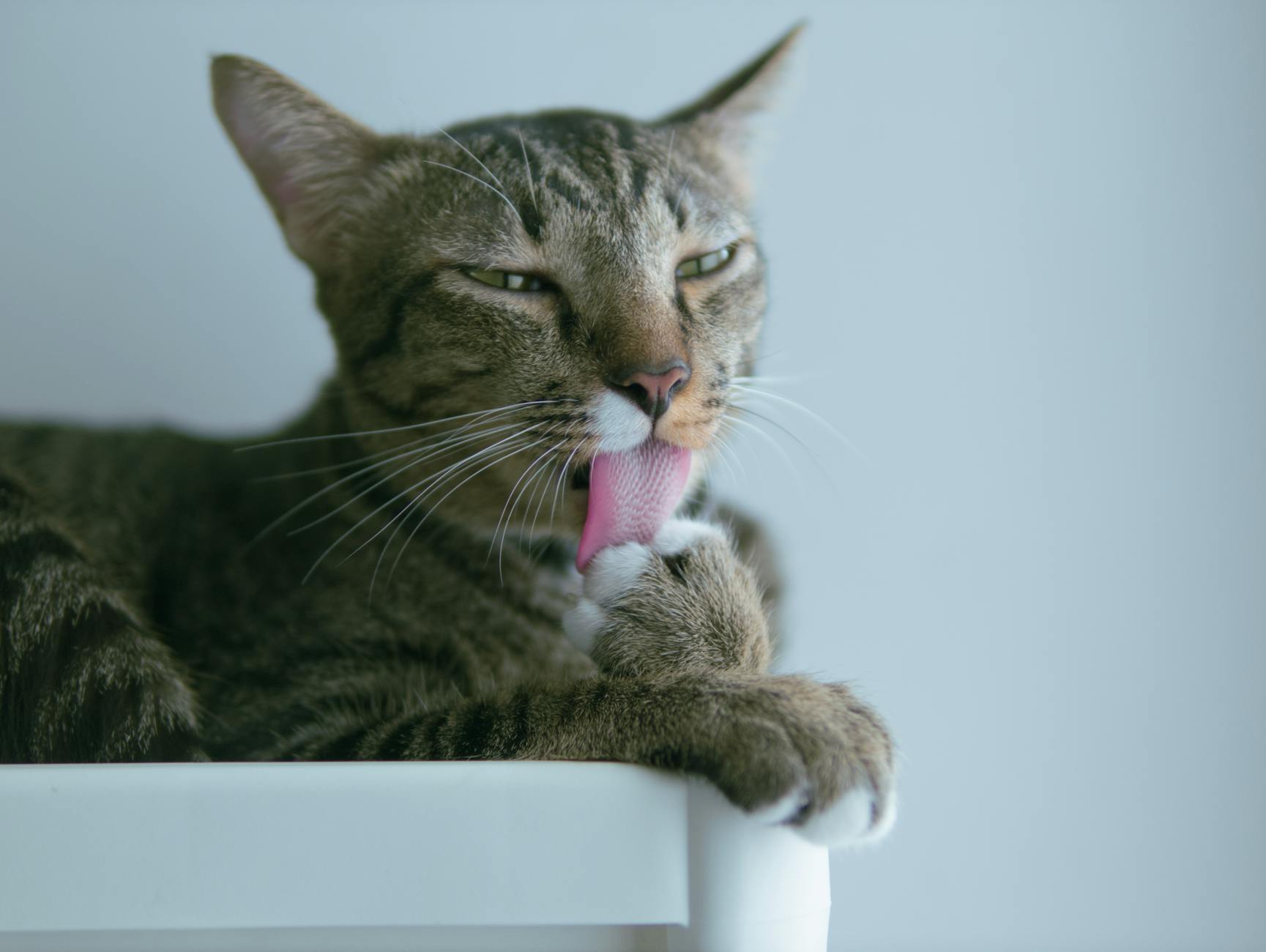
No, it is not safe for cats to lick lotion off your skin. Most lotions contain ingredients that are toxic or irritating to cats when ingested, including fragrance compounds, petroleum distillates, essential oils, and chemical preservatives. Even small amounts can cause gastrointestinal upset, and some lotions may contain specific ingredients like salicylates or xylene that pose more serious health risks.
For example, if you apply a scented hand lotion and your cat licks your hands before the lotion dries, your cat could absorb harmful chemicals through grooming. The danger depends on the lotion type, the amount ingested, and your cat’s individual sensitivity. A quick lick of unscented, fragrance-free lotion may cause only mild symptoms, while repeated contact with heavy fragrances or medicated lotions could lead to more serious complications. The safest approach is to prevent your cat from having any access to lotions on your skin and to store all personal care products securely away from curious felines.
Table of Contents
- What Lotion Ingredients Are Actually Toxic to Cats?
- Types of Lotions and Their Varying Levels of Risk
- Recognizing Signs That Your Cat Has Ingested Lotion
- Practical Strategies to Prevent Lotion Contact With Your Cat
- Common Mistakes That Increase Your Cat’s Exposure
- Special Considerations for Multi-Cat Households and Sensitive Cats
- Moving Forward With Safe Pet Care Practices
- Conclusion
- Frequently Asked Questions
What Lotion Ingredients Are Actually Toxic to Cats?
Most commercial lotions are formulated for human skin and contain compounds that cats‘ digestive and metabolic systems cannot process safely. Fragrance oils—both natural and synthetic—are among the most problematic ingredients found in scented lotions. These volatile compounds can irritate mucous membranes, cause vomiting, and potentially damage the liver in cats. Essential oils like tea tree, lavender, and citrus are particularly dangerous; even small amounts can accumulate to toxic levels in a cat’s body over time.
Other common lotion ingredients that pose risks include petroleum jelly derivatives, lanolin, glycerin in high concentrations, and chemical preservatives like methylisothiazolinone and parabens. Cats lack certain liver enzymes that humans have, which means they metabolize these chemicals differently and at a much slower rate. A lotion that sits harmlessly on human skin for hours can become a poison when a cat ingests it. Some medicated lotions containing salicylates (similar to aspirin) are especially risky, as cats are highly sensitive to compounds in the salicylate family and can develop severe poisoning from even modest exposure.

Types of Lotions and Their Varying Levels of Risk
Not all lotions present the same level of danger, though none should be considered truly safe for cats to ingest. Unscented, fragrance-free, hypoallergenic lotions designed for sensitive skin pose the lowest risk but still carry some concern due to their base oils and preservatives. A cat licking your arm once after you’ve applied plain, fragrance-free lotion may experience nothing more than mild stomach upset. However, the cumulative effect of repeated exposure is unknown, and individual cats may have different sensitivities.
Medicated lotions—those containing salicylates, benzocaine, or steroid compounds—are significantly more dangerous and should prompt immediate veterinary attention if ingested. Body butters and thick moisturizing creams that sit on skin longer also increase the risk of absorption through a cat’s tongue or paws. Scented lotions, anti-aging creams with active ingredients, and sunscreens are among the highest-risk products in a household. One important limitation to understand: even veterinarians often cannot immediately identify exactly which ingredient caused a problem if your cat gets into a lotion, because the formulas are complex proprietary mixtures. This makes prevention far more important than trying to assess risk after exposure occurs.
Recognizing Signs That Your Cat Has Ingested Lotion
Symptoms of lotion poisoning or irritation in cats typically appear within a few hours of ingestion and can range from mild to severe depending on the product and amount. Common early signs include vomiting, diarrhea, drooling, loss of appetite, and lethargy. Your cat may also exhibit abdominal pain, evidenced by a hunched posture, reluctance to move, or crying when their belly is touched. Some cats develop skin irritation around the mouth or on their paws if they’ve made repeated contact with the lotion. More serious symptoms indicate a greater level of toxicity and require emergency veterinary care.
These include tremors, difficulty walking or balance problems, excessive salivation or foaming at the mouth, difficulty breathing, or rapid heart rate. If your cat ingests a lotion containing essential oils or salicylates, you might see signs of liver damage appearing days later: yellowing of the eyes or gums, dark urine, pale gums, or extreme letharness. A critical warning: do not wait to see if symptoms resolve on their own. Contact your veterinarian or animal poison control center immediately if you suspect your cat has ingested lotion, even if your cat seems fine. Some toxins are cumulative or cause delayed internal damage that won’t show obvious symptoms until serious harm has occurred.

Practical Strategies to Prevent Lotion Contact With Your Cat
The most effective prevention method is to wash your hands thoroughly after applying lotion and wait several minutes for it to fully absorb before handling your cat. This simple step eliminates the risk of your cat licking lotion directly from your skin during play or cuddle sessions. If you apply lotion to your legs or body before bed, wear long sleeves and pants, or apply lotion only after your cat has settled in a separate room for the night. Many cat owners find it helpful to keep lotions in a locked bathroom cabinet or high shelf where their cat cannot access them, even if spilled.
Consider switching to fragrance-free, cat-safe alternatives when possible. Some veterinarians recommend keeping a dedicated “cat lotion” on hand—a minimal-ingredient product designed for pets—though even these should be used sparingly and kept away from your cat’s face. The tradeoff is that fragrance-free lotions may not be as appealing to use personally, and finding truly minimal-ingredient options requires reading labels carefully. For people who apply lotion multiple times daily, designating specific times (such as right before bed or right after showering, when cats are fed or occupied elsewhere) creates a routine that minimizes overlap between lotion application and cat contact.
Common Mistakes That Increase Your Cat’s Exposure
One of the most frequent mistakes cat owners make is applying sunscreen or after-sun lotion and then immediately petting their cat, not realizing how quickly cats will groom their own fur and anything on your skin that touches them. Sunscreen lotions are particularly problematic because they often contain zinc oxide or octinoxate, both of which are irritating to cats. Another common error is leaving lotion bottles or pumps on nightstands or bathroom counters where cats can knock them over, accidentally spilling lotion on themselves or ingesting it from their paws. Many owners also underestimate how much time a lotion needs to fully dry before it’s safe.
A lotion that feels absorbed into your skin may still contain enough residue on the surface to transfer to a cat’s mouth. This is especially true for thick creams and balms designed to sit on skin longer. A significant limitation in prevention is that some lotions are applied to hard-to-reach areas or in ways that make it difficult to keep a cat away—for example, athletes who apply lotion to their legs before or after exercise, or people with dermatological conditions who need frequent lotion application for medical reasons. In these cases, creating physical barriers (closed doors, separate sleeping areas) becomes essential.

Special Considerations for Multi-Cat Households and Sensitive Cats
In households with multiple cats, the risk compounds because lotions applied to your skin can transfer from one cat to another through grooming and physical contact. If one cat is older or has a weakened immune system, they may be more susceptible to adverse reactions from lotion exposure. Kittens and senior cats also metabolize substances more slowly, making them especially vulnerable.
Additionally, cats with existing gastrointestinal issues, liver disease, or kidney problems are at much higher risk of serious complications from any lotion ingestion, even in small amounts. Some breeds, such as Persians and other flat-faced cats, may be more prone to licking and grooming-related behaviors that increase their exposure risk. If your cat has a history of eating non-food items (pica), the risk of them deliberately ingesting lotion increases significantly. These cats require more vigilant supervision and may benefit from environmental modifications like using lotion only when they’re in a separate room with a closed door.
Moving Forward With Safe Pet Care Practices
Understanding the risks of lotion exposure helps you make informed decisions about your personal care routine while protecting your cat. As more people become aware of ingredient safety in pet products, some manufacturers are developing human-grade lotions with minimal toxic compounds, though “safe for cats to lick” should never be assumed from marketing language alone. The trend toward fragrance-free and natural-ingredient personal care products is beneficial for cat owners, as these products typically carry fewer risks.
Your veterinarian remains your best resource for personalized advice based on your cat’s age, health status, and specific behaviors. Some vets may recommend particular fragrance-free brands or provide guidance on safe timing for lotion application in your household. By combining preventive practices with awareness of symptoms and quick access to veterinary care if needed, you can minimize the risk that lotion exposure poses to your cat’s health.
Conclusion
Lotion is not safe for cats to lick off your skin, and most household lotions contain ingredients that can cause gastrointestinal upset, toxicity, or other health complications in felines. The severity of risk varies based on the lotion type, the amount ingested, and your individual cat’s health status, but prevention remains far more practical than managing a poisoning situation after the fact. By washing your hands after lotion application, waiting for absorption, storing products securely, and monitoring your cat for any signs of illness, you can virtually eliminate this household hazard.
If your cat does ingest lotion or you suspect exposure has occurred, do not delay in contacting your veterinarian. Keep your lotion bottles out of reach, establish routines that separate lotion application from immediate cat contact, and choose fragrance-free options when possible. Small preventive steps protect your cat’s long-term health and allow you to maintain your own skin care routine without worry.
Frequently Asked Questions
What should I do if my cat licks my lotion once?
Monitor your cat closely for the next 24-48 hours for signs of vomiting, diarrhea, or loss of appetite. If you know the lotion was fragrance-free and minimal-ingredient, the risk is lower, but contact your veterinarian if your cat shows any symptoms. It’s worth calling poison control or your vet to discuss the specific lotion formula, as they can advise on whether observation or treatment is appropriate.
Are all fragrance-free lotions safe for cats?
Fragrance-free lotions are safer than scented options, but they are not completely safe. They still contain base oils, preservatives, and other ingredients that cats should not ingest. Fragrance-free is a reduction of risk, not an elimination of risk.
Can cats develop an allergy to lotion through repeated exposure?
Yes, repeated exposure to lotion residue can cause allergic reactions or cumulative toxicity in some cats. If your cat repeatedly licks lotion from your skin, they may develop skin irritation, or in worse cases, internal organ damage. This is another reason to establish strict prevention practices.
Is lotion made for pets safe to use on my cat?
Pet-specific moisturizers are formulated with feline safety in mind and are generally safer than human lotions. However, they should still be used sparingly and kept away from your cat’s face. Always follow the product instructions and consult your veterinarian before using any new product on your cat.
What’s the difference between lotion and moisturizer in terms of cat safety?
Both are similarly risky for cats, as they contain overlapping base ingredients, oils, and additives. The terms are often used interchangeably in the market, so the safety difference is negligible. Focus on whether the product is fragrance-free and minimal-ingredient rather than the lotion versus moisturizer distinction.
If my cat has kidney or liver disease, are they at higher risk?
Yes, absolutely. Cats with pre-existing liver or kidney disease cannot process and eliminate the chemicals in lotion as effectively, making even small exposures potentially serious. If your cat has these conditions, prevention is absolutely critical, and any suspected lotion ingestion should result in immediate veterinary evaluation.