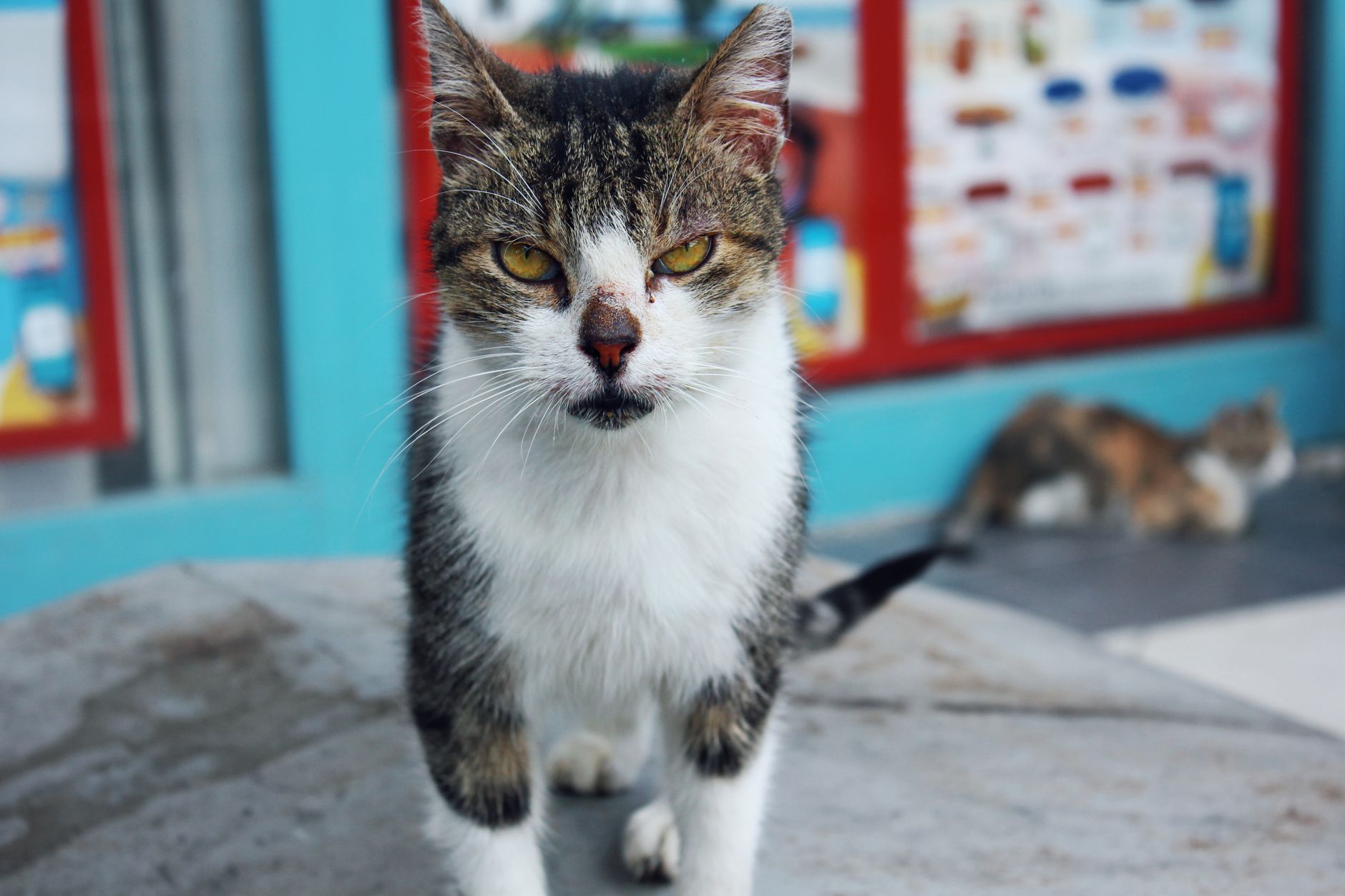
Stray and feral cats hide under cars in cold weather because the space is warmer and drier than anywhere else they can reach quickly. A recently driven engine radiates heat for hours, the undercarriage blocks wind and snow, and rubber tires insulate against frozen ground — which makes a parked car the best microclimate on an average winter street.
That behavior is not a quirk; it is thermoregulation. The problem is that the warmest spots on a car are also the most dangerous ones, and a cat tucked against a fan belt or wheel well has no warning that the engine is about to turn over. Knowing why cats go there tells you exactly what to do before you drive, and what to put in your yard so they stop needing to.
Table of Contents
- The physiology behind it: cats are built for far warmer air
- Why the car specifically, and not a bush
- What happens when the engine starts
- The 10-second check before you start the car
- The second hazard sitting in the same parking spot
- Give the cats a better option than your engine
- Frequently Asked Questions
The physiology behind it: cats are built for far warmer air
A cat's thermoneutral zone — the ambient temperature range where it holds a stable body temperature without burning extra energy — is roughly 86 to 100°F (30 to 38°C), according to a peer-reviewed review of domestic cat environmental welfare citing National Research Council data. Almost every winter day sits far below that floor. Below the thermoneutral zone, a cat has to spend calories to stay warm — calories a stray may not have, since outdoor food is scarcer in winter too.
Finding external heat is cheaper than generating it. A cat that locates a warm engine bay has effectively found free fuel. This is also why the popular "below 45°F is dangerous for cats" line should be treated as a rough prompt rather than a rule. It circulates through pet-care publishers, not veterinary standards, and real tolerance varies with body weight, age, coat density, and whether the cat is wet or dry.
Why the car specifically, and not a bush
Vehicles offer a combination almost nothing else outdoors does. As the pet-product company Catit explains in its guide to keeping cats out of cars in winter, the underside and wheel wells block wind, frost, snow, and rain, while the tires insulate the cat from the cold ground. Then there is residual engine heat.
A car driven home in the evening keeps radiating warmth from the engine block for hours after it is parked, so the cat gets shelter and a heat source in one place. Alley Cat Allies, which runs a national community-cat advocacy program, confirms in its winter weather guidance that outdoor cats seek out both car engines and the space beneath parked vehicles for warmth. The hierarchy matters for predicting where a cat will be. The undercarriage and wheel wells are the common hiding spots; the engine bay is the prize, reached by climbing up from below, and it is the one that injures cats.
What happens when the engine starts
The Humane Society of the United States warns that warm engines are dangerous precisely because cats and small wildlife can be injured or killed the moment a driver turns the key. The hazard is mechanical: belts, pulleys, and the cooling fan all begin moving at once, in a space the cat cannot exit quickly. The outcomes are documented, not hypothetical.
The UK veterinary charity PDSA publicized the case of a cat named Saffy, who climbed into a car engine and lost a leg to amputation after being caught in the moving parts, and issued a public warning to drivers on the strength of it. A trapped cat also often cannot free itself. Arizona Humane Society emergency animal medical technicians had to mechanically disassemble part of a Volkswagen Beetle to extract a Maine Coon wedged against the fan belt. If you hear a cat in your engine bay, that is a rescue call, not a wait-and-see.
The 10-second check before you start the car
Every major welfare group gives the same pre-drive routine, and it costs almost nothing. Alley Cat Allies tells drivers to look under the car, tap the hood, and check between the tires and the wheel wells before starting the engine.
The ASPCA's cold-weather safety guidance recommends banging loudly on the hood to give a hiding cat a chance to escape, and one of its veterinarians adds kicking the tires — especially on cars parked outdoors overnight. Run it in this order: This matters most in the first drive of the morning and after a car has sat for several hours in cold weather — the window when the engine has cooled enough to be comfortable but the cat has had time to settle in.
- Bang on the hood with an open hand, hard enough to make noise inside the engine bay.
- Kick or thump each tire.
- Crouch and look under the car, including behind and above each wheel.
- Pause a few seconds before turning the key, so anything that moved has time to get clear.
- If you hear crying or scrabbling after the engine starts, shut it off immediately and call a rescue or veterinary service rather than driving to find help.
The second hazard sitting in the same parking spot
Driveways and curbsides concentrate two winter poisons. Alley Cat Allies warns that antifreeze and snow-melting salts and chemicals are toxic to cats, that as little as a teaspoon of spilled auto antifreeze can be fatal, and that propylene glycol products are the safer choice over the usual ethylene glycol formulations. Cats are among the most ethylene-glycol-sensitive species, according to ASPCA Animal Poison Control clinicians writing in Clinician's Brief, and no toxic dose has been formally established for them.
Acute kidney failure typically appears 18 to 36 hours after ingestion — long after the cat has wandered off, and long after the owner would connect the two events. Practical consequences: wipe up coolant spills rather than hosing them into a puddle, store containers sealed and off the floor, and switch to propylene-glycol antifreeze and pet-safer de-icer where you can. If you suspect ingestion in a cat you care for, the APCC emergency line is (888) 426-4435, and speed is the whole treatment window.
Give the cats a better option than your engine
The durable fix is competition. Welfare groups including Alley Cat Allies and Best Friends Animal Society recommend an insulated outdoor shelter as the alternative — if the warmest dry spot on the property is a shelter, the car stops being the best offer. The specifications are not arbitrary: Site the shelter before the first hard freeze if you can — a cat that has already adopted a car as its winter spot takes longer to relocate than one choosing for the first time.
- Bed it with straw, not blankets or hay. Blankets and hay hold moisture, and wet bedding pulls heat out of a cat.
- Raise it off the ground, so cold and damp do not conduct up through the floor.
- Keep the doorway small, about 6 to 8 inches, to hold heat in and larger animals out.
- Face the doorway away from the prevailing wind.
- Place it somewhere quiet, with the entrance visible from a distance so a cat can see its escape route.
Frequently Asked Questions
Will banging on the hood actually make a cat leave?
It is the method the Humane Society of the United States and the ASPCA both recommend — the noise is meant to spook a hiding animal into running out before the engine turns over. Combine it with kicking the tires and a visual check, since a frightened cat sometimes freezes instead of fleeing.
How do I know if a cat is in the engine bay rather than under the car?
Look up into the wheel wells and under the front of the vehicle with a flashlight, since cats reach the engine compartment by climbing from below. Crying, scratching, or thumping sounds once the engine starts mean you should switch it off immediately and call for rescue help.
Is a heated outdoor pad better than a straw-bedded shelter?
The groups' published specification is straw bedding in a raised, insulated box with a 6 to 8 inch doorway facing away from the wind, which needs no power and no supervision. Straw's advantage is that it does not absorb moisture the way blankets and hay do, so the bedding stays warm when the weather turns wet.