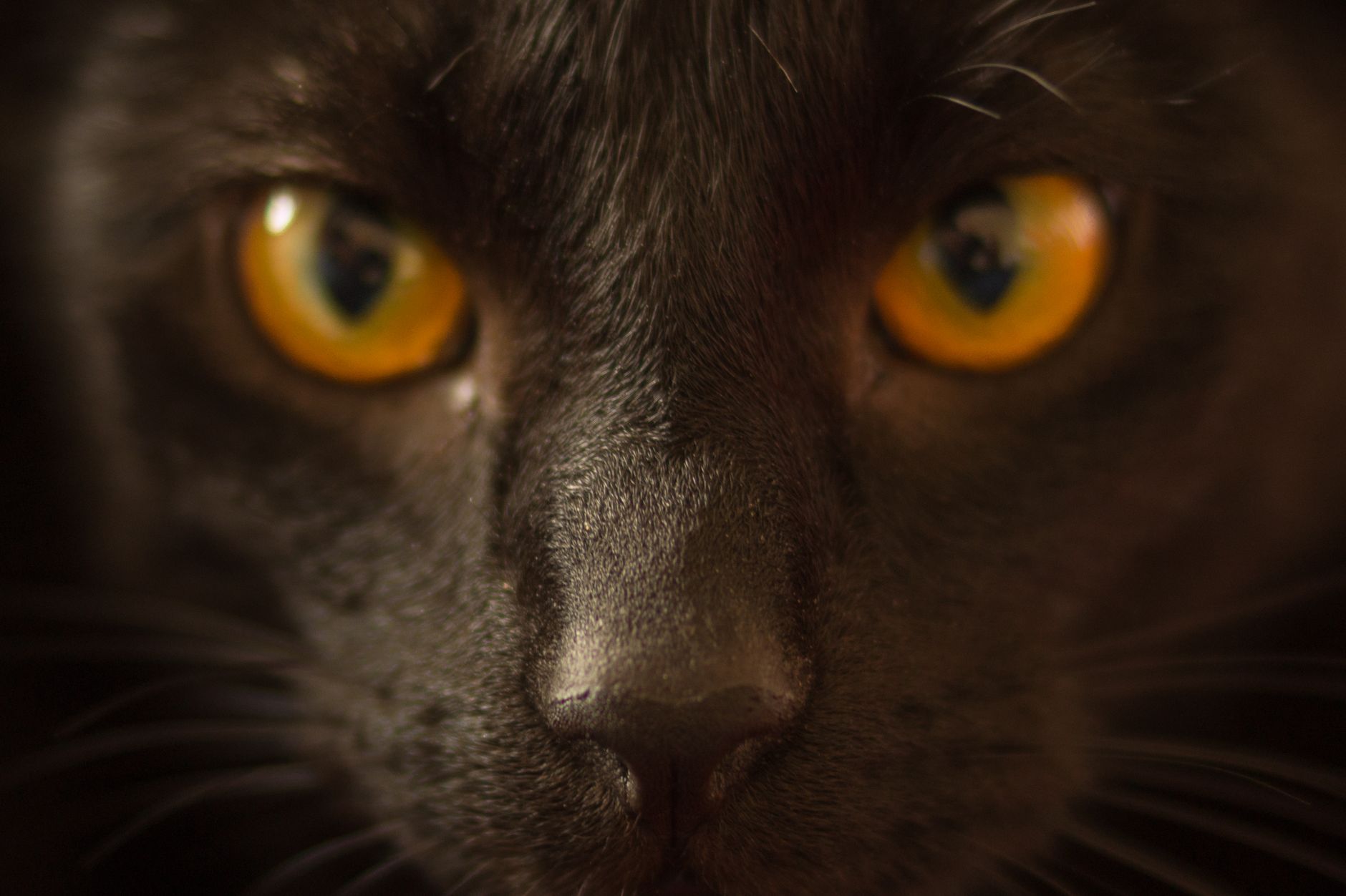
Cats are not truly nocturnal, even though they descend from night-hunting ancestors. Research on captive domestic cats published in *Animals* in 2022 found bimodal activity peaking at twilight and concluded that crepuscularity — being most active at dawn and dusk — describes the species better than nocturnality. That distinction matters for anyone being woken at 4 a.m. Your cat's ancestry explains why it can hunt in near-darkness, but the hours it actually chooses to be busy are shaped heavily by your household: when you feed, when you play, and whether it has anywhere interesting to go.
Table of Contents
- Crepuscular, not nocturnal — what the activity data shows
- Why night hunting is ancestral rather than contradictory
- The eye behind low-light hunting, and its limits
- Your routine sets part of your cat's clock
- Shifting a cat off the 5 a.m. schedule
- How much confidence the evidence supports
- Frequently Asked Questions
Crepuscular, not nocturnal — what the activity data shows
"Crepuscular" means active around twilight, with the heaviest movement clustered at dawn and dusk rather than spread through the night. The 2022 *Animals* study measured both locomotor activity and feeding in indoor and outdoor-housed cats and found two daily peaks in each group, both tied to twilight. An earlier study of a domestic cat colony reached the same conclusion from a different angle.
It recorded peaks at dusk and dawn and found no general pattern along a nocturnal-versus-diurnal axis at all, which is why the familiar labels fit cats so poorly. A companion seasonal study in the *Journal of Veterinary Behavior* classed indoor cats as nocturnal/crepuscular, with peaks in the late evening near 21:00 and the early morning near 05:00. Those two clock times are almost exactly the window in which owners report being woken.
Why night hunting is ancestral rather than contradictory
The domestic cat's wild ancestor is the Afro-Asiatic or African wildcat (*Felis lybica*). The IUCN Red List 2022 assessment and camera-trap work describe it as mainly nocturnal, sometimes crepuscular depending on food availability and temperature, and as a solitary hunter preying mostly on rodents. So there is no conflict in the title's premise.
Night hunting is the inherited baseline, and the domestic cat kept the equipment for it while loosening the schedule. Even in the wildcat, the timing bends toward whatever the prey and the weather allow. That flexibility is the real inheritance. A cat is built to hunt in low light, not obligated to confine its activity to darkness.
The eye behind low-light hunting, and its limits
Cats have a tapetum lucidum, a reflective layer behind the retina that bounces light back through the photoreceptors. As summarized in reviewed material on the tapetum lucidum, this lowers the absolute threshold for vision without materially changing which colors the eye detects — and the rod-dominated retina that makes it work reduces net visual acuity in bright light. There are two limits worth knowing before you repeat the usual claims:.
- A cat cannot see in total darkness. With no light source at all, the eye cannot form an image, because a tapetum can only recycle light that is already present.
- The widely repeated figure that cats need one-sixth the light humans do appears on pet-care and retailer explainers without a cited primary measurement. Treat it as approximate.
Your routine sets part of your cat's clock
The 2022 study separated two kinds of peaks, and the split is the most practical finding in the whole body of research. Spontaneous feeding and activity peaks followed twilight and shifted with the season. Peaks triggered by human interaction stayed fixed across seasons.
In other words, part of your cat's rhythm is anchored to daylight and part of it is anchored to you. The hour you reliably appear with food or a wand toy becomes a fixed appointment the cat keeps, regardless of what the sun is doing. Housing matters too. In the same study, outdoor-housed cats were more active at night than indoor cats, which the authors attributed to the greater exploratory behaviour available outdoors — so much of what looks like species-level night activity is really opportunity.
Shifting a cat off the 5 a.m. schedule
Because the human-linked peaks are the adjustable ones, the standard advice targets them directly. The RSPCA advises moving play and meals into the daytime and early evening to realign a cat's rhythm with the household.
The San Francisco SPCA adds more specific structure: The last point is the one people break. Full guidance is in the RSPCA knowledgebase entry on night-active cats and the SF SPCA page on nocturnal behavior.
- Two interactive play sessions of 20–30 minutes each.
- A bedtime sequence of vigorous play followed by a meal, so the cat hunts, eats, then sleeps.
- No feeding first thing in the morning, which otherwise teaches the cat that waking you pays.
- Never rewarding night-time waking with food or play — not even once, and not even to get back to sleep.
How much confidence the evidence supports
The strongest rhythm data come from small captive colonies and catteries under human care, not from free-roaming pet cats in ordinary homes. That is a real constraint on how far the numbers generalize.
Reviews also note that older studies describing cats as leaning nocturnal differed in housing, lighting and feeding conditions. The authors attribute the variation between studies to human influence rather than to a single fixed feline pattern — which, applied to your own cat, means its schedule is more negotiable than its ancestry suggests, and a 21:00 play-then-feed routine is a reasonable thing to test for two weeks before concluding anything.
Frequently Asked Questions
Is my cat abnormal if it is busiest at 2 a.m. rather than at dusk?
Not necessarily. Study authors attribute much of the variation between cats to housing, lighting and feeding conditions rather than to a fixed species pattern, so a cat whose only stimulation comes overnight will concentrate activity there.
Will more daytime play make my cat too tired to hunt or play at all?
No. The SF SPCA recommendation is two 20–30 minute interactive sessions plus a bedtime session, which redistributes a cat's activity rather than suppressing it.
Does leaving a nightlight on help my cat see?
It can, since a cat's eye needs some light to form an image at all. The tapetum lucidum recycles available light; it does not generate vision in complete darkness.