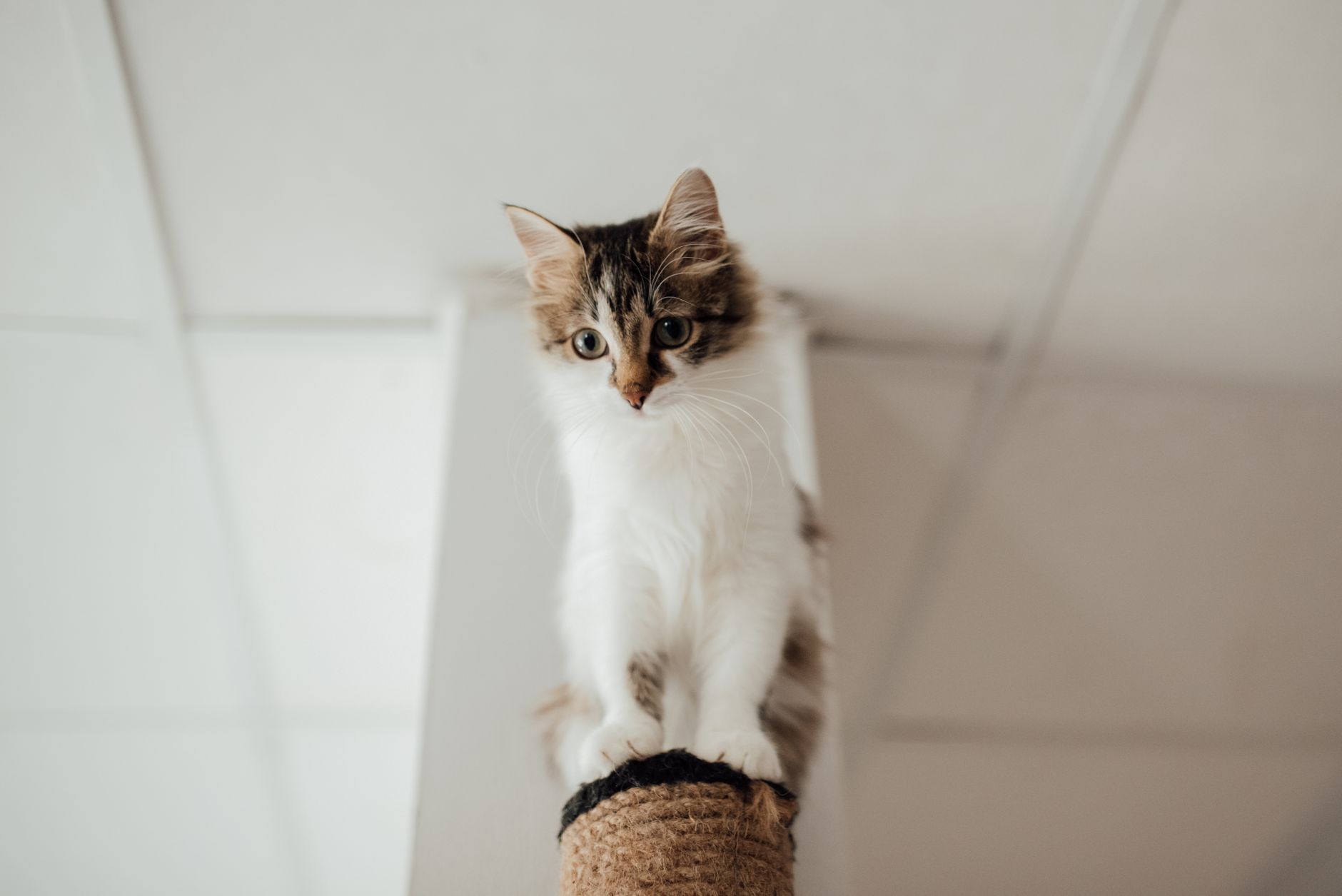
The best scratching post is a sturdy upright at least as tall as your cat's full stretch, wrapped in coarse sisal rope, and placed near sleep spots and current scratch sites. A scratching post is a fixed vertical surface that lets a cat grip, pull, and full-stretch mark. Cats scratch to care for claws, work front-leg and back muscles, and leave scent marks. The right height, texture, and location let them do all three instead of using furniture.
Table of Contents
- How tall should it be?
- What material works best?
- Where should you place it?
- What if your cat still picks furniture?
How tall should it be?
Choose a post that fits a full upright stretch. Cornell University College of Veterinary Medicine advises posts stay steady under use and reach at least the cat's hind-leg height with forelegs extended, according to sturdy-post guidance. A short or tippy post blocks stretching and invites rejection.
Taller often works better for upright posts and trees. An owner survey of 4,331 cats found more frequent use when the upright was at least 3 feet high, reported in peer-reviewed survey results. International Cat Care also favors as-tall-as-possible vertical posts, with wall panels as another full-stretch option.
What material works best?
Pick rough fiber that shreds a little under claws. Ohio State University's Indoor Cat Initiative says most cats favor rough, shreddable texture and calls coarse sisal ideal for satisfaction and wear, explained in the indoor cat care manual. Sisal rope over a solid core grips well and shows use clearly.
Offer choice when you can, because not every cat agrees. The same large owner survey found rope beat cardboard, carpet, and wood when all were present. Keep sisal as the main upright, then add cardboard or wood for cats that like other feels.
Where should you place it?
Put at least one scratcher where scratching already happens. The ASPCA advises varied surfaces and angles plus a scratcher near the snooze spot, since many cats scratch after waking, in its scratching behavior advice. Sleep areas, room entries, and the sofa arm are prime spots.
Use placement to redirect, not punish. Cats mark valued paths and rest areas. A post in a back closet gets little use, even when the texture is right.
- Set the new post tight against the targeted sofa leg or carpet edge.
- Cover the furniture target for a short time.
- Keep the post fixed so it never wobbles.
- Add a second option near the bed or sunny nap spot.
What if your cat still picks furniture?
Match the furniture it already likes. International Cat Care notes habits vary with the cat and early learning, so copy the used object's angle. A horizontal carpet scratcher suits a carpet-pawer, while a tall upright suits a sofa-side stretcher.
Make the post the easy win. Place it beside the old target, keep it stable, and reward quick checks and light pulls. A wobbling post is often refused, so tighten the base, brace against a wall, or pick a heavier tree.