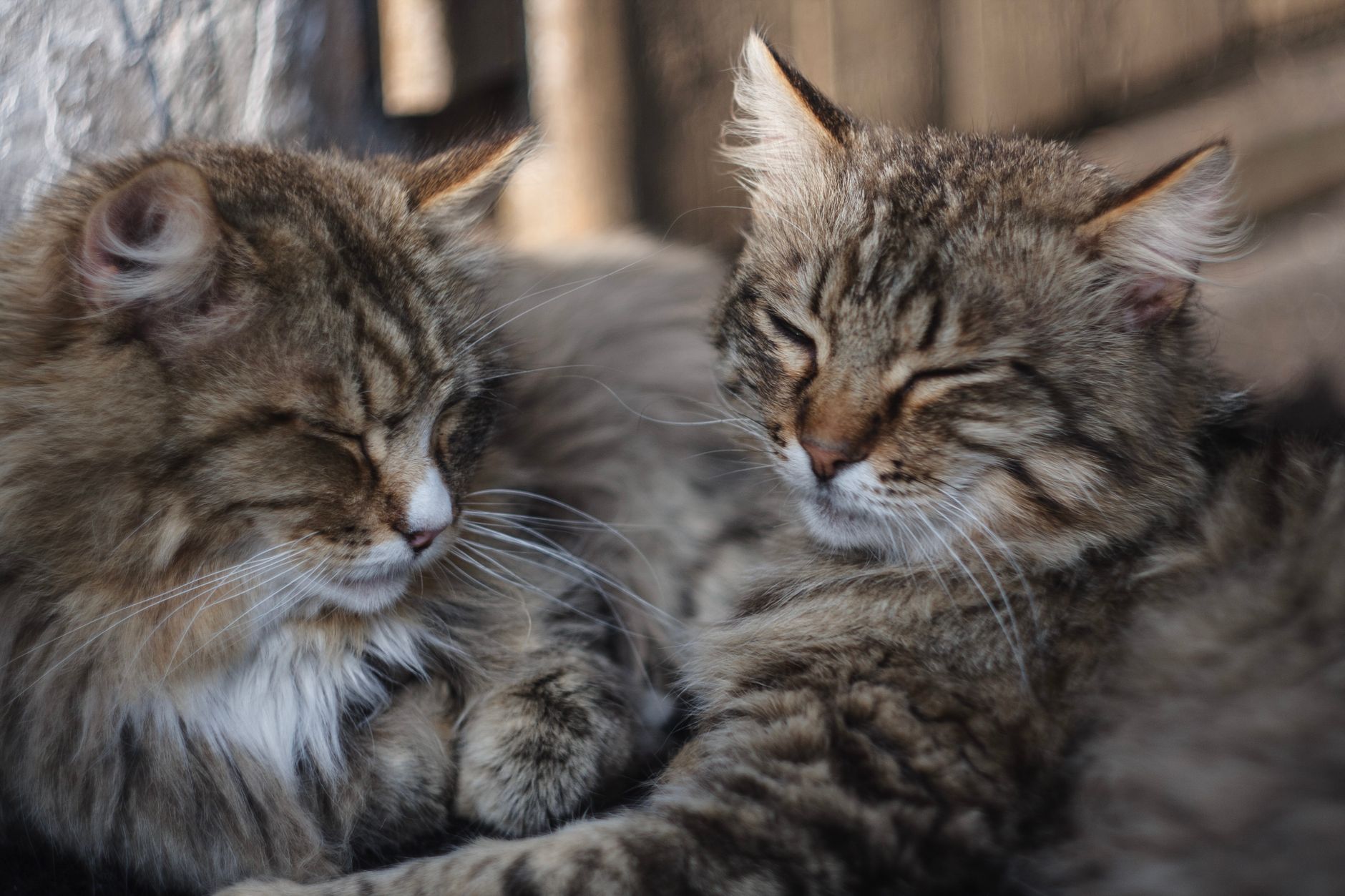
Purring is a low rhythmic vibration cats make while breathing in and out. This guide explains what purrs can signal, when to act, and what care questions to ask. A relaxed cat on a lap often purrs from comfort. The same sound alone under a bed can mean stress or pain, so setting and posture matter.
Table of Contents
- How Do Cats Make a Purr?
- Does Purring Always Mean Happiness?
- How Can You Tell Comfort From Pain?
- Can Purring Heal Injuries?
How Do Cats Make a Purr?
UC Davis expert Leslie Lyons explains in Scientific American's account of why cats purr that the brain sends repeated signals to laryngeal and diaphragmatic muscles. The muscles twitch and make sound during both inhalation and exhalation at 25–150 Hz.
NC State University College of Veterinary Medicine behavior experts report in NC State's explanation of why cats purr that kittens purr within days of birth while nursing. Mothers purr back and give close-range contact before kittens can see or hear.
Does Purring Always Mean Happiness?
No. Lyons also notes in Scientific American that cats purr when stressed, fearful, in pain, recovering from injury, or at the veterinarian. A purr tells you the cat is aroused, not why.
Hungry cats also use a special solicitation purr. New Scientist, reporting a University of Sussex Current Biology study, describes in New Scientist's report on hungry cats' solicitation purr how the cat embeds a high-pitched cry within the low purr. In tests, 50 volunteers rated it more urgent and less pleasant than normal purring.
How Can You Tell Comfort From Pain?
VCA Animal Hospitals notes in VCA Animal Hospitals' guide to pain and behavior in cats that a cat alone under a bed that purrs and kneads may be self-soothing pain. The same actions while resting with an owner more often reflect contentment.
Compare location, posture, appetite, and willingness to move. Get prompt veterinary help for: Track when the purr starts, what surrounds it, and what changes next. That record helps the clinic judge urgency.
- breathing difficulty or noisy effort
- hiding, appetite loss, or reduced mobility
- a sudden change in purr sound or pattern
Can Purring Heal Injuries?
Lyons hypothesized in Scientific American that purring aids communication and low-energy self-healing. The idea is that vibration may stimulate bones and muscles, since purr frequencies overlap ranges reported to improve bone density.
That healing effect remains a hypothesis, not proven therapy. VCA Animal Hospitals advises owners not to delay care for breathing difficulty, hiding, appetite loss, reduced mobility, or sudden purr change, but to ask a vet about pain assessment.