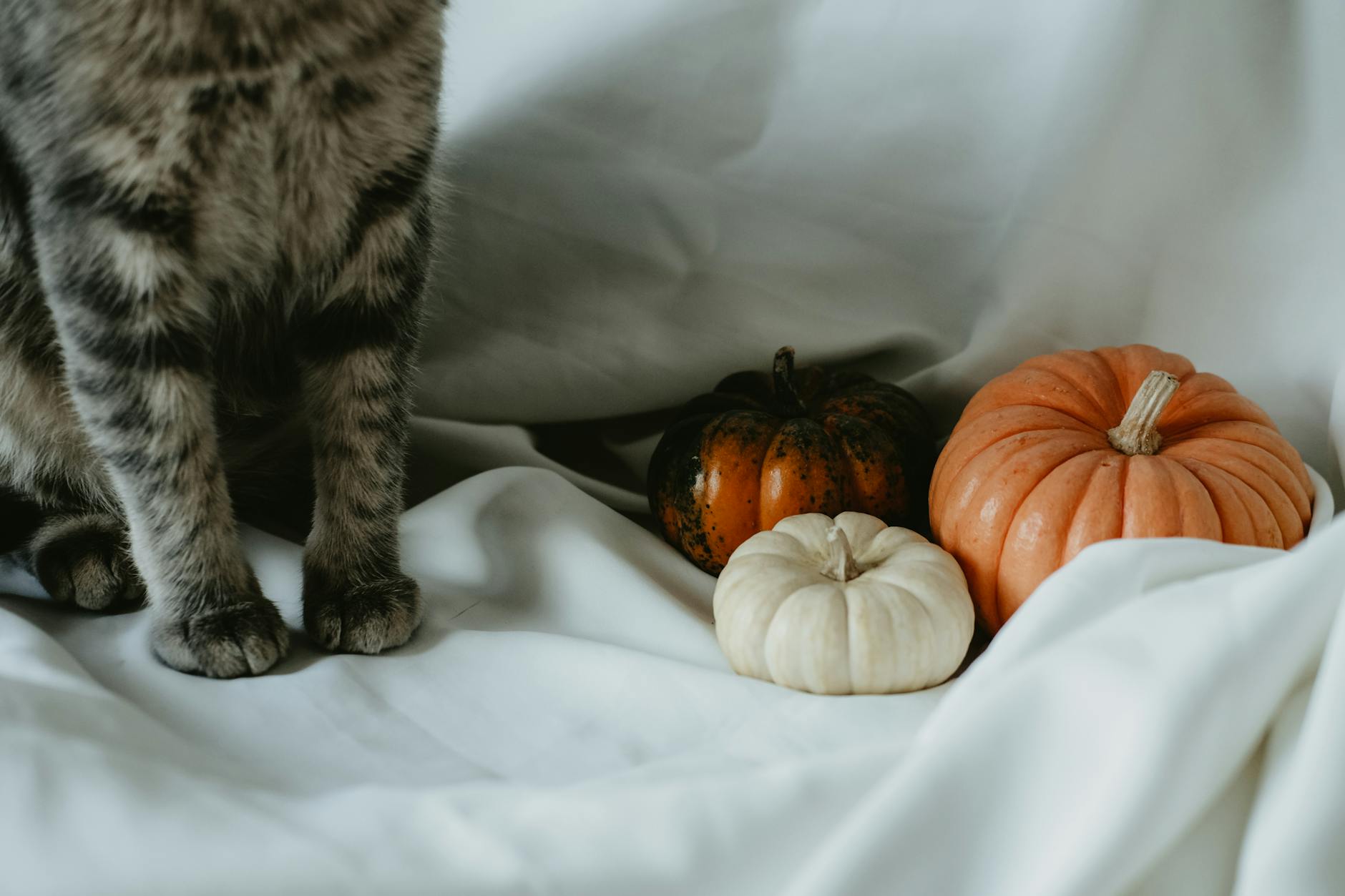
Yes, plain pumpkin is safe for cats to eat and can actually be a beneficial addition to their diet in small amounts. Cooked, pureed pumpkin without any added sugars, spices, or preservatives offers a modest dose of fiber, moisture, and vitamins that many cats tolerate well. If your cat has been dealing with a mild bout of constipation or loose stool, a teaspoon of plain canned pumpkin mixed into their food is one of the most commonly recommended home remedies by veterinarians. It is not a miracle cure, but for minor digestive hiccups, it often does the job.
That said, pumpkin is a supplement to a cat’s diet, not a replacement for any part of it. Cats are obligate carnivores, meaning their bodies are designed to run on animal protein. Pumpkin provides none of the essential amino acids, like taurine, that cats need to survive. This article covers exactly how much pumpkin to feed your cat, which forms of pumpkin are safe versus dangerous, the specific health benefits and their limits, situations where pumpkin can actually make things worse, and how to introduce it without upsetting your cat’s stomach.
Table of Contents
- Why Is Pumpkin Considered Safe for Cats to Eat?
- How Much Pumpkin Should You Feed a Cat?
- Specific Health Benefits of Pumpkin for Cats
- Safe Ways to Prepare and Serve Pumpkin for Your Cat
- When Pumpkin Can Make Things Worse
- Pumpkin Supplements and Commercial Cat Products
- Understanding Pumpkin’s Role in a Complete Feline Diet
- Conclusion
- Frequently Asked Questions
Why Is Pumpkin Considered Safe for Cats to Eat?
Pumpkin earns its reputation as a cat-safe food because it is low in calories, non-toxic, and easy to digest when prepared properly. A tablespoon of plain canned pumpkin contains roughly 5 calories, about 1 gram of fiber, and a decent amount of water, which is valuable for cats that do not drink enough on their own. The soluble fiber in pumpkin absorbs water in the digestive tract, which can help firm up loose stools, while the insoluble fiber adds bulk that helps move things along during constipation. This dual action is why pumpkin works for digestive issues in both directions. The key word in all of this is “plain.” The pumpkin that is safe for cats is pure, cooked pumpkin puree, the kind that comes in a can with one ingredient listed on the label. Compare that to pumpkin pie filling, which contains sugar, cinnamon, nutmeg, cloves, and ginger.
Nutmeg is actually toxic to cats and can cause hallucinations, increased heart rate, and seizures in significant amounts. Even the sugar and spices in pie filling can cause gastrointestinal distress. A cat owner who grabbed the wrong can at the grocery store and spooned pie filling into their pet’s food could end up with a very sick animal and an emergency vet bill. Raw pumpkin is not toxic, but it is tough and fibrous in a way that a cat’s digestive system is not built to handle. It can cause stomach upset, and larger pieces present a choking hazard. Pumpkin skin and the stringy pulp around the seeds are similarly difficult to digest. Stick with cooked, soft pumpkin or plain canned puree, and you eliminate those risks entirely.
How Much Pumpkin Should You Feed a Cat?
The standard recommendation from most veterinarians is to start with half a teaspoon of plain pumpkin mixed into your cat’s regular food and work up to no more than one to two teaspoons per day. That may not sound like much, but remember that the average house cat weighs between eight and eleven pounds. Their digestive systems are small, and even beneficial foods can cause problems in excess. Too much pumpkin can actually cause diarrhea, which is ironic given that one of its primary uses is treating diarrhea. For a cat that has never eaten pumpkin before, introduce it gradually over several days. Mix a tiny amount, roughly a quarter teaspoon, into one meal and watch for any changes in litter box habits or behavior over the next 24 hours.
If your cat tolerates it without any loose stool, vomiting, or refusal to eat, you can slowly increase the amount. Most cats will accept pumpkin mixed into wet food without complaint, though some will detect and reject the change immediately. Cats are notoriously particular about texture and smell, and there is no way to predict whether yours will take to it. However, if your cat has diabetes, the natural sugars in pumpkin, while modest, are worth discussing with your vet before adding it to the diet. A tablespoon of pumpkin contains about 1.5 grams of natural sugar, which is negligible for a healthy cat but potentially relevant for one whose blood sugar is already being carefully managed. Similarly, cats with chronic kidney disease are often on restricted diets where adding any new food requires veterinary guidance. Pumpkin is not dangerous in these cases, but it is not automatically appropriate either.
Specific Health Benefits of Pumpkin for Cats
The most well-documented benefit of pumpkin for cats is digestive regulation. The fiber content helps with both constipation and mild diarrhea, a quality that makes it unusual among home remedies. For constipation, the fiber adds bulk and draws water into the stool, making it easier to pass. For diarrhea, the soluble fiber absorbs excess water, helping to firm things up. A cat recovering from a dietary indiscretion, like stealing a piece of cheese off the counter, may benefit from a teaspoon of pumpkin at their next meal while their gut settles. Pumpkin also offers some nutritional value beyond fiber. It contains beta-carotene, which the body converts to vitamin A, along with small amounts of vitamin C, vitamin E, potassium, and iron.
Vitamin A supports eye health and immune function, and potassium supports proper muscle and nerve function. That said, cats synthesize vitamin A differently than humans do and get most of what they need from animal liver in their commercial food. The vitamins in pumpkin are a modest bonus, not a reason to feed it. The moisture content is another practical benefit. Canned pumpkin is roughly 90 percent water. Cats that eat primarily dry kibble are often chronically mildly dehydrated because they have a low thirst drive, an evolutionary holdover from their desert-dwelling ancestors. Mixing a spoonful of pumpkin into dry food adds moisture and may help support urinary tract health over time. This is not a substitute for providing fresh water or feeding wet food, but it is a small step in the right direction for cats that refuse to drink enough.

Safe Ways to Prepare and Serve Pumpkin for Your Cat
The most convenient and reliable option is plain canned pumpkin puree. Look at the ingredient list: it should say “pumpkin” and nothing else. Brands like Libby’s 100% Pure Pumpkin are widely available and safe. Compare this to Libby’s Pumpkin Pie Mix, which is shelved right next to it and contains sugar and spices. The labels look similar at a glance, so always double-check before purchasing. If you prefer fresh pumpkin, you can roast or steam it yourself. Cut a small sugar pumpkin in half, scoop out the seeds and strings, and bake it cut-side down at 350 degrees Fahrenheit until the flesh is soft, usually about 45 minutes. Scoop out the cooked flesh and mash or puree it.
Do not add butter, salt, sugar, or any seasoning. This homemade puree can be stored in the refrigerator for up to a week or frozen in ice cube trays for longer storage. The tradeoff is time and effort versus the convenience of opening a can, but some owners prefer knowing exactly where their cat’s food comes from. Pumpkin seeds are another option, though they require preparation. Raw pumpkin seeds should be cleaned, roasted without salt or oil, and ground into a fine powder before offering them to a cat. Whole seeds are a choking hazard and difficult to digest. Ground pumpkin seeds have been traditionally used as a natural dewormer because they contain cucurbitin, an amino acid that may paralyze certain intestinal parasites. The evidence for this is mostly anecdotal, and ground pumpkin seeds should never replace proper veterinary deworming medication. They are not harmful in small amounts, but do not count on them to treat an actual parasite infection.
When Pumpkin Can Make Things Worse
Pumpkin is not appropriate for every cat or every digestive issue. If your cat has been vomiting, has bloody stool, has not eaten for more than 24 hours, or is lethargic, pumpkin is not the answer. These symptoms indicate something more serious than a minor stomach upset, and delaying veterinary care in favor of a home remedy can allow a treatable condition to become dangerous. A cat with a gastrointestinal obstruction, for example, will not be helped by fiber. Fiber could actually make an obstruction worse. Cats with food allergies or inflammatory bowel disease may also react poorly to pumpkin. IBD in cats involves chronic inflammation of the intestinal lining, and introducing new foods, even gentle ones, can trigger flare-ups in some animals.
If your cat has been diagnosed with IBD or has a history of food sensitivities, consult your veterinarian before adding pumpkin or any other new food. The assumption that something natural is automatically safe is a common mistake in pet care. Overfeeding pumpkin is the most common problem among well-meaning owners. A cat that gets several tablespoons of pumpkin per day may develop diarrhea, nutrient dilution in their diet, or simply refuse their regular food because they feel full from the pumpkin. Fiber is filling relative to its calorie content, and a cat that eats too much pumpkin may consume less of the protein-rich food it actually needs. Moderation is not just a suggestion here. It is the difference between a helpful supplement and a dietary problem.
Pumpkin Supplements and Commercial Cat Products
Several pet food companies now sell pumpkin-based supplements specifically formulated for cats. Products like Weruva Pumpkin Patch Up and Nummy Tum-Tum Pure Pumpkin are marketed as digestive aids and come in convenient single-serve packets. These products are generally safe and often contain added ingredients like ginger or turmeric that may offer mild additional anti-inflammatory benefits. The downside is cost.
A can of plain pumpkin from the grocery store costs about two dollars and provides far more servings than a box of individual pumpkin supplement packets at four to five times the price. Some cat foods now include pumpkin as an ingredient in their regular formulas. This is generally fine, though the amount of pumpkin in these products is usually small enough that it contributes more to marketing appeal than to measurable health benefits. If your cat enjoys a food that happens to contain pumpkin, there is no reason to avoid it, but there is also no reason to seek it out over an otherwise equivalent formula.
Understanding Pumpkin’s Role in a Complete Feline Diet
The growing interest in pumpkin for cats reflects a broader trend toward integrating whole foods into pet nutrition, and it is a trend worth approaching with some perspective. Pumpkin is a tool, not a treatment. It can ease minor digestive discomfort, add moisture to a dry diet, and provide a small nutritional boost, but it does not replace veterinary care, a balanced commercial diet, or adequate hydration from water.
As veterinary nutrition research continues to evolve, we may develop a clearer picture of how supplemental foods like pumpkin interact with feline gut microbiomes over time. Early research into feline gut health suggests that dietary fiber plays a role in supporting beneficial bacteria, but the specific effects of pumpkin fiber versus other fiber sources have not been studied rigorously in cats. For now, pumpkin remains a practical, inexpensive, and low-risk option for the specific situations where it helps, and that is reason enough to keep a can in the pantry.
Conclusion
Plain, cooked pumpkin is one of the safest human foods you can share with your cat, provided you stick to small amounts and avoid any product containing added sugars, spices, or preservatives. Its fiber and moisture content make it genuinely useful for managing mild constipation or diarrhea, and most cats tolerate it without issue. Start with half a teaspoon, watch how your cat responds, and never exceed two teaspoons per day.
The most important thing to remember is that pumpkin is a supplement, not a solution. It does not replace a complete and balanced cat food, it does not treat serious medical conditions, and it is not appropriate for every cat. When in doubt, ask your veterinarian. They can tell you whether pumpkin makes sense for your specific cat’s health situation and diet, and they can identify problems that no amount of pumpkin will fix.
Frequently Asked Questions
Can kittens eat pumpkin?
Kittens can eat small amounts of plain pumpkin, but their digestive systems are more sensitive than adult cats. Limit portions to a quarter teaspoon or less, and only offer it if your veterinarian recommends it for a specific issue like constipation. Kittens need calorie-dense, protein-rich food for growth, and filling them up with fiber can interfere with that.
Will pumpkin help my cat with hairballs?
Pumpkin may help reduce hairballs by adding fiber that moves hair through the digestive tract more efficiently rather than allowing it to accumulate in the stomach. It is not as effective as purpose-made hairball remedies or regular brushing, but some owners report fewer hairball incidents after adding small amounts of pumpkin to their cat’s diet.
Can I give my cat pumpkin every day?
Yes, a small daily serving of one to two teaspoons of plain pumpkin is generally safe for healthy adult cats. However, there is no reason to give it daily unless your cat has an ongoing digestive issue that benefits from the added fiber. If constipation or diarrhea persists for more than a few days despite pumpkin supplementation, see your veterinarian.
Is butternut squash a safe alternative to pumpkin for cats?
Butternut squash is safe for cats and nutritionally similar to pumpkin. It can be cooked, pureed, and served in the same way. The fiber content is comparable, though butternut squash is slightly higher in sugar. Both are fine options, and some cats may prefer the taste of one over the other.
My cat ate pumpkin pie. Should I be worried?
A small lick of pumpkin pie is unlikely to cause serious harm, but monitor your cat for vomiting, diarrhea, or unusual behavior. The concern is the spices, particularly nutmeg, which is toxic to cats in larger quantities. If your cat consumed a significant amount of pumpkin pie or is showing symptoms, contact your veterinarian or the ASPCA Animal Poison Control Center at 888-426-4435.