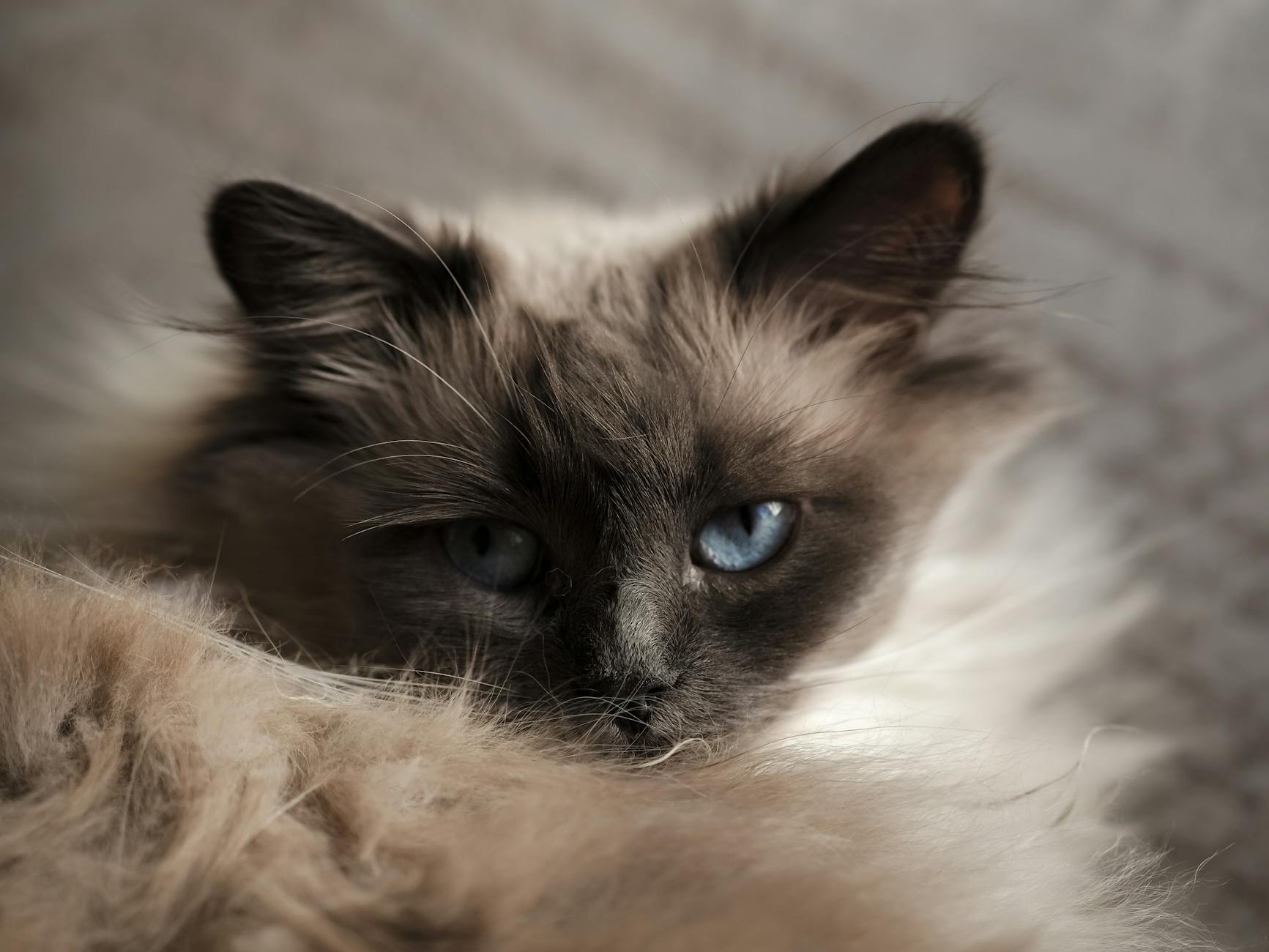
Among blue-eyed cat breeds, the Devon Rex and Cornish Rex shed the least, making them ideal choices for people seeking a striking feline companion without the constant battle against fur on furniture and clothing. These breeds have a distinctive curly or wavy coat that traps loose hair, preventing it from shedding as freely as straight-haired cats. For instance, a Devon Rex owner will notice significantly less fur accumulation compared to someone with a blue-eyed Russian Blue, which despite its regal appearance and stunning eyes, sheds moderately year-round.
The connection between coat type and shedding varies considerably among blue-eyed breeds. While genetics play the primary role in determining how much a cat sheds, factors like grooming habits, diet, and overall health also influence fur loss. Understanding which blue-eyed breeds naturally shed less can help you make an informed decision based on your lifestyle and tolerance for hair management.
Table of Contents
- What Makes Certain Blue-Eyed Breeds Shed Less?
- Understanding Coat Variations in Blue-Eyed Cat Breeds
- Blue-Eyed Breeds with Notable Low-Shedding Characteristics
- Managing Shedding in Blue-Eyed Cat Breeds: Prevention and Care
- Health Considerations and Potential Shedding Issues in Rex Breeds
- Comparing Blue-Eyed Rex Breeds to Other Low-Shedding Options
- The Future of Low-Shedding Cat Breeds and What This Means for Cat Owners
- Conclusion
What Makes Certain Blue-Eyed Breeds Shed Less?
Coat structure is the fundamental factor determining shedding levels in blue-eyed cat breeds. The Devon Rex and Cornish Rex possess soft, curly coats that don’t shed fur in the same quantity as cats with traditional double coats. These breeds produce fewer loose hairs because their unique coat texture actually catches and holds shed hair rather than releasing it into your home. By contrast, cats like the Tonkinese or Ojos Azules, while beautiful with their striking blue eyes, have standard short hair that sheds regularly throughout the year.
The science behind low-shedding breeds involves understanding hair growth cycles. Most traditional cats have multiple hair layers that continuously cycle through growth, rest, and shedding phases. The rex breeds have a modified hair structure where the guard hairs (longer, protective outer hairs) are reduced or absent, leaving primarily the softer undercoat. This structural difference means less overall hair volume being shed, though it’s worth noting these breeds still require regular grooming to prevent matting and to remove the dead hair trapped in their coats.
Understanding Coat Variations in Blue-Eyed Cat Breeds
Not all blue-eyed cats have the same coat characteristics, and this diversity affects shedding patterns substantially. The Siamese and its related breeds—which often have blue eyes—feature sleek, short coats that shed moderately but consistently throughout the year. The Russian Blue, despite its name, can have striking blue-green eyes and a dense double coat that sheds considerably, particularly during spring and fall seasonal shedding periods. A limitation to remember: even low-shedding breeds like the Devon Rex will shed more during seasonal transitions, so expecting zero shedding from any cat breed would be unrealistic.
The Ragdoll, another blue-eyed breed known for its beauty, presents an interesting case—while it has a semi-long coat that appears substantial, it actually sheds less than you’d expect for its length. However, the Ragdoll’s coat tangles more easily and requires more frequent brushing than the rex breeds. This highlights an important distinction: low shedding doesn’t automatically mean low maintenance. Some breeds shed minimally but demand more grooming to keep their coats healthy and mat-free.
Blue-Eyed Breeds with Notable Low-Shedding Characteristics
The Devon Rex stands out as perhaps the premier low-shedding blue-eyed breed option available today. Their elfin appearance, paired with their dramatically curved ears and large eyes (which can be blue, green, or amber), makes them instantly recognizable. One Devon Rex owner reported vacuuming just once weekly compared to three times weekly with their previous Siamese, demonstrating the real-world difference breed selection can make. These cats are also highly social and enjoy human company, though they do require regular nail trimming and ear cleaning due to their large ears.
The Cornish Rex offers similar shedding advantages to the Devon with its distinctive soft, wavy coat. While less common than the Devon Rex, Cornish Rex cats with blue eyes are equally striking and equally low-shedding. The key difference lies in their body structure—Cornish Rex cats tend to be slightly more slender and angular compared to the rounder-faced Devon Rex. Both breeds require warm environments and can’t be left outside in cold weather, which represents a practical limitation for those in harsh climates or without indoor-only home arrangements.

Managing Shedding in Blue-Eyed Cat Breeds: Prevention and Care
Even the lowest-shedding breeds require grooming to maintain coat health and prevent the accumulation of dead hair. For Devon and Cornish Rex cats, a gentle brushing session twice weekly with a soft brush or comb is typically sufficient to remove trapped loose hair and keep their coats in optimal condition. In comparison, blue-eyed breeds with traditional coats like the Siamese or Russian Blue benefit from brushing three to four times weekly, particularly during shedding seasons. The tradeoff with rex breeds is that while you vacuum less, you must commit to consistent grooming to prevent matting and skin issues.
Nutrition plays an underrated role in shedding management across all cat breeds. High-quality cat food with adequate protein and omega-3 fatty acids supports healthy skin and coat. A Devon Rex on a premium diet will naturally shed less than one fed lower-quality commercial food, even though the breed’s coat type remains unchanged. Additionally, regular nail trimming and dental care contribute to overall health, which indirectly affects coat quality and shedding patterns.
Health Considerations and Potential Shedding Issues in Rex Breeds
While Devon and Cornish Rex breeds shed minimally, they can experience specific health challenges that affect coat quality and sometimes increase shedding. Both breeds are prone to hypokalemia (low potassium levels), which can manifest in various ways including poor coat quality. Responsible breeders screen for genetic issues, but this remains important context when evaluating these breeds. Additionally, rex-coated cats can develop sebaceous gland issues, leading to oily patches of fur—a warning sign that the cat needs veterinary attention and potentially therapeutic bathing.
Environmental stress significantly impacts shedding across all cat breeds. Devon and Cornish Rex cats are particularly sensitive to temperature extremes due to their sparse coat and large ear surface area, which aids heat dissipation. A stressed rex cat may experience excessive shedding despite their normally low-shedding coat type. These breeds require stable, warm indoor environments and can become anxious if left alone for extended periods, which can paradoxically increase shedding even in these genetically low-shedding animals.
Comparing Blue-Eyed Rex Breeds to Other Low-Shedding Options
The Devon and Cornish Rex aren’t the only options for those wanting minimal shedding from a blue-eyed cat. The Tonkinese, while shedding more than rex breeds, still sheds less than many traditional blue-eyed cats and comes with fewer genetic health concerns.
The Bengal cat, which can have blue eyes in certain color patterns, represents another alternative, though this high-energy breed requires significantly more interactive play and space than rex breeds. For those prioritizing both low shedding and low maintenance grooming needs, the rex breeds remain superior choices despite their other care requirements.
The Future of Low-Shedding Cat Breeds and What This Means for Cat Owners
The pet industry continues exploring and developing low-shedding cat breeds through selective breeding programs. Breeders are working to combine the low-shedding characteristics of rex coats with other desirable traits, attempting to create healthier and more varied options for cat lovers.
As genetic testing becomes more accessible, prospective cat owners can make more informed decisions about health risks associated with specific breeds. The Devon and Cornish Rex remain the gold standard for low-shedding blue-eyed cats today, but emerging research into coat genetics may eventually offer alternative options with comparable advantages but different personality traits or care requirements.
Conclusion
If you’re searching for a blue-eyed cat breed that sheds minimally, the Devon Rex and Cornish Rex represent your best options, offering dramatic reductions in household fur compared to traditional blue-eyed breeds like the Siamese or Russian Blue. These striking breeds combine stunning appearance with practical shedding benefits, though they require regular grooming, warm indoor environments, and committed human companionship. Your choice ultimately depends on weighing the reduced shedding advantage against the breed’s higher grooming and environmental needs.
Before committing to a Devon or Cornish Rex, research reputable breeders who conduct genetic health testing and can provide references from previous owners. Consider whether you can provide the warm, interactive environment these breeds thrive in, and whether you’re prepared for regular grooming sessions. With proper care and realistic expectations, a low-shedding blue-eyed rex cat can be an excellent addition to your household for the next 15-20 years.