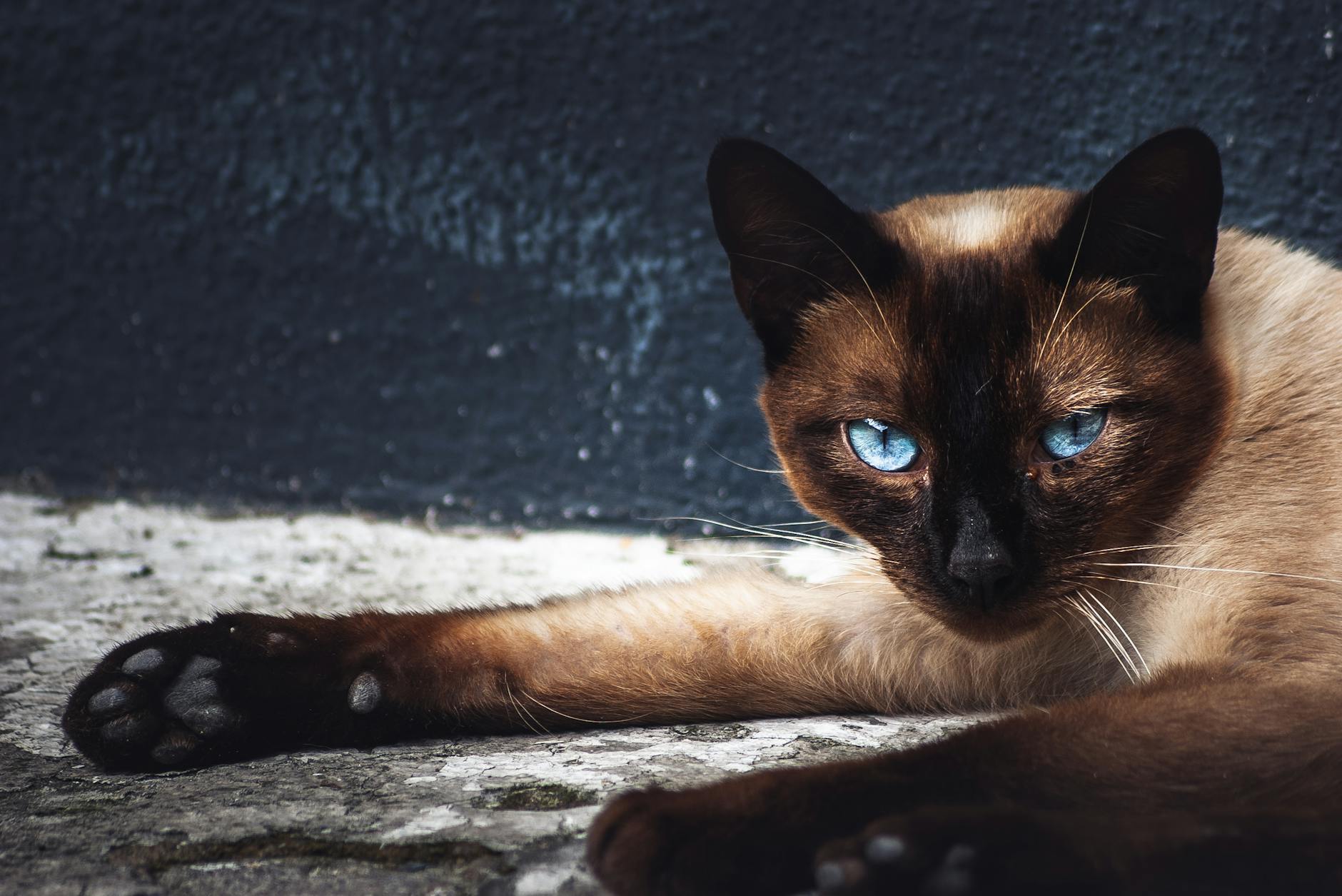
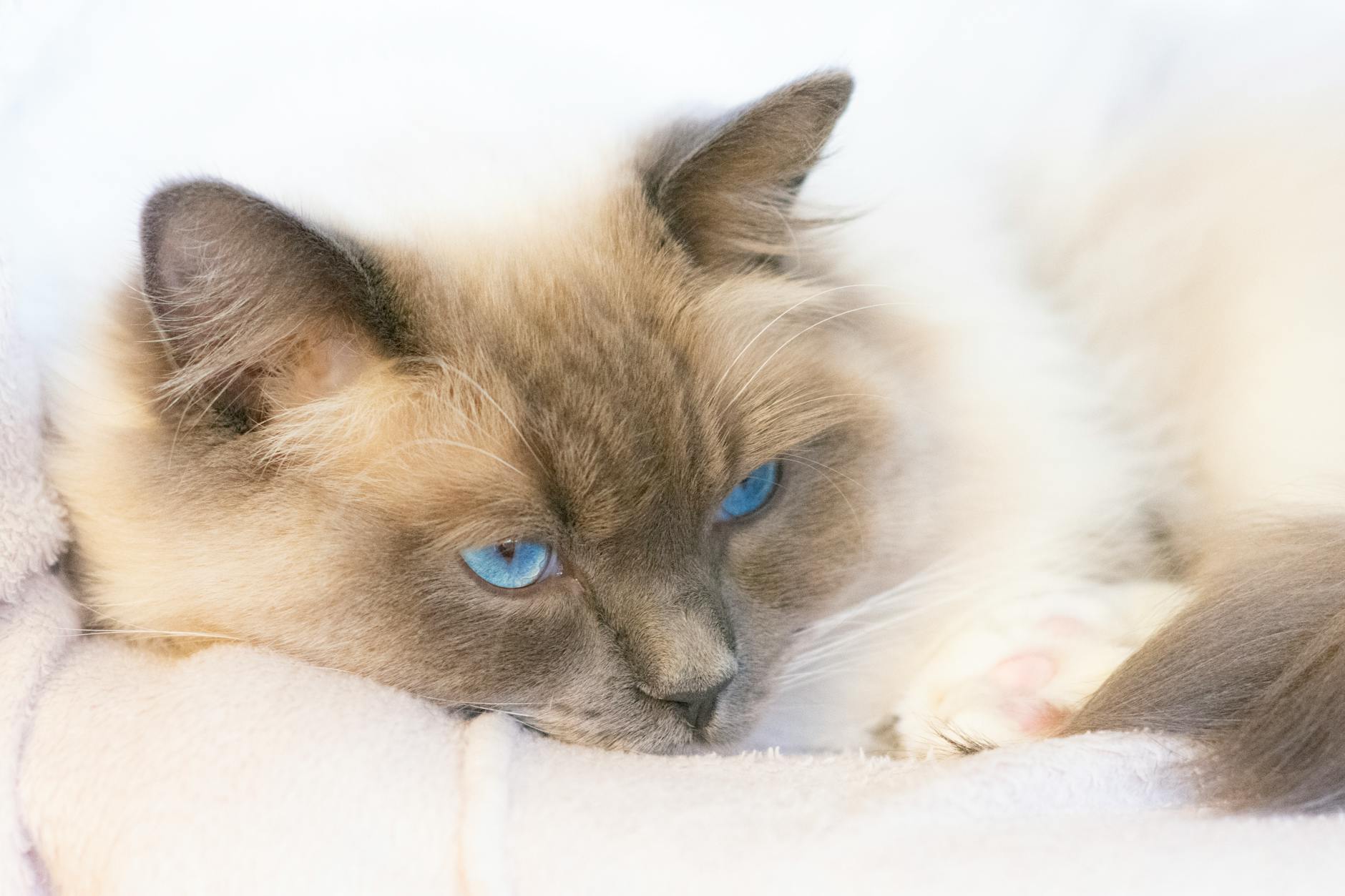
The Ragdoll is the definitive large blue-eyed cat breed, consistently ranking among the biggest domestic cats while displaying the striking sapphire-blue eyes that cat lovers find so appealing. Male Ragdolls typically weigh between 12 and 20 pounds at maturity, with some individuals reaching even greater weights, while females usually fall in the 8 to 12-pound range.
Their large, muscular build develops slowly—Ragdolls don’t reach full size until three to four years old—and their blue almond-shaped eyes remain a hallmark breed characteristic throughout their lives. While Ragdolls dominate this category, several other large-bodied cat breeds also display blue eyes, including Birmans, Balinese, and Snowshoes, though Ragdolls consistently surpass these breeds in both size and the intensity of their blue eye color. A typical adult Ragdoll male weighs roughly the same as a small dog breed like a Miniature Schnauzer, making them substantially larger than average domestic cats, which typically weigh 8 to 10 pounds.
Table of Contents
- What Makes Ragdolls Distinctly Large Among Blue-Eyed Breeds
- Physical Development and the Extended Growth Timeline
- Health Considerations Specific to Large Blue-Eyed Cats
- Size Management and Practical Care Considerations
- Behavioral Traits and Common Behavioral Challenges
- Grooming Requirements for Long-Haired Large Breeds
- Choosing a Responsible Breeder and Long-Term Ownership
- Conclusion
- Frequently Asked Questions
What Makes Ragdolls Distinctly Large Among Blue-Eyed Breeds
Ragdolls were developed in the 1960s by American breeder Ann Baker, who selectively bred for larger-bodied cats with striking color-point patterns and blue eyes. The breed was designed specifically for their substantial size, docile temperament, and those distinctive blue eyes—qualities that required deliberate genetic selection over many generations. This intentional breeding program means Ragdoll size isn’t accidental; it’s a foundational breed characteristic, unlike some other large breeds where size emerged as a secondary trait.
The Ragdoll’s substantial frame comes paired with a surprising gentleness that has become almost as defining as their size. Unlike some large cat breeds that maintain high prey drive or aggressive tendencies, Ragdolls are notably laid-back and people-oriented. This combination—large body with gentle temperament—made them increasingly popular in households where owners wanted a substantial, impressive-looking cat without the independent or aggressive behavior sometimes associated with larger breeds.
Physical Development and the Extended Growth Timeline
One critical limitation of owning a large-bodied breed like a Ragdoll is patience required during their extended development period. Unlike smaller cat breeds that reach full maturity by 12 months, Ragdolls continue growing and filling out until three, four, or even five years of age. This means a Ragdoll kitten purchased at eight weeks will still be relatively small, gradually transforming into a large adult over several years. Prospective owners sometimes underestimate this timeline and find themselves surprised by the substantial cat they’ve acquired.
The extended growth period creates specific care challenges. A young Ragdoll kitten requires appropriate food portions and nutrition designed for growth, then transitions to adult formulations, requiring dietary adjustments as the cat matures. Additionally, the growth process stresses joints and bones differently than in smaller breeds, making proper nutrition—particularly adequate protein, calcium, and phosphorus—essential for preventing developmental orthopedic disease. Without proper nutrition during these critical growth years, even a genetically large Ragdoll may experience joint problems or incomplete skeletal development.
Health Considerations Specific to Large Blue-Eyed Cats
Ragdolls and other large-bodied breeds face certain health predispositions that smaller breeds encounter less frequently. Hypertrophic cardiomyopathy (HCM), a serious heart condition, appears more commonly in Ragdolls than in many other cat breeds, requiring screening through echocardiography before breeding and sometimes even for individual pets. A Ragdoll with undiagnosed HCM might appear completely healthy until a sudden cardiac event occurs, making professional health screening essential for owners of this breed.
Another condition more prevalent in large Ragdolls is polycystic kidney disease (PKD), an inherited condition where cysts develop in the kidneys, potentially leading to kidney failure later in life. Responsible breeders screen breeding cats for PKD using ultrasound imaging, and prospective owners should request documentation of health testing before purchasing a kitten. The larger the cat and the longer its lifespan, the greater the opportunity for kidney cysts to develop and progress, making this a particular concern for long-lived Ragdolls.

Size Management and Practical Care Considerations
Owning a 15 to 20-pound cat requires practical adaptations that smaller cat owners might not anticipate. Litter boxes must be substantially larger than standard models—the general guideline of one-and-a-half times your cat’s length becomes especially important for large breeds. A typical hooded litter box designed for average 10-pound cats will feel cramped and uncomfortable for a large Ragdoll, leading to inappropriate elimination outside the box. Many Ragdoll owners eventually use large storage containers or jumbo litter boxes designed for multiple cats or large breeds specifically.
Furniture and climbing structures must also accommodate greater weight. A cat tree designed for cats up to 12 pounds may become unstable or collapse under the weight of a large, active Ragdoll. This doesn’t mean Ragdolls can’t use vertical spaces—they enjoy heights just like smaller cats—but the infrastructure must be engineered more robustly. Owners should budget for heavy-duty cat furniture or consider custom-built solutions designed to support substantial weight safely.
Behavioral Traits and Common Behavioral Challenges
The very traits that make Ragdolls appealing—their docile, people-oriented nature—can create unexpected behavioral challenges. Ragdolls are extremely social cats that struggle with isolation and extended periods alone. A lonely Ragdoll may develop separation anxiety, leading to destructive behavior, excessive vocalization, or litter box avoidance.
Unlike more independent large breeds, Ragdolls essentially require companionship, whether from their human family or another pet, making them unsuitable for households where cats will be alone for extended periods regularly. Additionally, the Ragdoll’s tendency to go limp when picked up—a trait that gives the breed its name—is charming in theory but challenging in practice with a 15-pound adult. Many Ragdoll owners discover that while their kitten happily draped over their shoulder, their 18-pound adult Ragdoll becomes difficult to handle when they require medical attention, grooming, or restraint. This limp response means you cannot securely hold or carry the cat by standard methods, requiring alternative handling strategies or professional groomer assistance.
Grooming Requirements for Long-Haired Large Breeds
Most Ragdolls have semi-long, silky coats that require regular grooming to prevent matting and maintain appearance. The larger the cat, the more surface area requiring maintenance—a Ragdoll’s coat demands brushing several times weekly to remain healthy and mat-free. Without consistent grooming, a neglected Ragdoll’s coat can develop painful mats that pull at the skin and harbor skin infections.
This grooming commitment is significantly greater than caring for a short-haired cat of the same size. Professional grooming services for large long-haired cats can become expensive over time. Many Ragdoll owners find that regular brushing at home, even with occasional professional grooming, remains the most practical approach to maintaining their cat’s coat and skin health.
Choosing a Responsible Breeder and Long-Term Ownership
The popularity of Ragdolls has unfortunately led to unscrupulous breeding practices, with many backyard breeders and irresponsible operations producing Ragdolls without health screening or genetic consideration. A Ragdoll from an irresponsible breeder might develop HCM, PKD, or other inherited conditions prematurely, resulting in heartbreak and unexpected veterinary expenses. Prospective owners should seek breeders who conduct thorough health testing, provide documentation, and genuinely prioritize genetic health over profit margins.
A responsible breeder typically charges $800 to $2,500, with higher prices often reflecting more rigorous health screening and socialization. The decision to adopt a large-bodied, blue-eyed Ragdoll should account for the complete 12 to 18-year lifespan commitment. These cats age more slowly than many breeds, remaining active and engaging well into their senior years, which means decades of substantial feeding costs, veterinary care, specialized grooming, and dedicated attention. However, for owners who understand these commitments and genuinely want a large, affectionate, blue-eyed companion, the Ragdoll’s temperament and striking appearance justify the investment.
Conclusion
If you’re seeking a large cat with striking blue eyes, the Ragdoll represents the gold standard—a breed developed specifically for substantial size, sapphire-blue eyes, and gentle temperament. However, adopting one of these impressive cats requires understanding their extended development timeline, potential health concerns, grooming demands, and critical need for human companionship.
These aren’t casual additions to households; they’re substantial commitments requiring knowledge, resources, and genuine dedication. Before pursuing a Ragdoll, honestly assess your living situation, time availability, and financial capacity for the 12 to 18-year commitment. If you have space for a large cat, ability to provide consistent grooming and companionship, and willingness to work with a health-conscious breeder, a Ragdoll can become an extraordinarily rewarding companion whose gentle nature and striking appearance will enrich your household for decades.
Frequently Asked Questions
How much larger are Ragdolls compared to average house cats?
Adult male Ragdolls typically weigh 12 to 20 pounds, compared to average domestic cats weighing 8 to 10 pounds. This means Ragdolls are often 50 to 100 percent heavier than standard-sized cats, roughly equivalent to a small dog breed in weight.
At what age do Ragdolls stop growing?
Ragdolls reach full maturity very slowly, continuing to grow and fill out until three to five years old. A Ragdoll kitten might seem small initially, but patience will reveal a substantially larger adult cat.
Do all Ragdolls have blue eyes?
All pure-bred Ragdolls have blue eyes as a breed requirement. However, if a cat claims Ragdoll ancestry but has yellow or green eyes, it likely carries non-Ragdoll genetics or isn’t a purebred.
Are Ragdolls good for families with children?
Ragdolls’ gentle, docile nature makes them excellent with children, though their limp body response means they cannot secure themselves when held. Supervision is important to prevent children from dropping a cat that can’t grip or balance.
How much does it cost to own a Ragdoll long-term?
Beyond the initial purchase price of $800 to $2,500, expect annual costs for food, veterinary care, grooming supplies, and litter averaging $800 to $1,500 annually. Over an 18-year lifespan, total ownership costs typically reach $15,000 to $30,000.
Can Ragdolls live indoors safely?
Yes, Ragdolls adapt well to indoor living, though their large size and activity level require adequate space, vertical enrichment, and environmental stimulation. Unlike more independent breeds, indoor Ragdolls need substantial human interaction and ideally a second feline companion to prevent loneliness and behavior problems.