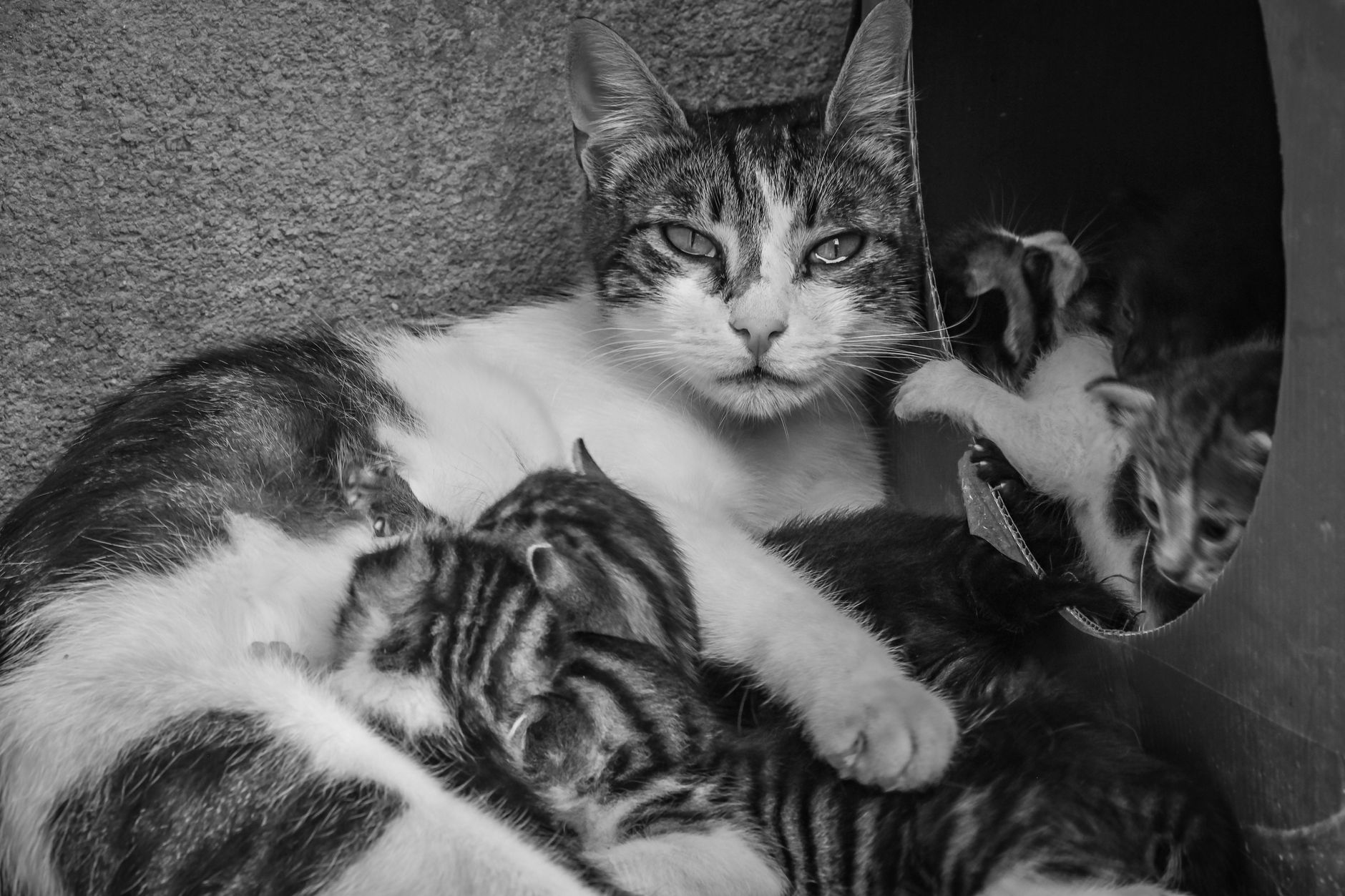
A mother cat’s final grooming session with her kittens before they leave for permanent homes is more than routine cleanliness—it’s a crucial part of feline maternal behavior that helps both mother and offspring prepare for separation. When a kitten is scheduled for adoption, the mother cat may intensify her grooming efforts in the days or hours before departure, licking her kittens thoroughly and focusing on their face, ears, and fur. This behavior serves multiple biological and emotional functions, from reinforcing the mother-kitten bond to depositing her scent on her offspring as a kind of maternal signature they carry into their new environment.
This grooming ritual reflects the natural process mother cats use to ready their litters for independence in the wild. Even domestic cats retain this instinctive behavior, and observant caregivers often notice a mother cat becomes particularly attentive during the adoption period. For example, a foster mother cat might spend extended periods with a kitten scheduled to leave that day, grooming it repeatedly while the kitten purrs and appears calm—a moment that seems tender but is actually the cat performing an ancient preparation ritual that has helped feline mothers transition their young for thousands of years.
Table of Contents
- Why Do Mother Cats Intensify Grooming Before Kitten Separation?
- What the Grooming Behavior Communicates About Feline Maternal Bonds
- How Adoption Day Grooming Affects the Kitten’s Transition
- Preparing Kittens for Adoption While Respecting Maternal Behavior
- Common Challenges When Mother and Kitten Are Separated After Grooming
- Supporting the Mother Cat After Separation
- The Natural Timeline of Feline Maternal Attachment and Weaning
- Frequently Asked Questions
Why Do Mother Cats Intensify Grooming Before Kitten Separation?
Mother cats groom their kittens as a primary parenting tool throughout the nursing period, but this behavior often reaches a peak as weaning approaches and separation nears. The intensified grooming serves practical purposes: it keeps the kitten’s coat clean, helps regulate body temperature, and stimulates digestion. However, before permanent separation, a mother cat’s grooming takes on additional significance. She is marking her kitten with her scent glands, which are located on her face and body, essentially claiming the kitten as hers one final time and providing a comforting scent the kitten can reference in an unfamiliar environment.
This pre-separation grooming also appears to have a calming effect on both participants. The mother cat may be responding to subtle behavioral cues from the kitten—increased restlessness, different vocalizations, or the stress of being handled for transport—and grooming serves as her way of soothing both herself and her offspring. Rescue workers and foster parents frequently report that mothers groom most intensely on adoption day, when the environment shifts and new people handle the kittens. A mother cat sensing this disruption will often seek out her kittens and engage in sustained grooming sessions that can last 30 minutes or longer, far exceeding her typical daily grooming time with them.
What the Grooming Behavior Communicates About Feline Maternal Bonds
Unlike humans, cats do not experience grief or loss in the way we do, but they do experience disruption to their routine and the absence of familiar social partners. The intensified grooming before separation may represent the mother cat’s attempt to strengthen her connection before it is interrupted. Research on feline behavior suggests that cats form attachments to their offspring, and while this attachment naturally weakens as kittens mature, the disruption of adoption can trigger increased maternal behaviors in the short term.
A limitation of interpreting this behavior is that we cannot definitively know the subjective experience of the mother cat. Some caregivers assume the cat is expressing sadness or awareness of permanent loss, but the behavior may instead reflect simple routine disruption and the cat responding to changed scents and sounds in the environment. Additionally, not all mother cats display this intensified grooming before separation—some remain relatively indifferent, particularly if the kitten has already begun the natural separation process through weaning and increasing independence. This variation is normal and does not indicate poor maternal care or lack of bond.
How Adoption Day Grooming Affects the Kitten’s Transition
When a kitten receives intensive maternal grooming just before entering a new home, it carries multiple maternal scents into that environment. For the new owner, this is often invisible—they simply receive a clean, sweet-smelling kitten—but for the kitten, this scent transfer serves as a bridge between the only environment it has known and the completely unfamiliar space it is about to enter. Kittens rely heavily on olfactory cues to navigate their world and build confidence, so arriving in a new home with the mother’s scent on their fur can reduce stress and anxiety during the critical first hours and days.
Foster parents and adoption agencies have observed that kittens who receive this final grooming session often settle more quickly into their new homes and show fewer signs of distress during the adaptation period. One example involves rescue programs that specifically ensure mother and kitten are together for several hours on adoption day, allowing natural grooming to occur, rather than separating them early. Kittens from these programs reportedly vocalize less during transport and show faster habituation to new family members and surroundings compared to kittens separated earlier in the day.
Preparing Kittens for Adoption While Respecting Maternal Behavior
Caregivers managing a mother cat and litter approaching adoption age should create space and time for natural pre-separation interactions. This might mean scheduling pick-ups in the afternoon rather than morning, allowing the mother cat to groom throughout the early part of the day. It also means resisting the urge to bathe kittens immediately before adoption or to interrupt grooming sessions in the name of cleanliness—the maternal scent and grooming behavior are more valuable to the kitten’s transition than a pristine appearance.
A practical tradeoff exists between maintaining adoption timelines and allowing natural maternal processes to complete. Some adoption organizations build buffer time into their schedules to permit these final grooming sessions, while others prioritize rapid placement and may not observe or account for this behavior. The first approach honors feline biology but may slightly delay adoptions; the second expedites placement but potentially increases kitten stress. For individual adopters or foster families, creating 24 to 48 hours of access between mother and kitten before final separation represents a middle ground that accommodates both timeline and welfare.
Common Challenges When Mother and Kitten Are Separated After Grooming
One significant challenge is that the mother cat, having just reinforced her maternal bond through grooming, may then experience sudden absence of the kitten with no resolution process. In a natural weaning scenario, independence develops gradually over weeks as kittens spend increasing time away from the mother. In adoption, this separation is abrupt, and a mother cat who has been intensively mothering may show behavioral changes—increased vocalization, seeking behaviors, or temporarily increased grooming of remaining littermates.
This can be distressing for caregivers, who may misinterpret it as the cat suffering from grief when it is more accurately a disruption of routine and social structure. Another challenge involves multi-kitten litters where siblings are separated at different times. If one kitten is adopted first and receives grooming from the mother on adoption day, the mother cat will likely continue attempting to groom remaining siblings with even more intensity, potentially causing excessive grooming that leads to minor skin irritation. Additionally, if adoption occurs after dark or when the mother cat is in a low-activity period, the final grooming session may not occur naturally, and some caregivers feel guilty about this missed opportunity, though the kitten will adapt to the new home regardless.
Supporting the Mother Cat After Separation
When kittens leave, providing environmental enrichment and maintaining the mother cat’s routine can help her adjust. Some caregivers keep one kitten slightly longer or reunite mothers with littermates to ease the transition, though permanent re-homing of all kittens is the end goal.
Increasing interactive play, providing new enrichment toys, or giving the mother cat more dedicated attention can redirect her maternal energy and provide stimulation that helps her re-engage with her own life and her caregiver’s attention. An example of this approach is foster families who schedule additional grooming sessions with the mother cat after her litter is adopted, using brushing tools and direct grooming to provide the tactile stimulation she was providing to her kittens. This maintains her grooming behaviors and social connection during a period when she might otherwise show signs of behavioral disruption.
The Natural Timeline of Feline Maternal Attachment and Weaning
Mother cats begin reducing their investment in kittens around 8-10 weeks of age in a natural setting, and most maternal behaviors significantly decline by 12 weeks. Adoption typically occurs during this window, often around 8-12 weeks when kittens are behaviorally ready for independence. The final grooming sessions observed before adoption occur within this natural declining phase, suggesting that the behavior is less about deep emotional attachment and more about the mother cat continuing her role until separation makes continuation impossible.
Understanding this timeline helps caregivers contextualize what they are observing. The intensive grooming is not an emergency signal or an indication that the kitten should not be adopted—it is a normal continuation of maternal programming that the mother cat is executing during her last available window. After separation, most mother cats transition back to solitary behavior within days, showing minimal interest in their previous kittens if reunion occurs weeks or months later. This is not callousness but rather the expected feline response to completed developmental stages.
- —
Frequently Asked Questions
Should I let the mother cat see her adopted kitten on adoption day?
Yes, if possible. Allowing the mother cat to groom and interact with the kitten immediately before departure supports both animals’ transition and is consistent with natural feline behavior.
Will the mother cat grieve after the kittens are adopted?
Mother cats typically show behavioral disruption—increased vocalization or restlessness—rather than grief. This adjustment usually resolves within a few days as her routine normalizes.
Is it safe to let the mother cat groom kittens right before transport?
Yes. The grooming provides calming scent and comfort. Just ensure transport happens after grooming is complete so the kitten remains clean and calm during the journey.
Do all mother cats groom intensively before separation?
No. Some mother cats remain relatively indifferent, especially if weaning is well-established. Variation in maternal behavior is normal and does not reflect attachment quality.
Can I help the mother cat during the separation period?
Yes. Maintain her routine, increase interactive play, provide enrichment, and offer direct attention. This helps redirect her maternal energy and eases her transition.