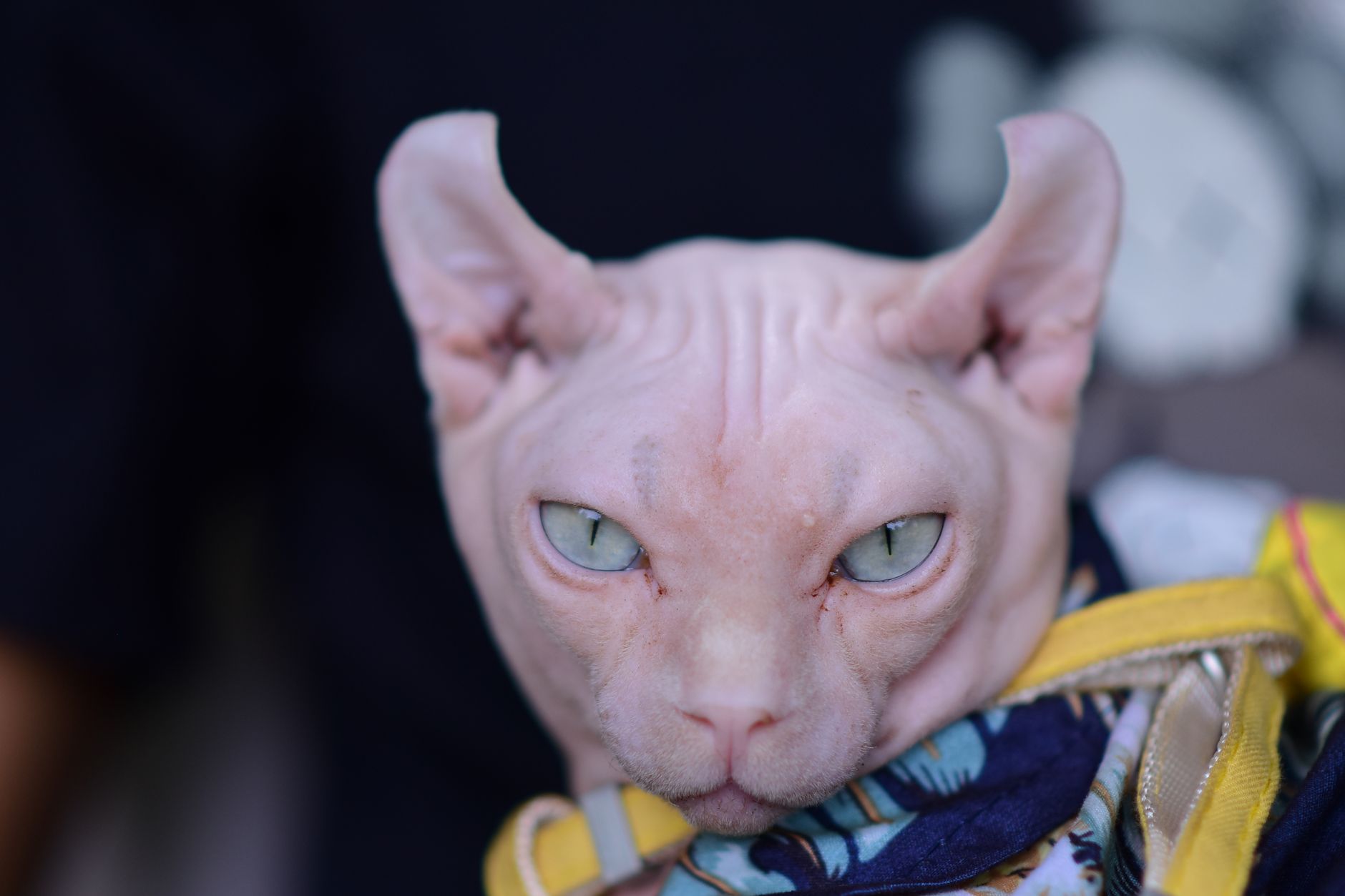
Sphynx cats do bear a striking visual similarity to the alien character E.T. from Steven Spielberg’s 1982 film, primarily due to their distinctive hairless appearance, large bat-like ears, wrinkled skin, and prominent eyes. This resemblance goes beyond mere coincidence—it stems from the breed’s actual physical characteristics, which can genuinely evoke the otherworldly appearance of the famous movie creature. When a hairless Sphynx kitten sits upright with its ears alert and eyes wide, the comparison becomes immediately apparent to most observers.
The likeness has become something of a cultural touchstone for the breed, with many cat enthusiasts and potential owners noting the E.T. comparison upon first encountering a Sphynx. This association isn’t negative; rather, it has contributed to the breed’s appeal for those seeking a truly unique and distinctive feline companion. The comparison underscores what makes Sphynx cats so visually arresting—they challenge conventional notions of cat appearance and invite a second look.
Table of Contents
- What Makes Sphynx Cats Look So Alien?
- Understanding the Sphynx Breed’s Origins and Development
- Personality Traits Behind the Extraterrestrial Look
- The Visual Experience of Living with a Sphynx
- Health and Care Requirements Beyond the Aesthetic
- The Cultural Impact of the E.T. Comparison
- Ethical Breeding Considerations and Reality Check
- Frequently Asked Questions
What Makes Sphynx Cats Look So Alien?
The Sphynx breed’s alien-like appearance stems from several interconnected physical traits that were deliberately selected through breeding. The cats have prominent, oversized ears that sit high on their heads—ears that can be as large as their entire head in proportion—creating that characteristic “E.T. in repose” quality.
Their skin, rather than being completely hairless, is covered in a fine layer of downy fuzz that gives it a suede-like texture, and the lack of a traditional fur coat leaves their wrinkles and skin folds visibly prominent, especially around their face, neck, and body. The breed also tends to have a somewhat slender, elongated body type with a distinctive gait when walking. Combined with their large, round, forward-facing eyes and the natural downward curve of their mouth (which creates an unintentional expression of contemplation), these features collectively create that unmistakable resemblance to an extraterrestrial being. A Sphynx kitten with ears fully extended and eyes wide open is essentially nature’s closest living equivalent to how many people picture an alien creature.
Understanding the Sphynx Breed’s Origins and Development
The Sphynx breed was first developed in the 1960s in Toronto, Canada, when a domestic cat gave birth to hairless kittens due to a natural genetic mutation. Breeders then selectively bred these cats to stabilize the hairless trait, crossing them with other breeds to improve overall health and genetic diversity. This deliberate breeding process, while successful in creating a visually distinctive cat, came with certain trade-offs and health considerations that potential owners should understand.
The breed can be more prone to certain health conditions than their furred counterparts, including susceptibility to cold temperatures due to lack of fur insulation, potential skin sensitivity, and metabolic considerations. Sphynx cats require regular bathing—sometimes weekly—to remove oil buildup on their skin that would normally be absorbed or distributed through fur. This is an important limitation that potential owners often underestimate; the E.T. aesthetic comes with genuine care requirements that extend beyond typical cat ownership.
Personality Traits Behind the Extraterrestrial Look
Interestingly, Sphynx cats’ behavior and temperament often complement their alien appearance in ways that enhance the E.T. comparison. The breed is known for being unusually curious, intelligent, and intensely people-oriented. Many Sphynx owners describe their cats as being almost anthropomorphic in their social interactions, often following their owners from room to room and seeking constant companionship and attention. This behavioral profile matches the gentle, curious nature often attributed to the E.T.
character. Sphynx cats are also known for being surprisingly vocal, with some owners noting that their cats use a wider variety of vocalizations than typical domestic cats. When a hairless cat sits upright on a piece of furniture, makes eye contact, and utters an unusual meow or chirp, the E.T. illusion can feel remarkably complete. This combination of unusual appearance paired with attentive, curious behavior creates a presence that genuinely differs from typical cat ownership.
The Visual Experience of Living with a Sphynx
Owning a Sphynx cat means living with an animal that frequently startles visitors and generates strong reactions—both positive and negative. Some guests find the cats extraordinarily endearing, noting how the lack of fur makes their facial expressions and body language more visible and readable than in other cats. The ability to see a cat’s ears move independently, observe their skin fold and relax, and watch their muscle movements creates a visual experience that’s genuinely novel compared to furred breeds.
However, the visual impact is not universally appreciated. Some people find the hairless appearance unsettling or even off-putting, and potential owners should be prepared for varied reactions from guests. The trade-off is that what makes Sphynx cats memorable also makes them polarizing; there’s rarely a middle ground where someone has a neutral reaction upon seeing one for the first time. Understanding that you’re adopting a conversation-starting, reaction-generating animal is an important part of the decision.
Health and Care Requirements Beyond the Aesthetic
Beyond their distinctive appearance, Sphynx cats require specific care protocols that differ significantly from standard feline care. Their skin requires protection from sun exposure, as they lack the UV protection that fur normally provides. Many Sphynx owners apply cat-safe sunscreen before allowing their pets outdoor access, and some use protective clothing. Cold sensitivity is another real concern; Sphynx cats should live in warm environments and may need sweaters or blankets in cooler climates.
Their ears also require more frequent cleaning due to the breed’s predisposition to earwax buildup, and their eyes need regular monitoring. Additionally, Sphynx cats have higher metabolic rates than other cats and require appropriate nutrition to maintain proper body temperature and health. These aren’t cosmetic considerations—they’re essential medical management details that someone drawn purely to the E.T. aesthetic might initially overlook. The visual distinctiveness has genuine biological consequences.
The Cultural Impact of the E.T. Comparison
The Sphynx breed has benefited significantly from pop culture recognition and the E.T. comparison, gaining popularity precisely because their unusual appearance appeals to people seeking something different. Social media has amplified this visibility, with Sphynx cats frequently appearing in viral content and generating significant engagement. The breed went from being virtually unknown outside cat-breeding circles to becoming recognized as emblematic of distinctive pet ownership.
This cultural moment has had practical effects on breed accessibility and pricing. Sphynx cats command premium prices compared to standard domestic cats, partly due to their genetic rarity and the specific care requirements, but also partly due to the cultural cachet surrounding their distinctive look and the E.T. comparison. The breed’s visual uniqueness has essentially become a commodity in the pet market.
Ethical Breeding Considerations and Reality Check
The increasing demand for Sphynx cats driven by their distinctive appearance has also created a marketplace for irresponsible breeding practices. Potential buyers attracted primarily by the E.T. resemblance should be cautious about where they source their cat, ensuring the breeder prioritizes health testing and genetic diversity over purely aesthetic concerns. Some less reputable breeders have produced unhealthy Sphynx cats with exaggerated features designed to maximize the alien appearance at the expense of the animal’s wellbeing.
Responsible Sphynx ownership means approaching the breed with realistic expectations about both their actual health needs and their actual personality. While the E.T. comparison makes for compelling first impressions and social media content, the cat living in your home is a genuine animal with specific requirements, not a novelty item. A Sphynx cat deserves to be appreciated for its entire nature—including its behavioral traits, health considerations, and individual personality—rather than treated as a living pop culture reference.
Frequently Asked Questions
Are Sphynx cats actually completely hairless?
No, Sphynx cats have a fine layer of downy fuzz covering their skin rather than being completely hairless. This gives their skin a soft, suede-like texture and allows you to feel their muscle and body structure beneath the surface.
Do Sphynx cats get cold easily?
Yes, because they lack the insulating properties of fur, Sphynx cats are sensitive to cold temperatures and should live in warm environments. Many owners use sweaters or blankets, especially in cooler climates.
How often do Sphynx cats need baths?
Most Sphynx cats need weekly baths to remove oil buildup on their skin that would normally be absorbed or distributed through fur in other breeds. Some cats may need bathing more or less frequently depending on their individual skin type and environment.
Are Sphynx cats good pets for families?
Sphynx cats are known for being social, affectionate, and people-oriented, making them suitable for many families. However, their care requirements, health considerations, and need for constant human interaction mean they’re not appropriate for households with limited time or resources.
Why are Sphynx cats so expensive?
Sphynx cats are expensive due to their genetic rarity, the selective breeding required to produce the breed, their health testing requirements, and the specific care knowledge needed to breed them responsibly. Demand has also increased their market value.