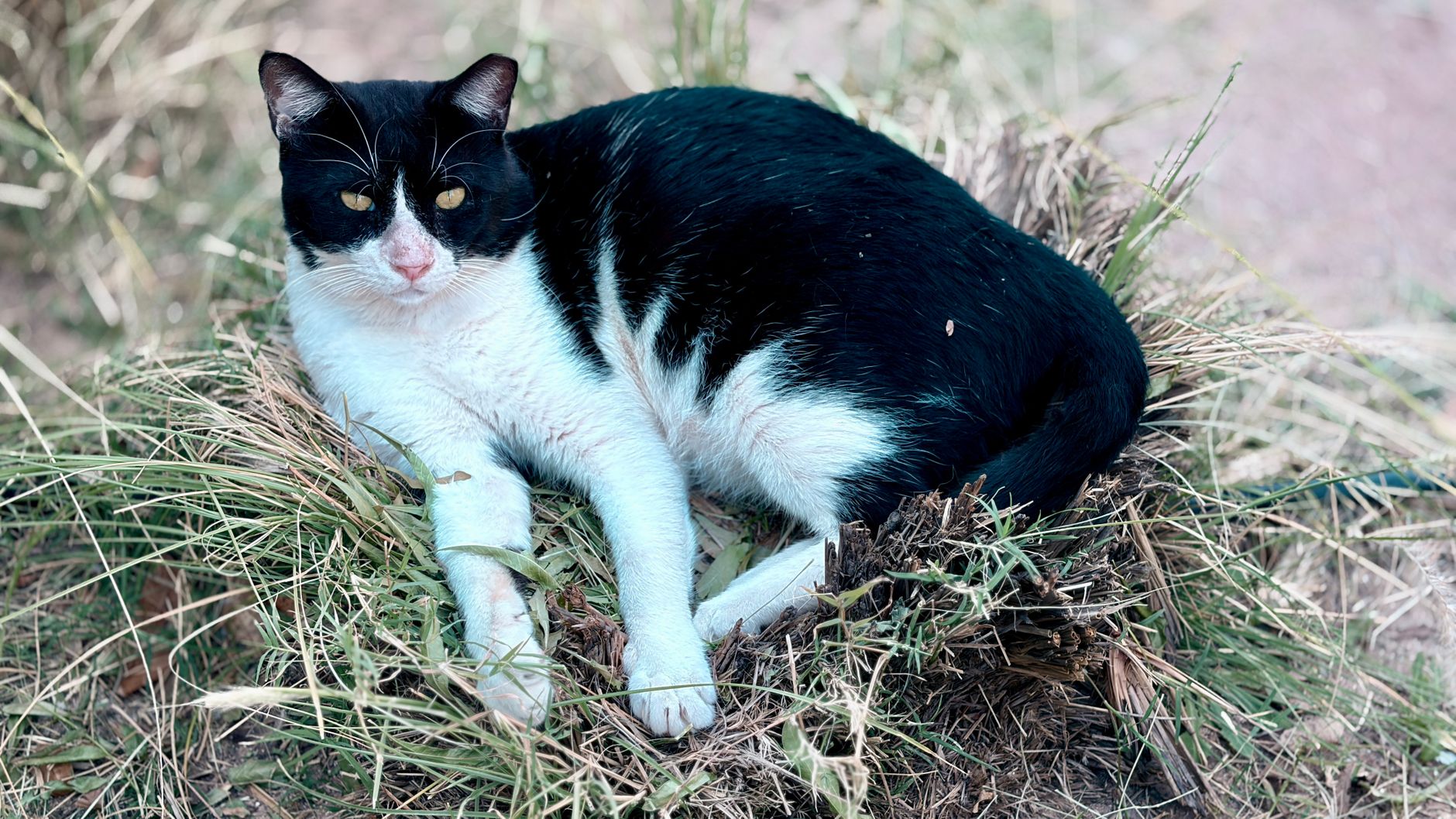
While the image of a tuxedo-clad cat confronting a black bear may sound more like folklore than fact, cats occasionally do exhibit surprising boldness when defending their territory or home. Felines, particularly those with protective instincts or who feel cornered, may hiss, puff up, and posture aggressively toward much larger animals—behaviors that sometimes startle wildlife enough to cause them to retreat. A black bear encountering an unexpected display of aggression at a residential property, especially if the cat’s actions coincide with other deterrents like lights, noise, or the human occupants’ response, might choose to leave rather than engage.
Cats are territorial animals with strong instincts to defend their home space, regardless of the intruder’s size. A tuxedo cat—named for its distinctive black and white coloring—possesses no special advantage in such a confrontation, but individual personality traits like confidence, lack of fear socialization with larger animals, or prior successful defenses against other wildlife can embolden a cat to stand its ground. The outcome depends heavily on the bear’s age, hunger level, and whether it views the encounter as worth the risk.
Table of Contents
- What Drives a Cat to Challenge a Much Larger Animal?
- The Reality of Cat-Bear Encounters and Their Limitations
- Tuxedo Cats and Bold Behavior—Myth or Reality?
- Creating Safer Residential Spaces When Wildlife Visits
- When Cat Boldness Becomes a Liability
- The Role of Surprise and Timing in Wildlife Encounters
- Practical Wildlife Safety for Homes with Cats
What Drives a Cat to Challenge a Much Larger Animal?
cats are surprisingly bold when defending what they perceive as their territory. Unlike many animals that assess threat size before engaging, domestic cats rely on defensive posturing—hissing, spitting, arching their back, and puffing their fur—to appear larger and more intimidating than they are. This bluff works particularly well against animals that have not encountered aggressive cats before or that are naturally conflict-averse. A young or inexperienced black bear, or one that was simply passing through rather than actively hunting, may interpret a cat’s aggressive display as a genuine threat and decide to move on.
Individual personality plays a significant role in how bold a cat becomes. Some cats have naturally low fear responses and will stand their ground against perceived threats, while others are more cautious. A tuxedo cat living in an area with regular wildlife activity might have already successfully deterred smaller predators or competitors, reinforcing the belief that aggressive displays work. This learned behavior can carry over to larger animals.
The Reality of Cat-Bear Encounters and Their Limitations
In truth, most cat-bear encounters never escalate to physical confrontation. Black bears are generally not aggressive toward cats unless they are extremely hungry, protecting cubs, or have been habituated to human food. A bear searching for garbage or compost at a residential property is focused on food, not on hunting a cat. If a cat’s aggressive behavior—combined with the sudden appearance of the homeowner, outdoor lights activating, or other commotion—interrupts the bear’s concentration, the bear may simply move to a different property where conditions feel safer or where food is easier to access.
However, relying on a cat to deter bears is risky and not recommended. A larger or more aggressive bear, a mother protecting cubs, or a bear that has become food-aggressive due to repeated access to human garbage may not back down when challenged. Cats can be seriously injured or killed in wildlife encounters. A bear’s claws and teeth are far more powerful than a cat’s defenses, and even a brief fight would likely result in the cat’s death.
Tuxedo Cats and Bold Behavior—Myth or Reality?
Tuxedo cats have a reputation for being particularly bold and mischievous, though this is largely anecdotal rather than scientifically proven. The distinctive black and white pattern does not correlate with specific behavioral traits in domestic cats. What may contribute to the tuxedo reputation is visibility—their high-contrast coloring makes them more noticeable than solid-colored cats, so their behavior tends to be more memorable. A bold tuxedo cat walking across a yard is more striking visually than a gray tabby doing the same thing.
Individual personality, early socialization experiences, and genetics influence a cat’s boldness far more than coat color. Some tuxedo cats are shy; others are confident. What matters in a wildlife encounter is whether a particular cat has developed a fearless attitude toward larger animals, which can happen in any cat regardless of markings. A cat raised indoors may be more cautious around unfamiliar animals, while a cat with outdoor experience may be more confident or even aggressive.
Creating Safer Residential Spaces When Wildlife Visits
The most effective way to prevent bear encounters at home is to eliminate the reasons bears visit residential areas in the first place. Bears are attracted to garbage, pet food, bird feeders, compost, and barbecue grills. Securing these attractants—storing garbage in bear-proof containers, bringing pet food indoors at night, removing bird feeders during bear season, and cleaning grills immediately after use—dramatically reduces the chance of a bear coming near your home. Installing motion-activated lights and keeping yards clear of dense brush also helps, as bears prefer to approach quietly and undetected.
Some people use motion-activated sprinklers or noise devices for added deterrence. These methods work far better than relying on a cat’s willingness to confront a wild animal. Even if a bold cat has succeeded once at chasing a bear away, repeating that outcome is unpredictable and puts the cat in unnecessary danger. A homeowner’s active management of attractants and environment is the only reliable defense.
When Cat Boldness Becomes a Liability
Cats that spend time outdoors and develop territorial confidence may eventually encounter wildlife they cannot handle. A bold cat that successfully chases off raccoons or possums may escalate to approaching a coyote, mountain lion, or bear with the same aggressive posturing. Wildlife that poses a genuine threat will not back down in the face of a cat’s hissing and growling. A predator focused on hunting rather than simply passing through will see a small cat as prey, not as a competitor.
Cats that roam freely in areas with active bear, cougar, or large predator populations face increased injury and mortality risk. Even non-lethal encounters can result in injuries that lead to infection. Keeping cats indoors or in secure, fenced enclosures when wildlife is known to be active protects them far better than any reputation for boldness. The willingness to confront a bear is a liability, not an asset, in wildlife safety.
The Role of Surprise and Timing in Wildlife Encounters
Many successful deterrence events hinge on timing and surprise rather than the animal doing the deterring. If a cat charges out barking or hissing at the exact moment a bear is distracted by food, the bear may startle and retreat before assessing whether the threat is real. The same moment, a homeowner may emerge from the house, turn on lights, or make noise, all of which contributes to the bear’s decision to leave.
The bear often receives multiple signals that the area is no longer safe or rewarding, and the cat gets credit for the outcome. This confluence of events explains why anecdotal stories of cats chasing away large animals circulate in communities with wildlife. Witnesses may remember the dramatic moment of the cat’s bold display but not the context of lights, noise, or the bear’s underlying disinterest in engaging.
Practical Wildlife Safety for Homes with Cats
Homeowners with outdoor cats and wildlife concerns should prioritize building barriers and removing attractants over hoping their cat will defend the property. Fencing that excludes bears is tall and sturdy; bear-proof garbage containers are specifically designed to prevent access.
Feeding cats indoors rather than leaving food outside removes a secondary attractant that brings bears closer to homes. If a cat is bold, that trait should be managed by limiting outdoor access during dawn, dusk, and night—when bears are most active—and by keeping the cat microchipped and current on vaccines in case a wildlife encounter does occur. A cat’s confidence is a personality trait, not a survival tool against wild predators, and cat owners living near wildlife need to respect that distinction.
- —