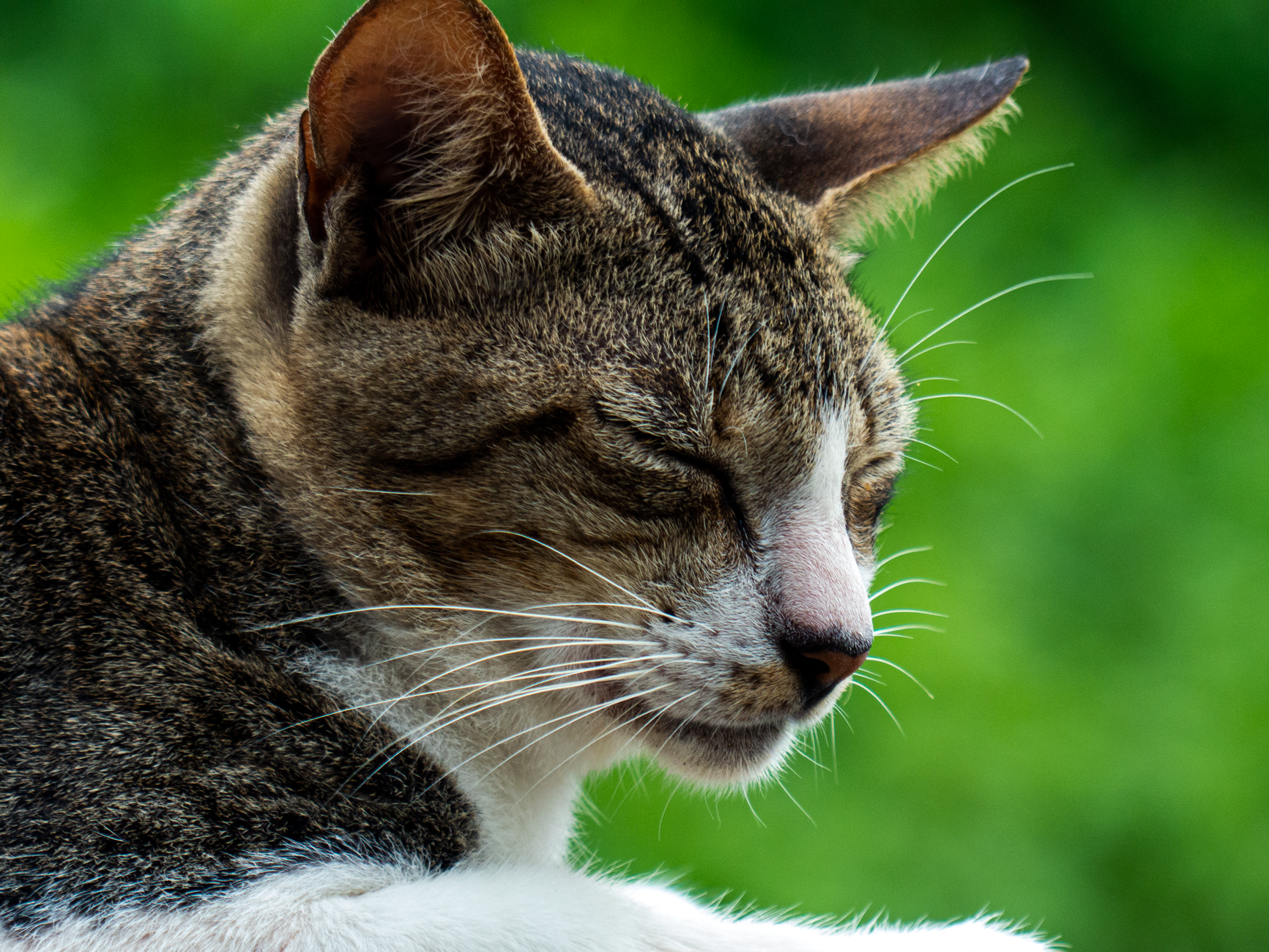
Cats purr to signal comfort and bonding, to ask for food, and to soothe themselves when stressed or hurt. A purr is a low, continuous vibration a cat makes while breathing in and out.
That range of uses means one sound has several meanings. Context matters more than volume. The cat's posture, activity, and situation tell which meaning fits.
Table of Contents
- How do cats make the purring sound?
- Does purring always mean a happy cat?
- Why do newborn kittens purr?
- What is the hungry purr?
- Can purring heal bones?
How do cats make the purring sound?
Brain signals make throat muscles and the diaphragm twitch in a fast rhythm. The movement vibrates air during both inhalation and exhalation, so the sound does not stop between breaths, according to Great Pet Care's veterinary-reviewed guide in how cats purr.
A 2023 University of Vienna study added another detail. Excised cat voice boxes could still produce purr-like vibration without nerve input, linked to fatty pads in the vocal folds like human vocal fry, reported by the University of Vienna in new research on how cats purr.
Does purring always mean a happy cat?
Often it signals ease during relaxed contact, grooming, resting, and nursing. That form supports comfort and social bonding with familiar cats, people, and dogs.
But purring alone does not prove happiness. Cats also purr when fearful, stressed, injured, in labor, or near death, likely as self-soothing. Read the whole cat:.
- relaxed body, slow blinks, kneading, or nursing points toward comfort
- hiding, flattening ears, panting, crying, labored breathing, or injury with purring points toward distress
Why do newborn kittens purr?
Kittens start purring at about two days old while nursing. At that age they cannot see or hear well, so the quiet vibration marks location and sends an "I'm OK" signal, described by the Cornell Feline Health Center in Ask Elizabeth on kitten socialization.
The mother answers with her own purr. The pair creates a calm loop during feeding and rest. A kitten that purrs while nursing, stays warm, and gains weight is doing normal bonding behavior.
What is the hungry purr?
Hungry cats add a high-pitched cry inside the low purr. The sound resembles an infant's cry and owners rate it as more urgent and harder to ignore, found the University of Sussex researchers in the solicitation purr study.
Expect it near meals, in the morning, or beside an empty bowl. If the urgent purr becomes constant, check food, water, and routine before assuming demand. Sudden appetite or weight change still deserves veterinary attention.
Can purring heal bones?
Purrs measure about 25–150 Hz. Some writers suggest that range could give low-energy stimulation to bones and tissues.
Healing effects remain unproven. Do not wait out limping, swelling, trouble breathing, loss of appetite, hiding, or crying because the cat is purring. Call a veterinarian promptly for those signs.