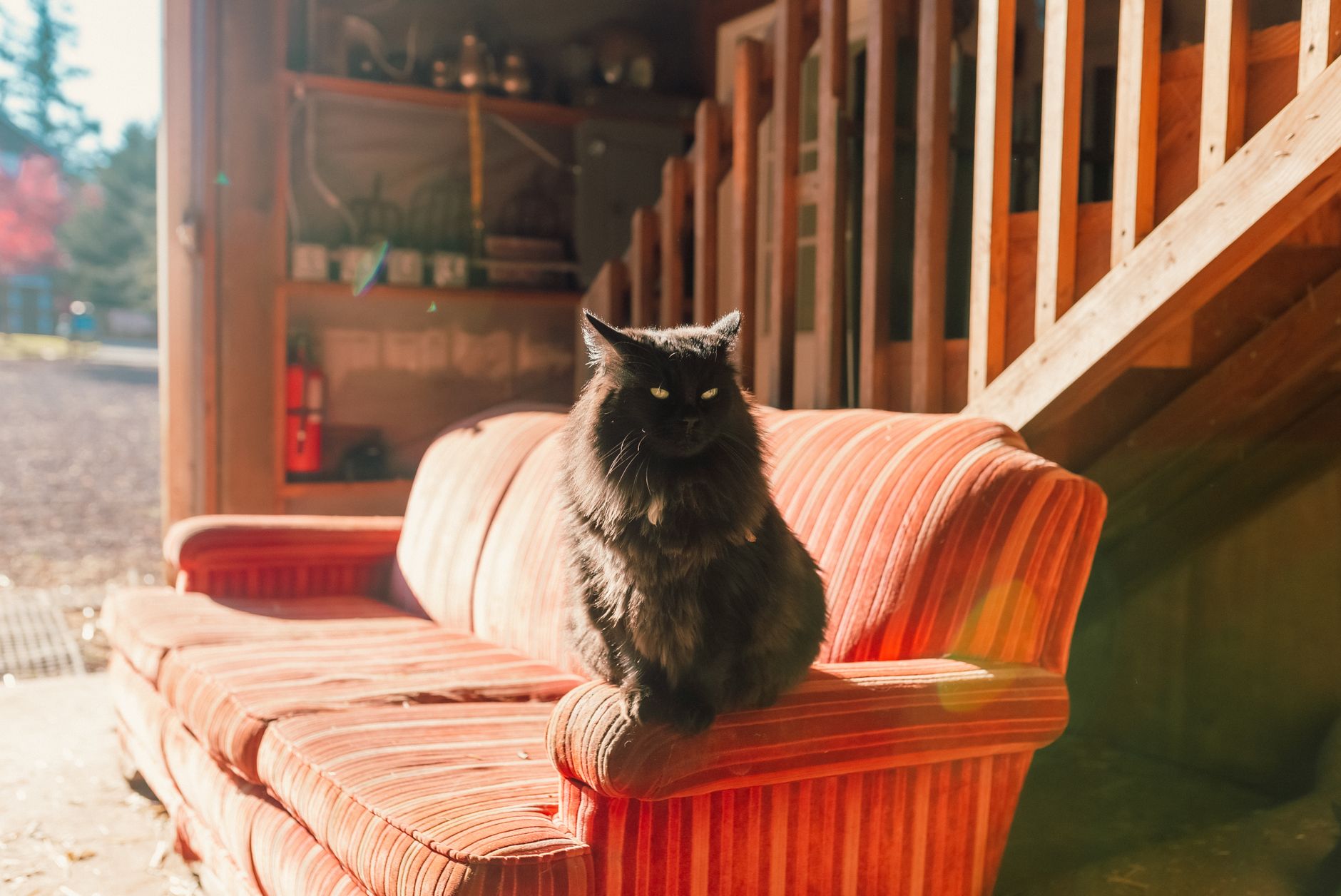
No verified court record shows that an Oregon judge is currently deciding whether an indoor-outdoor cat has a legal right to roam. Without a case name, court, docket, or filing, that premise should not be reported as fact. Existing Oregon appellate law also weighs strongly against describing roaming as the cat’s own legal right: animals cannot hold and assert rights in Oregon courts and remain a special form of property under current law. Consider a cat that leaves its Portland home and crosses a neighbor’s garden each afternoon.
Multnomah County excludes domestic cats from its definition of an “animal at large,” but it separately prohibits owners from permitting an animal to trespass on another person’s property. The cat’s conduct may therefore fall outside one restraint rule while still creating a problem under another. This distinction matters for owners, neighbors, rescuers, and animal-welfare advocates. Oregon recognizes animals as sentient beings and regulates how people treat them, but that protection does not amount to legal personhood, an unrestricted license to wander, or a judicially enforceable feline right.
Table of Contents
- Is an Oregon Judge Weighing an Indoor-Outdoor Cat’s Legal Right to Roam?
- Animal Welfare Protection Is Not a Statewide Cat Roaming Right
- Cats as Property and the Limits on an Owner’s Control
- Check State and Local Rules Before Letting a Cat Roam
- Trespass, Nuisance, Injury, and Neighbor Complaints
- How Eugene Handles Free-Roaming Cats in Practice
- What Happens When an Oregon Agency Takes In a Found Cat?
- Frequently Asked Questions
Is an Oregon Judge Weighing an Indoor-Outdoor Cat’s Legal Right to Roam?
There is no reliable court docket, judicial order, Oregon Judicial Department release, or credible news report establishing that an Oregon judge is currently weighing such a question. A genuine court dispute should be identifiable through basic details such as the parties’ names, the court, the case number, and the particular motion or order under consideration. A social-media post or secondhand account without those details is not enough to establish a pending case. The strongest relevant appellate authority points away from framing the issue as a right belonging to the cat. In [Justice by and through Mosiman v.
Vercher](https://caselaw.findlaw.com/court/or-court-of-appeals/2184640.html), decided August 31, 2022, the Oregon Court of Appeals held that animals lack the legal capacity to hold and assert their own rights in court. The Oregon Supreme Court denied review on February 23, 2023. That ruling does not mean animals receive no legal protection. It means the law generally works by imposing obligations on humans, such as owners, caretakers, agencies, and alleged abusers. A person may be prosecuted for neglecting a cat, for example, but the prosecution does not turn the cat into an independent legal person bringing its own claim.
Animal Welfare Protection Is Not a Statewide Cat Roaming Right
The Court of Appeals explained in Justice that Oregon’s animal-welfare statutes protect animals from suffering and impose duties on people. The statutes do not, however, create substantive or procedural legal rights that animals can personally enforce. This is a significant limitation on claims that a cat possesses a right to travel beyond its owner’s property. Oregon law nevertheless gives animals a status more protective than that of ordinary inanimate objects.
[ORS 167.305](https://www.oregonlegislature.gov/bills_laws/ors/ors167.html) recognizes animals as sentient beings capable of experiencing pain, stress, and fear and states that they should be cared for in ways that minimize suffering. That legislative finding can inform welfare rules, but it does not grant personhood or create a right to enter streets, yards, farms, or wildlife habitat. The comparison is important: a welfare protection limits what people may do to an animal, while a roaming right would authorize the animal’s movement against competing interests. Owners should not assume that Oregon’s recognition of feline sentience overrides property rules, nuisance provisions, animal-control ordinances, or their responsibility for harm caused by a roaming pet.
Cats as Property and the Limits on an Owner’s Control
The Oregon Supreme Court addressed the legal status of animals in [State v. Newcomb](https://law.justia.com/cases/oregon/supreme-court/2016/s062387.html), decided July 7, 2016. The court described animals as property while recognizing that an owner’s dominion is constrained by animal-welfare laws. The decision also acknowledged that an owner may have protected possessory and privacy interests in an animal under some circumstances.
This creates a legal structure different from both full personhood and absolute ownership. A cat cannot ordinarily sue in its own name, but an owner does not have unlimited authority to neglect or mistreat it. For example, claiming ownership would not excuse withholding legally required care, just as the state’s welfare interest does not automatically erase every protected interest the owner has in the cat. The same structure affects roaming disputes. A conflict is more likely to be analyzed through the conduct and responsibilities of people—the owner who allows the cat outside, the neighbor seeking to exclude it, or the agency that takes custody—than through an independent freedom belonging to the animal.
Check State and Local Rules Before Letting a Cat Roam
Oregon’s statewide “running at large” provisions in [ORS chapter 609](https://www.oregonlegislature.gov/bills_laws/ors/ors609.html) are directed primarily at dogs. The chapter does not contain an equivalent general statewide cat-leash rule. That absence is not an affirmative statewide right for cats to roam; it leaves room for other state laws, local codes, private-property rights, and fact-specific restrictions to matter. Local rules can change the practical answer. Under [Multnomah County Code §13.002](https://multco.us/file/chapter_13%3A_animal_services/download), the definition of an “animal at large” expressly excludes domestic cats.
Yet [§13.305](https://multco.us/file/chapter_13%3A_animal_services/download) makes it unlawful to permit an animal to trespass on another person’s property. An owner relying only on the domestic-cat exclusion could overlook the separate trespass provision. For day-to-day pet care, supervised outdoor access offers a different tradeoff from unrestricted roaming. A secure catio, enclosed yard, or properly fitted harness limits freedom of movement but reduces exposure to traffic, predators, infectious disease, fights, poisoning, and neighbor disputes. Before choosing any arrangement, owners should check the municipal or county code covering the cat’s actual location rather than assuming rules elsewhere in Oregon apply.
Trespass, Nuisance, Injury, and Neighbor Complaints
A cat need not violate a cat-specific leash law to create a legal or practical dispute. Repeated entry onto private property, defecation in gardens, attacks on poultry, fighting with other pets, or damage to screens and landscaping may bring trespass, nuisance, damages, or local animal-control provisions into play. The available response will depend on the locality and the evidence. Owners should take recurring complaints seriously and document corrective measures.
If a neighbor reports that a cat is sleeping in a shed, stalking chickens, or spraying a doorway, useful steps include keeping the cat indoors during high-activity periods, adding identification, installing an enclosure, and arranging veterinary care for behaviors that may have a medical component. Neighbors should also avoid dangerous or cruel self-help measures. The fact that an animal enters private property does not suspend Oregon’s animal-welfare laws. Humane deterrents such as blocking shelter access, removing food attractants, or using motion-activated sprinklers present a sharply different risk profile from poison, injurious traps, or physical abuse.
How Eugene Handles Free-Roaming Cats in Practice
[City of Eugene Animal Services](https://www.eugene-or.gov/1919/Animal-Services) distinguishes between dogs and free-roaming cats in its public-facing practices. The agency patrols for dog leash compliance, while its response to free-roaming cats focuses on animals that are very sick or injured and includes information about trap-neuter-return programs.
That operational distinction is useful context, but it is not a court ruling or a declaration that cats possess a legal right to roam. For example, an agency’s decision not to collect every healthy outdoor cat does not prevent a property owner from reporting a recurring problem under another applicable rule.
What Happens When an Oregon Agency Takes In a Found Cat?
Oregon enacted HB 3604 as Oregon Laws 2025, chapter 159, establishing procedures for qualified animal-holding agencies that take possession of unowned, stray, or abandoned cats. The measure does not create a roaming right. Its provisions have been incorporated into the Legislature’s current version of ORS chapter 609, confirming that they are operative law rather than a pending proposal.
Under the [enrolled HB 3604 text](https://olis.oregonlegislature.gov/liz/2025R1/Downloads/MeasureDocument/HB3604), an agency must post a found cat’s description or photograph within 24 hours, notify local animal control, and take reasonable steps to identify and notify an owner. The minimum holding period is three business days for a cat without a license, tag, or microchip and five business days for an identified cat. After the agency complies with those requirements and the applicable period expires, it becomes the cat’s owner. The House passed the measure on April 22, 2025, the Senate passed it on May 15, and it took effect September 26, 2025.
Frequently Asked Questions
Do cats have a legal right to roam in Oregon?
No Oregon appellate decision establishes such a right. Oregon courts treat animals as a special form of property without the capacity to assert their own legal rights, and the lack of a general statewide cat-leash law does not create an affirmative freedom to roam.
Must cats be kept on a leash throughout Oregon?
Oregon does not have a general statewide cat-leash provision equivalent to its dog-focused running-at-large rules. Cities and counties may impose different requirements, while trespass, nuisance, welfare, and property laws may still apply.
Are domestic cats considered “at large” in Multnomah County?
Domestic cats are excluded from the county code’s definition of an “animal at large.” That exclusion does not authorize trespassing because a separate county provision prohibits permitting an animal to trespass on another person’s property.
Does Oregon’s recognition of animal sentience give cats personhood?
No. ORS 167.305 recognizes that animals experience pain, stress, and fear and should receive care that minimizes suffering. The provision does not grant legal personhood or an independent right to roam.
How long must a qualified agency hold a found cat?
The minimum period is three business days if the cat has no license, tag, or microchip and five business days if it has one. The agency must also satisfy posting, notification, and owner-search requirements before ownership transfers.