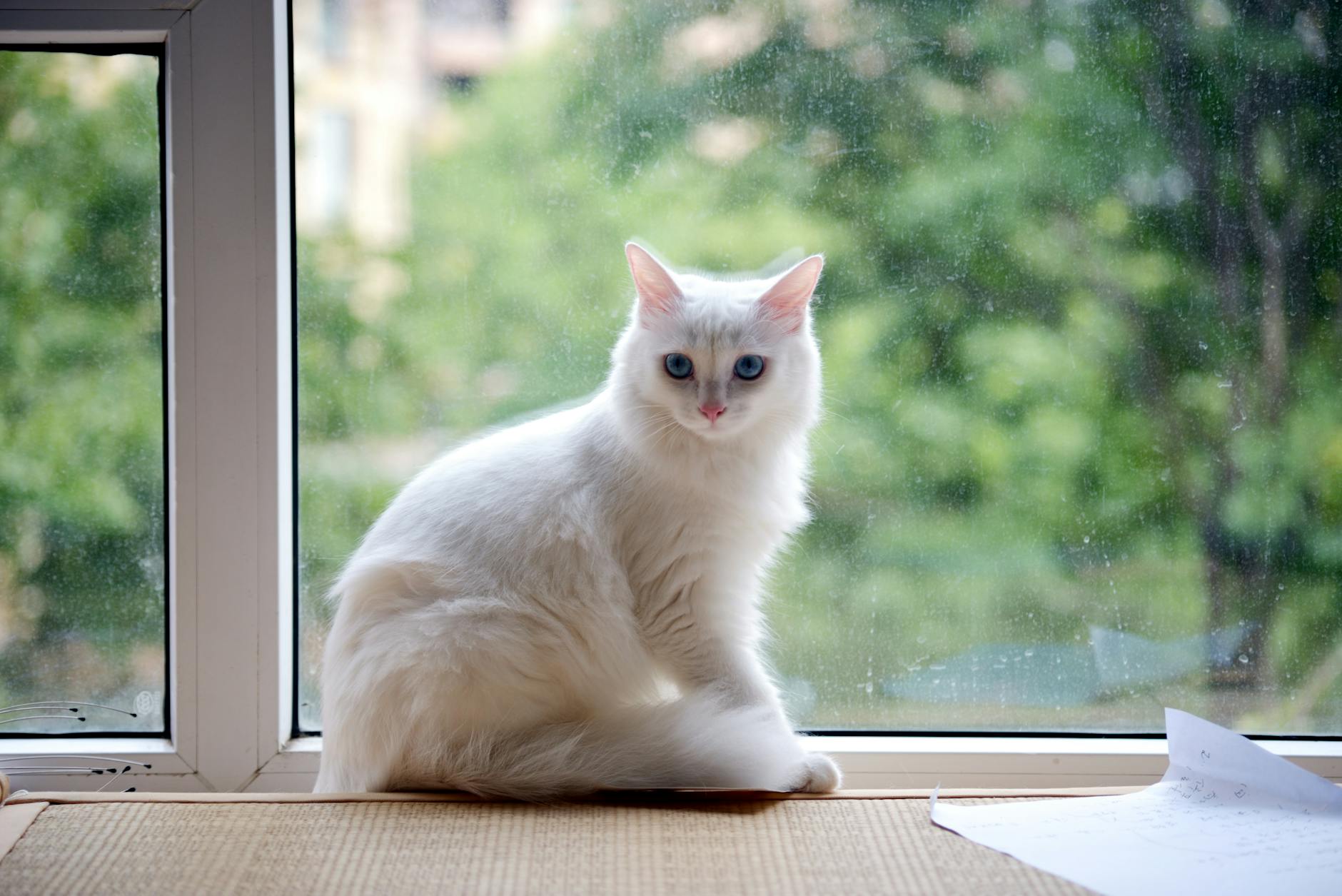
The blue-eyed cat breed that most resembles a Birman is the Ragdoll. Developed in the 1960s in California by breeder Ann Baker, the Ragdoll shares striking visual similarities with the Birman, including piercing blue eyes, a colorpoint coat pattern, and a similar body structure. In fact, Ann Baker intentionally used Birman cats in the Ragdoll’s development, breeding a Birman with an early Ragdoll to produce Daddy Warbucks, a seal point kitten with white feet who is credited as the foundation father of the modern Ragdoll breed. While Ragdolls and Birmans are distinct breeds with different temperaments and histories, they often get confused because of their comparable appearance.
Both feature the signature colorpoint pattern—a lighter body with darker coloring on the face, ears, feet, and tail—and both possess mesmerizing blue eyes that result from the genes responsible for their colorpoint coloring. For anyone searching for a cat that looks like a Birman but wants different characteristics, the Ragdoll is the primary answer. It’s worth noting that several other blue-eyed cat breeds also share Birman-like features, though they lack direct Birman ancestry. Understanding the differences between these breeds can help you find the perfect cat for your household.
Table of Contents
- How Did the Ragdoll Breed Develop From Birman Ancestry?
- Visual and Physical Similarities Between Ragdolls and Birmans
- Other Blue-Eyed Breeds That Resemble Birmans
- Choosing Between a Ragdoll and a Birman: Practical Considerations
- Health Issues and Genetic Concerns in Blue-Eyed Colorpoint Cats
- Grooming and Daily Care Requirements
- Ethical Breeding and Adoption Considerations
- Conclusion
How Did the Ragdoll Breed Develop From Birman Ancestry?
The Ragdoll breed has a deliberate connection to the Birman heritage. Ann Baker, working in Riverside, California during the 1960s, aimed to create a large cat with a striking appearance and a calm, relaxed temperament. Her breeding program specifically incorporated Birmans into her lines. By crossing a Birman cat with an early Ragdoll named Buckwheat, Baker produced Daddy Warbucks, whose characteristics became foundational to the Ragdoll breed standard.
This intentional breeding strategy means that if you’re looking at a blue-eyed cat that resembles a Birman, you’re likely seeing a breed that literally shares genetic material with Birmans. The Ragdoll breed emerged as a much newer addition to the feline world compared to the ancient Birman lineage. While Birmans have historical roots tracing back to temples in Myanmar (formerly Burma), Ragdolls are a modern creation of the 20th century. This difference in breed history explains some of the personality differences you might notice between the two, even though they look so similar at first glance.
Visual and Physical Similarities Between Ragdolls and Birmans
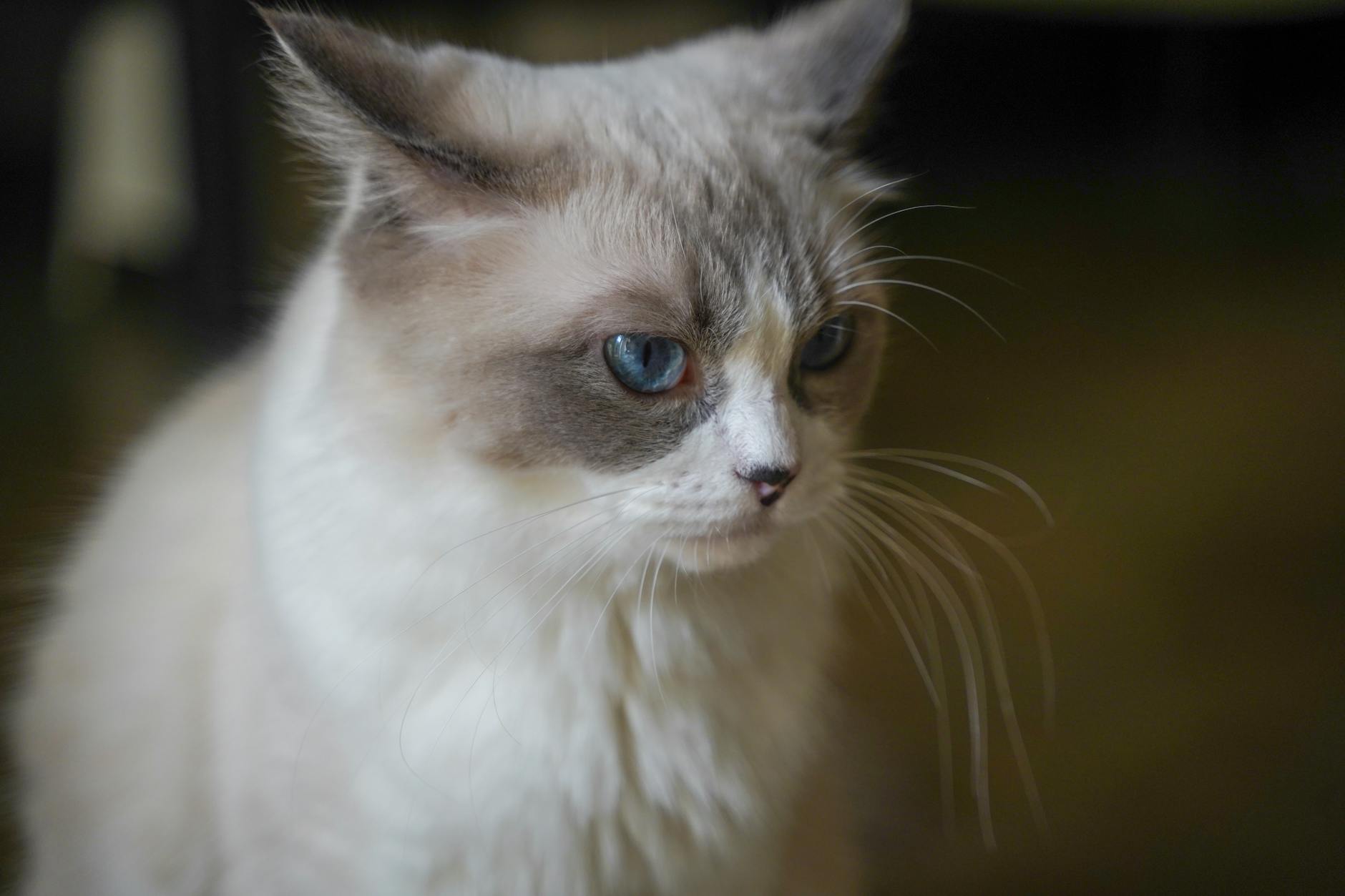
Both Ragdolls and Birmans display the colorpoint pattern, where the face mask, ears, legs, and tail are distinctly darker than the rest of the body. This pattern comes from the same genetic foundation in both breeds—specifically, the genes that produce the colorpoint coat also create the blue eye color. Both breeds typically have medium to large builds with semi-long, silky coats. When you see a blue-eyed cat with this distinctive coloring pattern, there’s a good chance you’re looking at either a Ragdoll or a Birman. However, important differences exist between them that become apparent when you examine them closely.
Birmans typically have stockier, more muscular builds compared to Ragdolls, which tend to be longer and more elegant in body structure. Birmans also have a distinctive feature that Ragdolls lack: white gloves and laces on their paws, which are breed standards in Birmans. Ragdolls, by contrast, may have white on their paws but it’s not the same precise pattern. Additionally, Birmans have yellow-green eyes that can sometimes appear more golden in certain lighting, while Ragdolls consistently display bright blue eyes. If you’re trying to determine which breed you’re looking at, the presence of white glove markings on the feet is a reliable distinguishing feature.
Other Blue-Eyed Breeds That Resemble Birmans
Beyond the Ragdoll, several other cat breeds display blue eyes and colorpoint-like patterns that might remind you of Birmans. The Himalayan cat, which was developed by crossing Persians with Siamese cats, features the colorpoint pattern and blue eyes but with a much fluffier, longer coat than either the Birman or Ragdoll. Himalayans require significantly more grooming due to their dense coats and are generally heavier and more compact than Birmans.
The Balinese breed, often described as the longhaired version of the Siamese, also displays blue eyes and colorpoint markings. Balinese cats are slender and athletic, more similar in body type to Ragdolls than to stocky Birmans, and they tend to be quite vocal—a trait inherited from their Siamese ancestry. The Tonkinese, another option, represents a cross between Siamese and Burmese cats and can display blue eyes along with colorpoint or champagne coloring. Each of these breeds offers the aesthetic appeal of blue eyes and similar coat patterns while bringing different personality traits and care requirements to the table.

Choosing Between a Ragdoll and a Birman: Practical Considerations
If you’re deciding between a Ragdoll and a Birman, temperament should be a primary consideration. Ragdolls are known for their exceptionally calm, docile nature and their tendency to go limp when picked up—a behavior that inspired their name. They are highly social and bond intensely with their owners, often following them from room to room and greeting them at doors. Birmans, while affectionate, maintain more independence and a bit more spirited personality. If you want a cat that will be constantly by your side and largely unresisting to handling, a Ragdoll may be the better choice.
If you prefer a cat with a bit more personality and independence, a Birman might suit you better. Size and grooming requirements also differ between the breeds. Ragdolls often reach 15 pounds or more for males, while Birmans typically max out around 12 pounds. Both require regular brushing to prevent matting, but Ragdolls’ longer, silkier coat requires somewhat more frequent grooming than the Birman’s more manageable coat. Cost is another factor—both are premium breeds, but Ragdolls from reputable breeders often command higher prices due to their breeding history and popularity. A blue-eyed Ragdoll kitten might cost $800 to $2,000, while Birmans typically range from $600 to $1,500, though exceptional examples of either breed can exceed these ranges significantly.
Health Issues and Genetic Concerns in Blue-Eyed Colorpoint Cats
Both Ragdolls and Birmans with blue eyes can inherit health conditions associated with their genetics. Hypertrophic cardiomyopathy (HCM), a form of heart disease, occurs in both breeds at elevated rates. Responsible breeders screen for HCM through echocardiograms before breeding. If you’re acquiring either a Ragdoll or Birman, asking the breeder for documentation of heart health screening for both parents is essential. This is not a reason to avoid the breed, but rather a responsible precaution to ensure your cat starts life with the best possible genetic health.
Polycystic kidney disease (PKD) is another concern that has affected Ragdoll populations, though ethical breeders have significantly reduced its prevalence through genetic testing. Birmans can also carry kidney issues, though PKD is more commonly associated with Ragdolls. Some blue-eyed cats, particularly those with higher concentrations of white coloring, can inherit deafness related to the genes producing white fur and blue eyes. This is less common in the typical colorpoint pattern but remains a consideration. Always request health clearances and genetic testing documentation from any breeder, and consider adopting from rescue organizations that have already screened for these conditions.
Grooming and Daily Care Requirements
Both Ragdolls and Birmans require consistent grooming to maintain their coat health and prevent matting. A Ragdoll’s semi-long, silky coat benefits from brushing three to four times per week, and daily brushing is ideal during shedding seasons. Birmans, with their slightly shorter and less silky coat, typically need brushing two to three times per week. Without regular grooming, both breeds can develop mats and tangles that become uncomfortable and may require professional grooming to remove. The good news is that their coats don’t mat as severely as those of Persians or Himalayans.
Beyond coat care, both breeds need regular nail trimming, ear cleaning, and dental care just like any other cat. Ragdolls, being heavier cats with calmer temperaments, require careful monitoring for weight gain—obesity is a real risk in this breed because they lack the high activity level of many other cats. Birmans are more active and tend to self-regulate their weight better. Both breeds do well with interactive play, puzzle feeders, and enrichment activities. A Ragdoll might be happier with a calm household where they can be a lap cat, while a Birman thrives with a bit more stimulation and activity.
Ethical Breeding and Adoption Considerations
When looking for a blue-eyed cat that resembles a Birman, whether you choose a Ragdoll or a Birman itself, sourcing from an ethical breeder is crucial. Reputable breeders conduct genetic health testing, maintain detailed records of their breeding lines, and prioritize the health and temperament of their cats over profit. They should be able to provide references, show you the parents of any kitten you’re considering, and give you a health guarantee. Be wary of breeders who have multiple litters available at all times or who are unwilling to discuss their breeding practices and health testing protocols.
Adoption is another meaningful path to finding a Ragdoll or Birman. Breed-specific rescue organizations exist for both cats, and adult cats available through rescue often bond just as deeply with their new families as kittens do. Adopting an adult cat also gives you a clearer picture of their personality and health status. Whether you choose a breeder or rescue, the investment you make in finding the right source for your blue-eyed companion will pay dividends in health, temperament, and the long-term wellbeing of your cat.
Conclusion
The Ragdoll is the blue-eyed cat breed most similar to the Birman, sharing the breed’s colorpoint coloring, striking blue eyes, and even direct genetic ancestry through deliberate breeding efforts in the 1960s. While Ragdolls and Birmans look remarkably alike at first glance, they differ in build, temperament, and grooming needs.
Other blue-eyed breeds like Himalayans, Balinese, and Tonkinese cats also offer similar aesthetics with their own distinct personality profiles and care requirements. Before bringing home a blue-eyed colorpoint cat, research the breed thoroughly, connect with ethical breeders or rescue organizations, and ensure you understand the specific health, grooming, and behavioral needs of your chosen breed. Whether you fall for a serene Ragdoll or an independent Birman, you’ll be getting a stunning, affectionate companion with mesmerizing blue eyes that will enhance your household for years to come.