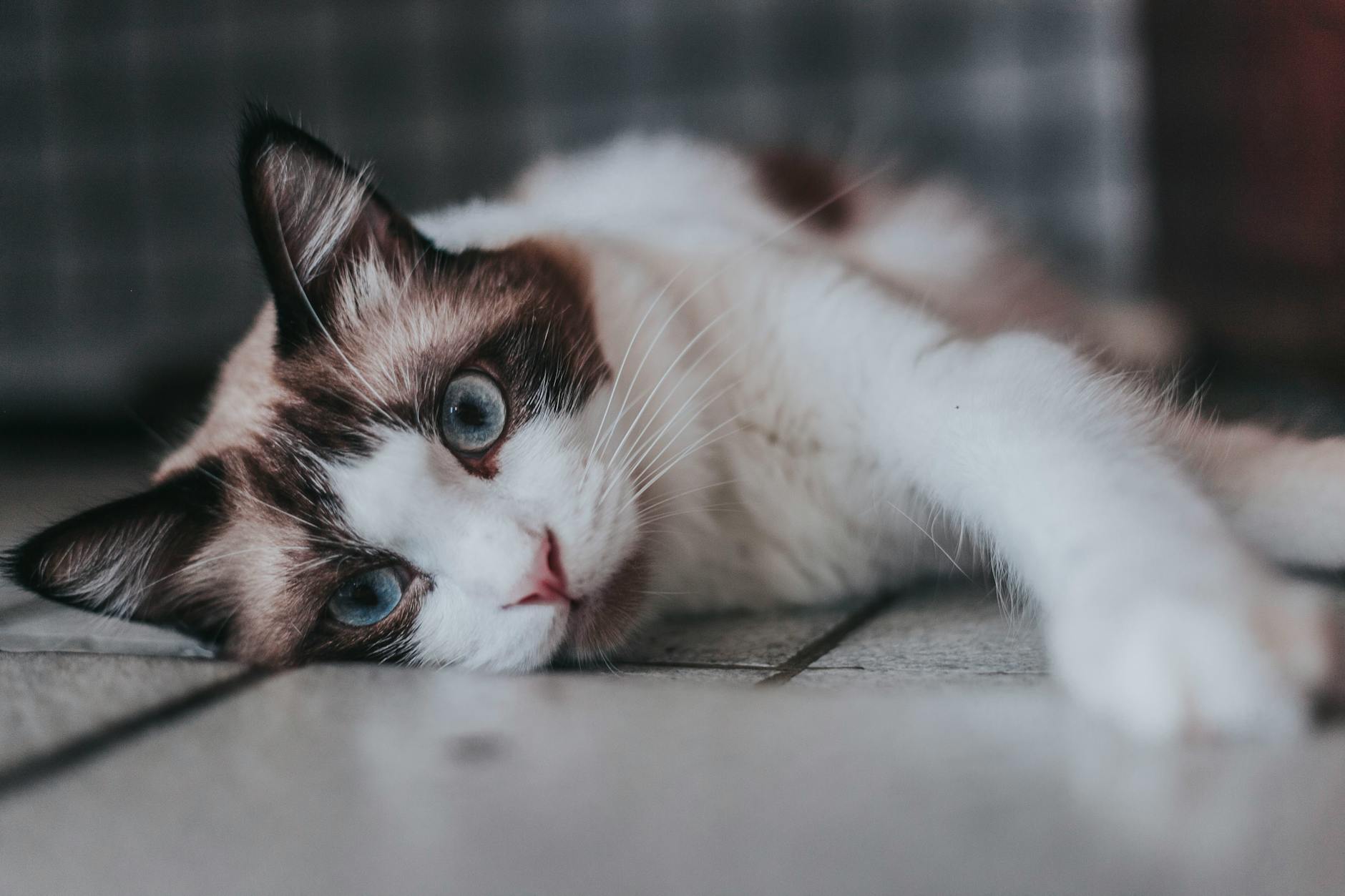
The blue-eyed cat breed that looks like a Himalayan is, quite simply, the Himalayan cat itself. This distinctive breed was created by deliberately combining the long, luxurious coat of Persian cats with the pointed coloring and striking blue eyes of Siamese cats, resulting in a feline that has captivated cat lovers for nearly a century. If you’ve encountered a strikingly beautiful cat with a fluffy, cream-colored body, darker “points” on the face and ears, and vivid blue eyes, you were likely looking at a Himalayan—one of the most visually distinctive breeds in the feline world.
Himalayans are classified differently depending on the cat registry. The Cat Fanciers’ Association (CFA) and the Governing Council of the Cat Fancy (GCCF) treat them as a color variant of the Persian breed, while the American Cat Fanciers Association and The International Cat Association (TICA) recognize them as a separate breed altogether. Regardless of their official classification, Himalayans remain instantly recognizable for their combination of Persian-type body structure, Siamese-style coloring, and the penetrating blue eyes that define the breed’s aesthetic appeal.
Table of Contents
- How Did the Himalayan Breed Come Into Existence?
- What Do Himalayan Cats Look Like?
- How Does Breeding Impact Himalayan Characteristics?
- What Level of Care Do Himalayans Require?
- What Health Issues Are Himalayans Predisposed To?
- What Is the Himalayan’s Personality Like?
- Choosing a Himalayan and What to Expect Long-Term
- Conclusion
How Did the Himalayan Breed Come Into Existence?
The Himalayan cat breed has a fascinating origin story rooted in controlled breeding experiments. Beginning in the 1930s, breeders at Harvard University undertook a deliberate project to create a cat that would blend the best traits of two very different breeds. They wanted the physical structure, coat length, and facial features of the Persian cat combined with the striking pointed coloring and blue eyes of the Siamese cat.
This ambitious breeding program took years of careful selection and planning, as the goal was not to create a random hybrid, but a standardized breed with consistent, predictable characteristics across multiple generations. The breed’s development was officially recognized when the Cat Fanciers’ Association granted the Himalayan formal breed status near the end of 1957. This watershed moment legitimized decades of breeding work and established the Himalayan as a distinct entity within the cat fancy community. The timing of this recognition reflected both the breed’s growing popularity among enthusiasts and the completion of sufficient breeding documentation to establish breed standards that could be consistently applied across different breeders and regions.
What Do Himalayan Cats Look Like?
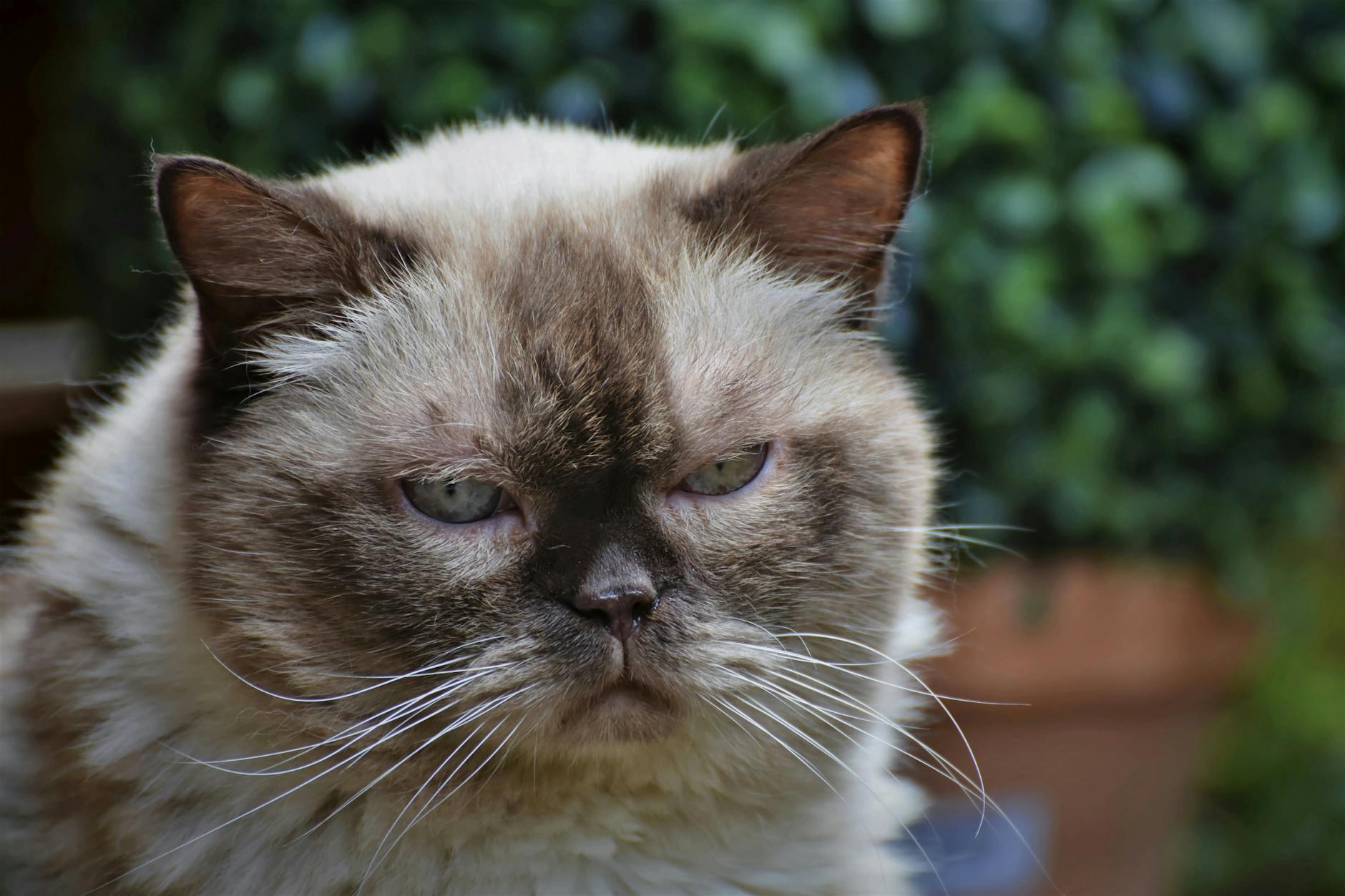
Himalayans are medium to large cats with a distinctly compact and sturdy frame, supported by characteristically short legs that give them a grounded, solid appearance. Their most striking features are their large, round, wide-set blue eyes, which create an expression that many describe as intelligent and somewhat intense. For pointed Himalayans (the color pattern most people recognize), these blue eyes are the standard eye color, though non-pointed varieties may have copper eyes. The breed’s facial features are heavily influenced by their Persian ancestry, including a prominent stop between the eyes and a somewhat flattened face that requires careful breeding to maintain the cat’s health and breathing capacity. The Himalayan’s coat is one of their defining characteristics—long, thick, and plush, requiring substantial grooming commitment.
Their coloring follows the “colorpoint” pattern typical of Siamese cats, with a pale, cream-colored body contrasted by darker “points” on the face (creating a distinctive “mask”), ears, paws, and tail. Common point colors include seal (deep chocolate-brown), chocolate, blue (gray), lilac, flame (red), and cream. This combination of the voluminous Persian coat with the elegant Siamese coloring creates a cat that is visually striking and immediately identifiable. One important limitation to be aware of is that the Himalayan’s facial structure, inherited from Persian breeding, creates what’s known as a brachycephalic face—a shortened facial structure. While breeders have made some efforts to develop moderate-faced Himalayans to address health concerns, the breed remains prone to breathing difficulties, especially in heavily brachycephalic individuals. Prospective owners should carefully evaluate breeding lines and prioritize breeders who focus on health alongside aesthetics.
How Does Breeding Impact Himalayan Characteristics?
The creation of the Himalayan required breaking established breed boundaries and carefully crossing two genetically distinct breeds over multiple generations. Breeders had to work with specific genetic traits: the recessive genes controlling Siamese coloring and blue eye color had to be introduced into the Persian gene pool while maintaining the desired Persian body structure and coat characteristics. This process involved backcrossing to Persians repeatedly to ensure that the resulting cats maintained the typical Persian build and coat length while stabilizing the pointed coloring. The genetic complexity of creating and maintaining Himalayans explains why breed standards were so important from the beginning.
The cat fancy established detailed specifications for everything from body proportions to acceptable color patterns to eye color intensity. Different registries have made different choices about where the Himalayan fits within their organizational structure—treating them as Persians or as separate breeds—but they all reference similar physical standards when evaluating show cats and determining breeding quality. One real-world example of breeding considerations appears in the history of lilac-point Himalayans, which took longer to develop than seal-points because the dilute color genes had to be carefully accumulated in the breeding population. Breeders who wanted to produce lilac-points couldn’t simply breed two cats with lilac-point coloring; they had to trace complex genetic lineages and sometimes work with intermediate colors like blue-points to introduce the necessary genes.
What Level of Care Do Himalayans Require?
Himalayan cats are not low-maintenance pets. Their long, thick coat requires brushing several times per week—ideally daily—to prevent matting and keep the coat healthy and free from tangles. Many Himalayan owners use professional grooming services, which can range from $60 to $100+ per session depending on location and the cat’s condition. Without regular grooming, the Himalayan’s coat can become severely matted within just a few days, a situation that’s both uncomfortable for the cat and expensive to resolve professionally. Beyond grooming, Himalayans benefit from environmental considerations that other cats might not require.
Because of their facial structure and breeding history, they can struggle with heat, making air conditioning during warm months not just a comfort but a health necessity. They also tend to have ongoing eye care needs due to their large, prominent eyes and tear-staining issues that are common in the breed. Many Himalayan owners find themselves regularly cleaning their cat’s facial area to maintain cleanliness and prevent skin infections in the tear-stained regions. The comparison is instructive: while a typical domestic shorthair cat might require grooming maintenance totaling a few hours per month, a Himalayan easily requires 8-12 hours per month or more, depending on the individual cat’s coat condition and the owner’s grooming skill level. This substantial time and financial investment should be factored into the decision to bring a Himalayan into your home.
What Health Issues Are Himalayans Predisposed To?
Himalayan cats carry genetic predispositions to several health conditions that prospective owners need to understand before bringing one into their home. The breed shows significantly elevated rates of polycystic kidney disease (PKD), an inherited condition in which fluid-filled cysts develop in the kidneys, potentially leading to kidney failure over time. They’re also predisposed to brachycephalic issues—breathing difficulties, excessive heat sensitivity, and heat intolerance related to their flattened facial structure. Additionally, Himalayans experience elevated rates of feline asthma compared to other breeds, which can require ongoing respiratory management.
The facial structure inherited from Persian breeding also predisposes Himalayans to chronic eye problems, including excessive tearing, eye infections, and other complications of prominent eyes in a shortened facial structure. Some Himalayans struggle with orthodontic issues where their teeth don’t align properly due to the compression of their facial bones. While not all Himalayans will develop all of these conditions, responsible breeding practices and veterinary care are essential for managing the breed’s health vulnerabilities. A critical warning: because of these health predispositions, it’s essential to work with reputable breeders who conduct health screening, including genetic testing for PKD, and who prioritize health outcomes alongside aesthetic standards. Any prospective Himalayan owner should request health certifications from the breeder and plan for regular veterinary care, including baseline kidney screening and monitoring for respiratory issues throughout the cat’s life.
What Is the Himalayan’s Personality Like?
Himalayans tend to be gentle, affectionate, and relatively calm cats compared to more hyperactive breeds. They often enjoy human companionship and may follow their owners from room to room, preferring to be near their people without necessarily being constantly active or demanding attention. Many Himalayans are content to lounge in comfortable spots around the home, and they typically adapt well to indoor living as long as they have adequate environmental enrichment and regular interactive play.
The breed’s temperament is often described as a blend of both parent breeds: they display some of the independent, dignified nature of Persians combined with the social, people-oriented nature of Siamese cats. Some individual Himalayans are more vocal than others, with some cats displaying the chatty, communicative nature inherited from Siamese ancestry. A specific example would be a seal-point Himalayan that greets its owner at the door with soft chirps and meows, expecting a grooming session and attention before settling into the evening routine—displaying both the Siamese tendency to communicate and the Persian tendency to demand grooming interaction.
Choosing a Himalayan and What to Expect Long-Term
If you’re considering adding a Himalayan to your household, the decision should be made with full awareness of the breed’s requirements and predispositions. Look for breeders who can provide documentation of health testing, particularly PKD screening, and who are willing to discuss the specific health issues in their breeding lines. Reputable breeders typically provide a health guarantee and are accessible for consultation throughout the cat’s lifetime if health issues arise.
The long-term commitment to a Himalayan extends beyond the typical fifteen-plus-year lifespan of a healthy cat. It includes a commitment to regular grooming, ongoing veterinary care, environmental management (particularly around temperature), and potential health management if the cat develops any of the breed’s predispositions. For cat lovers who understand these requirements and are prepared to meet them, Himalayans can be deeply rewarding companions that combine stunning visual appeal with genuinely affectionate, companionable personality traits.
Conclusion
The Himalayan cat is the blue-eyed cat breed that resembles its own distinctive aesthetic—a deliberate blend of Persian and Siamese genetics that was formalized as a breed in the 1950s and remains popular among dedicated feline enthusiasts today. These cats are visually striking with their long coats, pointed coloring, and penetrating blue eyes, but they require genuine commitment to grooming, healthcare, and environmental management. Understanding what Himalayans are—not just beautiful cats, but cats with specific health vulnerabilities and care requirements—is essential before deciding to welcome one into your home.
If you’re drawn to the Himalayan’s appearance and are prepared to invest in their care, reaching out to breed-specific rescues or carefully vetted breeders is the next step. Ask detailed questions about health screening, breeding practices, and breed predispositions. With proper care, a well-bred Himalayan can be a wonderful family companion that provides years of affection and visual beauty to a home committed to meeting its specific needs.