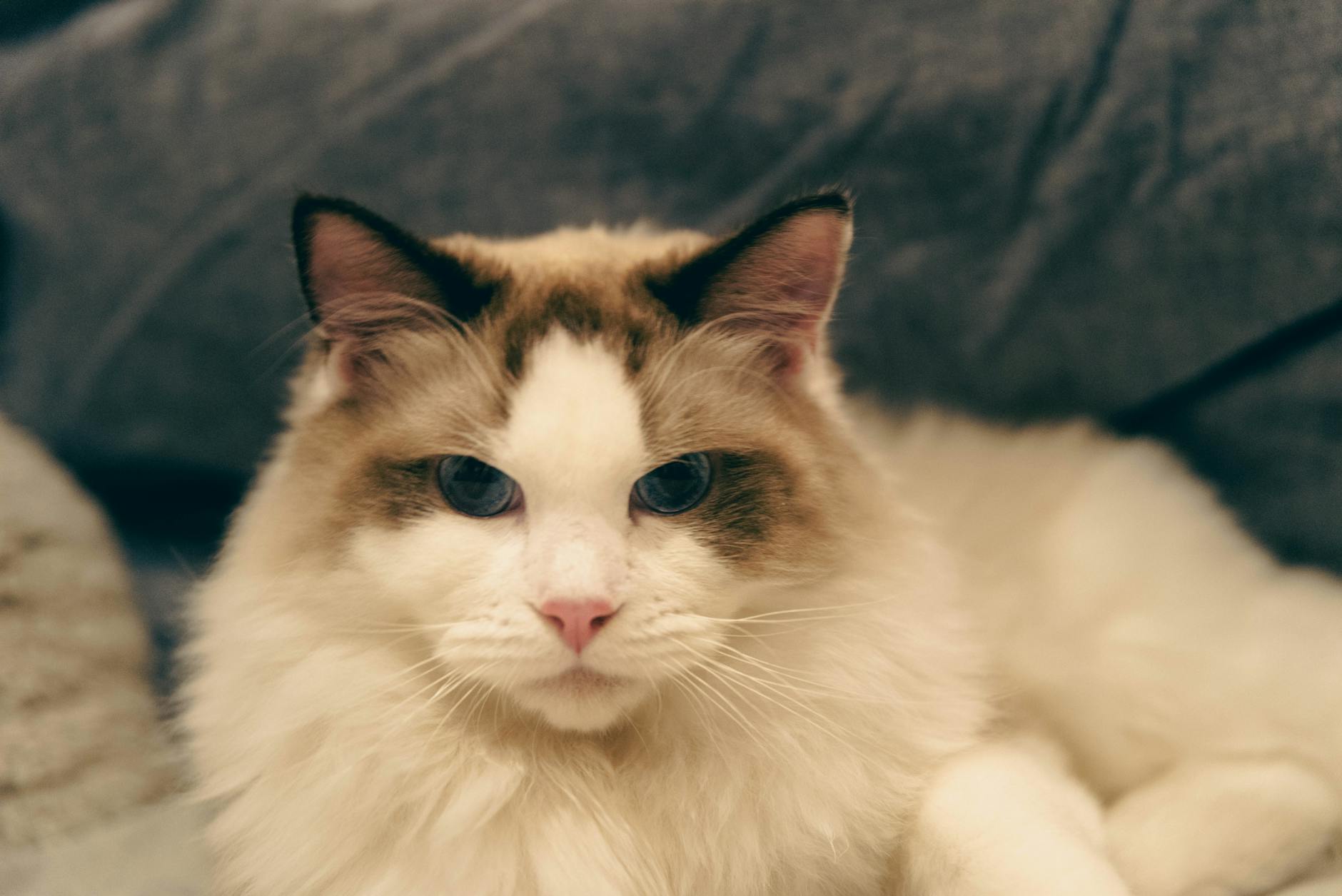
Several cat breeds can have striking blue eyes while maintaining a small stature, but the Ojos Azules stands out as the breed most directly associated with naturally blue eyes paired with a compact body. Unlike colorpoint breeds such as Siamese or Ragdolls that develop their blue eye coloring as part of their pattern genetics, Ojos Azules were specifically developed to showcase vivid blue eyes in cats of any color or pattern. These rare cats typically weigh between 4 to 8 pounds and possess an alert, muscular frame despite their diminutive size.
Beyond Ojos Azules, other small cat breeds can display blue eyes through specific genetics. The Tonkinese, a deliberate cross between Siamese and Burmese cats, regularly produces blue-eyed offspring while staying in the 6 to 12-pound range. Cornish Rex and Devon Rex cats, known for their elfin features and small frames, occasionally inherit blue eyes, particularly in lighter-colored individuals. Each breed brings its own personality and care requirements alongside the striking eye color.
Table of Contents
- What Makes Blue Eyes Rare in Small Cat Breeds?
- Blue Eye Genetics and Health Considerations in Smaller Breeds
- Small Breeds with Blue Eyes: Personality and Temperament
- Size Consistency and Growth Patterns in Blue-Eyed Breeds
- Breeding Ethics and Finding Legitimate Blue-Eyed Small Cats
- Blue-Eyed Cat Breeds Beyond the Obvious Choices
- Future Breeding and the Role of Genetic Testing
- Conclusion
What Makes Blue Eyes Rare in Small Cat Breeds?
blue eyes in cats result from a recessive gene that reduces melanin pigmentation in the iris. In most domestic cat breeds, blue eyes are strongly linked to the colorpoint genetic pattern, which restricts blue eye expression to specific breed lines like Siamese, Balinese, and Birmans. This creates a genetic bottleneck where blue-eyed cats tend to come from a limited pool of ancestry, making them less common in breeds without this pattern history.
The Ojos Azules breed emerged specifically to break this limitation. Breeders in New Mexico discovered a natural blue-eyed domestic cat in the 1980s and selectively bred cats carrying the blue-eye trait independent of colorpoint patterns. This deliberate development means Ojos Azules can be born with blue eyes regardless of coat color—solid, tabby, or patchy patterns all appear regularly. However, even within Ojos Azules, the trait remains genetically inconsistent, and not all kittens from two blue-eyed parents necessarily inherit blue eyes, creating unpredictability that breeders continue managing.
Blue Eye Genetics and Health Considerations in Smaller Breeds
The genetics behind blue eyes in small breeds can carry health implications that potential owners must understand. In colorpoint breeds like Siamese, the same genes responsible for blue eyes and the light colorpoint pattern also slightly increase the risk of crossed eyes (strabismus) and progressive retinal atrophy, though these conditions remain relatively uncommon. Some Siamese-descended breeds carry a higher incidence of these eye issues compared to cats without the colorpoint pattern, making regular veterinary eye checks important.
Ojos Azules, lacking the colorpoint pattern, present a different genetic picture. Their blue eyes appear unlinked to increased eye disease in preliminary research, but because the breed remains rare and relatively new, long-term health data remains limited. The small population size of Ojos Azules means fewer cats have been studied for hereditary conditions, so potential owners cannot rely on decades of health history the way they can with established breeds. Breeders working with Ojos Azules should provide eye certifications and health screening results, and prospective owners should verify these credentials before purchasing.
Small Breeds with Blue Eyes: Personality and Temperament
The Tonkinese exemplifies how blue-eyed small cats can display lively, demanding personalities. These 6 to 12-pound cats inherit the vocal, people-focused nature of their Siamese ancestors while maintaining the sturdier build of their Burmese heritage. Tonkinese form strong bonds with their owners, often following them from room to room and expecting interactive play sessions daily. Unlike the more aloof Ojos Azules, Tonkinese thrive on attention and can become destructive or vocal if left alone for extended periods, making them better suited to households where someone is home frequently.
Ojos Azules, by contrast, tend toward independence despite their small size. These cats retain the alert, hunting-focused temperament of the domestic cats from which they descended, with less need for constant human interaction than Siamese-derived breeds. They enjoy play and climbing but are content to entertain themselves for hours. This personality difference reflects their different breeding history—Tonkinese were deliberately bred for companionship traits, while Ojos Azules were selected primarily for their eye color, allowing natural cat temperament to emerge more prominently.
Size Consistency and Growth Patterns in Blue-Eyed Breeds
Cornish Rex cats present an interesting case for small, blue-eyed feline seekers, though size consistency varies. These cats typically max out at 5 to 8 pounds, giving them one of the smallest body weights in the cat world, but their slender, elegant frame can make them appear taller than their actual weight. The breed’s unique curly or wavy coat gives it a delicate appearance, though the actual cat is more muscular and sturdy than it looks. Blue eyes appear most commonly in light-colored Cornish Rex cats—creams, silvers, and whites—though the eye color doesn’t correlate directly with the breed standard as it does in colorpoint breeds.
Selecting a small, blue-eyed cat requires understanding the difference between small at birth versus small at maturity. A Tonkinese kitten with blue eyes may grow to 10 pounds as an adult, significantly larger than a Cornish Rex, so potential owners must research the specific breed’s growth trajectory rather than relying on kitten appearance. Health, nutrition, and genetics all influence final size, and occasionally individual cats from small breeds grow larger than breed averages. Reputable breeders can provide information about parent cat sizes and typical growth patterns for their lines.
Breeding Ethics and Finding Legitimate Blue-Eyed Small Cats
The increasing desirability of blue-eyed cats has unfortunately attracted irresponsible breeders and genetic backyard breeding operations. Because blue eyes appear rarer in small cats, some unethical breeders deliberately cross unrelated breeds or practice inbreeding to isolate the trait, potentially creating cats with genetic health problems. Ojos Azules especially fall victim to this, since the breed’s small population and high eye color demand make it a target for quick-profit breeding without proper health screening.
Finding a legitimate small blue-eyed cat requires verifying breeder credentials, asking about genetic testing, and requesting references from previous buyers. Reputable Ojos Azules breeders register cats with breed associations and maintain detailed pedigree records. For Tonkinese or Cornish Rex, legitimate breeders belong to cat fancy organizations and participate in shows where cats are judged against breed standards. Warning signs include breeders unwilling to share health test results, unusually low prices, or claims that their cats carry no genetic risk—all cats carry some genetic variation, and honest breeders acknowledge and work to minimize inherited conditions.
Blue-Eyed Cat Breeds Beyond the Obvious Choices
Birman cats, while sometimes reaching 8 to 10 pounds, occupy an interesting middle ground for people seeking small blue-eyed cats without committing to the extreme rarity of Ojos Azules. Birmans inherit their blue eyes through a genetic mechanism similar to Siamese but without the often-associated crossed eyes, and their semi-long coat and stockier build appeal to people who find Siamese cats too angular. Birmans display moderate affection levels—social but not demanding—making them suitable for various household situations.
Snowshoe cats, a deliberately created cross between Siamese and American Shorthairs designed to produce blue-eyed cats with distinctive white paws, typically weigh 6 to 12 pounds and offer another path to blue-eyed small cats. Snowshoes combine the intelligence and vocal tendency of Siamese with the heartiness of American Shorthairs, creating a cat that’s more robust than pure Siamese while retaining some of their personality traits. They remain less common than Siamese but more established than Ojos Azules, making them easier to find through legitimate breeders.
Future Breeding and the Role of Genetic Testing
As genetic testing becomes more accessible to cat breeders, the future of small blue-eyed cats will likely shift toward greater transparency about inherited conditions. Breeders increasingly can identify carriers of conditions like progressive retinal atrophy before breeding, allowing them to make informed decisions about which cats should produce offspring. This technological advancement could significantly reduce genetic disease in established blue-eyed breeds while enabling more people to confidently bring these cats into their homes.
The Ojos Azules breed, despite its small population, benefits particularly from genetic testing infrastructure as breeders work to expand the gene pool while maintaining the distinctive blue eyes. Organizations dedicated to the breed now encourage or require DNA testing in breeding programs, setting a template for other rare breeds to follow. This forward-looking approach suggests that small blue-eyed cats purchased from responsible breeders in coming years will likely be healthier and more genetically diverse than those from prior decades.
Conclusion
Small blue-eyed cat breeds offer distinct experiences depending on which breed you choose. The Ojos Azules stands alone as the breed specifically developed for blue eyes in any color pattern, though their rarity and limited health history require careful breeder selection. Tonkinese, Cornish Rex, and Birmans provide more accessible alternatives with blue-eyed individuals, each bringing different personality traits and established breed histories.
When seeking a small blue-eyed cat, prioritize legitimate breeders who provide health documentation and can discuss their breeding practices transparently. Ask about parents’ sizes, eye certifications, and genetic testing results. Consider whether the personality type matches your household—the highly social Tonkinese differs markedly from the more independent Ojos Azules. With proper research and careful breeder selection, you can find a small blue-eyed companion that remains healthy and happy throughout its life.