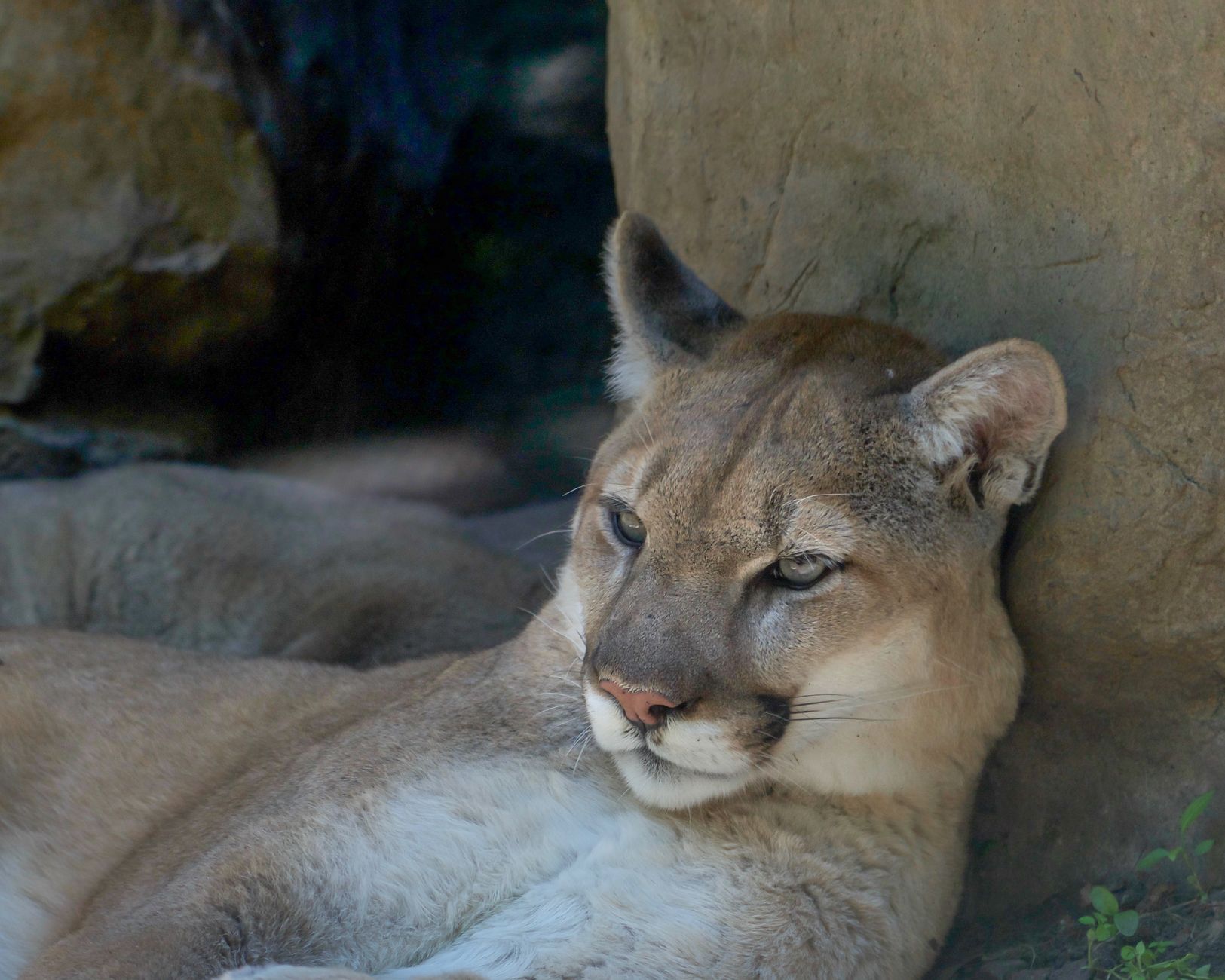
Zoo Idaho in Pocatello revealed the name of its rescued cougar kitten on Friday, July 17, 2026, at noon: Roxanne. The announcement came during a community celebration that drew families eager to celebrate the survival and recovery of a kitten that arrived at the zoo as an orphan from Wyoming after losing her mother. The name was chosen through a public contest that generated over 500 suggestions and received more than 600 community votes, making Roxanne the clear winner among finalist names Purrsephane and Clawdia. The naming campaign represented more than just a fun community event—it raised over $3,000 for cougar habitat renovations at the zoo.
Roxanne’s story is particularly compelling because she survived feline panleukopenia, a highly contagious viral disease that killed her two littermates. Her resilience through both loss and illness captured the imagination of the community, which invested in her welfare through the naming campaign. Student Caleb, serving as “Mayor for the Day,” announced Roxanne’s name alongside Mayor Mark Dahlquist at the noon event. The celebration highlighted both the zoo’s conservation efforts and the importance of community involvement in wildlife rehabilitation.
Table of Contents
- How Did Zoo Idaho’s Community Choose Roxanne’s Name?
- Feline Panleukopenia and Cougar Kitten Survival
- The Journey of an Orphaned Cougar Kitten
- What Panleukopenia Means for Domestic Cat Owners
- The Challenge of Raising Orphaned Wild Kittens
- Fundraising Through Conservation Naming Campaigns
- Cougar Kitten Care Versus Domestic Kitten Development
How Did Zoo Idaho’s Community Choose Roxanne’s Name?
The naming process began as a public contest inviting community members to suggest names for the newly arrived cougar kitten. Over 500 submissions poured in from across the region, reflecting genuine public interest in the kitten’s welfare and personality. Zoo staff reviewed the submissions and narrowed the field to three finalists: Roxanne, Purrsephane, and Clawdia. Each finalist name had its own appeal, offering different tones from classic to playful to nature-inspired.
The voting phase generated impressive community participation, with over 600 votes cast to select the final name. Roxanne emerged as the clear favorite, suggesting that voters connected with its strength and personality. This level of engagement demonstrates how wildlife rescue efforts can create meaningful community bonds, especially when people are invited to participate in naming and caring for animals that have experienced hardship. The naming campaign became a vehicle for raising awareness about conservation needs while simultaneously funding tangible improvements to Roxanne’s habitat.
Feline Panleukopenia and Cougar Kitten Survival
Roxanne faced a serious health challenge early in her time at Zoo Idaho: diagnosis with feline panleukopenia, a highly contagious viral disease that affects felids of all sizes. This disease, also known as feline distemper, attacks the immune system and bone marrow, leading to severe illness and often death in young animals. The virus is particularly dangerous in orphaned kittens whose immune systems may already be compromised by stress and improper nutrition in their earliest weeks.
Of the three littermates that arrived at the zoo together, only Roxanne survived panleukopenia. Her two siblings succumbed to the virus, making her survival a remarkable testament to her individual resilience and the medical care provided by Zoo Idaho’s veterinary team. This outcome underscores an important limitation in wildlife rescue: even with professional care, highly contagious diseases can devastate populations of young animals, particularly those already weakened by maternal loss and environmental stress. Panleukopenia remains a serious threat in wild and captive feline populations because the virus can survive in environments for extended periods and spread rapidly between susceptible animals.
The Journey of an Orphaned Cougar Kitten
Roxanne arrived at Zoo Idaho as an orphan from Wyoming after her mother was unable to care for her litter. This circumstance placed enormous strain on the three young kittens, who depend entirely on their mother for nutrition, warmth, and critical immune factors passed through nursing. The stress of maternal loss alone compromises young animals’ ability to fight infections, which likely contributed to the vulnerability that panleukopenia exploited in two of the three siblings.
Zoo Idaho’s veterinary and care teams undertook intensive treatment protocols to save Roxanne’s life once panleukopenia was diagnosed. These protocols included supportive care such as fluid therapy, nutrition management, and infection prevention measures to keep the environment as sterile as possible. The fact that Roxanne survived while her littermates did not highlights the unpredictability of infectious disease outcomes, even under professional care. Some individual animals possess genetic factors or physiological advantages that improve their survival odds, but these advantages are never guaranteed.
What Panleukopenia Means for Domestic Cat Owners
While Roxanne’s battle with panleukopenia occurred in a zoo setting, domestic cat owners should understand this disease because it affects housecats as well. Feline panleukopenia is preventable through vaccination—a stark contrast to the situation facing orphaned wild kittens who lack access to vaccines. Domestic kittens should receive their first panleukopenia vaccination at 6-8 weeks of age, with booster shots following at 3-4 week intervals until 16 weeks of age, then a booster one year later and every 3 years thereafter.
The difference between Roxanne’s situation and domestic kittens illustrates an important advantage of pet ownership: access to preventive medicine. Domestic kittens with responsible owners who follow vaccination protocols have virtually no risk of developing panleukopenia, while wild and orphaned felids remain vulnerable regardless of veterinary attention. Zoo Idaho’s successful treatment of Roxanne demonstrates excellent medical care, but prevention through vaccination remains far more reliable than treatment of an active infection. Unvaccinated domestic cats in multi-cat households face particular risk, as the virus spreads readily through direct contact, shared litter boxes, and contaminated environments.
The Challenge of Raising Orphaned Wild Kittens
Raising an orphaned cougar kitten without maternal care presents enormous obstacles that domestic kitten rescue operations do not always face. Wild cougar mothers provide not only nutrition but also behavioral training, socialization patterns appropriate for their species, and immune protection through antibodies in their milk. When these elements are absent, caretakers must substitute artificial nutrition, environmental enrichment, and medical intervention—none of which perfectly replaces natural maternal care.
A critical limitation in orphaned kitten rescue is the risk of imprinting, where young animals develop inappropriate social bonds with humans rather than recognizing their own species. For a cougar kitten like Roxanne, this poses long-term welfare concerns if the animal later interacts with other cougars or attempts to integrate into social structures. Zoo Idaho’s care protocols must balance the medical necessity of human intervention with the behavioral need to maintain species-appropriate distance and responses. Additionally, the stress of maternal loss and illness combines to create a cascade of physiological challenges that even excellent veterinary care cannot entirely overcome—as evidenced by the loss of Roxanne’s two littermates.
Fundraising Through Conservation Naming Campaigns
Zoo Idaho’s decision to connect the naming campaign with habitat fundraising generated over $3,000 for cougar habitat renovations. This approach creates incentive for community participation while directly funding the animal’s welfare—a model that other zoos and wildlife organizations increasingly employ. When community members know their votes contribute to tangible improvements like shelter upgrades, enrichment structures, or space expansion, they feel genuine ownership in the animal’s wellbeing.
The campaign’s success reflects growing public interest in wildlife conservation and a willingness to support zoos that demonstrate transparency about animal care and habitat needs. For Roxanne specifically, these funds will improve the physical environment in which she will live, potentially reducing stress and supporting her continued recovery from panleukopenia. The naming process thus served a dual purpose: creating community engagement and generating resources for the very animal whose survival inspired that engagement.
Cougar Kitten Care Versus Domestic Kitten Development
Roxanne’s care at Zoo Idaho illustrates how veterinary management of wild felines differs fundamentally from domestic kitten care, despite both being felids. Zoo veterinarians must consider species-specific nutritional needs, natural behavioral patterns, territorial requirements, and long-term psychological wellbeing in ways that differ from domestic cat medicine. A cougar kitten requires substantially more space, more challenging enrichment, and a diet based on whole prey to maintain appropriate predatory and digestive function.
The medical crisis Roxanne faced—panleukopenia—affects both domestic and wild cats identically at the viral level, yet the treatment context differs dramatically. A domestic kitten’s owner can administer oral medications at home and manage care in a familiar environment, while Roxanne required professional Zoo Idaho facilities. Her recovery demonstrates that wild felids can survive serious infections with proper intervention, but it also underscores that prevention through vaccination remains far superior to treatment for any feline, whether wild or domestic. Roxanne’s name and story will likely persist at Zoo Idaho as a reminder of both the fragility and resilience of young animals facing health crises.